
Two intended fathers may each create embryos using eggs from the same donor and sperm from one partner per egg. Each embryo has one genetic father and the egg donor as its genetic contributors. Feasibility depends on available eggs, semen testing, laboratory recommendations, and the gestational carrier plan.
TL;DR: Split-cycle IVF divides donor eggs into separate groups so each intended father may create embryos. It does not guarantee embryos or pregnancy. Request current itemized medical, donor, carrier, insurance, travel, and legal estimates.
Table of Contents
- How Does the Medical Process Work for Two Dads?
- What Is Split-Cycle IVF and How Does It Work?
- How Do You Decide Whose Sperm to Use First?
- How Do You Choose an Egg Donor for Two Dads?
- What Does the Timeline and Cost Look Like?
- What About Genetic Testing and Embryo Selection?
- What Legal Steps Protect Both Fathers?
- How Should You Approach Counseling and Disclosure?
- How Does Life IVF Center Support Two-Dad Journeys?
- A Clinic View on Shared Genetic Parenthood
- Ready to Explore Your Options With Life IVF Center
- Sources
- FAQ
How Does the Medical Process Work for Two Dads?
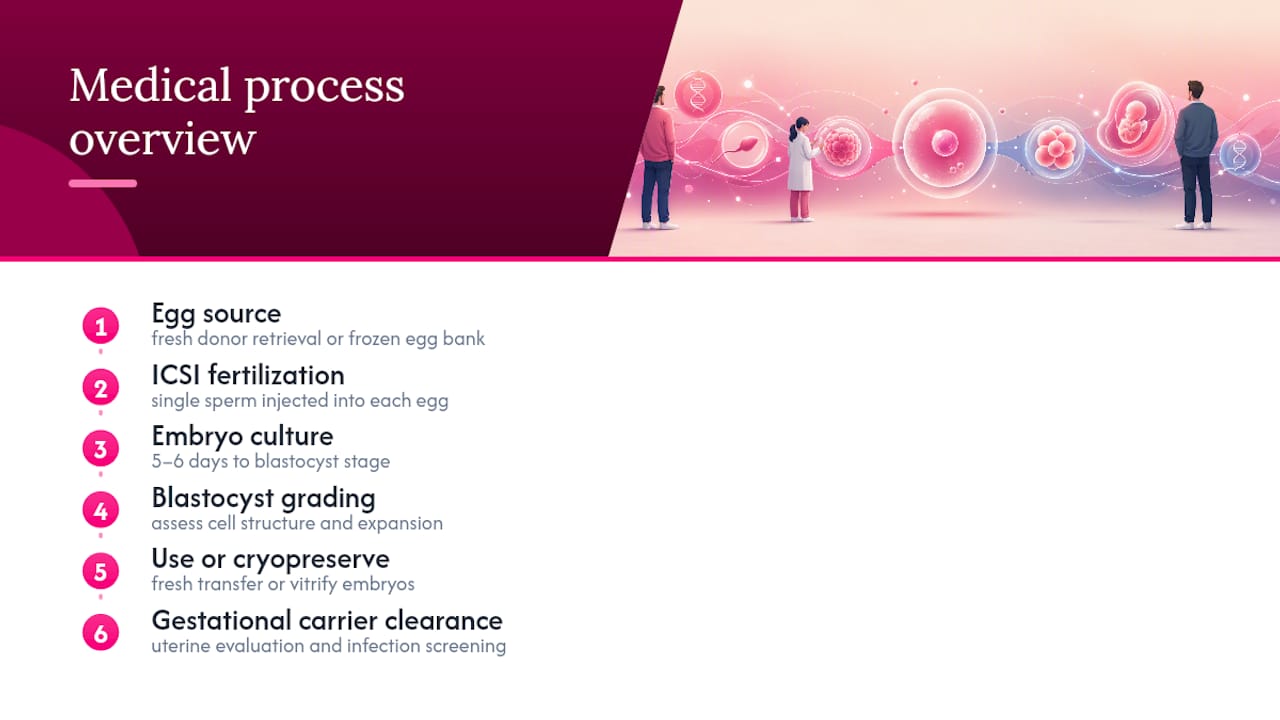
Most two-dad journeys start with a donor egg cycle, either fresh retrieval from a donor working with your clinic or a batch of frozen eggs from an egg bank. Once the eggs are retrieved or thawed, embryologists fertilize them using intracytoplasmic sperm injection (ICSI), which injects a single sperm directly into each egg. This step matters for male couples because ICSI works regardless of sperm count or motility, making it the default fertilization method in donor egg cycles built around gestational surrogacy for gay couples.
After fertilization, embryos culture in the lab for five to six days, developing to the blastocyst stage. Embryologists grade each blastocyst on cell structure and expansion, then either transfer a fresh embryo or vitrify (flash freeze) it for later use. Vitrification lets you build a bank of embryos before matching with a surrogate, which many couples prefer since surrogate matching timelines rarely align neatly with lab timelines.
The gestational carrier’s role is purely physical. She carries the pregnancy but has no genetic connection to the embryo, since the egg came from a donor. Carriers undergo medical clearance, including uterine evaluation and infectious disease screening, before any transfer is scheduled.
What Is Split-Cycle IVF and How Does It Work?
Split-cycle (also called tandem) IVF divides a single donor egg retrieval into two groups. One group is fertilized with sperm from partner A, the other with sperm from partner B, so you end up with two separate embryo cohorts from the same donor. This is the workflow most fertility clinics use for gay couples pursuing surrogacy when both men want a genetic connection to their children.
Couples generally choose between two paths once embryos exist:
- Sibling-over-time: transfer one embryo (from one dad) now, then use an embryo from the other dad in a future pregnancy attempt, whether with the same surrogate or a new one.
- Simultaneous twin attempt: transfer one embryo from each dad in the same cycle, aiming for twins who share a birth date but have different genetic fathers.
Twin transfers carry more medical risk. Multiple clinic resources note that single-embryo transfer reduces twin-pregnancy risk compared with transferring two embryos at once, and many programs will only attempt a mixed-embryo twin transfer if the surrogate clears additional medical screening. Split cycles also require more donor eggs upfront, since you need enough mature eggs to build two viable embryo groups rather than one.
How Do You Decide Whose Sperm to Use First?
Deciding whose sperm goes into the first cycle is rarely simple, but a structured approach helps. Consider it in this order:
- Start with semen analysis. Fertility testing for both partners identifies sperm count, motility, and morphology issues early, since male-factor infertility can affect which lab techniques (like ICSI) your clinic recommends.
- Review genetic and family history. Carrier screening results and any known hereditary conditions may make one partner’s sperm a more straightforward first choice.
- Talk through personal priorities with a counselor. Some couples let the partner without existing biological children go first; others weigh age or long-term family goals more heavily.
- Decide together, not by default. A short decision checklist, reviewed with your clinical team, keeps the choice deliberate rather than incidental.
Genetic carrier screening and preimplantation genetic testing (PGT) don’t just inform which embryos get transferred. They can also shape which partner’s sperm you prioritize if screening reveals a higher carrier risk on one side.
How Do You Choose an Egg Donor for Two Dads?
Egg donors generally come from three sources: a known donor (often a friend or family member), an agency-matched anonymous donor, or a frozen egg bank. Each option differs in screening depth, wait time, and cost, with known donors usually requiring the most legal paperwork and egg banks offering the fastest turnaround.
When comparing donor profiles, most couples prioritize:
- Physical traits and family resemblance, if that matters to you
- Documented health history and results of infectious disease screening
- Education, personality traits, or other lifestyle details agencies provide
- Full medical records, since your clinic and attorney will both want this documentation on file
One detail deserves special attention if you’re planning split-cycle IVF: using the same egg donor for both partners’ embryos means any resulting children share a genetic mother, making them full genetic siblings rather than half-siblings. Many couples find that detail meaningful for family cohesion, even though the donor herself has no parental role.
What Does the Timeline and Cost Look Like?
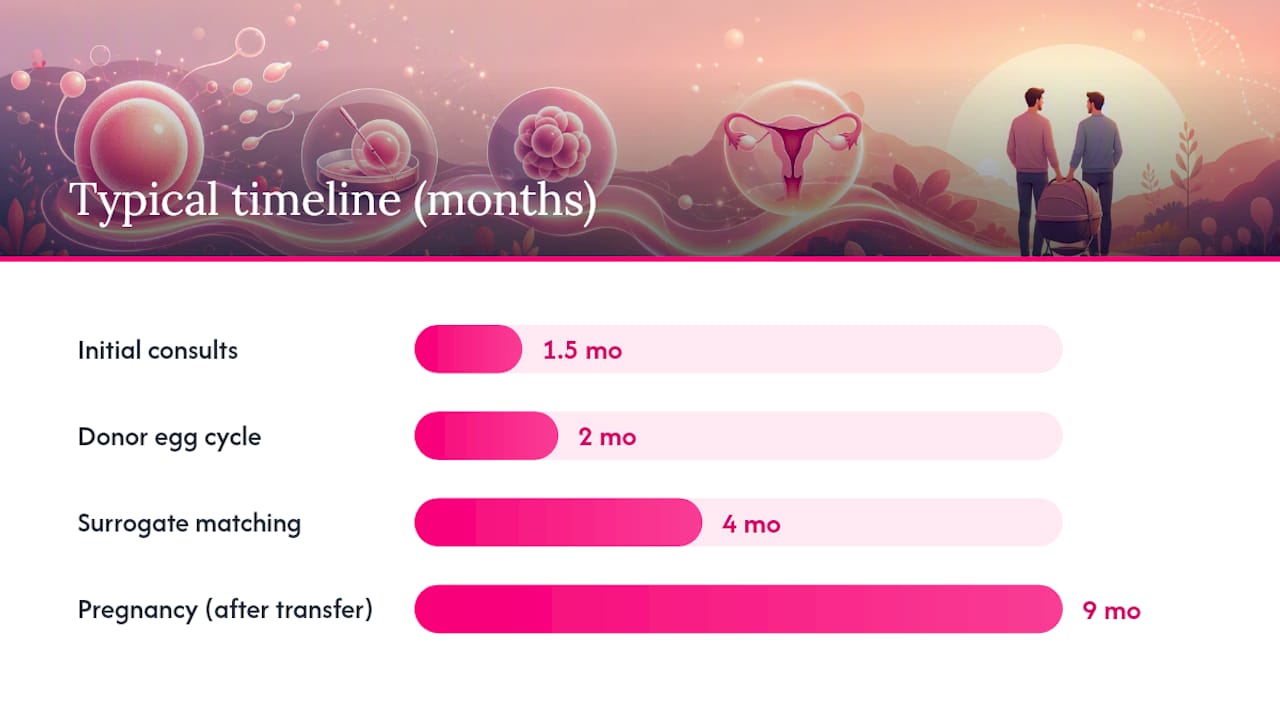
A typical two-dad surrogacy IVF journey runs roughly over a year from initial consultation to birth, though delays in donor matching or surrogate screening can extend the timeline. The rough sequence: initial consultations and testing (4 to 8 weeks), donor egg cycle and embryo creation (6 to 10 weeks), surrogate matching and legal contracts (2 to 6 months), then pregnancy itself (about 9 months after transfer).
Cost breaks down into several categories that programs consistently list:
- Donor egg cycle fees (agency or egg bank charges)
- IVF and embryology lab fees, including fertilization and embryo culture
- Surrogate compensation and living expenses
- Agency and legal fees for both surrogacy and parentage matters
- Travel, insurance, and optional genetic testing
Cost categories and timelines vary significantly by program and location, and reputable surrogacy programs for LGBTQ+ parents recommend getting itemized estimates before committing to any agency or clinic, rather than relying on a single all-in quote. Ask for a sample budget that separates medical, legal, and agency costs so you can compare programs on equal footing, and build in contingency funds in case a cycle needs to repeat.
What About Genetic Testing and Embryo Selection?
Carrier screening for both intended fathers, done before IVF begins, flags inherited conditions that could affect embryo selection later. Once embryos reach the blastocyst stage, clinics commonly offer PGT-A (screening for chromosomal abnormalities) and PGT-M (testing for a specific known genetic mutation), both of which help prioritize which embryos to transfer first.
No genetic test is absolute. PGT carries a real, if small, chance of false positives or false negatives, so results guide decisions rather than guarantee outcomes. Clinics also differ on policies around sex selection and how test results get disclosed or documented, so it’s worth raising these questions with your medical team before testing begins, not after results arrive.
What Legal Steps Protect Both Fathers?
Parentage law varies significantly by state, and getting legal agreements finalized before embryo transfer is non-negotiable. Key documents include the surrogacy agreement itself, a pre-birth parentage order where your state allows one, and in some cases a post-birth second-parent adoption for extra protection. An experienced reproductive attorney will confirm what your state requires and how birth certificates get issued for both fathers.
Medical record privacy also matters throughout this process. HIPAA governs how donor and surrogate medical information gets shared with intended parents, and your clinic and attorney typically coordinate consent forms so records move securely between donor agencies, surrogacy programs, and your legal team.
How Should You Approach Counseling and Disclosure?
Counseling helps at three points: before deciding on donor and sperm choices, during treatment when expectations shift, and after birth as you plan disclosure. Good counseling addresses decision support, managing grief if a cycle fails, and building an age-appropriate plan for explaining donor conception to your children later. RESOLVE’s professional resources connect intended parents with counselors and legal referrals experienced in LGBTQ+ family building specifically.
Pro Tip: Ask your clinic, surrogate, and counselor to align on the same language for talking about donor conception early, so your child hears a consistent story no matter who’s answering the questions.
How Does Life IVF Center Support Two-Dad Journeys?
Some fertility clinics coordinate donor and surrogate logistics alongside in-house lab capabilities, offering treatment plans tailored to individual needs rather than a one-size protocol. Support may include travel coordination, multi-language assistance, and financial guidance for couples managing a multi-step process across donor screening, embryo creation, and legal work. A typical starting point is to request a consultation, ask for a sample package estimate, and get specifics on donor screening and legal referral options.
A Clinic View on Shared Genetic Parenthood
Shared genetic parenthood is medically achievable for many two-dad couples with careful planning, not luck. The couples who move through this smoothly are the ones who line up their clinical, legal, and counseling teams early, before the first embryo exists. If you’re weighing your options, a conversation with Life IVF Center is a reasonable place to start mapping out what fits your goals.
Ready to Explore Your Options With Life IVF Center
Life IVF Center can discuss donor selection, semen testing, embryo creation, and transfer planning for two intended fathers. Confirm services, eligibility, timelines, and current fees directly, and obtain independent legal guidance.
If you’re ready to talk through donor selection, split-cycle logistics, or surrogate coordination with a clinical team, book a consultation with Life IVF Center and ask for a sample budget tailored to your situation.
Sources
For deeper legal, clinical, or patient-advocacy detail, review HIPAA privacy and security guidance from HHS and RESOLVE’s professional resources for fertility patients.
This article is for general educational purposes and is not medical or legal advice. Consult qualified fertility, mental-health, and independent reproductive-law professionals before treatment or embryo transfer.
- Surrogacy for Gay Couples: 2026 Costs, Success & Legal Guide
- Split IVF cycles for two sperm providers (clinic explainer)
- HIPAA privacy and security guidance (HHS)
FAQ
How Does Surrogacy Work With Two Dads?
Donor eggs are fertilized with sperm from one or both partners using IVF, then the resulting embryos transfer into a gestational surrogate who carries the pregnancy. Split-cycle IVF lets both men be genetic fathers, either in the same pregnancy or across separate ones over time.
Do Surrogate Babies Get Both Dads’ Looks?
A child’s physical traits come from genetics, not from the person carrying the pregnancy, since the gestational surrogate has no genetic link to the embryo. If split-cycle IVF is used, one child’s traits reflect one father’s genetics plus the egg donor, not a blend of both fathers.
Can a Surrogate Carry Two Eggs With Two Different Sperm?
Yes, in a simultaneous twin attempt, a surrogate can carry two embryos transferred in the same cycle, one fertilized with each partner’s sperm. Clinics generally favor single-embryo transfer to reduce twin-pregnancy risk, so many couples opt for sibling-over-time pregnancies instead.
Can a Baby Have DNA From Two Fathers?
No single child carries DNA from two fathers at once. What’s possible is that two children from the same egg donor, each carried in a separate pregnancy or as twins, can be full genetic siblings, each carrying DNA from one father and the shared donor.
What Does Two Dad Surrogacy IVF Cost With Life IVF Center?
Costs vary by which services you need, but Life IVF Center lists The Advanced IVF Package at $13,500 and Embryo Transfer from 2950 USD one-off. Pre-IVF testing, egg freezing, and donor or surrogate costs are separate line items best requested as an itemized estimate from the clinic.
This article is for general educational purposes only and is not a substitute for personalized medical advice, diagnosis, or treatment. Fertility care is highly individual; please consult a qualified healthcare professional about your specific circumstances.
