
Many people assume the role of technology in IVF has essentially made conception a guaranteed outcome for anyone who walks through a fertility clinic door. That belief, while understandable, sets up real emotional and financial disappointment. Technology has genuinely transformed what is possible in fertility treatments, moving success rates from the single digits in the early 1980s to meaningfully higher numbers today. But the story is more complicated than headlines suggest. This article breaks down what the science actually supports, which innovations deliver real results, and how to separate evidence-backed tools from expensive additions that may not help.
Table of Contents
- Key takeaways
- The role of technology in IVF: core advances
- AI and automation in the IVF lab
- Evaluating IVF add-ons: what the evidence says
- How technology shapes your treatment decisions
- My perspective on innovation and evidence in fertility care
- How Life IVF Center applies technology to your care
- FAQ
Key takeaways
| Point | Details |
|---|---|
| Extended embryo culture improves outcomes | Growing embryos to day 5 or 6 significantly raises live birth rates compared to earlier transfer methods. |
| Vitrification changed fertility preservation | Rapid freezing technology dramatically improves embryo survival and enables safer, flexible treatment scheduling. |
| AI shows promise but has limits | AI supports embryo scoring and lab consistency, yet no definitive proof exists of improved live birth rates in routine clinical use. |
| Many add-ons lack solid evidence | Popular IVF extras like ERA testing and time-lapse imaging often add cost without proven benefit for most patients. |
| Transfer timing matters more than most realize | Embryo transfer completed in under 34 seconds is linked to meaningfully higher pregnancy and implantation rates. |
The role of technology in IVF: core advances
The foundational technologies underpinning modern IVF are easy to take for granted, but each one represented a genuine leap in what clinics could offer patients.
Ovarian stimulation and egg retrieval have become far more precise over time. Earlier protocols used fixed hormone doses with limited monitoring. Today, clinicians adjust stimulation based on real-time hormone assays and ultrasound follicle tracking, retrieving more viable eggs with lower risk of ovarian hyperstimulation syndrome.

Embryo culture duration is one of the clearest examples of technology directly improving success rates. In early IVF, embryos were transferred after just two or three days, when they consisted of only a handful of cells. Extended culture to day 5 or 6 allows embryos to reach the blastocyst stage, containing roughly 80 to 100 cells. Success rates rose from 12 to 15 percent with two-day culture up to approximately 25 percent at three days, and higher still at blastocyst stage. The extended period acts as a natural filter, allowing only the most developmentally capable embryos to reach transfer.
Key technologies that transformed IVF laboratories include:
- Preimplantation genetic testing (PGT): Screening embryos for chromosomal abnormalities before transfer reduces miscarriage risk and supports better embryo selection, particularly for patients over 35 or those with recurrent pregnancy loss.
- Vitrification: This rapid-freeze method brings embryos to a glassy, crystal-free state, dramatically improving survival rates after thaw. Vitrification enables freeze-all strategies and safer spacing between stimulation and transfer cycles.
- ICSI (intracytoplasmic sperm injection): Injecting a single sperm directly into an egg transformed outcomes for male factor infertility. You can find a thorough breakdown of when ICSI is appropriate for different patient profiles.
Together, these advances form the backbone of what modern fertility clinics offer. Each one is backed by years of clinical data and adopted broadly because the evidence justified it.
AI and automation in the IVF lab
The most actively discussed area of IVF advancements and technology right now is artificial intelligence. The potential is genuine. The current reality is more measured.
Traditional IVF labs rely heavily on embryologist skill and judgment, which introduces variability. Two equally trained embryologists can grade the same embryo differently. Fatigue, lighting conditions, and workload all affect manual assessments. AI and automation reduce this variability by standardizing embryo scoring, managing workflow, and interpreting large genetic datasets with consistency no individual can match at scale.
The specific applications include:
- Embryo viability scoring: AI models trained on thousands of embryo images assign developmental scores that support, though do not replace, embryologist judgment.
- Workflow management: Automated systems track each sample through the lab, reducing the risk of mix-ups and documentation errors.
- Genetic data interpretation: AI can process PGT results and flag patterns that correlate with implantation success, assisting genetic counselors in complex cases.
That said, the role of AI in IVF process improvement faces real technical barriers. Integrating AI with legacy hardware requires API connectivity that older equipment often lacks, and handling sensitive genetic data demands robust cybersecurity frameworks many labs are still building. The bigger open question is clinical outcomes. No definitive evidence yet confirms that AI embryo selection improves cumulative live birth rates in routine clinical settings. Retrospective accuracy on existing datasets is promising. Prospective, randomized trials are still catching up.
Pro Tip: When evaluating a clinic’s AI capabilities, ask specifically whether their AI tools are integrated into prospective care or used only for retrospective data analysis. The distinction matters enormously for your actual treatment.
Evaluating IVF add-ons: what the evidence says
This is where the conversation about benefits of tech in IVF gets complicated. A growing number of add-on procedures are marketed to patients as ways to improve their odds. Some are genuinely useful in specific situations. Many are not supported by the evidence for general use.
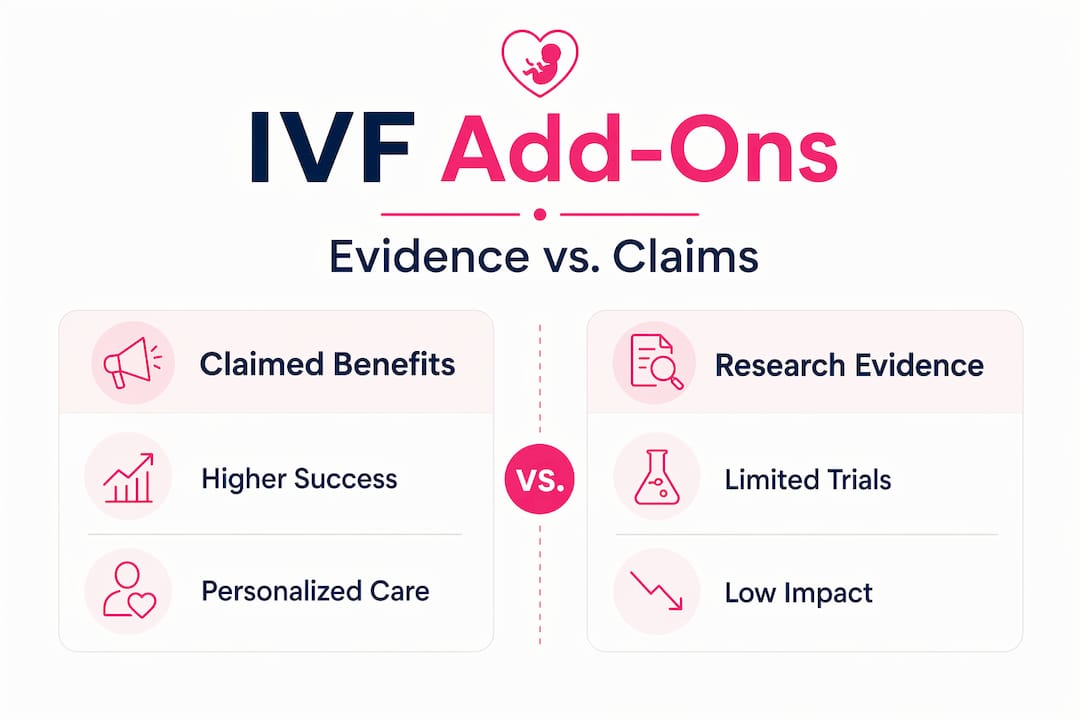
| Add-On | Claimed Benefit | What Evidence Shows |
|---|---|---|
| Endometrial receptivity testing (ERA) | Identifies optimal transfer timing | No live birth improvement in general IVF patients; costs $800–$1,500 and delays transfer cycle |
| Time-lapse embryo imaging | Continuous embryo monitoring without disturbance | Lab workflow benefits confirmed; largest clinical trial showed no significant improvement in live birth rates |
| Assisted hatching | Helps embryo break through its outer shell | Meta-analyses show no improvement in most patients; possible harm in some groups |
| ICSI | Improves fertilization for male factor infertility | Well-supported for male infertility; overused in cases without male factor diagnosis |
| PGT-A (aneuploidy testing) | Selects chromosomally normal embryos | Strong evidence for older patients and recurrent miscarriage; benefit less clear under 35 |
The IVF field is dealing with what researchers have labeled an add-on crisis, where commercial pressure drives adoption before randomized controlled trials validate the clinical benefit. Patients end up paying more for procedures that professional societies often advise against outside research settings.
Pro Tip: Before agreeing to any add-on, ask your clinic for the specific prospective trial data supporting it for patients with your profile. If they cite observational studies or say “it can’t hurt,” that is not sufficient justification.
Before committing to any additional procedure, review pre-IVF pricing options to understand what standard protocols include versus what carries additional cost.
How technology shapes your treatment decisions
Understanding how technology aids IVF is most useful when you connect it to actual patient decisions. Here are the ways these advances translate into real choices and expectations during treatment.
-
Embryo transfer timing is a precision variable. Research shows that transfers completed within 15 to 33 seconds achieve pregnancy rates of 51.2 to 55.6 percent, compared to 41.1 percent when the procedure exceeds 34 seconds. Implantation rates drop from roughly 36 percent to 25.5 percent with longer procedures. This is not about rushing. It reflects embryo sensitivity to temperature changes and uterine environment disruption. Asking your clinic about their transfer technique and average procedure time is entirely reasonable. You can also read a detailed guide to understanding embryo transfer to know what to expect.
-
Vitrification expands your options significantly. Freeze-all cycles are now a standard strategy for many patients. Rather than transferring embryos in the same cycle as stimulation, vitrification allows you to freeze all viable embryos and transfer in a subsequent, less hormonally disrupted cycle. This matters for patients at risk of hyperstimulation, those who need genetic testing results before transferring, and those preserving fertility before chemotherapy or other medical treatments.
-
Personalized protocols change outcomes for complex cases. Patients with endometriosis, immune disorders, or age-related fertility challenges benefit most from protocols tailored to their specific biology rather than population averages. Precision IVF® approaches, which incorporate genetic profiling and individual hormonal response data, reflect how IVF advancements and technology are moving toward genuinely individualized care. The Precision IVF® benefits for couples over 35 article explores this in detail for a common patient demographic.
-
Emerging technologies require cautious optimism. Robotics-assisted procedures, expanded AI applications, and early research into gene editing represent the next phase of innovations in reproductive technology. Each requires rigorous clinical validation before routine use. The goal is not to slow progress but to protect patients from paying for hope dressed up as science.
My perspective on innovation and evidence in fertility care
I have watched the fertility field move faster than almost any other branch of medicine over the past decade. And most of the time, that speed has delivered real benefits to patients. But I have also seen how quickly a promising lab finding can become a marketed product before anyone has run a proper randomized trial.
The hardest conversations to have are with patients who have spent thousands of dollars on add-ons that never had solid evidence behind them. They were not misled by bad people. They were misled by an industry that moves fast and often treats enthusiasm as sufficient justification.
What I believe most strongly is this: patient education is the most undervalued technology in fertility medicine. When you understand what the evidence actually supports, you become a far more informed participant in your own care. You ask better questions. You spend money on interventions that genuinely help rather than ones that feel reassuring.
Clinics that are transparent about the evidence, including its gaps, are the ones worth trusting. Transparency is not a weakness. It is the clearest signal of confidence in the quality of actual care being delivered.
The future of IVF will almost certainly include better AI, more precise genetic tools, and potentially therapies we cannot yet fully imagine. That future is worth pursuing with rigor and honesty rather than marketing optimism.
How Life IVF Center applies technology to your care
At Life IVF Center, advanced laboratory technology and transparent clinical practice work together rather than one substituting for the other. The clinic’s Precision IVF® approach customizes stimulation protocols, embryo culture conditions, and transfer timing based on each patient’s unique biological profile and medical history. This is not a one-size approach applied with a different label. It reflects genuine individualization informed by the data each patient generates through their own diagnostic workup. Life IVF Center also offers affordable fertility treatment packages that make advanced reproductive care accessible across Southern California locations, along with support for patients navigating insurance coverage. If you are evaluating your options, start with a consultation to understand which technologies are genuinely recommended for your situation.
FAQ
What is the role of technology in IVF success rates?
Technology has raised IVF success rates significantly through advances like extended embryo culture, vitrification, preimplantation genetic testing, and AI-assisted embryo assessment. However, no single technology guarantees success, and outcomes still depend heavily on patient age and individual biology.
Does AI actually improve IVF outcomes?
AI improves lab consistency and embryo scoring accuracy, but current clinical evidence does not yet confirm that AI tools improve cumulative live birth rates in routine IVF practice. Prospective randomized trials are ongoing.
Are IVF add-ons worth the extra cost?
Most add-ons, including ERA testing and time-lapse imaging, lack strong prospective evidence of improving live birth rates for general IVF patients. Professional societies advise patients to request evidence-based justification before agreeing to any additional procedure.
How does embryo freezing technology affect treatment?
Vitrification allows embryos to be frozen with minimal ice crystal formation, preserving them effectively for future use. This enables freeze-all strategies that reduce complication risk and give patients scheduling flexibility without sacrificing embryo quality.
Why does embryo transfer timing matter?
Transfer completed within 33 seconds is linked to pregnancy rates above 51 percent, compared to 41 percent when the procedure takes longer. The embryo’s sensitivity to temperature and uterine disruption makes procedural efficiency a genuine clinical variable.
Recommended
- IVF Process Explained: Personalize Your Path to Success
- Fertility treatment options: Effectiveness and best uses
- ICSI in IVF: Benefits, risks, and when it’s needed
- Understanding embryo transfer: The key step in IVF
Ready to take the next step?
Life IVF Center specializes in individualized Precision IVF® care for complex cases—including diminished ovarian reserve, prior failed cycles, and advanced maternal age. Our in-house labs and dedicated physicians are ready to help.
Book a Free Consultation →