

When repeated IVF cycles fail without a clear explanation, it’s natural to search for answers. Immunotherapies in IVF have captured significant attention from hopeful patients who believe their immune system may be working against implantation. The idea is compelling. But the science is more complicated than many fertility clinics and online forums suggest. This guide cuts through the noise, examining what these treatments actually are, what current research supports, and how you can make informed decisions with your care team rather than chasing interventions that may not help.
Table of Contents
- Key Takeaways
- Immunotherapies in IVF: types and how they work
- What the clinical evidence actually shows
- The problem with immune testing in IVF
- Adjunct therapies for thin endometrium and recurrent failure
- Making a practical decision about immune therapies
- My honest perspective on immune therapies
- How Lifeivfcenter approaches immune evaluation and IVF
- FAQ
Key Takeaways
| Point | Details |
|---|---|
| Immunotherapies vary widely | From IVIG to corticosteroids to intralipid infusions, each therapy targets different immune pathways with varying levels of evidence. |
| Evidence is mixed at best | Major clinical trials show no consistent improvement in live birth rates for most immune therapies in unexplained IVF failure cases. |
| Embryo quality comes first | Chromosomal abnormalities in embryos remain the leading cause of IVF failure, and immune therapies cannot compensate for this. |
| Immune testing lacks standards | NK cell and cytokine tests vary significantly between labs, making results difficult to interpret and act on reliably. |
| Personalized care is the standard | Any immune therapy decision should follow thorough evaluation of embryo genetics, uterine anatomy, and individual immune profile. |
Immunotherapies in IVF: types and how they work
The role of immunology in IVF centers on a fundamental biological challenge. The embryo is genetically foreign to the mother’s body, containing DNA from a second person. For a pregnancy to succeed, the maternal immune system must tolerate rather than reject it. When this tolerance breaks down, or is suspected to break down, IVF immune therapies are sometimes offered to shift the immune response toward acceptance.
Several categories of immunomodulation in IVF are currently in clinical use or being studied:
- Intravenous immunoglobulin (IVIG): A concentrated preparation of antibodies infused into the bloodstream, thought to dampen overactive immune responses and modulate natural killer (NK) cell activity.
- Corticosteroids (e.g., prednisolone): Oral or injectable steroids used to suppress inflammatory immune activity around the time of embryo transfer.
- Intralipid infusions: Fat emulsions administered intravenously, proposed to reduce uterine NK cell activity, though the mechanism is not fully understood.
- Peripheral blood mononuclear cell (PBMC) infusion: A procedure in which the patient’s own white blood cells are cultured and reintroduced into the uterine cavity before transfer to stimulate local immune tolerance.
- Lymphocyte immunization therapy (LIT): White blood cells from the male partner are introduced to the female patient to potentially stimulate protective immune responses. This therapy is banned in some countries due to safety concerns.
- Granulocyte colony-stimulating factor (G-CSF): Often used to improve endometrial thickness, G-CSF also has immune-modulating properties affecting the uterine environment.
Each of these therapies targets the immune response in IVF at a different point in the conception process. Some are administered before egg retrieval, some around transfer, and others during early pregnancy.
Pro Tip: Ask your doctor to specify which immune pathway a proposed therapy targets and what evidence exists for that specific pathway in patients with your diagnosis. A general rationale is not enough to justify treatment.

What the clinical evidence actually shows
This is where honest conversations become most important. A 2025 randomized controlled trial examining IVIG and prednisolone in women with unexplained recurrent pregnancy loss found ongoing pregnancy rates of 25.0% in the treatment group versus 15.0% in the placebo group. That sounds promising on the surface, but the difference did not reach statistical significance (p=0.26), meaning the result could easily be due to chance. This is a critical distinction that matters enormously when weighing whether to pursue treatment.
The picture is nuanced rather than simply negative. A propensity score-matched cohort study found that IVIG during early pregnancy was associated with a live birth rate of 60.1% compared to 44.9% in controls. This effect was most pronounced when embryos with chromosomal abnormalities were excluded from the analysis and when treatment started between six and twelve weeks of gestation at lower doses under 20 grams. This suggests a potentially meaningful benefit in a carefully selected subgroup, not a blanket benefit for all IVF patients.
For recurrent implantation failure specifically, the results are less encouraging. One study found that IVIG improved biochemical pregnancy rates to 38.2% versus 19.1% in controls, yet the live birth rate difference was not statistically significant. This pattern appears repeatedly across the literature: early markers of pregnancy may improve, but the outcome that matters most to patients, a healthy live birth, does not consistently follow.
| Therapy | Evidence Strength | Live Birth Benefit | Key Limitation |
|---|---|---|---|
| IVIG | Moderate | Possible in select RPL subgroups | No significance in major RCTs for unexplained RIF |
| Corticosteroids | Low to Moderate | Inconsistent | Risk of overuse; no standardized protocol |
| Intralipid infusion | Weak | Not established | Mechanistic rationale largely theoretical |
| G-CSF (intrauterine) | Moderate for thin lining | Modest improvement | Primarily endometrial, not immunological |
| PBMC infusion | Preliminary | Unclear | Requires more prospective trial data |
“The maternal-fetal immune interface is highly complex. Immunotherapies need individualized approaches and cautious use rather than being applied as a standard protocol.” — Reproductive immunology expert consensus from current research
The problem with immune testing in IVF
One of the most significant challenges in this field is diagnosis. Before prescribing immune therapy, many clinics offer immune panels that measure NK cell activity, cytokine ratios, T-regulatory cell counts, and antinuclear antibody levels. The goal is to identify which patients have immune profiles that might respond to treatment.
The problem is that these tests lack standardization and predictive reliability. Results vary significantly between laboratories, and no professional consensus establishes what constitutes an abnormal level that warrants treatment. A result flagged as elevated at one clinic may be interpreted as normal at another.
There is a deeper biological issue as well. Immune cells such as NK cells are not simply dangerous agents to be suppressed. NK cells play dynamic, essential roles in normal implantation, including remodeling uterine blood vessels to support placental development. Suppressing them indiscriminately based on an elevated lab value could interfere with processes that pregnancy actually requires.
Several key concerns stand out in this area:
- No international consensus defines a diagnostic threshold for “immune implantation failure.”
- Peripheral blood NK cell counts do not reliably reflect uterine NK cell activity.
- Cytokine ratio panels are not validated as predictors of IVF outcomes in prospective trials.
- Some clinics charge significantly for immune panels before any evidence-based diagnosis has been established.
Experts consistently emphasize re-evaluating embryo quality and uterine anatomy before pursuing immune treatments, particularly when the diagnostic foundation is an unvalidated biomarker.
Pro Tip: Before agreeing to an immune panel, ask whether the specific test has been validated in a published prospective trial as a predictor of IVF outcomes. If the answer is unclear, treat the result with caution.
Adjunct therapies for thin endometrium and recurrent failure
For patients dealing with thin endometrium or recurrent implantation failure, a separate category of adjunct therapies has emerged that blends regenerative medicine with immunomodulation in IVF. These deserve specific attention because they address structural and immune factors simultaneously.
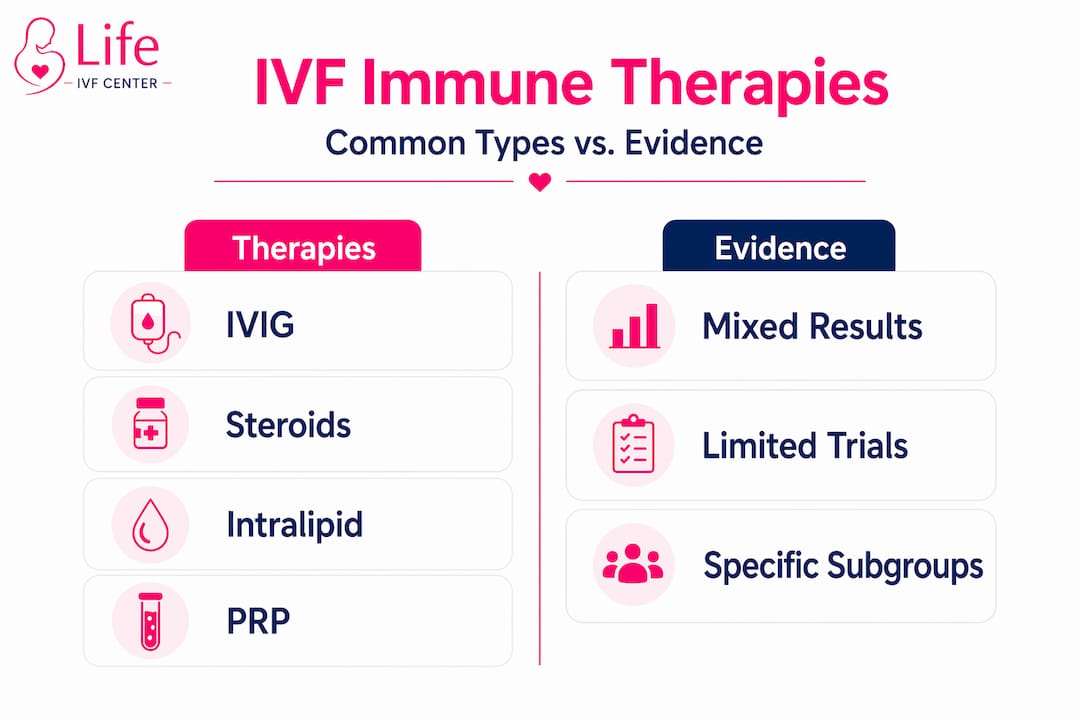
Platelet-rich plasma (PRP) and G-CSF infused directly into the uterine cavity are the most studied options for severe thin endometrium. Regenerative approaches including PRP and G-CSF can improve endometrial thickness and modestly improve pregnancy rates in cases where the lining measures 3mm or less. Live birth rates in this severe category typically fall below 10 to 15% with standard treatment, and multimodal approaches can push that figure to the 20 to 30% range. That improvement is meaningful but still modest. Understanding what realistic outcomes look like in thin uterine lining cases is something resources like this explanation of thin endometrium can help clarify.
For couples exploring options after multiple failures, IVF and autoimmune disorders intersect in particularly complex ways. Conditions like lupus, antiphospholipid syndrome, and thyroid autoimmunity do have established treatment protocols that include anticoagulants and targeted immune therapies. These are distinct from the speculative immune treatments often marketed to patients with unexplained failure.
Regardless of which adjunct therapy is being considered, Preimplantation Genetic Testing for Aneuploidies (PGT-A) remains standard practice before attributing IVF failure to immune factors. Transferring chromosomally abnormal embryos will result in failure regardless of how well the uterine environment has been prepared. Addressing embryo genetics is not optional when building an evidence-based protocol.
Making a practical decision about immune therapies
If you are considering fertility treatment immunotherapy as part of your IVF plan, a structured approach protects both your health and your resources. Here is how to evaluate your situation:
- Confirm embryo quality first. Request PGT-A testing if you have had multiple failed transfers with embryos of unknown chromosomal status. This single step resolves the most common cause of IVF failure. Reviewing your history with a failed IVF second opinion can surface details that prior cycles may have missed.
- Rule out structural causes. A hysteroscopy to exclude polyps, fibroids, or scar tissue should precede any immune workup. Structural problems are more common than immune problems and more consistently treatable.
- Ask for validated diagnostics. If immune testing is recommended, ask specifically which published trials validate that test as predictive of IVF outcomes in patients with your profile.
- Understand the specific therapy being proposed. Ask what mechanism it targets, what the expected benefit is in live birth rates (not just pregnancy rates), and what risks are involved.
- Weigh cost against evidence. Some immune therapies cost thousands of dollars per cycle with limited evidence of benefit. The financial and emotional cost of pursuing multiple unproven treatments adds up. Review your fertility treatment options in the context of overall IVF effectiveness.
Pro Tip: Request the specific study or meta-analysis that supports any proposed immune therapy. A physician confident in their recommendation should be able to cite it.
My honest perspective on immune therapies
I have worked with enough patients facing recurrent IVF failure to understand why immune therapies feel so appealing. When embryo after embryo fails and the standard workup returns normal results, the immune system becomes a logical place to look for answers. I get it.
But what I have seen repeatedly is that immune therapies are often pursued before the more fundamental questions have been answered. Was PGT-A done? Was a hysteroscopy performed? Was endometrial receptivity evaluated? In my experience, a significant portion of patients labeled as having “immune implantation failure” actually had undetected chromosomal abnormalities in their embryos or subtle uterine abnormalities that were missed.
The therapeutic logic behind many of these treatments is plausible. That does not mean they work in practice. I have seen patients spend considerable money and emotional energy on IVIG protocols and NK cell suppression therapies only to find that a euploid embryo transferred into a properly prepared uterus succeeded without any immune intervention.
My honest advice: push for thorough evaluation before you accept an immune therapy recommendation. Ask whether the proposal is based on validated biomarkers or clinical intuition. If your care team cannot answer that question clearly, that itself tells you something. Hope is worth protecting. So is the accuracy of the information that shapes your decisions.
— Ben
How Lifeivfcenter approaches immune evaluation and IVF
Choosing where to receive care matters as much as which treatments you choose. At Lifeivfcenter, the Precision IVF® approach is built on the principle that every patient’s protocol should reflect their specific biology, not a generalized assumption about what might help.
Lifeivfcenter offers thorough immune evaluation as part of a personalized workup that includes embryo genetic testing, uterine assessment, and clinical review before any immune therapy is recommended. For patients who have experienced previous IVF failures elsewhere, the team conducts a structured re-evaluation to identify what prior cycles may have missed. Treatment packages are designed to deliver evidence-based care at transparent pricing, and you can review the options available through Lifeivfcenter’s fertility treatment packages to understand what a personalized protocol might look like for your situation. Consultations are available across multiple Southern California locations.
FAQ
What are immunotherapies in IVF?
Immunotherapies in IVF are treatments designed to modify the maternal immune response to support embryo implantation. Common examples include IVIG, corticosteroids, intralipid infusions, and PBMC therapy.
Does immunotherapy improve IVF success rates?
The evidence is mixed. Some studies show modest benefits in specific patient subgroups, but major randomized trials have not found consistent improvements in live birth rates for most patients with unexplained recurrent failure.
Who might benefit most from IVF immune therapies?
Patients with diagnosed autoimmune conditions like antiphospholipid syndrome, or those with confirmed recurrent pregnancy loss after chromosomally normal embryo transfers, are the most evidence-supported candidates for targeted immune therapy.
Are NK cell tests reliable for IVF planning?
Currently, NK cell and cytokine tests lack standardization across laboratories and have not been validated as reliable predictors of IVF outcomes in prospective trials, making clinical interpretation difficult.
Should I pursue immune therapy before checking embryo quality?
No. Chromosomal abnormalities in embryos are the leading cause of IVF failure. PGT-A testing and uterine evaluation should precede any immune workup, as immune therapies cannot compensate for genetically abnormal embryos.
Recommended
- Fertility treatment options: Effectiveness and best uses
- Top fertility supplements: Evidence, comparisons, and expert picks
- ICSI in IVF: Benefits, risks, and when it’s needed
- Previous IVF Failures – Life IVF Center
Ready to take the next step?
Life IVF Center specializes in individualized Precision IVF® care for complex cases—including diminished ovarian reserve, prior failed cycles, and advanced maternal age. Our in-house labs and dedicated physicians are ready to help.
Book a Free Consultation →