

Most patients using Lupron (leuprolide acetate) for IVF experience temporary, manageable side effects that closely resemble early menopause symptoms. These effects are a direct result of how the drug works, and the vast majority resolve once the suppression phase ends or stimulation begins. The common side effects of Lupron for IVF typically resemble menopausal symptoms such as hot flashes, headaches, mood changes, fatigue, injection-site reactions, vaginal dryness, and mild nausea.
For most patients, daily self-care measures (hydration, layered clothing, over-the-counter pain relief) keep these symptoms manageable. Contact your clinic promptly if you experience severe mood changes, signs of an allergic reaction, vision changes, or any symptom that feels sudden and severe.
Key Takeaways
Short-term Lupron use for IVF produces temporary, reversible side effects that do not cause lasting fertility damage in the vast majority of patients.
| Point | Details |
|---|---|
| Most effects are temporary | Hot flashes, headaches, and mood changes typically resolve once stimulation begins or Lupron stops. |
| Dose personalization reduces symptoms | Clinics lower the Lupron dose after confirmed suppression, which often meaningfully reduces side-effect severity. |
| Bone density risk is low short-term | Standard IVF suppression of two to four weeks carries minimal bone-density risk; extended courses warrant monitoring. |
| Red flags need same-day contact | Severe mood changes, vision changes, allergic signs, or chest pain require immediate clinic or emergency contact. |
| Life IVF Center personalizes every protocol | Precision IVF® calibrates Lupron dosing to your hormone levels, reducing unnecessary side effects while maintaining suppression. |
Table of Contents
- How Lupron (leuprolide) works in IVF and why it causes menopausal-like symptoms
- Common and less common Lupron side effects, with severity and home care
- When side effects usually start and how long they last
- How Lupron is given and how to make injections more comfortable
- Practical strategies to reduce Lupron side effects during your cycle
- Red flags and when to contact your clinic or emergency services
- Does Lupron affect your long-term fertility?
- Why side effects vary and how clinics personalize your Lupron dosing
- How Lupron’s side effects compare to GnRH antagonist protocols
- Does experiencing Lupron side effects affect your IVF success rate?
- What clinics tell patients starting Lupron
- Individualized medication support at Life IVF Center
- Sources
How Lupron (leuprolide) works in IVF and why it causes menopausal-like symptoms
Lupron is a GnRH agonist, meaning it mimics the hormone that normally signals the pituitary gland to release LH and FSH. When given continuously, it first triggers a brief hormone surge (the “flare”), then causes the pituitary to become desensitized and stop releasing those hormones. The result is a temporary, medically induced low-estrogen state.
That drop in estrogen is precisely why the side effects of Lupron for IVF so closely mirror menopause symptoms. Hot flashes, mood shifts, vaginal dryness, and disrupted sleep all trace back to the same mechanism: reduced circulating estrogen. The suppression is intentional. Clinics use it to prevent premature ovulation before egg retrieval, giving the medical team full control over the stimulation cycle.
Formulation matters for timing. Daily subcutaneous injections (short-acting Lupron) begin suppression within about one to two weeks and allow dose adjustments throughout the cycle. Lupron Depot, the long-acting intramuscular formulation, delivers a single dose that suppresses the pituitary for four to twelve weeks depending on the preparation, which means side effects can persist longer and are harder to adjust mid-cycle.
GnRH antagonists, such as Cetrotide (cetrorelix) and Ganirelix, work differently. They block GnRH receptors immediately without the initial flare, which generally produces a shorter side-effect window. Your fertility team will select the protocol that best fits your diagnosis, ovarian reserve, and response history.
Common and less common Lupron side effects, with severity and home care
MedlinePlus lists tiredness, hot flashes, headache, and mood changes among the most frequently reported effects of leuprolide injections, and advises contacting a doctor when symptoms are severe or persistent. The table below organizes the full picture.
| Symptom | Frequency / Severity | Typical Duration | Simple Management | Contact Clinic When |
|---|---|---|---|---|
| Hot flashes | Very common / mild-moderate | Throughout suppression phase | Layered clothing, cool room, cold water | Severe, disruptive to daily function |
| Headaches | Common / mild-moderate | First 1–2 weeks; may persist | Acetaminophen or ibuprofen, hydration | Sudden severe or “worst headache of life” |
| Mood swings / irritability | Common / mild-moderate | Throughout suppression | Sleep hygiene, light exercise, support | Suicidal thoughts, severe depression |
| Fatigue | Common / mild | Throughout suppression | Rest, moderate activity, hydration | Extreme or worsening over time |
| Injection-site pain / bruising | Common / mild | Each injection; fades in days | Rotate sites, room-temperature medication | Increasing redness, warmth, pus |
| Vaginal dryness | Common / mild | Throughout suppression | Water-based lubricants | Significant pain or bleeding |
| Nausea | Occasional / mild | First 1–2 weeks | Small meals, ginger tea | Vomiting that prevents eating |
| Joint / muscle pain | Occasional / mild-moderate | Throughout suppression | Gentle stretching, acetaminophen | Severe or sudden joint swelling |
| Breast tenderness | Occasional / mild | First 1–2 weeks | Supportive bra | New lump or discharge |
| Dizziness | Occasional / mild | First days to weeks | Rise slowly, stay hydrated | Fainting, chest pain |

The Lupron Depot prescribing information specifically names hot flashes, injection-site reactions, and mood changes as the most commonly reported effects, and flags bone thinning as a concern with longer use. Healthline’s summary of Lupron Depot side effects reinforces these findings and highlights that bone loss and rare neurological events warrant monitoring.
When side effects usually start and how long they last
Most patients notice the first Lupron IVF reactions within three to seven days of starting daily injections. Hot flashes and headaches tend to appear earliest, often within the first week. Mood changes and fatigue typically follow as estrogen levels fall further over the next one to two weeks.
With daily (short-acting) Lupron, symptoms usually stabilize once suppression is established, then ease significantly when gonadotropin stimulation begins and estrogen rises again. The suppression phase in a standard long protocol typically runs two to four weeks before stimulation starts.
Lupron Depot behaves differently. Because a single injection delivers medication over four to twelve weeks, the side-effect window is longer and cannot be shortened by stopping injections. Patients using the depot formulation for IVF preparation should expect symptoms to persist for the full duration of the depot’s activity, which is a key reason many IVF clinics prefer daily dosing for cycle flexibility.
Individual variability is real. Patients with lower baseline estrogen or higher sensitivity to hormonal shifts tend to experience more pronounced symptoms. Clinics typically monitor follicle development and hormone levels throughout suppression to confirm adequate downregulation and adjust timing accordingly.
How Lupron is given and how to make injections more comfortable
Lupron for IVF is administered as either a daily subcutaneous injection (into the fatty tissue of the abdomen or thigh) or as a depot intramuscular injection given by a healthcare provider. Most IVF protocols use the daily subcutaneous route because it allows dose flexibility throughout the cycle. Your clinic’s pre-IVF instructions will specify the exact formulation, dose, and injection schedule for your protocol.
Practical steps to reduce injection discomfort:
- Let the medication sit at room temperature for five to ten minutes before injecting; cold medication stings more.
- Rotate injection sites with each dose, alternating sides of the abdomen or thigh to prevent tissue buildup.
- Apply a clean cold compress to the site for one to two minutes before injecting to numb the area.
- Pinch the skin gently and inject at the angle your clinic demonstrated, typically 45–90 degrees for subcutaneous.
- After injecting, apply light pressure with a gauze pad rather than rubbing, which can increase bruising.
- Watch for signs of infection: increasing redness, warmth, swelling, or discharge at the site beyond 48 hours.
If you notice a severe local reaction, such as a large raised welt, spreading redness, or significant pain that worsens rather than fades, contact your clinic before the next scheduled injection.
Practical strategies to reduce Lupron side effects during your cycle
Many of the adverse effects of Lupron are manageable with straightforward interventions, and clinics can adjust the protocol when symptoms become burdensome. The key principle: communicate early rather than waiting to see if symptoms resolve on their own.
- Manage hot flashes with layered clothing and temperature control. Keep a small fan at your desk or bedside, wear moisture-wicking fabrics, and avoid caffeine and alcohol, which can trigger or worsen flashes.
- Use acetaminophen or ibuprofen for headaches and joint pain. Both are generally appropriate during the suppression phase; confirm with your clinic which is preferred given your full medication list.
- Prioritize sleep hygiene. Night sweats disrupt sleep, which compounds fatigue and mood symptoms. A cool room, light bedding, and a consistent sleep schedule help break that cycle.
- Stay hydrated. Dehydration worsens headaches and dizziness. Aim for consistent fluid intake throughout the day, not just when you feel thirsty.
- Ask your clinic about dose reduction after downregulation. Once hormone suppression is confirmed by blood work, many clinics lower the Lupron dose for the stimulation phase. Reducing dose after downregulation frequently reduces symptom severity while still maintaining pituitary suppression.
- Ask about add-back therapy if suppression is prolonged. For patients on extended Lupron courses, low-dose progestin or estrogen add-back can reduce bone and symptom burden without compromising suppression.
- Consider an antagonist protocol if side effects are severe. If Lupron IVF reactions are significantly affecting your quality of life, ask whether a GnRH antagonist protocol using Cetrotide or Ganirelix is appropriate for your case. Antagonist cycles avoid the prolonged suppression phase entirely.
Pro Tip: Write down your symptoms with a severity rating (1–10) and the time of day they occur. Bringing this log to your monitoring appointments gives your fertility team the specific data they need to adjust your dose or timing, rather than relying on a general “I feel terrible.”
For a broader look at managing IVF side effects, Life IVF Center’s patient resource library covers coping strategies across the full stimulation cycle.
Red flags and when to contact your clinic or emergency services
Most Lupron side effects are mild and expected. A smaller set of symptoms require immediate action.
Contact your clinic the same day if you experience:
- Severe or worsening depression, anxiety, or emotional instability
- Any thoughts of self-harm or suicide
- New or worsening seizures
- Sudden vision changes or blurred vision
- Signs of a serious allergic reaction: hives, facial swelling, difficulty breathing
- High fever (above 101°F) or chills
- Severe, uncontrolled pain at the injection site with spreading redness
Call 911 or go to the nearest emergency room immediately for:
- Sudden severe chest pain or pressure
- Shortness of breath at rest
- Fainting or loss of consciousness
For suspected overdose or acute toxic reactions, Poison Help is a U.S. national resource available around the clock. You can also report serious adverse events directly through FDA MedWatch, the official pathway for safety reporting and label updates for medications like leuprolide.
Bone density note: Bone mineral density loss is primarily a concern with prolonged Lupron use, such as in endometriosis treatment lasting six months or more. For a standard IVF suppression course of two to four weeks, the risk is low. If your protocol involves an extended course or you have baseline osteoporosis risk factors, discuss bone-health monitoring and add-back therapy with your provider before starting. The Lupron Depot prescribing information specifically addresses this risk and the importance of monitoring with longer-term use.
Does Lupron affect your long-term fertility?
Short-term Lupron use for IVF has not been shown to cause permanent infertility. The pituitary suppression it produces is reversible; once the medication clears, the hypothalamic-pituitary-ovarian axis resumes normal function. Most patients see hormone levels return to their baseline within weeks of stopping treatment.
The more relevant long-term concern is bone mineral density. Evidence from longer-course Lupron use (typically six months or more, as used in endometriosis treatment) shows a measurable, temporary reduction in bone density. For a standard IVF suppression window of two to four weeks, this effect is clinically minimal. Clinics managing patients on extended courses use add-back therapy and duration limits to reduce that risk, as outlined in the Lupron Depot prescribing information.
Patients with pre-existing osteoporosis, low bone mass, or other risk factors should have a direct conversation with their fertility specialist before starting any Lupron-based protocol. In those cases, a GnRH antagonist protocol may carry a more favorable risk profile. The impact of Lupron on IVF outcomes themselves is addressed in a later section, but the short answer on fertility impact is reassuring: the drug is a tool for cycle control, not a source of lasting reproductive harm for the vast majority of patients.
Why side effects vary and how clinics personalize your Lupron dosing
Side-effect variability comes down to three main factors: your baseline hormone levels before starting, the dose and formulation your clinic prescribes, and your individual sensitivity to estrogen fluctuation. Two patients on identical doses can have very different experiences, which is why personalization matters more than any generic protocol.
Clinics that practice individualized dosing typically follow this pattern: start suppression at a standard dose, confirm downregulation with a blood estrogen level and ultrasound, then reduce the Lupron dose once suppression is established. That dose reduction, timed to the start of gonadotropin stimulation, often produces a noticeable improvement in hot flashes and mood symptoms without compromising cycle control. Patients with PCOS, for example, may need a different suppression approach entirely; a PCOS-specific IVF protocol accounts for their distinct hormonal baseline and ovarian response.
For patients with complex immune or inflammatory profiles, side-effect patterns can differ further. Immunological factors in fertility can influence how the body responds to hormonal suppression, and clinics managing those cases often build additional monitoring checkpoints into the protocol.
Questions to bring to your next monitoring appointment:
- “My estrogen is suppressed. Can we reduce the Lupron dose now to lower my side effects?”
- “Is add-back therapy appropriate given how long my suppression phase will be?”
- “Would an antagonist protocol be a better fit for my side-effect profile and diagnosis?”
Bring your symptom log, your most recent hormone results, and any written notes from prior cycles. A reproductive endocrinologist can help interpret those results in the context of your full fertility picture.
How Lupron’s side effects compare to GnRH antagonist protocols
The core difference between Lupron-based (agonist) protocols and antagonist protocols using Cetrotide or Ganirelix is the duration and mechanism of hormonal suppression. Lupron requires a suppression phase of one to four weeks before stimulation begins, during which estrogen remains low and menopausal-like symptoms are most pronounced. Antagonist protocols suppress LH surges immediately and are introduced mid-stimulation, so patients spend far less time in a low-estrogen state.
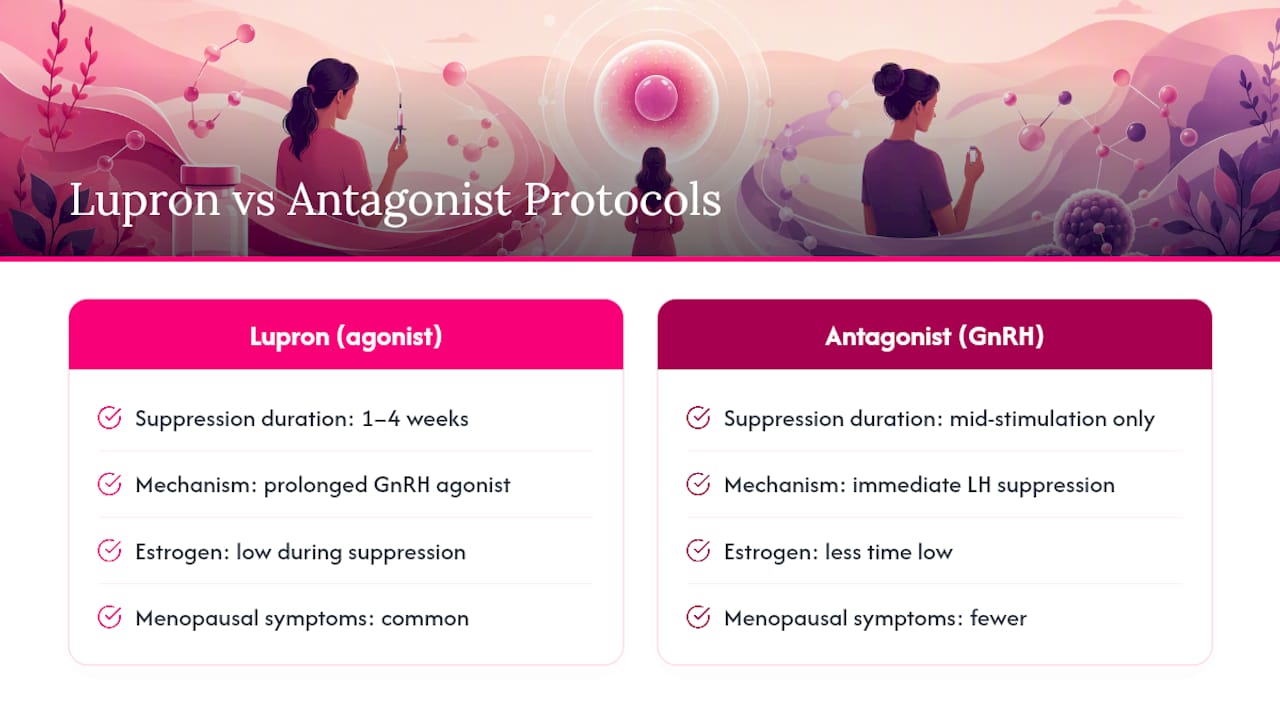
In practice, patients on antagonist protocols tend to report fewer and shorter-lived hot flashes, less mood disruption, and less fatigue during the stimulation phase. The trade-off is that antagonist cycles offer less flexibility for timing egg retrieval around a patient’s schedule, and some clinical evidence suggests agonist protocols may produce more consistent suppression in certain patient populations, particularly those with a history of premature LH surges.
Neither protocol is universally superior for side-effect burden. The right choice depends on your ovarian reserve, prior cycle history, diagnosis, and how your body responded to previous medications. Reviewing fertility treatment options with your specialist gives you the clearest picture of which approach fits your specific profile.
Does experiencing Lupron side effects affect your IVF success rate?
Experiencing common Lupron side effects does not, by itself, reduce IVF success rates. The symptoms are a byproduct of effective pituitary suppression, and adequate suppression is what allows the stimulation phase to proceed under controlled conditions. A patient who feels significant hot flashes and fatigue is not having a worse cycle outcome because of those symptoms; they are simply experiencing the physiological effect of the drug working as intended.
Where side effects can indirectly affect outcomes is through adherence and timing. Missing injections, stopping Lupron early without clinic guidance, or allowing a premature LH surge due to incomplete suppression can compromise cycle control. Severe mood symptoms that go unaddressed can also affect a patient’s ability to follow the protocol consistently, which is one reason clinics take psychiatric side effects seriously and act on them quickly.
The relationship between medication management and outcomes is also why personalized dosing matters. A protocol calibrated to your hormone levels and adjusted based on monitoring data is more likely to achieve clean suppression with fewer disruptive symptoms, keeping you on track through retrieval. Patients who have experienced a failed cycle and are considering a protocol change can request a second opinion consultation to evaluate whether a different suppression approach might improve both tolerability and outcomes.
What clinics tell patients starting Lupron
The reassurance that fertility teams give patients starting Lupron is consistent: the side effects are real, they are temporary, and they are a sign the medication is doing its job. Most patients find the first week the most uncomfortable, with symptoms leveling off as the body adjusts to the lower estrogen state.
Three things clinics consistently emphasize:
- Track your symptoms daily, even briefly. A simple note of what you felt and when gives your care team the information to act on.
- Follow injection instructions precisely. Technique, timing, and storage all affect how consistently the drug works and how much local discomfort you experience.
- Report mood changes and severe reactions promptly. Clinics would rather hear about a difficult symptom early than manage a crisis later.
Your fertility team is your primary resource for medication-specific questions. If something feels wrong or different from what you were told to expect, call. No symptom is too minor to mention.
Individualized medication support at Life IVF Center
Lupron side effects are manageable, but managing them well requires a team that monitors your hormone levels, adjusts your dose at the right moment, and knows when to pivot your protocol entirely. Life IVF Center’s Precision IVF® approach does exactly that: every medication plan is built around your individual biological profile, not a one-size protocol, which means fewer unnecessary side effects and a suppression phase calibrated to your specific response.

Patients at Life IVF Center receive hands-on support through every phase of their cycle, from the first Lupron injection through retrieval and beyond. If you are preparing for an IVF cycle and want a medication plan designed around your history and goals, review the clinic’s treatment packages or schedule a consultation to discuss your protocol in detail.
Sources
These verified, patient-facing resources provide official guidance on leuprolide safety, side-effect reporting, and emergency support:
- Leuprolide Injection: MedlinePlus Drug Information
- LUPRON DEPOT (leuprolide acetate for depot suspension)
- Ncbi
- Fda
- Poisonhelp
This article is general information, not a substitute for advice from a qualified doctor. Consult a qualified healthcare professional about your own circumstances before acting on anything here.
Recommended
- How to Manage IVF Side Effects Effectively
- Donor Egg IVF: What to Expect in 2026
- Uterine Health and IVF Success: What You Need to Know
- Endometriosis IVF Process: What You Need to Know
Ready to take the next step?
Life IVF Center specializes in individualized Precision IVF® care for complex cases—including diminished ovarian reserve, prior failed cycles, and advanced maternal age. Our in-house labs and dedicated physicians are ready to help.
Book a Free Consultation →