
Immunological factors in fertility are defined as immune system components that directly regulate fertilization, embryo transport, implantation, and pregnancy maintenance. Research shows immune causes account for about 10% of all infertility cases. That figure is significant because it means a meaningful share of patients who struggle to conceive may have an immune-related explanation that standard hormone or structural testing will miss. Regulatory T cells (Tregs), cytokines, and uterine natural killer (uNK) cells are among the key players. Life IVF Center incorporates immunological evaluation into its Precision IVF® protocols to address exactly these cases.
What are immunological factors in fertility?
The immune system does not simply stand aside during reproduction. Pregnancy requires active immune editing, not immune suppression. The maternal immune system must tolerate a genetically foreign embryo while still defending against infection. That balance depends on several tightly regulated mechanisms.
Key immune structures involved in normal reproduction include:
- HLA-G signaling: Trophoblast cells express HLA-G, a non-classical immune molecule that signals tolerance to maternal immune cells.
- Regulatory T cells (Tregs): Tregs suppress cytotoxic immune responses at the implantation site, preventing rejection of the embryo.
- PD-1/PD-L1 checkpoint: This immune checkpoint pathway suppresses T cell activity at the maternal-fetal interface, protecting the developing embryo.
- Uterine natural killer (uNK) cells: Unlike peripheral NK cells, uNK cells support placental development and vascular remodeling rather than attacking foreign tissue.
- Th1/Th2 cytokine balance: A shift toward Th2 cytokines during implantation promotes tolerance. Excessive Th1 activity is linked to implantation failure and pregnancy loss.
Progesterone modulates immune responses through a protein called Progesterone-Induced Blocking Factor (PIBF). PIBF promotes Th2 dominance and inhibits NK cell activity. When progesterone signaling is inadequate, this immunomodulatory effect weakens, raising the risk of implantation failure and early miscarriage.
Pro Tip: If you have experienced recurrent implantation failure, ask your fertility specialist whether a Th1/Th2 cytokine profile has been assessed. This test is not part of standard fertility panels but can reveal immune imbalances that affect embryo acceptance.

How does immune disruption impair fertility?
Immune dysfunction in fertility rarely operates as a single isolated cause. Immunological infertility typically amplifies other reproductive stresses such as oxidative stress, metabolic disorders, or structural issues. Understanding the most common disruptions helps clarify why immune evaluation matters.
The major immune-related fertility disruptions fall into four categories:
-
Anti-sperm antibodies (ASAs): Chronic inflammation or injury to the male reproductive tract can compromise the blood-testis barrier. ASAs damage sperm motility and DNA integrity, contributing directly to male factor infertility. Conditions like varicocele and metabolic syndrome increase ASA risk by disrupting the immune privilege of the testes.
-
Chronic reproductive tract inflammation: Persistent low-grade inflammation in the fallopian tubes, ovaries, or uterine lining degrades the local environment needed for fertilization and implantation. Subclinical infections are a common but underdiagnosed trigger.
-
Elevated systemic inflammatory markers: Higher inflammatory quartiles reduce AMH and antral follicle count (AFC), with a neutrophil-to-lymphocyte ratio (NLR) cutoff of 2.22 identified as a significant inflection point for ovarian reserve decline. This means systemic inflammation measurable in a routine blood draw can predict reduced egg supply.
-
Alloimmune and autoimmune reactions: The maternal immune system may mount a response against paternal antigens on the embryo, or autoimmune conditions such as antiphospholipid syndrome may interfere with implantation and placentation.
| Immune Disruption | Primary Effect on Fertility |
|---|---|
| Anti-sperm antibodies | Reduced sperm motility and DNA damage |
| Elevated NLR/SII markers | Lower AMH and reduced oocyte yield |
| Th1 cytokine excess | Implantation failure and pregnancy loss |
| Compromised blood-testis barrier | Spermatogenesis impairment |
Pro Tip: Male partners in couples with unexplained infertility should consider a reproductive immune assessment that includes ASA testing and inflammatory marker screening, not just a standard semen analysis.
How are immune-related fertility problems diagnosed?
Immune testing in fertility is considered an extended diagnostic pathway. Immunological diagnostics provide risk profiles rather than definitive yes-or-no answers. They supplement standard fertility testing to refine treatment strategies for patients with unexplained infertility, recurrent implantation failure, or recurrent pregnancy loss.
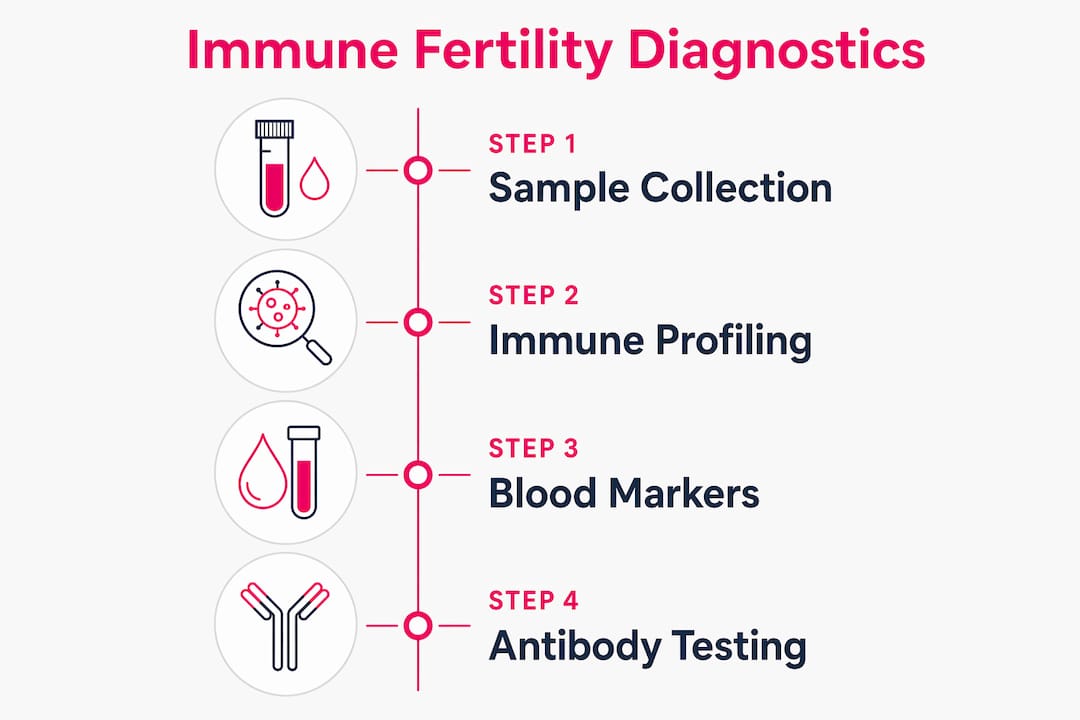
Current diagnostic approaches include:
- Endometrial immune profiling: Five RNA biomarkers quantify Th1/Th2 balance and uNK cell maturation during the mid-luteal phase. This test identifies implantation-impairing immune imbalances that standard endometrial biopsies miss.
- Systemic inflammatory markers: NLR and the systemic immune-inflammation index (SII) are measurable from routine bloodwork. Elevated values correlate with reduced ovarian reserve and lower oocyte yield.
- Anti-sperm antibody screening: A blood or semen test that detects immune proteins targeting sperm. Relevant for both male and female partners.
- Lymphocyte subset analysis: Measures the ratio of Th1 to Th2 cells and NK cell activity in peripheral blood. Elevated NK activity is associated with recurrent pregnancy loss.
- Antiphospholipid antibody panel: Screens for autoimmune antibodies that impair placentation and raise miscarriage risk.
A comparison of diagnostic scope helps clarify when each test applies:
| Test | What It Measures | Best Used For |
|---|---|---|
| Endometrial immune profiling | Local Th1/Th2 and uNK balance | Recurrent implantation failure |
| NLR/SII blood markers | Systemic inflammation level | Reduced ovarian reserve workup |
| ASA screening | Antibodies against sperm | Unexplained male factor infertility |
| Lymphocyte subset analysis | Peripheral NK and T cell ratios | Recurrent pregnancy loss |
Your fertility evaluation checklist should include a conversation with your specialist about whether extended immune diagnostics are appropriate for your history.
What treatment options address immune-related infertility?
Treatment for immune-related fertility problems targets the specific mechanism causing disruption. No single protocol applies to every patient. The most evidence-supported approaches include the following:
- Progesterone supplementation: Supporting PIBF production through progesterone therapy is a first-line intervention for patients with inadequate luteal phase immune modulation. Progesterone-induced immune tolerance00044-5) is a key therapeutic target in immune-related implantation failure.
- Systemic inflammation reduction: Managing inflammation through lifestyle changes, metabolic control, and treatment of subclinical infections resets the immune environment and improves fertility chances. This includes addressing insulin resistance, obesity, and chronic pelvic infections.
- Varicocele repair: Correcting varicocele in male partners reduces oxidative stress and restores blood-testis barrier integrity, lowering ASA levels over time.
- Immunotherapy considerations: Intravenous immunoglobulin (IVIG), intralipid infusions, and low-dose corticosteroids are used in some clinical settings for patients with elevated NK activity or recurrent implantation failure. Evidence for these therapies is still evolving. Patients should review the evidence on immunotherapies in IVF before proceeding.
- Diet and lifestyle: Anti-inflammatory dietary patterns, regular moderate exercise, and stress reduction all reduce systemic inflammatory markers. These changes support immune balance without pharmacological risk.
Pro Tip: Progesterone supplementation is most effective when started based on documented immune profiling rather than empirically. Ask your specialist whether your luteal phase progesterone levels and PIBF activity have been assessed before prescribing supplementation.
How do immune factors affect IVF success rates?
The endometrial immune environment is a direct variable in IVF outcomes. A balanced uterine immune profile is associated with better embryo receptivity, particularly when embryo morphology is suboptimal. Patients with repeated failed transfers often have an immune component that standard IVF protocols do not address.
Immune profiling can inform IVF in several practical ways:
- Transfer timing: Identifying the window of optimal Th2 dominance allows embryo transfer to be scheduled when the endometrium is most receptive.
- Luteal support protocols: Patients with documented NK cell excess or Th1 skewing may benefit from tailored luteal phase support that includes immune modulation alongside standard progesterone.
- Explaining unexplained failures: For patients with good-quality embryos that repeatedly fail to implant, immune dysregulation is one of the most clinically relevant explanations to investigate.
- Precision IVF® integration: Life IVF Center’s Precision IVF® approach incorporates immune findings into individualized treatment protocols, reducing the number of cycles needed by addressing root causes rather than repeating the same protocol.
Patients exploring immune disorder fertility solutions will find that immune-aware IVF protocols represent one of the most meaningful advances in reproductive medicine over the past decade.
Key Takeaways
Immune factors in fertility are not rare edge cases. They affect a measurable share of patients and influence outcomes at every stage from fertilization through implantation.
| Point | Details |
|---|---|
| Immune causes are common | Immunological factors contribute to about 10% of infertility cases, affecting multiple reproductive stages. |
| Active regulation, not suppression | Successful pregnancy depends on Tregs, HLA-G, and PD-1/PD-L1 checkpoints actively managing immune tolerance. |
| Inflammation reduces egg supply | Elevated NLR above 2.22 correlates with lower AMH and reduced oocyte yield in affected patients. |
| Diagnostics provide risk profiles | Immune tests supplement standard fertility workups and guide tailored hormonal and immunological protocols. |
| Treatment targets the mechanism | Progesterone support, inflammation control, and immune profiling improve IVF outcomes when applied to the right patients. |
Why immune testing deserves a place in every unexplained infertility workup
Patients often come to fertility clinics after years of unexplained diagnoses. Standard testing covers hormones, anatomy, and semen parameters. What it frequently misses is the immune layer. In my experience reviewing fertility cases, immune dysregulation is one of the most consistently underinvestigated contributors to recurrent failure.
The common assumption is that the immune system is either normal or obviously broken. The reality is more nuanced. A patient can have entirely normal hormone levels, good embryo quality, and a structurally normal uterus, and still experience repeated implantation failure because of a Th1/Th2 imbalance or elevated uNK activity that no standard test captures. That gap is where immune profiling earns its place.
What I find most compelling about recent research is the shift away from viewing pregnancy as immune suppression. The new paradigm treats pregnancy as immune editing, an active, tightly regulated process. That reframing matters clinically because it changes what you look for and what you treat. You are not trying to suppress the immune system. You are trying to support its regulatory mechanisms.
The practical implication for patients is this: if you have had two or more failed transfers with good-quality embryos, push for extended immune diagnostics before your next cycle. The tests exist. The evidence supports their use in this population. And the cost of one additional diagnostic cycle is far lower than the cost of another failed transfer.
Personalized fertility care at Life IVF Center
Life IVF Center integrates immunological assessment into its Precision IVF® protocols for patients facing unexplained infertility, recurrent implantation failure, or immune-related reproductive challenges. Each treatment plan is built around your individual biological profile, including immune markers, hormonal data, and reproductive history.
Patients dealing with immune-related fertility challenges benefit from a structured, evidence-based approach rather than repeated standard cycles. Life IVF Center’s fertility treatment packages are designed to make comprehensive, personalized care accessible across Southern California. If immune factors may be part of your fertility picture, a consultation with the Life IVF Center team is the right next step toward a treatment plan that actually addresses your biology.
FAQ
What are immunological factors in fertility?
Immunological factors in fertility are immune system components, including Tregs, cytokines, uNK cells, and antibodies, that regulate fertilization, implantation, and pregnancy maintenance. Disruptions to these components account for about 10% of infertility cases.
Can the immune system cause recurrent miscarriage?
Yes. Elevated NK cell activity, Th1 cytokine excess, and antiphospholipid antibodies are all immune mechanisms linked to recurrent pregnancy loss. Immune profiling can identify these patterns and guide targeted treatment.
How do antibodies affect fertility in men?
Anti-sperm antibodies form when the blood-testis barrier is compromised by inflammation, injury, or conditions like varicocele. These antibodies damage sperm motility and DNA, reducing fertilization potential. A male fertility assessment after pregnancy loss should include ASA screening.
What immune tests are used in fertility evaluation?
Standard extended immune testing includes endometrial immune profiling, NLR and SII blood markers, anti-sperm antibody screening, lymphocyte subset analysis, and antiphospholipid antibody panels. These tests supplement, not replace, standard fertility diagnostics.
Does progesterone help with immune-related implantation failure?
Progesterone supports immune tolerance through PIBF, which promotes Th2 dominance and suppresses NK cell activity. Inadequate progesterone signaling00044-5) is a documented immunological trigger of implantation failure, making progesterone supplementation a key treatment option for affected patients.
Recommended
- Immune Disorder Fertility Solutions: Your Treatment Guide
- Age-Related Fertility Factors List: What You Need to Know
- Real Examples of Fertility Challenges Explained
- Uterine Health and IVF Success: What You Need to Know
Ready to take the next step?
Life IVF Center specializes in individualized Precision IVF® care for complex cases—including diminished ovarian reserve, prior failed cycles, and advanced maternal age. Our in-house labs and dedicated physicians are ready to help.
Book a Free Consultation →