
Nutrition directly determines reproductive outcomes by regulating hormonal balance, egg and sperm quality, and the uterine environment needed for implantation. The role of nutrition in fertility success is not a secondary concern. It is a primary clinical variable that fertility specialists now treat alongside medical protocols. Research from NHANES, Mount Sinai, and the International Journal of Reproduction, Contraception, Obstetrics and Gynecology confirms that specific nutrient deficiencies and poor dietary patterns measurably reduce conception rates. What you eat before and during fertility treatment shapes the biological environment where conception either succeeds or fails.
What are the key nutrients and dietary patterns that boost fertility?
Adherence to Mediterranean and plant-rich diets is linked to improved gamete quality, better hormonal balance, and higher pregnancy and live birth rates. These diets share a common profile: high in vegetables, legumes, whole grains, fish, and healthy fats, and low in processed foods and refined sugars.
The nutrients with the strongest evidence for reproductive health include:
- Folate and B6: Folate supports DNA synthesis and reduces neural tube defect risk. Women experiencing infertility show B6 inadequacy at 21.5% compared to 14.6% in fertile women. That gap is clinically significant.
- Vitamins A, C, D, E, and K: These antioxidant and fat-soluble vitamins protect eggs and sperm from oxidative damage. Over 50% of women experiencing infertility fall below the Estimated Average Requirement or Adequate Intake for vitamins A, C, and E.
- Omega-3 fatty acids (EPA and DHA): EPA and DHA inadequacy exceeds 93% among women experiencing infertility. These fatty acids reduce inflammation and support endometrial receptivity.
- Zinc, selenium, and magnesium: Zinc regulates ovulation and testosterone production. Selenium protects sperm DNA. Magnesium supports progesterone synthesis.
- CoQ10 (Coenzyme Q10): CoQ10 improves mitochondrial function in egg cells, which is particularly relevant for patients over 35.
Ultra-processed foods, high glycemic index foods, and red or processed meats increase systemic inflammation and impair reproductive function. Diets built around these foods disrupt insulin sensitivity, which directly affects ovulation.
Pro Tip: Before adding supplements, audit your diet for EPA and DHA first. Most prenatal vitamins do not contain adequate omega-3s, and this deficiency is the most widespread among patients seeking fertility treatment.

How does nutrition affect male and female fertility differently?
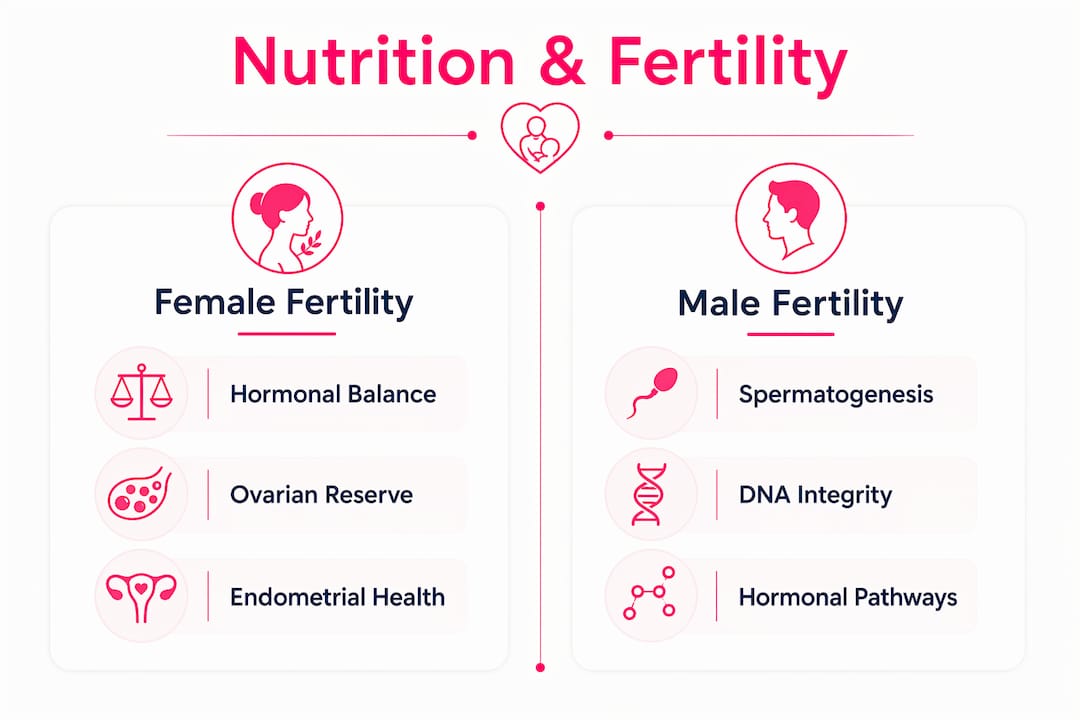
Nutrition influences male and female reproductive physiology through distinct biological pathways. Understanding both sides helps couples address the full picture.
| Factor | Female Fertility | Male Fertility |
|---|---|---|
| Primary mechanism | Hormonal regulation, ovulation, egg quality | Spermatogenesis, sperm motility, DNA integrity |
| Key nutrients | Folate, iron, vitamin D, omega-3s, CoQ10 | Zinc, selenium, vitamin C, CoQ10, omega-3s |
| Diet pattern impact | Mediterranean diet improves ovarian response | Antioxidant-rich diets reduce sperm DNA fragmentation |
| Oxidative stress effect | Damages egg mitochondria, impairs implantation | Damages sperm membrane and DNA |
| Research maturity | Strong clinical evidence | Molecular evidence strong; clinical guidelines still developing |
For women, diet shapes ovarian reserve, menstrual regularity, and endometrial quality. Vitamin D deficiency is associated with irregular cycles and reduced IVF success rates. CoQ10 supplementation shows particular benefit for women over 35, where mitochondrial decline in egg cells accelerates.
For men, nutrition modulates spermatogenesis at a molecular level, but translating that into clinical practice requires caution. Claims about specific “superfoods” for sperm quality are oversimplifications. The evidence supports broad antioxidant-rich dietary patterns rather than single-food interventions. Patients can review a male fertility checklist to assess where nutritional and lifestyle factors intersect with sperm health.
Pro Tip: Both partners should address nutrition simultaneously. Male factor infertility contributes to roughly half of all cases, yet nutritional counseling for men remains underutilized in most fertility programs.
What role does metabolic and digestive health play in nutrient absorption?
Eating the right foods is not enough if your body cannot absorb the nutrients they contain. Digestive function directly impacts hormone regulation and reproductive readiness by controlling how efficiently micronutrients enter the bloodstream.
Conditions like irritable bowel syndrome (IBS) and inflammatory bowel disease (IBD) impair nutrient absorption even when dietary intake appears adequate. Chronic gut inflammation alters micronutrient status, disrupts estrogen metabolism, and elevates systemic inflammatory markers. All three of these effects reduce fertility.
The gut microbiome plays a specific role that fertility nutrition plans often overlook. A healthy microbiome supports estrogen recycling through the enterohepatic circulation. When gut bacteria are imbalanced, estrogen is either excreted too quickly or recirculated in excess, both of which disrupt the hormonal signals that govern ovulation and implantation.
Metabolic health adds another layer. Insulin resistance, even at subclinical levels, suppresses ovulation in women and reduces testosterone in men. Patients with polycystic ovary syndrome (PCOS) see measurable improvements in ovulation frequency when they address insulin sensitivity through diet before starting fertility treatment.
The practical implication is clear:
- Address gut health before focusing on specific fertility nutrients
- Treat IBS or IBD symptoms with a gastroenterologist alongside your reproductive specialist
- Prioritize fiber-rich foods that feed beneficial gut bacteria
- Limit alcohol, which disrupts both gut microbiome balance and liver estrogen metabolism
- Consider a registered dietitian who works with reproductive medicine teams
Fertility is best supported by building a strong metabolic foundation rather than adopting restrictive diets. Hormone and digestive balance come first.
How can you apply nutrition knowledge to improve fertility outcomes?
Practical dietary changes produce measurable results when applied consistently before and during fertility treatment. The following steps reflect current evidence on diet for reproductive health.
- Adopt a Mediterranean-style eating pattern. Fill half your plate with vegetables and legumes at each meal. Use olive oil as your primary fat. Eat fatty fish like salmon or sardines at least twice per week for EPA and DHA.
- Prioritize whole food sources of folate. Dark leafy greens, lentils, and chickpeas deliver folate alongside fiber and other micronutrients. Supplement with methylfolate if you have an MTHFR gene variant that impairs folic acid conversion.
- Address vitamin K and omega-3 gaps. Vitamin K and EPA/DHA deficiencies are underrecognized in fertility care and frequently missed by standard prenatal supplements, especially in women aged 35–44. Review your supplement label and add a dedicated omega-3 supplement if needed.
- Stabilize blood sugar. Replace white rice, white bread, and sugary drinks with whole grains, legumes, and water. Stable blood sugar reduces insulin-driven hormonal disruption.
- Hydrate adequately. Cervical mucus quality and endometrial lining thickness both depend on consistent hydration. Aim for at least eight cups of water daily.
- Reduce ultra-processed food intake. These foods drive inflammation and displace nutrient-dense options. Cutting them is more effective than adding supplements on top of a poor diet.
For patients undergoing IVF or intrauterine insemination (IUI), nutrition during the stimulation phase matters. Antioxidant-rich foods support follicle development and reduce oxidative stress on maturing eggs. Review top fertility supplements with evidence-based comparisons before adding anything new to your protocol.
Pro Tip: Start dietary changes at least three months before your planned treatment cycle. Egg maturation takes approximately 90 days, so the nutrients available today directly affect the eggs retrieved next quarter.
What recent research advances are shaping fertility nutrition?
New research is expanding what clinicians know about diet and reproductive outcomes. A 2026 study found that the Mediterranean diet may improve vaginal microbiome stability, reducing bacterial vaginosis risk and supporting implantation success in women undergoing artificial insemination. Vitamins A, C, D, E, beta-carotene, calcium, and zinc all appear to play protective roles in this microbiome-fertility connection.
Precision nutrition is the most significant emerging development in this field. AI-powered personalized dietary recommendations integrate metabolic profiling, clinical history, and real-time biomarker data to generate nutrition protocols tailored to individual patients. This moves fertility nutrition beyond generic advice like “eat more leafy greens” and toward specific, timed interventions matched to each patient’s biology.
“Precision fertility nutrition integrates AI-derived metabolic and clinical data to customize diets, enabling nuanced management of nutritional impacts on reproductive physiology.” (International Journal of Reproduction, Contraception, Obstetrics and Gynecology, 2026)
Current research has real limitations. Most nutrition and fertility studies rely on self-reported dietary data, which introduces recall bias. Randomized controlled trials isolating single nutrients are difficult to design and fund. The field needs larger, longer trials before clinical guidelines can be fully standardized. That said, the directional evidence is consistent: diet modulates oxidative stress, inflammation, and the endometrial environment, and these mechanisms directly influence implantation and early pregnancy sustainability.
Patients pursuing Precision IVF at specialized centers are already benefiting from protocols that incorporate metabolic and nutritional data alongside standard clinical markers.
Key Takeaways
Nutrition shapes fertility outcomes through hormonal regulation, gamete quality, and metabolic health, making dietary choices a clinical priority alongside medical treatment.
| Point | Details |
|---|---|
| Nutrient deficiencies are widespread | Over 50% of women experiencing infertility fall below recommended intakes for vitamins A, C, and E. |
| Mediterranean diet leads the evidence | Plant-rich, anti-inflammatory eating patterns improve egg quality, hormonal balance, and live birth rates. |
| Gut health determines absorption | Digestive disorders like IBS and IBD impair nutrient uptake even when diet quality is adequate. |
| Both partners need nutritional support | Male fertility is nutritionally modulated; antioxidant-rich diets reduce sperm DNA fragmentation. |
| Precision nutrition is the future | AI-driven metabolic profiling enables personalized dietary protocols that go beyond generic fertility diet plans. |
Why I think most fertility nutrition advice misses the point
Most fertility nutrition content focuses on adding things: more folate, more CoQ10, more omega-3s. That framing is incomplete. In my experience working with patients navigating fertility treatment, the bigger problem is absorption and metabolic baseline, not just intake.
A patient can take every supplement on the list and still have poor outcomes if their gut is inflamed, their blood sugar is unstable, or their liver is not clearing estrogen efficiently. The nutrients never reach the tissues that need them. Fixing the foundation first, through gut health, insulin sensitivity, and reducing systemic inflammation, makes every other dietary intervention more effective.
The other misconception I see regularly is that fertility nutrition is primarily a female concern. Male factor issues contribute to a substantial share of infertility cases, yet men rarely receive nutritional guidance at the first consultation. Sperm quality responds to dietary changes within three months. That window is actionable and often ignored.
Restrictive fertility diets also create unnecessary stress, which itself disrupts the hormonal environment. A sustainable, varied, Mediterranean-style pattern beats any short-term elimination protocol. Work with your care team to identify your specific nutrient gaps rather than following a generic fertility diet plan. Personalized, realistic changes outperform perfect-on-paper protocols that patients cannot maintain.
How Life IVF Center incorporates nutrition into fertility care
Life IVF Center integrates nutritional assessment into its Precision IVF® approach, recognizing that metabolic and dietary health directly affect treatment outcomes. Each patient’s protocol is built around their unique biological profile, including the nutritional factors that influence hormonal response and gamete quality.
Patients at Life IVF Center’s Southern California locations receive care that goes beyond standard IVF cycles. The team coordinates reproductive and metabolic health considerations to give each cycle the strongest possible foundation. Fertility treatment packages are designed to be accessible without compromising the depth of personalized care. If you are ready to understand how your nutrition and reproductive health connect, scheduling a consultation with Life IVF Center is a clear next step.
FAQ
What nutrients matter most for female fertility?
Folate, vitamins D, A, C, and E, omega-3 fatty acids, magnesium, and CoQ10 have the strongest evidence for supporting female reproductive health. NHANES data shows that women experiencing infertility fall significantly below recommended intakes for most of these nutrients.
Does diet affect sperm quality?
Yes. Antioxidant-rich dietary patterns reduce sperm DNA fragmentation and support healthy spermatogenesis. Nutrition modulates sperm quality at a molecular level, though single-food claims lack the clinical evidence to support specific recommendations.
How long before trying to conceive should I change my diet?
Start at least three months before your planned conception attempt or treatment cycle. Egg maturation takes approximately 90 days, so dietary changes made today affect the eggs available next quarter.
Can prenatal vitamins replace a healthy diet?
No. Standard prenatal supplements frequently miss vitamin K and adequate EPA/DHA, and they cannot replicate the anti-inflammatory and microbiome benefits of whole food dietary patterns.
Does gut health really affect fertility?
Yes. Digestive disorders like IBS and IBD impair nutrient absorption and disrupt estrogen metabolism, both of which reduce reproductive readiness even when dietary intake appears adequate.
Recommended
- Top fertility supplements: Evidence, comparisons, and expert picks
- Evidence-Based Endometriosis Fertility Tips for Better Conception
- Common Fertility Myths Debunked: Facts You Need to Know
- Why consider fertility testing? Key insights and action steps
Ready to take the next step?
Life IVF Center specializes in individualized Precision IVF® care for complex cases—including diminished ovarian reserve, prior failed cycles, and advanced maternal age. Our in-house labs and dedicated physicians are ready to help.
Book a Free Consultation →