

Egg donation in Tampa starts with a single step: submitting an application to a local fertility clinic or donor program. First-time donors in the Tampa area typically receive compensation considered average for initial donation cycles, with experienced donors often receiving higher payments. Lifeivfcenter accepts donor inquiries directly and guides applicants through every stage, from initial screening to retrieval and recovery.
Before you go further, run through these immediate eligibility checkpoints:
- Age: Most programs require donors to be aged between 21 and 32 years old.
- Residency and availability: You must be able to attend multiple monitoring appointments in the Tampa area during the stimulation phase.
- Non-smoker, drug-free: Active tobacco use or recreational drug use is a standard disqualifier.
- BMI: Most programs set a threshold, commonly under 30.
- No major unmanaged medical conditions: Serious chronic illness or unmanaged psychiatric conditions typically disqualify applicants.
To start, visit Lifeivfcenter’s egg donor intake page or call the clinic to request an initial consultation. The process moves quickly once your application is submitted.
Table of Contents
- Who qualifies as an egg donor in Tampa?
- How much do egg donors get paid in Tampa?
- What does the Tampa donation process look like, step by step?
- Can you donate eggs more than once in Tampa?
- Medical risks and side effects donors should understand
- What do you sign, and what are your rights as a donor in Florida?
- How to apply to a Tampa egg donor program: a practical checklist
- Why Lifeivfcenter’s egg-donor program stands out
- Key Takeaways
- What prospective donors in Tampa often overlook
- Lifeivfcenter’s donor program: a direct path to getting started
- Useful sources and further reading
Who qualifies as an egg donor in Tampa?
Most Tampa egg donor programs share a consistent set of eligibility criteria, though specific thresholds vary by clinic. Understanding the common rules upfront saves time and prevents surprises during screening.
Standard requirements across most programs:
- Age window of 21–32, with some programs accepting up to 34 for experienced donors
- BMI typically under 30, though individual programs may set their own threshold
- Non-smoker and free from recreational drug use for at least one year
- No current use of certain psychiatric medications
- Willingness to self-administer daily hormone injections during stimulation
- Reliable transportation and schedule flexibility for monitoring appointments
Common disqualifiers:
- Major chronic diseases such as diabetes, autoimmune disorders, or active cancer
- Certain hereditary genetic conditions in the donor or immediate family
- Recent cancer treatment or ongoing chemotherapy
- Unmanaged or severe psychiatric conditions, including untreated bipolar disorder or schizophrenia
- History of substance abuse within the past several years
Required screening goes well beyond a simple questionnaire. Expect a reproductive health exam, blood work, infectious disease testing (including HIV, hepatitis B and C, and sexually transmitted infections), and genetic carrier screening. A psychological evaluation is also standard. The psych eval is not a pass/fail hurdle; it is a structured conversation to confirm you understand the process and have realistic expectations.
Pro Tip: Before your intake appointment, gather an updated immunization record and a recent primary-care visit summary. Clinics frequently request these documents, and having them ready can shorten your approval timeline by one to two weeks.

How much do egg donors get paid in Tampa?
Compensation is one of the most searched aspects of the Tampa egg donation process, and the numbers are worth understanding clearly. First-time donors nationally earn compensation amounts generally considered standard for initial cycles, while experienced donors typically receive higher pay, with amounts varying depending on program and location.
Several factors push compensation higher:
- Repeat cycles: Pay commonly increases for second and third donations, reflecting the clinic’s confidence in a proven donor.
- Sought-after characteristics: Donors with specific educational backgrounds, ethnic heritage in high demand, or rare blood types may receive higher offers.
- Travel requirements: If a donor must travel to a clinic outside her home area, a travel stipend and expense reimbursements are standard additions.
- Agency vs. clinic model: Some boutique agencies that recruit by internal referral rather than open online listings may offer different compensation structures than direct clinic programs.
Compensation snapshot: First-time donors in the U.S. typically earn $5,000–$10,000 per cycle. Experienced donors with prior successful retrievals often earn $6,000–$12,000 or more, depending on program, location, and donor profile.
Payment timing varies. Some programs release compensation in staged installments tied to milestones (medication start, retrieval day), while others pay a lump sum after cycle completion. Expense reimbursements for travel, parking, and missed work are typically separate from the base compensation figure.
Tax note: Egg donor compensation is generally considered taxable income. Donors often receive a 1099-MISC at year-end and should consult a tax professional for guidance specific to their situation.

What does the Tampa donation process look like, step by step?
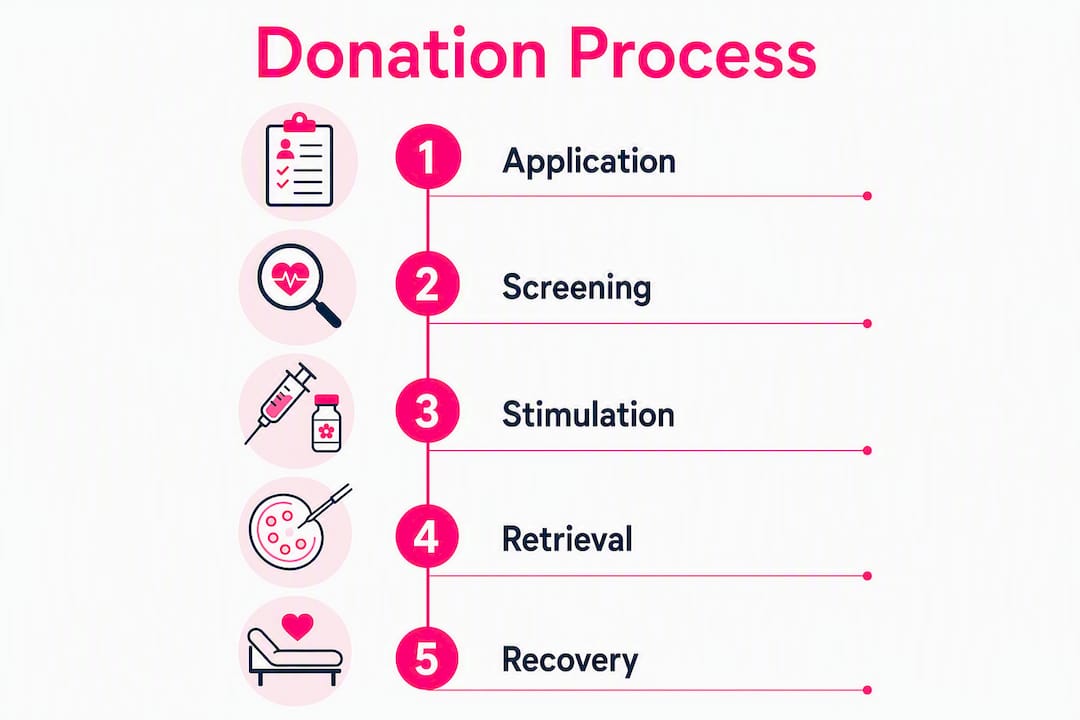
The donation process moves through four distinct phases. Most donors complete the full cycle in about four to six weeks from initial screening to retrieval, with the stimulation phase itself lasting roughly ten to fourteen days.
The four phases at a glance:
- Application and initial screening — Submit your application, complete the intake questionnaire, and attend a baseline medical appointment including blood work and ultrasound.
- Matching and legal review — The clinic or agency matches you with a recipient family. You review and sign informed-consent documents and a legal contract before any medications begin.
- Ovarian stimulation and monitoring — Daily self-administered hormone injections stimulate egg development. You attend frequent monitoring appointments (ultrasound and blood draws) every one to three days.
- Retrieval and recovery — Egg retrieval is a short outpatient procedure performed under light sedation. Most donors return to normal activity within one to three days.
| Stage | Typical Duration | Required Visits | Common Tests/Procedures |
|---|---|---|---|
| Application and screening | 1–2 weeks | 1–2 in-person | Blood work, ultrasound, genetic screening, psych eval |
| Matching and legal review | 1–2 weeks | 1 (legal/consent) | Contract review, informed consent |
| Ovarian stimulation | 10 days | 4–6 monitoring visits | Daily ultrasound, estrogen/LH blood draws |
| Retrieval and recovery | 1–2 days | 1 retrieval + 1 follow-up | Anesthesia, follicular aspiration, post-procedure check |
For a detailed look at what retrieval day involves, Lifeivfcenter’s egg retrieval guide covers the procedure and recovery expectations clearly. The monitoring phase is the most time-intensive part of the cycle. Plan for early-morning appointments, since most clinics schedule monitoring before 9 AM to align with lab processing times.
Can you donate eggs more than once in Tampa?
Yes, repeat donation is common, and most programs actively welcome donors who have completed a successful first cycle. That said, limits exist for both medical and ethical reasons.
- Most programs cap lifetime donations at six cycles, following guidance from professional reproductive medicine organizations.
- Clinics typically require a minimum recovery period between cycles, often at least two to three months, to allow the ovaries to return to baseline.
- Compensation for second and third cycles is generally higher than for the first, reflecting the reduced uncertainty for the clinic and recipient.
- Donors who maintain their health records and keep prior-cycle documentation readily available move through repeat screening faster.
- Some programs require a brief re-screening (updated blood work, a baseline ultrasound) before each new cycle rather than a full repeat of the initial evaluation.
The spacing requirement is not arbitrary. Repeated ovarian stimulation without adequate recovery time increases the risk of complications, and responsible programs enforce these intervals consistently.
Pro Tip: Keep a personal file with your prior-cycle records: medication protocols, retrieval outcomes, and any adverse reactions. Presenting this at a repeat-cycle intake appointment demonstrates reliability and can accelerate the approval process.
Medical risks and side effects donors should understand
Most donors complete the process without serious complications. Short-term side effects are common and manageable; serious risks are rare but real, and every prospective donor deserves a clear picture of both.
Common short-term side effects:
- Bloating and abdominal fullness during stimulation
- Mild to moderate cramping around retrieval
- Mood fluctuations related to hormone changes
- Injection-site soreness (bruising, redness)
- Temporary fatigue in the days following retrieval
Less common but serious risks:
- Ovarian hyperstimulation syndrome (OHSS): The most significant medical risk. OHSS occurs when the ovaries over-respond to stimulation medications, causing fluid accumulation and, in severe cases, requiring hospitalization. Clinics monitor estrogen levels and follicle counts closely to catch early signs and adjust protocols before OHSS develops.
- Anesthesia complications: Rare, but donors should disclose all medications and allergies before retrieval.
- Infection: A small risk associated with any invasive procedure; clinics use sterile technique and may prescribe a short antibiotic course.
Risk context: OHSS requiring medical intervention is uncommon when clinics follow established monitoring protocols. Frequent ultrasound and blood-draw monitoring during stimulation is the primary safeguard.
Clinics reduce risk through close monitoring, clear emergency contact protocols, and a follow-up appointment after retrieval. If you experience severe pain, rapid weight gain, or difficulty breathing after retrieval, contact your clinic immediately. Emotional support during the process matters too; Lifeivfcenter’s resources on partner and patient support through IVF offer useful context on navigating the emotional side of fertility procedures.
What do you sign, and what are your rights as a donor in Florida?
Before any medications begin, donors review and sign two primary documents: an informed-consent form covering the medical procedure and a legal contract governing parental rights, confidentiality, and compensation.
What these documents typically cover:
- Informed consent: Confirms you understand the medical procedure, its risks, and the stimulation protocol. This is a medical document, not a financial one.
- Parental-rights contract: Legally assigns all parental rights to the recipient(s). Once signed, the donor has no legal claim to any resulting children.
- Confidentiality clause: Specifies whether the donation is anonymous or open, and what (if any) future contact or identity disclosure is permitted.
- Compensation terms: States the payment schedule, conditions for partial payment if a cycle is cancelled, and what expenses are reimbursed.
Before signing, confirm three things: the payment schedule and what triggers each installment, who covers your medical costs if a complication arises, and whether any future contact or disclosure terms are included. Florida law generally supports donor anonymity, but open-identity arrangements are increasingly common and must be explicitly stated in the contract.
This article provides general information only and does not constitute legal advice. Consult a licensed Florida attorney before signing any donor contract.
How to apply to a Tampa egg donor program: a practical checklist
Applying is straightforward when you know what to prepare. The steps below reflect the standard process at most Tampa-area programs, including Lifeivfcenter.
Step-by-step application checklist:
- Complete the online application or call the clinic to request an intake consultation.
- Fill out the intake questionnaire (medical history, family history, lifestyle questions).
- Gather medical records: immunization history, recent primary-care notes, and any prior reproductive health records.
- Schedule your baseline screening appointment (blood work, ultrasound, physical exam).
- Consent to and schedule the psychological evaluation.
- Review and sign legal documents once a match is confirmed.
- Begin the medication protocol after legal clearance.
What to bring to your in-person screening appointment:
- Government-issued photo ID
- Insurance card (if applicable; most programs cover donor medical costs directly)
- Immunization records
- A list of current medications and supplements
- Notes on family medical history for at least two generations
For blood work, arrive hydrated and fasted if the clinic requests it. Baseline ultrasound is typically done on cycle days 2–4, so timing your first appointment accordingly can prevent a one-month delay.
To start the process with Lifeivfcenter, visit the Become an Egg Donor page to submit your application or request a consultation directly.
Why Lifeivfcenter’s egg-donor program stands out
Lifeivfcenter brings a level of clinical structure to the donor experience that matters when you are making a significant medical commitment. The program is built around the clinic’s Precision IVF® protocol, which tailors stimulation plans to each donor’s individual hormonal profile rather than applying a one-size-fits-all approach. Board-certified reproductive specialists oversee every cycle, and the clinic’s third-party program experience spans donor egg, donor sperm, and gestational surrogacy pathways.
Practical donor supports include:
- Dedicated counseling throughout the cycle, not just at intake
- Travel coordination for donors who require logistical assistance
- A clear, written compensation schedule so payment timing is never ambiguous
- Aftercare follow-up to monitor recovery and address any post-retrieval concerns
- Multi-language support and accessibility features for donors with diverse needs
- Inclusive care for all family structures, including LGBTQ+ patients
Donors who prioritize clinical continuity, meaning a single medical team overseeing screening, stimulation, retrieval, and follow-up, will find the clinic-based model at Lifeivfcenter more cohesive than working through a standalone agency. For a broader look at how third-party reproductive services are structured at the clinic, the overview page explains donor and recipient pathways in detail.
Pro Tip: When evaluating any Tampa egg donor program, ask two questions upfront: “When exactly will I be paid, and what happens to my compensation if the cycle is cancelled before retrieval?” A program with clear, written answers to both is one worth trusting.
Key Takeaways
Egg donation in Tampa is a structured, well-supported process when you choose a clinic with clear protocols, transparent compensation, and dedicated counseling at every stage.
| Point | Details |
|---|---|
| Compensation range | First-time donors in the U.S. typically earn $5,000–$10,000 per cycle. Experienced donors with prior successful retrievals often earn $6,000–$12,000 or more, depending on program, location, and donor profile. |
| Core eligibility | Age 21–32, BMI under program threshold, non-smoker, no major unmanaged medical or psychiatric conditions. |
| Timeline commitment | The full cycle generally takes four to six weeks; stimulation alone runs roughly ten to fourteen days with frequent monitoring visits. |
| Repeat donation limits | Most programs cap lifetime donations at six cycles, with required recovery spacing between each. |
| Lifeivfcenter’s program | Offers Precision IVF® protocols, board-certified specialists, counseling, travel coordination, and a written compensation schedule for donors. |
What prospective donors in Tampa often overlook
The compensation figure gets most of the attention, and understandably so. But the donors who report the most positive experiences consistently point to something else: how well the clinic communicated with them throughout the process. Payment timing, monitoring schedules, and what to do if something felt off during stimulation — these are the details that determine whether a donation cycle feels manageable or stressful.
There is also a meaningful difference between agency-based and clinic-based donation routes that rarely gets discussed plainly. An agency matches donors to recipients and coordinates logistics, but the medical oversight sits with a separate clinic. A clinic-based program like Lifeivfcenter keeps that entire relationship under one roof. For a donor who wants one point of contact for medical questions, payment questions, and aftercare, that structure is genuinely simpler.
The legal documents deserve more attention than most applicants give them. The parental-rights assignment is permanent. The confidentiality terms shape whether future contact is even possible. Reading these carefully, ideally with a Florida attorney, is not overcaution. It is the one part of the process where taking extra time costs nothing and protects everything.
Lifeivfcenter’s donor program: a direct path to getting started
Lifeivfcenter offers Tampa-area donors a full-service clinical experience, from personalized stimulation protocols to post-retrieval follow-up, without the coordination gaps that can arise when a donor works through a separate agency and clinic. The compensation schedule is written and clear, counseling is available throughout the cycle, and the medical team handling your screening is the same team managing your retrieval.
For donors ready to take the next step, the treatment and donor program options page outlines what the clinic offers and how to get started. To begin your application or ask questions before committing, visit the Become an Egg Donor page and submit an inquiry. A member of the care team will follow up to walk you through eligibility and scheduling.
This article provides general information and does not substitute for medical or legal advice. Confirm current program requirements and compensation terms directly with your clinic.
Useful sources and further reading
These resources provide additional detail on egg donation programs, clinic credentials, and donor rights:
- Become an Egg Donor at Lifeivfcenter — The primary intake page for prospective donors; start here to apply or request a consultation.
- Third-Party Services Overview at Lifeivfcenter — Explains donor egg, donor sperm, and gestational surrogacy pathways in one place; useful for understanding how the clinic structures third-party programs.
- Working with Donor Eggs at Lifeivfcenter — Covers the recipient side of donor-egg IVF, which helps donors understand how their contribution fits into the broader process.
- RESOLVE: The National Infertility Association — A leading nonprofit providing education and advocacy on infertility, including donor rights and program standards.
- Society for Reproductive Endocrinology and Infertility (SREI) — The professional society for reproductive endocrinologists; a useful reference for understanding clinical standards governing donor programs.
- Society for Assisted Reproductive Technology (SART) — Publishes clinic-level success rate data and program reporting; use it to evaluate any Tampa fertility clinic’s track record.
Recommended
- Become an Egg Donor – Life IVF Center
- Working with Donor Eggs – Life IVF Center
- Working with Donor Sperm – Life IVF Center
- Intro to Third Party – Life IVF Center
Ready to take the next step?
Life IVF Center specializes in individualized Precision IVF® care for complex cases—including diminished ovarian reserve, prior failed cycles, and advanced maternal age. Our in-house labs and dedicated physicians are ready to help.
Book a Free Consultation →