

To get accurate fertility blood-panel results, schedule cycle-dependent tests on the correct day, stop biotin supplements at least 72 hours beforehand, disclose every medication and supplement to your clinic, and arrive hydrated with a current medication list in hand.
Quick-start checklist:
- 72 hours before: Stop all biotin-containing supplements (hair, skin, and nail vitamins included)
- 48 hours before: Avoid alcohol and heavy exercise; confirm your appointment day relative to your cycle
- 24 hours before: Prepare your medication list (prescriptions, OTCs, herbals, recent injections); confirm fasting instructions with your clinic
- Morning of the draw: Drink water, eat a normal meal unless fasting is required, wear a short-sleeved shirt, and bring your photo ID and insurance card
- At the lab: Tell the phlebotomist about any recent illness, vaccination, or new medication started in the past two weeks
Table of Contents
- Which fertility blood tests are typically ordered, and when should you schedule each?
- How to prepare step by step, from 72 hours out to the morning of your draw
- How do medications, hormonal contraception, and supplements affect your results?
- What other fertility tests might you need, and how do you prepare for each?
- What should you expect at the lab, and when will you get results?
- What questions should you ask your clinic before scheduling, and what are the red flags?
- Key Takeaways
- Why timing and disclosure matter more than most patients realize
- Life IVF Center offers personalized support from your first blood draw through treatment
- Useful sources for further reading
Which fertility blood tests are typically ordered, and when should you schedule each?
Your reproductive endocrinologist will likely order a panel covering several hormones, each with its own timing requirement. Getting the schedule right is as important as showing up.
Common tests and what they measure:
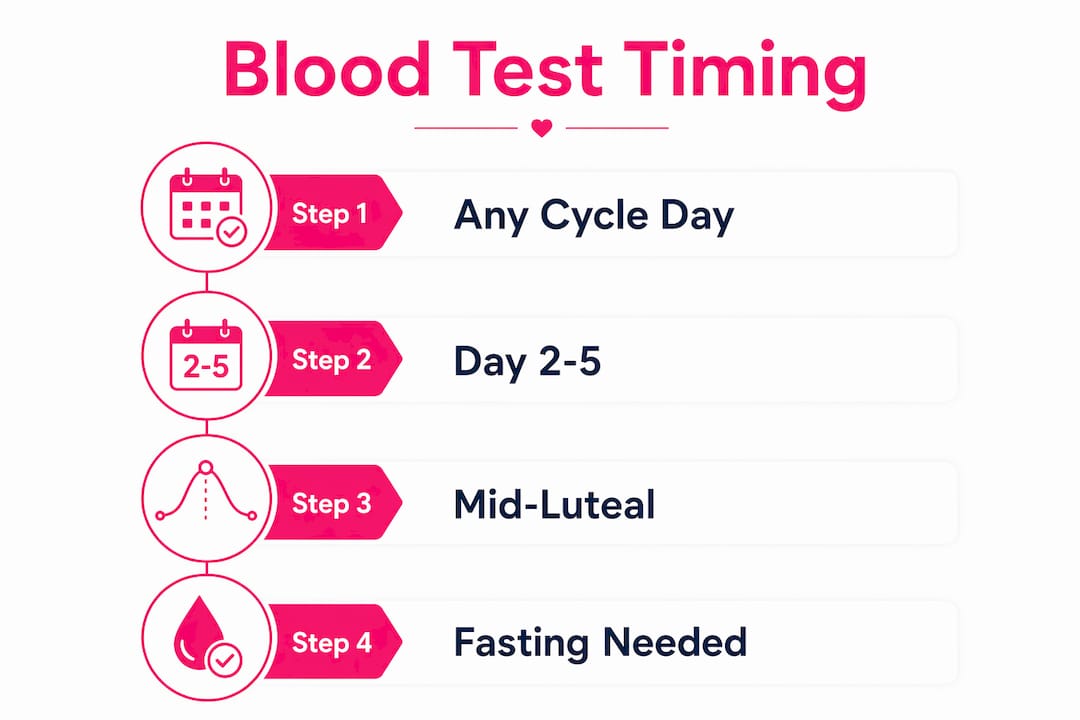
- AMH (anti-Müllerian hormone): Reflects ovarian reserve; can be drawn any day of the cycle
- FSH (follicle-stimulating hormone): Signals how hard the pituitary is working to stimulate the ovaries; drawn on cycle day 2–5
- LH (luteinizing hormone): Triggers ovulation; baseline drawn on cycle day 2–5
- Estradiol (E2): Baseline ovarian function marker; drawn on cycle day 2–5 alongside FSH
- Progesterone: Confirms ovulation occurred; drawn approximately 7 days after ovulation (mid-luteal), not automatically on day 21
- TSH (thyroid-stimulating hormone): Screens for thyroid dysfunction that can disrupt cycles; no specific cycle-day requirement
- Prolactin: Elevated levels can suppress ovulation; best drawn fasting and after rest
- Total testosterone: Relevant for both male factor evaluation and PCOS screening in women; men should draw at 8–10 a.m.
- SHBG / DHEA-S: Androgen balance markers; no strict cycle-day requirement
| Test | Timing | Clinical note |
|---|---|---|
| AMH | Any cycle day | Ovarian reserve snapshot; interpret with age and ultrasound |
| FSH / LH / Estradiol | Cycle day 2–5 | Day 1 = first day of full bleeding |
| Progesterone | ~7 days post-ovulation | Mid-luteal timing prevents misleading low values |
| TSH / Prolactin | Any day; prolactin best fasting | Prolactin may need repeat if mildly elevated |
| Total testosterone (male) | 8–10 a.m. draw | Diurnal variation affects accuracy |
| Glucose / insulin / triglycerides | Fasting required | Only when metabolic markers are included in panel |
Most fertility hormone tests do not require fasting. Fasting becomes necessary only when the panel includes metabolic markers such as glucose, insulin, or triglycerides. Always confirm with your clinic or lab before assuming either way.
How to prepare step by step, from 72 hours out to the morning of your draw
Following a clear timeline reduces the chance of a mistimed or compromised result, which means fewer repeat draws and faster answers. For Spanish-speaking patients, consider our Tips para aprovechar la visita prenatal: guía completa to optimize your prenatal visits and testing.
-
72 hours before the draw: Stop all biotin-containing supplements. This includes multivitamins, hair-growth formulas, and prenatal vitamins that list biotin (vitamin B7) on the label. Biotin can distort thyroid and hormone assays, producing falsely high or low readings. Also avoid alcohol starting now.
-
48 hours before: Skip intense workouts. Heavy exercise raises cortisol and can temporarily shift LH and testosterone values. Confirm your appointment date against your cycle calendar; if you are scheduling FSH or estradiol, count from the first day of full bleeding, not spotting.
-
24 hours before: Write out every medication, supplement, and herbal product you take, including dosage and frequency. Note any injections or vaccines received in the past two to four weeks. Call your clinic if you are unsure whether to pause any prescription medication before the draw.
-
Night before: Prioritize sleep. Elevated cortisol from poor sleep can nudge prolactin and cortisol values upward. If your panel includes prolactin, rest matters more than usual. Eat normally unless your clinic has given specific fasting instructions.
-
Morning of the draw: Drink at least one to two glasses of water before leaving home. Hydration improves vein visibility and makes the draw faster and less uncomfortable. Eat a light meal if fasting is not required. Wear a short-sleeved or loose-sleeved top. Bring your photo ID, insurance card, and the medication list you prepared.
-
At the lab: Sit quietly for five to ten minutes before the draw if you feel anxious. Inform the phlebotomist of any recent illness, fever, or new medication. If you feel lightheaded during or after the draw, stay seated and let the staff know immediately.
Pro Tip: To avoid a mistimed mid-luteal progesterone draw, use an over-the-counter LH surge test kit during your cycle. Draw progesterone exactly 7 days after the LH surge, not on a fixed calendar day. This single step eliminates the most common reason for a falsely low progesterone result.

How do medications, hormonal contraception, and supplements affect your results?
Several common medications and supplements can shift hormone values enough to make results difficult to interpret. Knowing which ones matter, and what to do about them, protects the accuracy of your panel.
Items that commonly affect fertility blood tests:
- Biotin supplements: Stop at least 72 hours before the draw; can falsely alter thyroid and hormone assay readings
- Hormonal birth control (pills, patch, ring, hormonal IUD): Suppresses FSH, LH, and estradiol; AMH may also be modestly lower while on hormonal contraception. Your clinician will note this context when interpreting results
- Thyroid medication (levothyroxine): Take it as prescribed on the morning of the draw unless your clinic instructs otherwise; do not skip a dose without guidance
- Corticosteroids or recent steroid injections: Can suppress adrenal androgens (DHEA-S) and affect cortisol-related markers
- Recent fertility medications (Clomid, letrozole, gonadotropins): Actively alter FSH, LH, and estradiol; your clinician needs to know the exact dates and doses
- Herbal supplements (vitex, maca, ashwagandha, black cohosh): Some have mild hormonal activity; disclose all of them even if they seem minor
- Recent COVID-19 infection or fever: Acute illness can transiently suppress testosterone and alter other markers; consider rescheduling if you are currently unwell
The most important action is full disclosure. Tell your clinic about every prescription, over-the-counter product, supplement, and recent injection before the draw, not after. Your clinician can then decide whether to proceed, pause a supplement, or note the context in the interpretation.
Pro Tip: If a result comes back borderline and you were recently on hormonal birth control or taking biotin, ask your clinician about a repeat draw after a full washout period rather than making treatment decisions on a single potentially affected value. Mildly elevated prolactin, for example, is often rechecked fasting and after rest before a diagnosis is confirmed.

What other fertility tests might you need, and how do you prepare for each?
Blood panels are one piece of a complete fertility workup. Your care team will likely coordinate bloodwork with at least one or two of the following.
-
Semen analysis: The male partner should abstain from ejaculation for 2–5 days before collection. Abstaining longer than 7 days can reduce sperm motility and skew results. Avoid alcohol and any fever-inducing illness in the days before collection. For a detailed male-specific checklist, the male infertility assessment at Life IVF Center covers the full workup.
-
Antral follicle count (AFC) via transvaginal ultrasound: Typically scheduled on cycle day 2–5, the same window as baseline bloodwork. No special physical prep is required, though you should have an empty bladder for comfort.
-
Hysterosalpingogram (HSG): Scheduled in the follicular phase, usually cycle day 7–10, before ovulation. Your clinic will provide specific prep instructions, which may include a mild pain reliever taken beforehand.
The value of coordinating these tests together is that no single result tells the full story. AMH gives a snapshot of ovarian reserve but should always be interpreted alongside age, AFC, and clinical history. Bloodwork, semen analysis, and ultrasound together give your clinician the pattern needed to make accurate recommendations. You can review the full sequence in the fertility evaluation checklist at Life IVF Center.
What should you expect at the lab, and when will you get results?
The blood draw itself is brief. A phlebotomist will collect one to several small tubes of blood, typically from a vein in the inner elbow. The process usually takes under ten minutes from the moment you sit down.
Common minor side effects and when to seek care:
- Mild bruising or soreness at the draw site: Normal; apply light pressure for a few minutes after the draw
- Lightheadedness: Sit or lie down, drink water, and inform the staff; usually resolves within minutes
- Prolonged bleeding (more than 10 minutes): Contact the lab or your clinic
- Signs of infection (redness, warmth, swelling, fever at the site 24–48 hours later): Call your provider promptly
Turnaround times vary by lab and by test. Routine hormone panels (FSH, LH, estradiol, TSH) often return within one to two business days. AMH may take slightly longer depending on the lab. Your clinic will typically review results with you at a follow-up appointment or through a patient portal message, and will use the full panel to coordinate next steps: scheduling an ultrasound, ordering a semen analysis, or planning a treatment consultation.
Labs and clinicians interpret fertility results as a pattern, not as isolated numbers. A single value that looks outside the reference range, especially if the draw was mistimed or affected by a supplement, should prompt a repeat test or additional context rather than immediate alarm. For a closer look at how monitoring visits connect bloodwork to treatment planning, the monitoring visit overview at Life IVF Center explains the coordination process.
What questions should you ask your clinic before scheduling, and what are the red flags?
Going into your draw with a short list of confirmed answers prevents the most common scheduling and prep mistakes.
Questions to ask your clinic or lab before the draw:
- On which cycle day should I schedule this specific panel?
- Do any of my current medications need to be paused, and for how long?
- Does this panel require fasting, and if so, for how many hours?
- Should I stop biotin or any other supplement before the draw?
- Does the lab accept my insurance directly, or do I need a referral or ordering provider?
- How and when will I receive my results, and who will explain them to me?
If you need guidance on obtaining a referral or ordering provider for lab testing, the fertility specialist referral guide at Life IVF Center walks through the process.
Red flags that warrant contacting your provider before the draw:
- You are currently experiencing an acute illness, fever, or active infection
- You started a new prescription medication or received a hormone injection in the past two weeks
- You recently had a COVID-19 infection or received a vaccine within the past week
- You suspect you may be pregnant
- Your cycle timing has shifted significantly from what was expected when the appointment was scheduled
When in doubt, call the clinic. Rescheduling a draw is far less costly than repeating an entire panel because the timing or health context was off.
Key Takeaways
Accurate fertility blood-panel results depend on correct cycle-day scheduling, stopping biotin at least 72 hours before the draw, full medication disclosure, and arriving hydrated with your documentation ready.
| Point | Details |
|---|---|
| Cycle-day timing is critical | FSH, LH, and estradiol must be drawn on day 2–5; progesterone 7 days after the LH surge, not automatically on day 21 |
| Stop biotin 72 hours before | Biotin in hair and beauty supplements can distort thyroid and hormone assay readings |
| Disclose all medications | Hormonal contraception, steroids, fertility drugs, and herbals all affect results; tell your clinic before the draw |
| Hydrate and bring documentation | Water improves vein access; bring your photo ID, insurance card, and a written medication list |
| Life IVF Center supports the full workup | Life IVF Center coordinates bloodwork, ultrasound, and semen analysis under one clinical team using the Precision IVF® approach |
Why timing and disclosure matter more than most patients realize
Most preparation guides focus on the logistics of the draw itself, and that matters. But the deeper issue is that fertility hormone values are not static numbers. They shift with the time of day, the day of the cycle, recent sleep quality, and what a patient took that morning. A progesterone drawn on cycle day 18 instead of 7 days post-ovulation can look like a failure to ovulate when ovulation occurred normally. A TSH drawn while a patient is on high-dose biotin can look falsely suppressed. These are not rare edge cases; they are the most common reasons a clinician orders a repeat panel.
The other underappreciated point is that a single out-of-range value rarely means what a patient fears it means. Fertility labs are interpreted as patterns across multiple markers, and a borderline AMH read alongside a normal AFC and a well-timed FSH tells a very different story than AMH alone. Preparation, in this context, is not just about following instructions. It is about giving your clinical team data they can actually use, so that the interpretation reflects your biology rather than a scheduling error or a supplement you forgot to mention.
Life IVF Center offers personalized support from your first blood draw through treatment
Getting your bloodwork right is the first step. Knowing what to do with the results is where Life IVF Center comes in. At Life IVF Center, every fertility panel is reviewed within the context of your full clinical picture, including cycle history, ultrasound findings, and semen analysis, using the Precision IVF® approach that customizes interpretation and treatment protocols to your specific biology.
The team at Life IVF Center also provides insurance navigation support, multilingual care coordination, and travel assistance for patients coming from outside Southern California. Whether your results point toward a straightforward next step or a more complex workup, the clinical team will walk you through the findings and outline a clear path forward. Review fertility treatment packages or book a consultation to bring your results directly to a reproductive endocrinologist who can act on them.
Useful sources for further reading
- Blood Tests for Fertility: Hormone Guide: Detailed timing guidance for FSH, LH, estradiol, progesterone, and testosterone draws
- Fertility Hormone Testing: Understand Your Blood Test Results: Explains which tests require fasting and how results are used clinically
- Female Health and Hormone Panel, Labcorp OnDemand: Lab-level prep instructions including biotin interference guidance
- A Step-by-Step Guide to Understanding Fertility Testing for Couples: Covers AMH limitations and the value of combining bloodwork with clinical history
- How to Prepare for a Fertility Blood Test: Practical day-of tips including hydration, documentation, and draw logistics
- When to Start Fertility Testing: Your Complete Guide: Semen analysis prep and the broader fertility workup sequence
- Infertility Investigations, Wrightington, Wigan and Leigh NHS: Clinical guidance on repeat prolactin testing and interpretation context
- Fertility Evaluation Checklist, Life IVF Center: Steps, tests, and benchmarks for a complete fertility workup
This article provides general educational information about fertility blood test preparation and is not a substitute for personalized medical advice. Confirm all preparation instructions with your ordering provider or clinic before your draw.
Recommended
- Your fertility evaluation checklist: Steps, tests, and benchmarks
- Monitoring Visits – Life IVF Center
- The Fertility Consultation Process: What to Expect
- Pre-IVF Pricing – Life IVF Center
Ready to take the next step?
Life IVF Center specializes in individualized Precision IVF® care for complex cases—including diminished ovarian reserve, prior failed cycles, and advanced maternal age. Our in-house labs and dedicated physicians are ready to help.
Book a Free Consultation →