

Reproductive immunology, the field your search likely meant by “immulogy in infertility,” studies how the immune system interacts with conception, implantation, and early pregnancy. The bottom line: immune factors explain a minority of infertility cases, and immunological evaluation is most warranted when you have a specific clinical trigger, such as recurrent pregnancy loss, repeated implantation failure after IVF, a diagnosed autoimmune condition, or confirmed antisperm antibodies. For most people with unexplained infertility, immune causes are not the primary driver, and many immune “add-ons” offered by clinics lack robust evidence to improve live birth rates.
If you are wondering whether immune factors might explain your fertility challenges, here is when it makes sense to investigate:
- You have experienced two or more pregnancy losses without a clear structural or genetic explanation.
- You have had repeated implantation failure after IVF with good-quality embryos.
- You carry a diagnosed autoimmune condition such as antiphospholipid syndrome, lupus, or thyroid autoimmune disease.
- Antisperm antibody testing has returned a positive result in either partner.
- Your standard fertility workup has come back normal and your specialist suspects an immune contributor.
Pro Tip: Before requesting immune testing, ask your specialist which specific clinical finding would change your treatment plan. If the answer is unclear, that is a signal to seek a second opinion from a clinic with reproductive immunology experience, such as Life IVF Center.
Table of Contents
- How does the immune system affect implantation and early pregnancy?
- Which immune tests are clinically meaningful, and which are not?
- What treatments exist, and what does the evidence actually support?
- When should you consult a reproductive immunologist?
- What does current research say, and where are the gaps?
- Key Takeaways
- Why careful evaluation matters more than aggressive treatment
- Personalized immune evaluation at Life IVF Center
- Authoritative sources for further reading
How does the immune system affect implantation and early pregnancy?
Successful implantation requires the maternal immune system to tolerate the embryo, which carries paternal antigens that are genetically foreign. Rather than attacking the embryo as it would a pathogen, a healthy uterine immune environment actively supports trophoblast invasion and placental development. When that tolerance breaks down, the result can be implantation failure or early pregnancy loss.
The uterine immune environment is distinct from the rest of the body. Uterine natural killer cells (uNK cells) make up the majority of immune cells in the endometrium during the implantation window. Unlike peripheral blood NK cells (pbNK), uNK cells are not primarily cytotoxic; they regulate trophoblast invasion, support blood vessel remodeling, and produce growth factors that sustain early pregnancy. Regulatory T cells (Tregs) play a parallel role, dampening inflammatory responses that could otherwise reject the embryo. The balance between pro-inflammatory Th1 cytokines and tolerogenic Th2 cytokines also shifts during implantation, and disruption of that balance has been associated with recurrent implantation failure in some patients.
“The concept of the fetus as an allograft, a genetically foreign tissue that the maternal immune system must tolerate, was first articulated by Peter Medawar in 1953. Modern reproductive immunology has since mapped the cellular adaptations that make this tolerance possible, including the specialized roles of uNK cells, Tregs, and the Th1/Th2 cytokine balance. Dysfunction in any of these pathways can contribute to infertility, recurrent pregnancy loss, or implantation failure in specific clinical situations.”
(Reproductive Immunology: Current Knowledge and New Perspectives
One of the more specific mechanisms under active research involves KIR receptors and HLA-C antigens. Uterine NK cells express killer immunoglobulin-like receptors (KIR), and the embryo’s trophoblast cells express HLA-C ligands. The interaction between a mother’s KIR haplotype and the fetal HLA-C type can either activate or inhibit uNK signaling, which in turn affects how deeply the trophoblast invades the uterine wall. Certain KIR/HLA-C combinations have been associated in studies with higher risks of recurrent implantation failure, miscarriage, and preeclampsia. This is a promising area of research, but clinical testing is not yet standardized.
Autoantibodies add another layer of complexity. Antiphospholipid antibodies can promote clotting in placental blood vessels, disrupting early pregnancy. Antinuclear antibodies (ANA) and anti-thyroid antibodies (TPO antibodies) have been associated with implantation difficulties and early loss in some studies, though their independent causal role remains debated. Chronic inflammation from infection or conditions like endometriosis can also alter the uterine immune environment in ways that may impair fertility.

Which immune tests are clinically meaningful, and which are not?
Understanding the difference between a validated test and a speculative one can save you significant time, money, and unnecessary treatment. The immune-related diagnoses that most reliably warrant investigation include antiphospholipid syndrome, diagnosed systemic autoimmune disease, confirmed antisperm antibodies, and suspected endometrial immune dysregulation in the context of repeated IVF failure.
Commonly offered tests and what they actually measure:
- Antiphospholipid panel (anticardiolipin antibodies, anti-beta-2 glycoprotein I, lupus anticoagulant): detects antibodies linked to clotting and pregnancy loss; clinically validated for diagnosing antiphospholipid syndrome.
- Antinuclear antibody (ANA): screens for systemic autoimmune disease; a positive result requires clinical context and specialist interpretation.
- Anti-thyroid peroxidase (TPO) antibodies: identifies thyroid autoimmunity, which has been associated with implantation difficulties and early loss; thyroid function should be assessed alongside.
- Antisperm antibody (ASA) testing: detects IgG or IgA antibodies against sperm in either partner; relevant when sperm function is unexpectedly impaired or after vasectomy reversal. Male immunologic factors such as antisperm antibodies are part of a thorough workup when indicated.
- Peripheral blood NK cell count and cytotoxicity: measures NK cells in blood; widely offered but clinically unreliable for predicting uterine immune status.
- Endometrial immune profiling (gene expression panels assessing markers such as IL-15, IL-18, TWEAK, Fn14, CD56): characterizes local immune activation patterns in the endometrium; some centers report outcome improvements with targeted therapy, but standardization is lacking.
- Cytokine and Th1/Th2 panels: measures circulating inflammatory markers; research use is established, but clinical utility for directing treatment in individual patients is not.
The most important distinction here is between blood-based and uterine-based testing. Peripheral blood NK testing does not reliably reflect the uterine immune environment because pbNK cells are phenotypically and functionally different from uNK cells. A blood NK count cannot tell you what is happening at the endometrium. Clinicians at evidence-based centers treat blood NK results with caution and do not use them alone to direct immune treatment.
Endometrial biopsy-based profiling is more physiologically relevant, but it carries procedural risks, results vary by timing and laboratory method, and no universal protocol exists for interpreting findings or selecting therapy. A positive antiphospholipid panel, by contrast, has clear diagnostic criteria and established treatment implications. When a test result genuinely changes your management plan, it earns its place in your workup.

What treatments exist, and what does the evidence actually support?
Some immunotherapies are well-supported for patients with a defined immunological diagnosis. Many others are offered as IVF “add-ons” for unexplained infertility or repeated implantation failure without convincing evidence that they improve live birth rates in unselected patients. Major fertility authorities caution that immune therapies should be reserved for patients with diagnosed immunological disease and managed with specialist oversight.
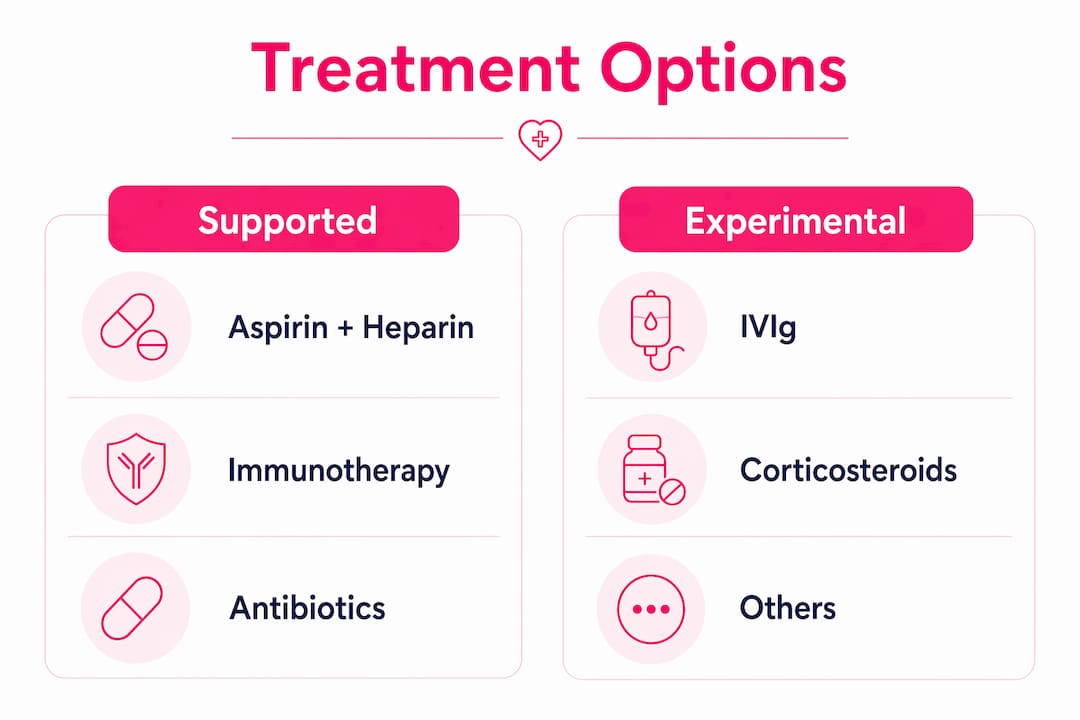
| Treatment | Evidence Level | Typical Indication | Main Risks |
|---|---|---|---|
| Low-dose aspirin + heparin | Strong (for APS) | Antiphospholipid syndrome with pregnancy loss | Bleeding, injection-site reactions |
| Corticosteroids (e.g., prednisolone) | Moderate in selected groups | Autoimmune disease, antisperm antibodies with BV | Metabolic effects, infection risk, adrenal suppression |
| IVIG (intravenous immunoglobulin) | Weak for unselected IVF | Severe recurrent loss with immune dysregulation | Infusion reactions, high cost, systemic effects |
| Intralipid infusion | Weak; no RCT consensus | Elevated uNK activity (unvalidated indication) | Lipid overload, infusion reactions |
| TNF-alpha blockers | Very weak for fertility use | Experimental; rheumatologic disease off-label | Serious infection risk, teratogenicity concerns |
| Prednisolone or zinc acetate (with antimicrobials) | Positive in one targeted RCT | Antisperm antibodies + bacterial vaginosis | Zinc: generally well tolerated; prednisolone: metabolic effects |
One randomized controlled trial of 123 women with unexplained infertility, antisperm antibodies, and bacterial vaginosis found that immunomodulators combined with antimicrobial therapy increased clinical pregnancy rates compared with placebo. Zinc acetate showed better tolerability than prednisolone in that trial. This is a meaningful positive result, but it applies to a specific, narrowly defined population, not to all patients with unexplained infertility.
Systematic reviews and meta-analyses of immunomodulatory therapy report mixed results overall. Some analyses show modest benefit in carefully defined subgroups, but the evidence is limited by small sample sizes, inconsistent patient selection, and heterogeneous study designs. The evidence base does not currently support routine use of IVIG, intralipids, or TNF blockers for unselected IVF patients.
The risk side of this equation deserves equal weight. Immune-suppressing drugs carry real systemic consequences: corticosteroids used over multiple cycles can affect bone density, blood sugar, and adrenal function. TNF blockers carry infection risks and have not been adequately studied for safety in early pregnancy. IVIG is expensive and associated with infusion reactions. These are not trivial considerations, and systemic risks mean that specialist supervision is not optional when immune-modulating drugs are part of a fertility plan.
When should you consult a reproductive immunologist?
Not every fertility patient needs an immune workup. The following triggers are the clearest signals that immunological evaluation adds value to your care:
- Recurrent pregnancy loss: two or more losses, particularly in the first trimester, without a clear chromosomal or structural explanation.
- Repeated implantation failure: two or more failed IVF cycles with good-quality embryos transferred to a well-prepared uterus.
- Diagnosed autoimmune disease: lupus, antiphospholipid syndrome, thyroid autoimmunity, or another systemic condition already under medical management.
- Positive antiphospholipid panel: confirmed on two tests at least 12 weeks apart, per diagnostic criteria.
- Antisperm antibody findings: positive ASA testing in either partner, particularly when sperm function is otherwise unexplained.
- Unexplained infertility after a complete standard workup: when structural, ovarian reserve, hormonal, and male-factor causes have been excluded.
A typical evaluation at a specialist center follows a structured sequence. The initial consultation reviews your full reproductive history, prior test results, and any autoimmune diagnoses. A focused lab panel follows, covering the antiphospholipid panel, ANA, TPO antibodies, and antisperm antibody testing as indicated. Endometrial assessment, whether through biopsy-based immune profiling or ultrasound evaluation of the uterine environment, is considered selectively, not routinely. A multidisciplinary case review then integrates findings with your IVF history and guides a shared decision about whether any immune-directed intervention is warranted. Follow-up decision points are built in, so treatment is adjusted based on response rather than locked in from the start.
Questions worth asking your provider at any stage:
- What specific finding would this test change my treatment plan for?
- What is the evidence level for this intervention in patients with my profile?
- What are the risks if I take this medication through an IVF cycle?
- Is there an alternative explanation for my results that does not require immune treatment?
Pro Tip: When evaluating clinics for immune-related infertility, ask specifically whether their reproductive immunology workup is guided by a multidisciplinary team and whether they follow evidence-based IVF protocols. Life IVF Center’s Precision IVF® approach builds individualized protocols around each patient’s biological profile, which is exactly the framework that makes immune evaluation meaningful rather than routine.
What does current research say, and where are the gaps?
The immune system’s central role in reproductive tolerance is well established. Translating that biology into reliable diagnostics and effective therapies, however, remains one of the harder problems in reproductive medicine.
“While reproductive immunology research reveals plausible mechanisms linking immune biology to implantation, translating biomarkers into standardized diagnostics and effective therapies is still limited. High-quality evidence and standardization are the field’s most pressing next steps.”
(Reproductive Immunology: Current Knowledge and New Perspectives
KIR/HLA-C immunogenetics is one of the most actively studied areas. Researchers have identified that specific maternal KIR haplotypes combined with certain fetal HLA-C types can alter uNK activation in ways that affect placentation. The clinical implications are real, but testing and interpretation are complex, and no standardized protocol exists for using KIR/HLA-C typing to direct treatment in routine practice. This is a field to watch, not yet one to act on outside of a research setting.
Endometrial immune profiling is similarly promising. Gene expression panels that assess markers such as IL-15, IL-18, TWEAK, Fn14, and CD56 can characterize local immune activation patterns with more precision than blood tests. Some centers report improved outcomes when therapy is guided by detailed endometrial diagnosis, but results across studies are inconsistent, and no universal protocol has been validated. The role of diagnostic technology in this area is evolving, and patients should ask whether any endometrial profiling offered is part of a standardized protocol or an experimental add-on.
The broader research challenge is that most immunotherapy trials in fertility have been small, heterogeneous, and difficult to replicate. Patient selection criteria vary widely between studies, making it hard to identify which subgroups genuinely benefit. Major professional organizations and regulators consistently advise against routine use of immunotherapies as IVF add-ons for patients without a defined immunological disease, precisely because randomized trial evidence is limited and risks are real. Responsible clinical practice means separating patients with true immunological disease who need specialist care from patients with unexplained infertility for whom immune add-ons remain unproven.
Key Takeaways
Immune factors in infertility are real but affect a minority of patients; the most meaningful step is identifying whether a specific clinical trigger justifies evaluation before pursuing any immune-directed treatment.
| Point | Details |
|---|---|
| Reproductive immunology defined | The field studies how immune processes affect conception, implantation, and early pregnancy, including maternal tolerance of the embryo. |
| When immune testing is warranted | Recurrent pregnancy loss, repeated implantation failure, diagnosed autoimmune disease, or confirmed antisperm antibodies are the clearest triggers. |
| Blood NK testing is unreliable | Peripheral blood NK counts do not reflect the uterine immune environment and should not be used alone to direct treatment. |
| Most immune add-ons lack strong evidence | Major fertility authorities caution against routine use of IVIG, intralipids, and TNF blockers for unselected IVF patients without a defined immunological diagnosis. |
| Life IVF Center’s approach | Precision IVF® at Life IVF Center builds individualized protocols around each patient’s profile, including targeted immune evaluation for complex cases. |
Why careful evaluation matters more than aggressive treatment
The patients who reach a reproductive immunology consultation have often been through a great deal already. Multiple losses, failed cycles, and months of uncertainty carry real emotional weight, and it is understandable to want an answer, any answer, that explains what has been happening. That urgency is something every clinician in this field needs to hold carefully.
What the evidence consistently shows is that more testing and more treatment are not the same as better care. A patient with confirmed antiphospholipid syndrome who receives low-dose aspirin and heparin during pregnancy has a well-supported intervention behind her. A patient with unexplained infertility who receives IVIG or intralipid infusions based on a peripheral blood NK count does not. The difference between those two situations is not a matter of degree; it is a matter of whether the diagnosis justifies the intervention.
Shared decision-making is the standard that matters here. That means explaining what a test can and cannot tell you, what the evidence level is for any proposed treatment, and what the realistic risks are, not just the potential benefits. Patients deserve that transparency, and clinics that provide it are the ones worth trusting with a complex case.
Personalized immune evaluation at Life IVF Center
For patients navigating complex fertility histories, including those with suspected immune contributors, Life IVF Center offers a structured path forward through its Precision IVF® approach. Rather than applying a standard protocol to every patient, the team builds individualized treatment plans around each person’s biological profile, reproductive history, and specific clinical findings. That includes targeted immune evaluation for patients with recurrent loss, repeated implantation failure, or diagnosed autoimmune conditions, with multidisciplinary case review and specialist collaboration where indicated.
Services available include specialist consultations, focused immune testing panels, endometrial assessment where clinically appropriate, and tailored treatment plans that incorporate evidence-based interventions. Not every patient needs immunotherapy, and Life IVF Center’s approach reflects that: the goal is to identify the patients who genuinely benefit from immune-directed care and to avoid unnecessary treatment for those who do not. Informed consent and honest communication about evidence levels are part of every consultation. To explore whether an immune evaluation fits your situation, review treatment package options or schedule a consultation with the Life IVF Center team.
This article is general health information, not medical advice. Confirm current clinical guidelines and your individual situation with a qualified reproductive specialist.
Authoritative sources for further reading
The sources below are selected for their authority and relevance to patients and clinicians seeking deeper information on reproductive immunology and infertility.
-
HFEA: Immunological Tests and Treatments for Fertility: The UK’s fertility regulator provides a clear, evidence-graded overview of immune tests and treatments, including its position on peripheral NK testing and immune add-ons. Recommended for patients evaluating whether a proposed test or treatment has regulatory support. (Note: HFEA is a UK body; U.S. patients should confirm whether their clinic follows comparable evidence standards.)
-
Reproductive Immunology: Current Knowledge and New Perspectives (CEOG): A peer-reviewed review covering immune tolerance mechanisms, uNK and Treg roles, KIR/HLA-C research, and the state of immunotherapy evidence. Suitable for medically literate patients and clinicians wanting a comprehensive scientific overview.
-
Immunological Aspects of Infertility: The Role of KIR Receptors and HLA-C Antigen (MDPI Cells): Focused review of KIR/HLA-C immunogenetics and its association with recurrent implantation failure and miscarriage. Best suited for clinicians or patients whose specialist has raised KIR/HLA testing as a consideration.
-
BMC Immunology: Immunomodulators + Antimicrobial Therapy RCT: The randomized controlled trial of prednisolone and zinc acetate in women with antisperm antibodies and bacterial vaginosis. Useful for patients and clinicians evaluating targeted immunomodulation in a specific clinical context.
-
Stony Brook Medicine: Immunology of Male Infertility: A patient-facing clinical resource on male immune factors, including antisperm antibodies and their evaluation. Recommended for couples where male immune contributors have been raised as a possibility.
-
Life IVF Center: Immunological Factors in Fertility: Patient-facing overview of reproductive immunology from Life IVF Center, useful for readers who want clinic-contextualized guidance alongside the peer-reviewed literature.
Recommended
- Immunological Factors in Fertility: What You Need to Know
- Immune Disorder Fertility Solutions: Your Treatment Guide
- Immunotherapies in IVF: What the Evidence Really Shows
- Blog – Life IVF Center
Ready to take the next step?
Life IVF Center specializes in individualized Precision IVF® care for complex cases—including diminished ovarian reserve, prior failed cycles, and advanced maternal age. Our in-house labs and dedicated physicians are ready to help.
Book a Free Consultation →