
Fertility acupuncture attracts more interest every year, and for good reason. Thousands of individuals and couples dealing with infertility are searching for ways to support their bodies beyond medication and procedures alone. The evidence is genuinely mixed, which creates real confusion about whether acupuncture is worth pursuing. This article cuts through that confusion. You will find a clear breakdown of how acupuncture interacts with your reproductive system, who tends to benefit most, what safety considerations to know, and how to use it practically alongside treatments like IVF.
Table of Contents
- Key takeaways
- How fertility acupuncture works
- Who benefits most and when to start
- Safety, side effects, and who should be cautious
- Integrating fertility acupuncture with medical treatments
- My perspective on acupuncture in fertility care
- How Life IVF Center can support your fertility plan
- FAQ
Key takeaways
| Point | Details |
|---|---|
| Evidence is promising but mixed | Acupuncture shows strong results for PCOS and recurrent implantation failure, but study variability means no universal guarantee. |
| Timing matters significantly | Starting at least 3 months before conception or IVF aligns with the egg development cycle and produces better outcomes. |
| Safety profile is favorable | Serious adverse events are extremely rare when treatment is performed by a licensed professional. |
| Acupuncture complements, not replaces | It works best alongside medical fertility treatments, not as a standalone solution. |
| Session volume affects results | Around 13 to 15 sessions show a dose-response relationship with fertility success, making consistency critical. |
How fertility acupuncture works
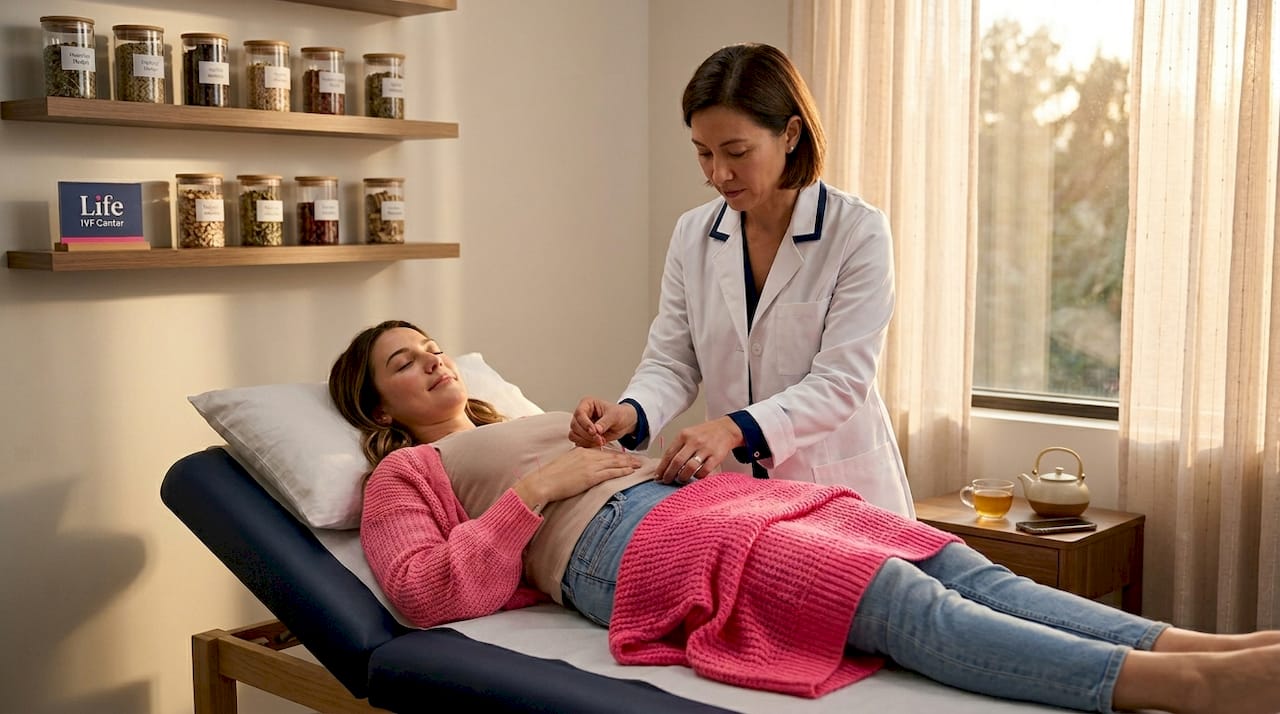
Fertility acupuncture is grounded in both traditional Chinese medicine for fertility and an expanding body of modern physiological research. Traditional theory holds that acupuncture restores the flow of qi through specific meridians, but the clinical science offers a more concrete explanation. Needling specific points stimulates the nervous system, triggering neuroendocrine changes that influence hormone regulation, uterine blood flow, and the body’s stress response.
From a reproductive standpoint, these mechanisms matter. Improved blood flow to the ovaries and uterus supports egg quality and endometrial thickness. Regulation of the hypothalamic-pituitary-ovarian axis can normalize irregular cycles. Reduction in cortisol and other stress hormones creates a more hospitable hormonal environment for conception.
What the clinical research shows
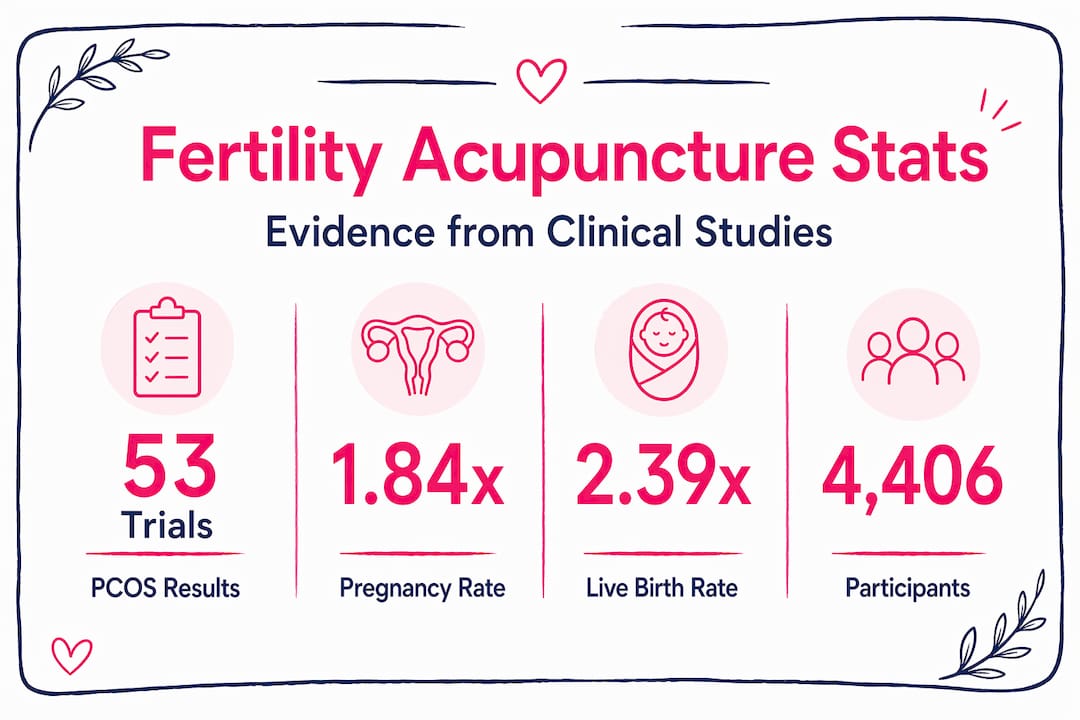
The research picture is nuanced. A meta-analysis of 15 studies covering 1,029 subjects found that acupuncture and moxibustion improve clinical pregnancy rates with a relative risk of 1.84 and live birth rates with a relative risk of 2.39 in recurrent implantation failure patients. Those are clinically meaningful numbers.
For PCOS specifically, a systematic review of 53 randomized controlled trials involving 4,406 participants found that acupuncture therapies reduced BMI and testosterone while increasing pregnancy rates, with a SUCRA score of 76.6% placing it among the most effective interventions reviewed.
At the same time, it would not be accurate to say the evidence is uniformly positive. Large analyses with variable outcomes show that differences in study design, point selection, session frequency, and patient populations make direct comparisons difficult. This is not a reason to dismiss acupuncture. It is a reason to understand that results depend heavily on protocol and individual circumstances.
| Study type | Key finding | Population |
|---|---|---|
| Meta-analysis (15 RCTs) | RR=1.84 pregnancy, RR=2.39 live birth | Recurrent implantation failure |
| Systematic review (53 RCTs) | SUCRA 76.6% for pregnancy rates | PCOS patients |
| Clinical cohort data | Ovulation rate 77.97% vs 49.74% control | PCOS patients |
| Large pooled analyses | Variable outcomes, protocol-dependent | Mixed infertility diagnoses |
Pro Tip: When reviewing acupuncture studies, check whether the comparison group received sham acupuncture or no treatment at all. Sham-controlled trials tend to show smaller effect sizes, which changes how you interpret the results.
Who benefits most and when to start
Not everyone responds to acupuncture for fertility in the same way, and the evidence does point toward certain groups who see stronger effects.
Conditions with the clearest evidence
- PCOS: Women with PCOS show particularly strong responses. Clinical studies report ovulation rates of 77.97% in acupuncture groups compared to 49.74% in controls, with pregnancy rates following a similar pattern.
- Recurrent implantation failure: Patients who have experienced multiple failed embryo transfers appear to be one of the groups with the strongest evidence supporting acupuncture as an adjunct therapy.
- Unexplained infertility: When conventional testing finds no clear cause, acupuncture’s systemic effects on hormone balance and stress physiology may provide meaningful support.
- Male factor infertility: Acupuncture has been studied for improving sperm motility, morphology, and count, making it a relevant consideration for partners as well. You can explore more about male fertility support through dedicated resources.
- High stress or disrupted cycles: Patients whose cycles are notably stress-sensitive or irregular often report cycle normalization with consistent treatment.
The timing question
Starting acupuncture at least 3 months before conception or before your IVF cycle is a widely held clinical recommendation, and the biology supports it. Oocytes take approximately 90 days to mature. Interventions that begin at the start of that window have a realistic chance of influencing egg quality by the time retrieval or natural conception occurs.
Starting one or two weeks before an embryo transfer is not useless, but it is unlikely to produce the same depth of effect as a sustained, multi-month protocol. This is one of the most commonly overlooked aspects of acupuncture treatment for infertility. Consistency over time matters far more than intensity in a short window.
Pro Tip: If you are preparing for an IVF cycle, speak with your reproductive endocrinologist and an acupuncturist simultaneously. Coordinating the protocols from the beginning produces better integration than adding acupuncture as an afterthought mid-cycle.
Safety, side effects, and who should be cautious
One of the genuine strengths of fertility acupuncture is its safety profile when performed by a qualified practitioner. Most people experience little to no discomfort beyond a mild sensation at the needle site.
Reported minor side effects include:
- Temporary soreness or dull aching at needle insertion points
- Minor bruising or needle site bleeding in approximately 4.67% of cases
- Mild fatigue or lightheadedness following a session
- Occasional emotional release, which some patients describe as unexpected but not distressing
Serious adverse events are rare. A 2021 review estimated serious events at 1 per 10,000 treatments performed by licensed professionals. That is a considerably safer profile than most pharmaceutical interventions used in fertility care.
That said, certain situations do require caution or avoidance:
- Anticoagulant therapy or bleeding disorders: The risk of bruising and bleeding increases significantly and requires disclosure before treatment begins.
- Implanted electrical devices: Electroacupuncture is contraindicated for patients with pacemakers due to the risk of electrical interference.
- Active skin infection at needle sites: Practitioners should avoid areas with active infection or inflammation.
- Certain pregnancy stages: While acupuncture is used during pregnancy, specific points are avoided due to their stimulating effects on uterine contractions.
Always disclose your full medical history, current medications, and any implanted devices to your acupuncturist before beginning. A qualified practitioner will ask, but volunteering this information proactively protects your safety.
Integrating fertility acupuncture with medical treatments
The most clinically sound position is that acupuncture serves as a low-risk adjunct that supports fertility treatments rather than replacing them. Understanding how to structure that integration is where many patients lack practical guidance.
Frequency and session volume
Research consistently shows that acupuncture’s effects on fertility are cumulative. Single or occasional sessions are unlikely to produce measurable reproductive benefits. Around 13 to 15 sessions appear to represent a meaningful threshold, with studies showing a dose-response relationship that roughly doubles live birth likelihood compared to IVF alone. Most protocols involve one to two sessions per week over three to six months.
When patients ask about the best acupuncture for conception, the honest answer is not a specific style or set of points. It is a well-structured, consistent protocol tailored to their diagnosis. This is why licensed acupuncturists must tailor protocols based on individual fertility diagnoses, including decisions about whether to use traditional needling or electroacupuncture.
Timing around an IVF cycle
The table below summarizes how acupuncture is typically scheduled around an IVF protocol.
| IVF phase | Acupuncture timing | Primary goal |
|---|---|---|
| Pre-stimulation | Weekly sessions for 3+ months prior | Improve egg quality, regulate hormones |
| Ovarian stimulation | 1-2 sessions per week during stimulation | Support follicle development, reduce side effects |
| Egg retrieval | Session within 24 hours before or after | Reduce stress response, support recovery |
| Embryo transfer | Session day of or within 24 hours | Improve endometrial receptivity, reduce anxiety |
| Two-week wait | 1-2 sessions during luteal phase | Support implantation, manage stress |
Acupuncture during the stimulation phase may help reduce the intensity of medication side effects, particularly bloating and emotional swings associated with gonadotropins. Many patients report that sessions during this period provide a meaningful sense of calm and physical grounding during what is often an anxious time.
Choosing a qualified practitioner
When searching for fertility acupuncture near you, prioritize practitioners who are licensed by your state’s acupuncture board and who have specific experience working with fertility patients. Ask directly about their experience coordinating with reproductive endocrinologists. A practitioner who works alongside IVF teams understands how to align their sessions with your treatment calendar without interfering with clinical protocols.
You may also want to review fertility treatment options to understand how acupuncture compares and interacts with other approaches before committing to a combined protocol.
Pro Tip: Ask your acupuncturist whether they have treated patients going through IVF specifically. General acupuncture training does not always include reproductive medicine protocols. Fertility-focused practitioners will often have a referral relationship with a clinic.
My perspective on acupuncture in fertility care
I’ve reviewed a considerable amount of research on this topic, and I want to be straightforward with you: I am genuinely impressed by the evidence in specific patient populations, but I am also honest about its limits.
What I’ve seen consistently is that acupuncture adds real value when it is used correctly. Patients who begin treatment months before their IVF cycle, who attend sessions consistently, and who view it as one piece of a broader fertility strategy tend to report both measurable and subjective benefits. The subjective piece matters more than it might seem. The emotional toll of infertility is significant, and anything that reliably reduces anxiety, improves sleep, and gives patients a sense of agency over their health is worth taking seriously.
What concerns me is how acupuncture is sometimes marketed as a solution on its own, or how patients occasionally delay medical evaluation because they are “trying acupuncture first.” In my view, that sequencing can cost precious time. Acupuncture is not a substitute for understanding your diagnosis. It works best when it is layered onto a clear medical plan, not used while waiting for one.
The variability in study design is real, and I think patients deserve to know that. But variability in research does not mean the therapy is ineffective. It means we are still learning how to standardize protocols that already show genuine promise. For patients with PCOS, recurrent implantation failure, or high fertility-related stress, the evidence is strong enough that I think it warrants serious consideration as part of a comprehensive plan.
How Life IVF Center can support your fertility plan
Life IVF Center offers personalized reproductive care across Southern California, combining advanced clinical science with support for the full range of a patient’s needs. The Precision IVF® approach at Life IVF Center customizes every protocol to your individual biological profile, which means complementary therapies like acupuncture can be discussed and integrated into your plan from the start rather than added as an afterthought.
Whether you are just beginning to explore fertility options or have experienced prior treatment without success, Life IVF Center’s team can help you build a strategy grounded in your specific situation. You can start by reviewing IVF basics and treatment overviews, or if you’ve had a previous cycle that did not go as planned, explore support for patients after failed IVF. For couples managing male factor infertility alongside acupuncture, Life IVF Center also provides guidance on insurance and financing options to make care more accessible.
FAQ
What does fertility acupuncture actually do?
Fertility acupuncture stimulates specific points on the body to influence hormone regulation, improve blood flow to the uterus and ovaries, and reduce stress hormones. These physiological effects are thought to support a more favorable environment for conception and implantation.
How many acupuncture sessions are needed for fertility benefits?
Research points to 13 to 15 sessions as a meaningful threshold, with a dose-response relationship suggesting that more consistent treatment produces better outcomes. One to two sessions per week over several months is the most common protocol.
Is acupuncture safe during an IVF cycle?
Yes, acupuncture is generally safe during an IVF cycle when performed by a licensed practitioner. Serious adverse events are estimated at approximately 1 per 10,000 treatments, and many reproductive endocrinologists actively support its use alongside stimulation and transfer protocols.
When should I start acupuncture if I’m planning to conceive?
Starting at least 3 months before a planned conception attempt or IVF cycle is the standard recommendation. This aligns with the 90-day egg development window and gives treatment time to influence egg quality and hormonal environment.
Can acupuncture help with PCOS-related infertility?
Yes. Clinical studies show ovulation rates of 77.97% in PCOS patients receiving acupuncture compared to 49.74% in control groups, with corresponding improvements in pregnancy rates. A systematic review of 53 trials confirmed significant improvements in reproductive and metabolic markers.
Recommended
- Top fertility supplements: Evidence, comparisons, and expert picks
- Fertility treatment options: Effectiveness and best uses
- Evidence-Based Endometriosis Fertility Tips for Better Conception
- Why consider fertility testing? Key insights and action steps
Ready to take the next step?
Life IVF Center specializes in individualized Precision IVF® care for complex cases—including diminished ovarian reserve, prior failed cycles, and advanced maternal age. Our in-house labs and dedicated physicians are ready to help.
Book a Free Consultation →