
Embryo transfer timing is the match between two clocks: the age of the embryo and the readiness of the uterine lining. In a fresh IVF cycle, transfer usually happens on day 5 or 6 after egg retrieval, when the embryo has reached the blastocyst stage. In a frozen cycle, your clinic counts backward from the embryo’s age and schedules the transfer around ovulation or around the start of progesterone. This guide explains how each schedule works, what the implantation window is, and what to expect in the days after transfer.
TL;DR
- Fresh transfers have shifted from day 3 toward day 5 or 6 (blastocyst stage), because that is closer to when an embryo naturally reaches the uterus.
- Frozen transfers are scheduled by counting from ovulation, an LH surge, an hCG trigger or the first day of progesterone, depending on your cycle type and the embryo’s stage.
- The implantation window is a limited stretch of time. Progesterone that starts too early or too late can shift it, so the start date and the transfer date are planned together.
- Most clinics schedule a blood pregnancy test roughly one to two weeks after transfer. Follow your own clinic’s date, not a home test result.
- Timing is individualized. Your age, embryo quality, cycle regularity and history all shape the plan.
Table of Contents
- Why timing matters in embryo transfer
- Fresh embryo transfer: day 3 or day 5?
- Frozen embryo transfer timing: natural, modified natural and medicated cycles
- The implantation window in IVF
- What happens in the days after transfer
- How Life IVF Center approaches transfer timing
- Costs related to transfer timing
- Questions to bring to your clinic
- FAQ
- Sources
Why timing matters in embryo transfer
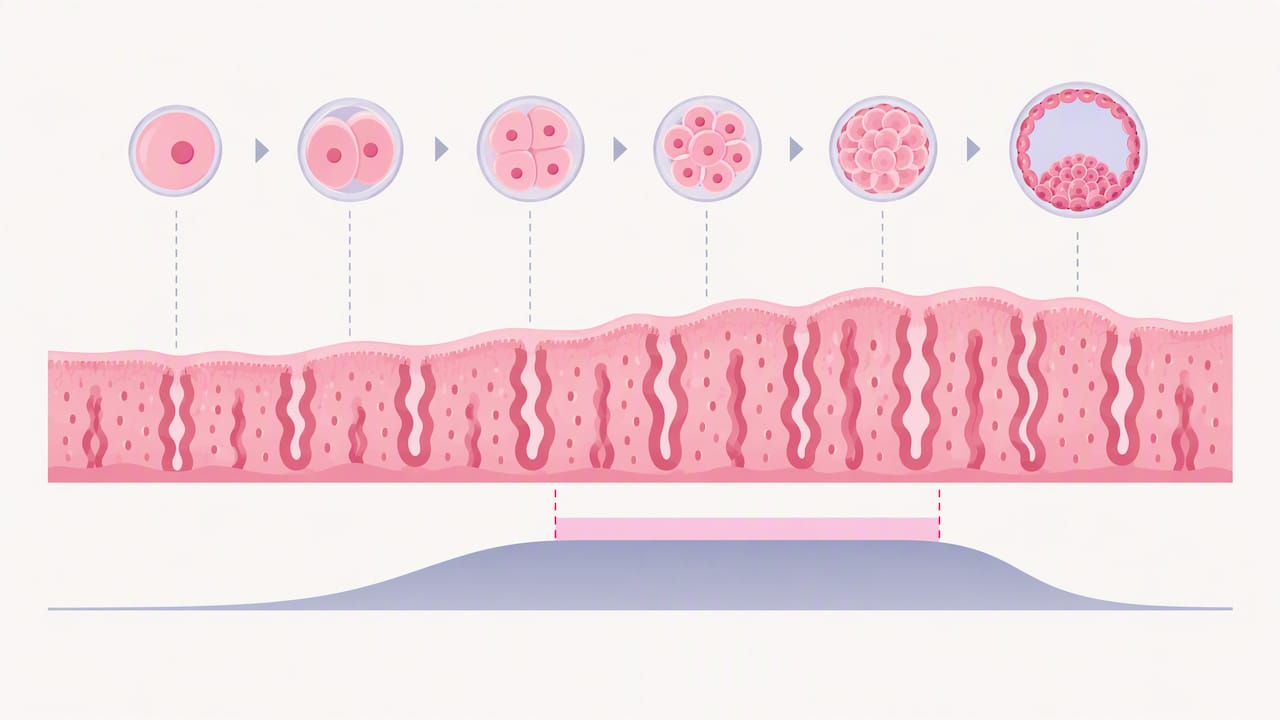
An embryo can only implant when the endometrium (the uterine lining) is receptive. That receptive period is temporary. If the embryo is placed too early, the lining may not be ready. If it is placed too late, the window may be closing.
In a natural conception, the embryo travels down the fallopian tube and reaches the uterus several days after fertilization. In IVF, fertilization happens in the laboratory, so the care team has to recreate that schedule on purpose. The 2022 review Luteal phase support in fresh and frozen embryo transfers explains that frozen-cycle timing uses the embryo’s developmental age and the length of progesterone exposure to synchronize embryo and endometrium. The same review notes that premature or delayed progesterone exposure can disturb implantation timing. That is why the day you start progesterone and the day of transfer are treated as one linked decision.
For patients, the practical meaning is simple: the date on your calendar is not arbitrary. It was calculated from your embryo’s stage and your uterine preparation.
Fresh embryo transfer: day 3 or day 5?
In a fresh cycle, the transfer follows egg retrieval within the same cycle. The question is how long the embryos stay in the laboratory first.
A 2024 BMJ review on the importance of the day of embryo transfer reports that cleavage-stage transfer traditionally took place on day 3, while current practice has moved toward blastocyst transfer, usually on day 5 or 6 after retrieval.
Why many clinics favor the blastocyst stage
The American Society for Reproductive Medicine’s committee opinion, Blastocyst culture and transfer in clinically assisted reproduction, makes two points that explain the shift:
- Implantation in vivo generally occurs on days 5 to 7, so a blastocyst transfer may better synchronize embryo and endometrium.
- Clinicians cannot predict with certainty which cleavage-stage embryos will go on to become viable blastocysts.
The BMJ review adds that extended culture also gives additional information about an embryo’s developmental competence, since an embryo that stalls in the laboratory is unlikely to have been a good candidate for transfer.
Why some patients still transfer on day 3
Extended culture is not automatically better for everyone. Not every embryo reaches a good-quality blastocyst, and some cycles end with no embryo to transfer on day 5. A 2023 study, Day-3 vs. Day-5 fresh embryo transfer, describes the choice as depending on embryo development and laboratory policy. In that study, extended culture to day 5 was reserved for patients with at least five high-quality day-3 embryos.
That is one clinic’s protocol, not a universal rule, but it illustrates the trade-off. When there are few embryos, a day-3 transfer can protect against the risk of losing them all in culture. When there are many, waiting for day 5 lets the team choose among embryos that have shown they can keep developing.
| Factor | Day 3 (cleavage stage) | Day 5 or 6 (blastocyst) |
|---|---|---|
| How it fits natural timing | Embryo is placed in the uterus earlier than it would naturally arrive | Closer to natural arrival in the uterus |
| Information about the embryo | Limited | Extended culture shows which embryos keep developing |
| Risk for patients with few embryos | Embryos stay in the lab for less time | Possible that no embryo reaches transfer quality |
| Typical current use | Selected cases, by embryo count and lab policy | Common standard in current practice |
Fresh cycle and progesterone
In a fresh cycle, progesterone support begins around retrieval. The 2022 luteal-phase review found that starting progesterone from the evening of oocyte retrieval through up to three days afterward was associated with optimal pregnancy chances across the studies it reviewed. Your clinic will tell you the exact start time, and it matters to take every dose on schedule.
Frozen embryo transfer timing: natural, modified natural and medicated cycles
Frozen transfers separate embryo creation from transfer, so the lining can be prepared on its own schedule. There are three common approaches. Your clinic chooses based on whether you ovulate regularly, your medical history and what is practical for you.
True natural cycle
No hormonal medicines are needed. The transfer is timed to your own ovulation, which is tracked with ultrasound and blood hormone levels or with LH testing. Because you rely on your own cycle, this approach suits people who ovulate predictably.
Modified natural cycle
The cycle is still your own, but an hCG trigger shot is used to set the time of ovulation precisely, which makes scheduling easier.
Artificial (medicated) cycle
Estrogen builds the lining and progesterone is added when the lining is ready. This gives the team the most control over the date, and it is often used for patients with irregular cycles.
How the days are counted
Research describes the counting conventions in the following way. The 2023 review, Finding of the optimal preparation and timing of frozen embryo transfer, reports these schedules:
| Cycle type | Day-3 embryo | Blastocyst |
|---|---|---|
| True natural cycle | Ovulation plus 3 days, or LH surge plus 4 days | Ovulation plus 5 days, or LH surge plus 6 days |
| Modified natural cycle | hCG plus 5 days | hCG plus 7 days |
The luteal-phase review also notes that in a true natural cycle, transfer is generally scheduled one day earlier after an LH surge than after an hCG trigger in a modified natural cycle. In an artificial cycle with no corpus luteum, cleavage-stage embryos are transferred on the fourth day of luteal-phase support and blastocysts on the sixth day.
These are reference points from the literature. Your clinic’s protocol may differ slightly, and it will give you the actual date and times.
Day 6 blastocysts
Not all blastocysts reach the right stage on day 5. Some need a sixth day. A 2026 systematic review of progesterone exposure for programmed frozen transfer of day 6 blastocysts concluded that current evidence supports both 6 and 7 days of progesterone exposure as acceptable strategies, while individualized timing may be appropriate until randomized trials are available. In plain terms, a day 6 embryo does not necessarily require a different plan from a day 5 embryo, but your team may adjust the schedule to your case.
The implantation window in IVF
The implantation window is the interval when the endometrium can accept an embryo. The 2023 review above reports that for cleavage-stage embryos in a 28-day cycle, the optimal window may vary from cycle day 16 to 20. The word “vary” is the important one. The window is not identical in every person, and it can be shifted by hormone exposure.
This variation is why two patients with the same embryo stage can have different transfer schedules. It is also why some patients with previous unsuccessful transfers ask about testing whether their window is displaced.
Testing the window
The Endometrial Receptivity Assay (ERA) analyzes a small sample of the lining to assess whether it is receptive at a given point in a medicated cycle. At Life IVF Center it is listed at $975 on our pre-IVF testing price list. A saline infusion sonohysterogram (SIS), listed at $450, looks at the uterine cavity itself for polyps, fibroids or scar tissue that could affect implantation regardless of timing. Whether either test makes sense for you depends on your history, and your care team can say so after reviewing your records.
What implantation feels like
Implantation happens after the transfer, not on the day of it, and most people notice nothing at all. Some notice light spotting or mild cramping. If you are trying to tell implantation spotting apart from a period, this guide on implantation bleeding versus a period and when to test walks through the differences. Spotting is not a reliable sign either way, so wait for the blood test.
What happens in the days after transfer
After transfer, the embryo needs a few days to attach and begin to grow. Progesterone continues so the lining stays supportive. Clinics generally schedule a blood test (a quantitative hCG test) about one to two weeks after transfer, and the exact day depends on the embryo’s stage at transfer and on your clinic’s protocol. If the first result is positive, many clinics repeat it a couple of days later to see whether the level is rising appropriately.
A few practical points:
- Wait for the clinic’s test date. Home tests can give false negatives if taken too early, and they can also be misread if you have taken an hCG trigger shot recently.
- Keep taking your medications unless your team tells you otherwise.
- Continue normal, gentle activity. Ask your team about exercise, travel and work.
- Call the clinic about severe pain, heavy bleeding, fever or sudden swelling and shortness of breath. These need prompt medical attention.
The days between transfer and testing are hard. Symptom-watching rarely helps, because both medication side effects and early pregnancy can cause bloating, tiredness and breast tenderness.
How Life IVF Center approaches transfer timing
Timing in our practice is a result of planning, not a fixed template. Our Precision IVF® approach builds each treatment plan around the patient’s biology, medical history and goals, and the date of transfer is part of that plan. That includes the decision of whether to transfer fresh or to freeze all embryos and transfer in a later cycle, and whether a natural or medicated cycle suits you better.
Here is how we think about the main decisions:
- Stage of the embryo. We look at how the embryos develop in our in-house laboratory before deciding with you whether to proceed on day 3, day 5 or day 6.
- Cycle regularity. If you ovulate on a predictable schedule, a natural or modified natural approach may be reasonable. If not, a medicated cycle gives more control.
- History. Previous unsuccessful transfers, endometriosis, uterine findings, immune concerns or age-related factors may call for added testing before the next transfer, rather than repeating the same schedule.
- Logistics. Transfer dates are fixed by biology. For patients traveling to us, we coordinate travel so that monitoring and the transfer date fit together.
We also welcome second-opinion cases. If you have had a transfer that did not work and you want a team to review the timing, the embryo’s stage and your lining preparation, we can go through that with you.
Costs related to transfer timing
Fees depend on the pathway you take, so it helps to see the published figures. These are our listed prices:
| Item | Listed price |
|---|---|
| Embryo Transfer | from $2,950 |
| Advanced IVF Package | $13,500 |
| Precision Embryo Freezing | $8,950 |
| Annual embryo storage | $750 per year |
| Monthly storage | $70 per month |
| 3 Year Prepaid storage | $2,000 |
You can see what each includes on our pages for IVF treatment packages, embryo freezing pricing and storage costs. Medication costs and any additional testing are separate, so ask for a full written estimate at your consultation.
Questions to bring to your clinic
A short list helps you understand your schedule and challenge it when needed:
- Are we transferring fresh or frozen, and why?
- On which day of embryo development will transfer happen?
- Which cycle type are we using (natural, modified natural or medicated), and how will the date be set?
- When do I start progesterone, and what happens if a dose is late?
- Would a receptivity test or a uterine evaluation change the plan for me?
- When is my pregnancy blood test, and who will call me with the result?
If you want to talk through your own case, you can learn more about Precision IVF® at Life IVF Center or book a consultation. Our team reviews your history and recommends a plan, and that plan is never a generic calendar.
FAQ
On which day is embryo transfer done?
In a fresh cycle, transfer is most often done on day 5 or 6 after egg retrieval, at the blastocyst stage, although day 3 transfers still happen in selected cases. In a frozen cycle, the day is set by your cycle type and the embryo’s stage, for example hCG plus 7 days for a blastocyst in a modified natural cycle. Your clinic will confirm your exact date.
What is the best time for embryo transfer?
The best time is when the embryo’s developmental stage matches the receptivity of your lining. For most patients that means a blastocyst transferred after the correct length of progesterone exposure or the correct number of days after ovulation. Because the implantation window varies between people, the best time is individual rather than a single number.
How long after transfer does implantation happen?
Implantation generally occurs within several days of transfer, and the research describes in vivo implantation as typically happening on days 5 to 7 of embryo development. You will not feel it in most cases. Confirmation comes from the blood test your clinic schedules, not from symptoms.
When should I take a pregnancy test after embryo transfer?
Use the date your clinic gives you, which is usually a blood hCG test about one to two weeks after transfer. Testing at home sooner can produce a misleading result, especially if you have recently had an hCG trigger shot. If you are unsure, call your clinic and ask which test to rely on.
Can the transfer date change?
Yes. In a natural or modified natural cycle, the date follows your ovulation, and in a medicated cycle it follows how your lining responds. Your team may postpone a transfer if the lining is not ready or if an embryo needs extra time in culture. A change is a scheduling decision, not a sign that something has gone wrong.
Sources
- The importance of the day of embryo transfer during in vitro fertilization (BMJ, 2024)
- Blastocyst culture and transfer in clinically assisted reproduction: a committee opinion (ASRM)
- Day-3 vs. Day-5 fresh embryo transfer (PubMed Central, 2023)
- Luteal phase support in fresh and frozen embryo transfers (PubMed Central, 2022)
- Finding of the optimal preparation and timing of frozen embryo transfer (PubMed Central, 2023)
- Timing of progesterone exposure for programmed frozen transfer of day 6 blastocysts: a systematic review (PubMed)
This article is for general educational purposes only and is not a substitute for personalized medical advice, diagnosis, or treatment. Fertility care is highly individual; please consult a qualified healthcare professional about your specific circumstances.
Ready to take the next step?
Life IVF Center specializes in individualized Precision IVF® care for complex cases—including diminished ovarian reserve, prior failed cycles, and advanced maternal age. Our in-house labs and dedicated physicians are ready to help.
Book a Free Consultation →