
What is unexplained infertility, and how common is it?
Unexplained infertility is the diagnosis given when a couple cannot conceive despite all standard fertility evaluations returning normal results. There is no identifiable problem with ovulation, sperm quality, fallopian tube function, or uterine anatomy. The diagnosis does not mean nothing is wrong. It means current testing has not found what is wrong.
Approximately 30% of infertile couples receive this diagnosis after a full workup, making it one of the most frequently assigned categories in reproductive medicine. That figure reflects both the real limits of standard testing and the biological complexity of human conception.
Key aspects of the diagnosis include:
- Diagnosis by exclusion: A couple receives this label only after all standard tests come back within normal ranges for both partners.
- Minimum duration: The evaluation typically follows at least 12 months of regular, unprotected intercourse, or sooner for women of advanced reproductive age.
- Normal parameters confirmed: Ovarian reserve, ovulation, semen analysis, tubal patency, and pelvic anatomy must all appear normal before the diagnosis applies.
- Not a dead end: Many couples with this diagnosis do go on to conceive, either spontaneously or with treatment.
Understanding this diagnosis is the first step toward making informed decisions about next steps.
Table of Contents
- What could be causing infertility when tests show nothing wrong?
- How is unexplained infertility diagnosed?
- What treatment options are available for unexplained infertility?
- How Life IVF Center approaches unexplained infertility with Precision IVF®
- Key Takeaways
What could be causing infertility when tests show nothing wrong?
The absence of a clear finding does not mean the biology is simple. Several subtle factors can interfere with conception without triggering abnormal results on routine tests.

Subtle egg quality issues and sperm function abnormalities are among the most plausible hidden contributors. Standard semen analysis measures count, motility, and morphology, but it does not assess how well sperm actually penetrate and fertilize an egg. Similarly, ovarian reserve tests measure quantity, not the developmental competence of individual eggs.
Possible contributing factors include:
- Egg quality problems: Eggs may appear normal on ultrasound but carry chromosomal abnormalities or developmental deficiencies that prevent successful fertilization or implantation.
- Sperm function deficits: Sperm may pass a basic analysis yet still fail at the molecular level, including impaired DNA integrity or poor acrosome reaction.
- Poor endometrial receptivity: The uterine lining may not be adequately prepared to accept a fertilized embryo, even when its thickness appears normal on imaging.
- Mild or undiagnosed endometriosis: Mild endometriosis can impair fertility through inflammatory effects on the pelvic environment without causing symptoms obvious enough to prompt investigation.
- Fertilization failure: In some couples, eggs and sperm simply do not fertilize reliably, a problem only revealed during IVF when fertilization can be directly observed.
- Immunological factors: Certain immune responses may interfere with implantation, though this area of research remains evolving and not yet part of standard workups.
Because the exact cause is unknown, treatment focuses on optimizing the chance of conception through empiric methods rather than correcting a specific abnormality. Advanced fertility testing can sometimes reveal underlying causes that routine evaluations miss entirely.
How is unexplained infertility diagnosed?
The diagnostic process is structured and sequential. Reaching a diagnosis of unexplained infertility requires ruling out every known, testable cause first.
When to begin testing
Fertility investigations are recommended after 12 months of regular unprotected intercourse for couples where the woman is under 35. For women 35 or older, most specialists recommend beginning evaluation after six months. Women over 40 or those with known risk factors such as irregular cycles, prior pelvic surgery, or a history of sexually transmitted infections should seek consultation promptly. Your fertility evaluation checklist can help you track where you are in this process.
Standard tests for both partners
The diagnostic workup for unexplained infertility covers the following:
- Ovulation confirmation through blood progesterone levels or ultrasound monitoring
- Semen analysis assessing count, motility, and morphology
- Tubal patency testing via hysterosalpingography (HSG) or ultrasound-based assessment
- Pelvic ultrasound to evaluate uterine anatomy and ovarian reserve
The diagnostic sequence
- Confirm regular ovulation through cycle tracking and hormonal testing.
- Complete a full semen analysis for the male partner.
- Assess ovarian reserve with antral follicle count and AMH blood test.
- Evaluate tubal patency and uterine structure.
- Review all results; if all are normal after the required duration of trying, the diagnosis of unexplained infertility applies.
Additional tests such as sperm DNA fragmentation analysis, endometrial receptivity assessment, or laparoscopy for endometriosis are not part of the standard workup. Specialists may recommend them selectively based on clinical history, but they are not universally required before this diagnosis is made.
When to see a specialist
If you are under 35 and have been trying for a year without success, a reproductive endocrinologist is the appropriate next step. Do not wait longer than six months if you are 35 or older. A specialist can coordinate the full workup efficiently and discuss whether any additional testing is warranted for your specific situation.
What treatment options are available for unexplained infertility?
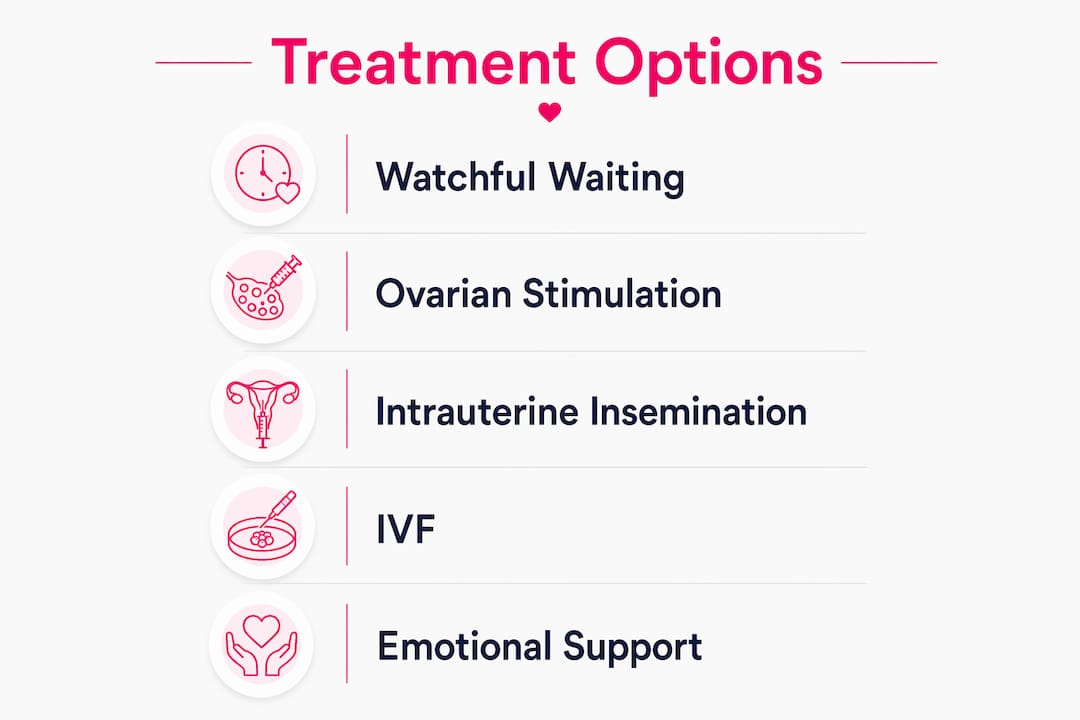
Because no specific cause has been identified, treatment for unexplained infertility follows an empiric approach, meaning clinicians apply treatments that improve conception odds broadly rather than targeting a known defect. The progression typically moves from least to most intensive.
Expectant management
For younger couples with a short duration of infertility, watchful waiting is a legitimate first option. There is a meaningful chance of spontaneous pregnancy with unexplained infertility, particularly when the woman is under 35 and the couple has been trying for less than two years. During this period, optimizing general health through nutrition, weight management, and reducing alcohol and tobacco use can support natural conception.
Ovarian stimulation with IUI
Controlled ovarian stimulation combined with intrauterine insemination (IUI) is typically the first active treatment. Oral medications such as clomiphene citrate or letrozole stimulate the ovaries to produce one or two follicles, and prepared sperm are placed directly into the uterus around ovulation. This approach increases the number of eggs available and brings sperm closer to the site of fertilization.

IVF
IVF after failed ovarian stimulation and IUI improves pregnancy rates and reduces the risk of high-order multifetal pregnancies compared to continued gonadotropin use alone. IVF also provides diagnostic information: if fertilization fails in the lab, that finding itself clarifies the underlying problem. For women over 38, many specialists recommend moving to IVF sooner, given the time sensitivity of declining egg quality. Explore your fertility treatment options to understand how each approach compares in effectiveness and appropriate use.
Treatment options at a glance:
- Expectant management: Appropriate for younger couples with shorter infertility duration; lifestyle optimization during this period matters.
- Ovarian stimulation with IUI: First-line active treatment; typically attempted for three to six cycles before reassessment.
- IVF: Recommended after IUI failure, for women over 35–38, or when time is a clinical concern.
- Preimplantation genetic testing (PGT): May be added to IVF to screen embryos for chromosomal abnormalities, particularly relevant when egg quality is suspected.
Emotional and psychological impact
A diagnosis of infertility without a clear cause can be particularly distressing. Many couples describe the uncertainty as harder to cope with than a concrete diagnosis, because there is no single problem to address. Psychological support through counseling, peer support groups, or mental health professionals who specialize in reproductive health is a recognized part of comprehensive infertility care. Acknowledging this emotional dimension is not secondary to treatment. It is part of it.
Cost and insurance considerations
Fertility treatment costs in the US vary significantly. IUI cycles are generally less expensive than IVF, which can range from several thousand to over $20,000 per cycle depending on medications and additional procedures. Insurance coverage for infertility treatment differs by state and by plan. Some states mandate coverage for diagnosis and treatment; others do not. Reviewing your plan’s specific language around “infertility diagnosis” versus “infertility treatment” is important, as these are often covered differently. Life IVF Center’s insurance patient resources can help you understand what your plan may cover before you begin.
How Life IVF Center approaches unexplained infertility with Precision IVF®

Life IVF Center’s Precision IVF® protocol is built on the recognition that unexplained infertility is rarely one-size-fits-all. Rather than applying a standard stimulation protocol and adjusting reactively, Precision IVF® customizes every aspect of treatment from the outset, using each patient’s unique biological profile, medical history, hormonal data, and reproductive goals to design a protocol before the first injection is given.
The clinic’s experienced fertility specialists work across multiple Southern California locations, making personalized reproductive care accessible to patients throughout the region. The team’s approach to complex cases, including those involving unexplained infertility, endometriosis, immune factors, and age-related challenges, reflects a commitment to clinical depth rather than volume-driven care.
For couples who have received a diagnosis of unexplained infertility and are weighing their next steps, reviewing Life IVF Center’s treatment packages is a practical starting point for understanding what a personalized IVF pathway might look like and what it costs.
Key Takeaways
Unexplained infertility affects a notable portion of infertile couples and is a diagnosis by exclusion, not a verdict, with multiple treatment pathways available depending on age, duration, and individual biology.
| Point | Details |
|---|---|
| Diagnosis by exclusion | All standard fertility tests must return normal results before unexplained infertility is diagnosed. |
| Prevalence | Approximately 30% of infertile couples receive this diagnosis after a complete workup. |
| Hidden causes exist | Subtle egg quality issues and sperm function deficits often go undetected by basic testing. |
| Treatment follows a progression | Expectant management, then IUI with ovarian stimulation, then IVF based on age and response. |
| Personalized care improves outcomes | Tailored protocols like Precision IVF® address individual biology rather than applying population-level averages. |
Recommended
- Blog – Life IVF Center
- Uncategorized Archives – Life IVF Center
- Female Infertility Explained: Causes, Diagnosis, and Treatment
- Causes of Infertility List: What You Need to Know
Ready to take the next step?
Life IVF Center specializes in individualized Precision IVF® care for complex cases—including diminished ovarian reserve, prior failed cycles, and advanced maternal age. Our in-house labs and dedicated physicians are ready to help.
Book a Free Consultation →