
Polycystic ovary syndrome (PCOS) is a hormonal disorder that disrupts ovulation and stands as one of the most common causes of infertility in women of reproductive age. Understanding what PCOS means for your fertility, and what you can do about it, is the first step toward making informed decisions about your reproductive health.
What is PCOS in fertility, and why does it matter?
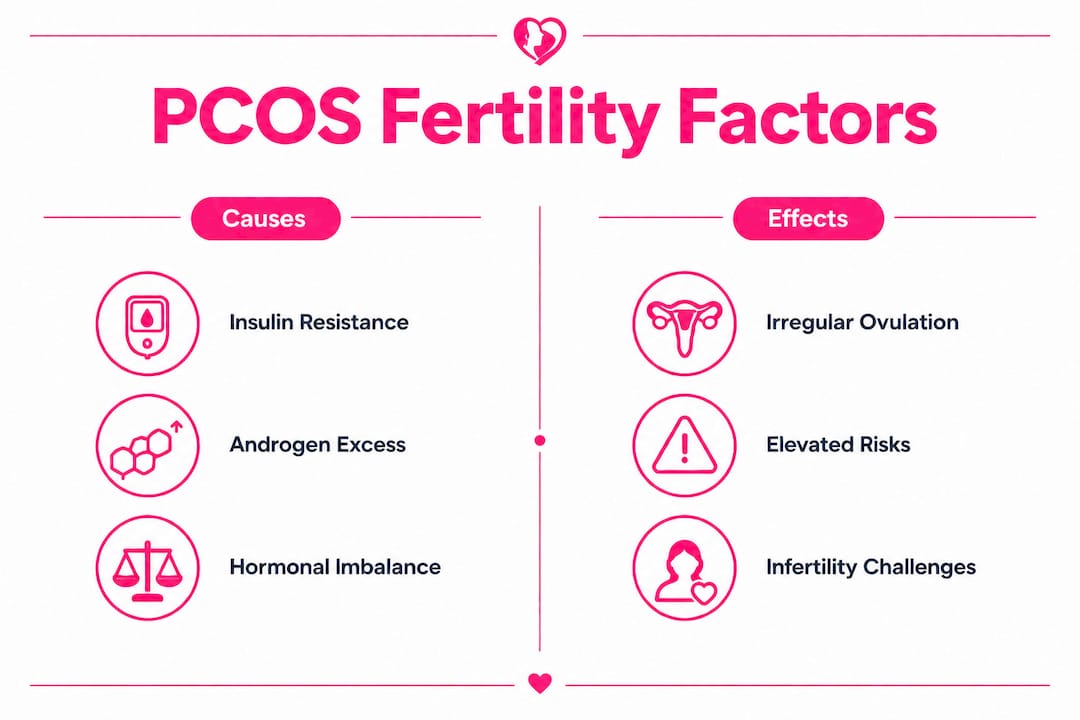
PCOS affects a significant portion of women of reproductive age in the United States and is a leading cause of anovulatory infertility worldwide. At its core, PCOS is a hormonal imbalance in which the ovaries produce higher than normal levels of androgens (male hormones), disrupting the normal development and release of eggs each month.

The fertility impact is direct. When ovulation is irregular or absent, conception becomes difficult without medical support. PCOS also carries metabolic components, including insulin resistance, that compound these reproductive challenges over time.
Key ways PCOS affects fertility:
- Anovulation or oligo-ovulation: Eggs fail to develop fully or are not released consistently, making natural conception unpredictable.
- Hormonal imbalance: Elevated androgens and disrupted luteinizing hormone (LH) patterns interfere with the ovarian cycle.
- Insulin resistance: Present in many women with PCOS, it worsens androgen excess and further suppresses ovulation.
- Irregular menstrual cycles: Infrequent or absent periods are a direct sign that ovulation is not occurring reliably.
- Cystic follicles: Multiple small, undeveloped follicles accumulate on the ovaries, visible on ultrasound, reflecting arrested egg development.
Pro Tip: If you have PCOS and are planning to conceive, consult a fertility specialist early. Early intervention allows for personalized treatment planning before months of unsuccessful attempts.
What are the symptoms and causes of PCOS?

PCOS presents differently from woman to woman, which is part of why it often goes undiagnosed for years. The condition stems from a cycle of hormonal and metabolic dysfunction that reinforces itself over time.
The hallmark symptoms include:
- Irregular or absent periods: Cycles longer than 35 days, or fewer than eight cycles per year, are a common sign.
- Excess androgens: Elevated male hormones cause acne, excess facial or body hair (hirsutism), and sometimes male-pattern hair thinning.
- Polycystic ovaries: Ovaries enlarged with multiple small follicles, detected on ultrasound.
- Weight gain or difficulty losing weight: Particularly around the abdomen, linked to insulin resistance.
- Skin changes: Darkening of skin in body creases (acanthosis nigricans), a marker of insulin resistance.
The underlying cause involves a feedback loop: insulin resistance drives androgen excess, which disrupts ovarian function, which worsens hormonal imbalance. Genetics play a role as well. Women with a mother or sister with PCOS face a higher likelihood of developing it themselves. Not every woman with PCOS will have all symptoms, and severity varies considerably.
How is PCOS diagnosed?
Diagnosis relies on the Rotterdam criteria, the internationally accepted standard, which requires at least two of three findings: irregular or absent ovulation, clinical or biochemical signs of excess androgens, and polycystic ovaries on ultrasound. No single test confirms PCOS on its own.
A thorough diagnostic workup typically includes:
- Hormone blood tests: Measuring LH, follicle-stimulating hormone (FSH), testosterone, DHEA-S, and estradiol to assess hormonal status.
- Fasting glucose and insulin levels: To evaluate insulin resistance and metabolic health.
- Thyroid function and prolactin: To rule out other conditions that mimic PCOS symptoms.
- Pelvic ultrasound: To visualize ovarian morphology and follicle count.
- Anti-Müllerian hormone (AMH): An emerging marker that reflects ovarian reserve and follicle pool size, often elevated in PCOS.
Distinguishing PCOS from other causes of irregular cycles, such as thyroid disorders, hyperprolactinemia, or premature ovarian insufficiency, is critical before starting fertility treatment. A fertility evaluation checklist can help you prepare for these diagnostic conversations with your provider.
Can you get pregnant with PCOS, and what affects your chances?
Yes, pregnancy is absolutely possible with PCOS. The condition is one of the most treatable causes of infertility, and most women with PCOS who receive appropriate care do conceive. The challenge is that ovulation does not happen reliably on its own, so conception often requires targeted support.
Factors that influence fertility outcomes with PCOS:
- Age: Ovarian reserve and egg quality decline with age, so earlier evaluation and treatment generally improve outcomes.
- Body weight: Excess weight worsens insulin resistance and androgen levels, making ovulation less frequent.
- Severity of hormonal imbalance: Women with more pronounced androgen excess or more irregular cycles may need more intensive treatment.
- Presence of other infertility factors: Tubal health, sperm quality, and uterine anatomy all affect overall conception chances independently of PCOS.
Women with PCOS do face elevated risks during pregnancy, including a higher likelihood of miscarriage, gestational diabetes, and preeclampsia. These risks make prenatal care planning and close monitoring throughout pregnancy particularly important. With proper management, many women with PCOS carry healthy pregnancies to term.
Treatment options for PCOS-related infertility
Treatment follows a step-wise approach, starting with the least invasive interventions and advancing based on response. Managing metabolic health alongside ovulation induction consistently improves outcomes.
The treatment progression looks like this:
- Lifestyle modification (first line): Weight loss, dietary changes, and exercise reduce insulin resistance and can restore spontaneous ovulation in some women before any medication is needed.
- Letrozole (preferred oral agent): An aromatase inhibitor now considered the first-choice oral medication for ovulation induction in PCOS, with strong evidence for higher live birth rates compared to older options.
- Clomiphene citrate: A selective estrogen receptor modulator that has been used for decades to stimulate ovulation; still widely prescribed, though letrozole has largely replaced it as the preferred first-line agent.
- Metformin: An insulin-sensitizing medication that addresses the metabolic root of PCOS. Used alongside ovulation induction agents, particularly in women with confirmed insulin resistance.
- Injectable gonadotropins: FSH injections that directly stimulate the ovaries. Used when oral agents fail, they require careful monitoring to reduce the risk of ovarian hyperstimulation syndrome (OHSS).
- In vitro fertilization (IVF): The most effective option for women who do not respond to ovulation induction or who have additional infertility factors. IVF bypasses the need for natural ovulation entirely.
PCOS accounts for approximately 70% of all anovulatory infertility cases, making ovulation induction the cornerstone of fertility treatment for this condition.
A multidisciplinary approach that addresses both reproductive and metabolic health consistently produces the best fertility outcomes. Adjunct options like inositol and vitamin D supplementation have shown promise in some studies, though evidence is still developing.
Managing PCOS at home and supporting long-term fertility
Lifestyle changes are not just a preliminary step before medication. For many women, they are the intervention that makes everything else work better. Even modest weight loss of around 5% can meaningfully improve ovulatory function and metabolic markers in women with PCOS.
Practical strategies for home management:
- Dietary adjustments: A low-glycemic diet that limits refined carbohydrates and added sugars helps reduce insulin spikes and supports hormonal balance.
- Regular physical activity: Moderate exercise, such as 30 minutes of brisk walking most days, improves insulin sensitivity without overtaxing the body.
- Weight management: Even small reductions in body weight can trigger measurable improvements in cycle regularity and ovulation frequency.
- Cycle tracking: Monitoring basal body temperature or using ovulation predictor kits helps identify whether ovulation is occurring and when.
- Stress management: Chronic stress elevates cortisol, which can worsen hormonal imbalance. Practices like mindfulness, yoga, or counseling support overall hormonal health.
- Stopping hormonal contraceptives: Stopping contraceptives 2–3 months before trying to conceive allows menstrual cycles to regulate and gives your provider a clearer picture of your baseline fertility.
Regular follow-up with your healthcare team allows for timely adjustments as your body responds to these changes. Psychological support matters too. The emotional weight of PCOS-related infertility is real, and many fertility clinics now integrate counseling as part of comprehensive care.
Medications commonly used to treat PCOS and support ovulation
Medication choices for PCOS depend on whether the goal is managing symptoms, inducing ovulation, or both. Each drug works through a different mechanism, and the right combination depends on your individual hormonal and metabolic profile.
Key medications and their roles:
- Letrozole: Blocks estrogen production temporarily, prompting the pituitary to release more FSH and stimulate follicle development. Currently the preferred first-line agent for ovulation induction in PCOS.
- Clomiphene citrate: Blocks estrogen receptors in the brain, triggering FSH release. Effective but associated with a thinner uterine lining in some patients, which is one reason letrozole has gained preference.
- Gonadotropins (FSH injections): Directly stimulate the ovaries to develop follicles. Require close ultrasound monitoring to prevent multiple follicle development and OHSS.
- Metformin: Reduces insulin resistance and lowers androgen levels. Often used alongside ovulation induction agents, particularly in women with metabolic syndrome features.
- Spironolactone: Used to manage androgen-related symptoms like hirsutism and acne, but must be stopped immediately if pregnancy occurs due to potential fetal risks.
- GLP-1 receptor agonists: Increasingly used for weight management in PCOS, but also require discontinuation before or upon confirmed pregnancy.
Consulting a fertility specialist before starting or stopping any medication is essential. Self-managing PCOS medications without medical oversight can delay conception or introduce unnecessary risks.
Who gets PCOS?
PCOS does not discriminate by ethnicity or body type, though certain factors increase the likelihood of developing it. The condition affects women across all racial and ethnic backgrounds, and it can appear in adolescents as young as their early teens, though it is most commonly identified when women begin trying to conceive.
Risk factors include a family history of PCOS, type 2 diabetes, or irregular menstrual cycles in close female relatives. Women with obesity carry a higher risk, though PCOS also occurs in women with normal body weight. Insulin resistance, whether or not it leads to visible weight gain, appears to be a central predisposing factor. Because symptoms like irregular periods or acne are often attributed to other causes, many women live with undiagnosed PCOS for years before receiving an accurate diagnosis.
How does PCOS create fertility problems?
The link between PCOS and infertility runs through several interconnected pathways. Elevated androgens disrupt the normal hormonal signaling that triggers ovulation, leaving follicles partially developed but never releasing an egg. Without egg release, fertilization cannot occur.
Insulin resistance compounds the problem by stimulating the ovaries to produce even more androgens, deepening the cycle of hormonal disruption. The pituitary gland also plays a role: in PCOS, LH levels are often disproportionately elevated relative to FSH, which skews the hormonal environment needed for healthy follicle maturation. The result is a reproductive system that is biologically primed to develop follicles but structurally prevented from completing ovulation consistently.
How does PCOS affect your menstrual cycle and ovulation?
PCOS directly disrupts the hormonal sequence that governs the menstrual cycle. A normal cycle depends on a precise rise and fall of estrogen, progesterone, LH, and FSH. In PCOS, this sequence is thrown off by androgen excess and abnormal LH pulsing, which prevents the mid-cycle LH surge that triggers ovulation.
The practical result is cycles that are unpredictable in length, often ranging from 35 days to several months, or absent altogether. Some women with PCOS do ovulate occasionally but irregularly, making natural conception possible but difficult to time. Others experience anovulation chronically, meaning months pass without any egg release. Without ovulation, the uterine lining also fails to shed normally, which over time raises the risk of endometrial hyperplasia.
What is the long-term fertility outlook with PCOS?
The long-term fertility outlook for women with PCOS is generally positive with appropriate treatment. Most women who pursue ovulation induction or assisted reproductive technologies do achieve pregnancy. PCOS does not cause permanent damage to the ovaries, and ovarian reserve in women with PCOS is often higher than average due to the large pool of resting follicles.
That said, pregnancy in women with PCOS carries elevated risks that require monitoring throughout gestation. These include gestational diabetes, pregnancy-induced hypertension, preeclampsia, and a higher rate of cesarean delivery. Miscarriage rates are also somewhat elevated, particularly in women with poorly controlled insulin resistance. Managing metabolic health before and during pregnancy, through diet, exercise, and medication when indicated, reduces many of these risks substantially. Women with PCOS who are not yet ready to conceive may also consider egg freezing as a fertility preservation option, particularly if they wish to delay pregnancy while protecting their reproductive options.
When should you see a fertility specialist for PCOS?
The standard recommendation for otherwise healthy women under 35 is to try conceiving for 12 months before seeking specialist evaluation. For women with PCOS, that timeline is shorter. Because PCOS directly causes ovulatory dysfunction, waiting a full year without treatment is rarely productive.
Seek a specialist evaluation if:
- You have a confirmed or suspected PCOS diagnosis and have been trying to conceive for six months without success.
- Your menstrual cycles are consistently irregular or absent, regardless of how long you have been trying.
- You are 35 or older, in which case a specialist evaluation after three to six months of trying is appropriate.
- You have additional risk factors such as a prior miscarriage, known tubal issues, or a partner with a known semen analysis concern.
A reproductive endocrinologist can assess your full hormonal and metabolic profile, confirm whether ovulation is occurring, and design a treatment plan tailored to your specific presentation. Early specialist involvement shortens the path to conception and reduces the emotional toll of prolonged uncertainty.
Ready to take the next step toward conception?
Life IVF Center specializes in personalized fertility care for women with PCOS and complex reproductive health needs. The clinic’s Precision IVF® approach customizes every treatment protocol based on your unique hormonal profile, medical history, and fertility goals, reducing unnecessary treatment cycles and improving outcomes. Whether you are just beginning to explore your options or have already tried other approaches, Life IVF Center’s team of reproductive endocrinologists across Southern California is ready to guide you. Explore fertility treatment packages designed with PCOS patients in mind and take the first step with confidence.
Key Takeaways
PCOS is the leading cause of anovulatory infertility, but with the right treatment approach, most women with the condition can achieve pregnancy.
| Point | Details |
|---|---|
| PCOS prevalence | PCOS affects about 1 in 10 women of reproductive age and is the top cause of anovulatory infertility. |
| Ovulation is the core issue | Irregular or absent ovulation, driven by androgen excess and insulin resistance, is the primary barrier to conception. |
| Treatment follows a clear path | Care progresses from lifestyle changes to letrozole or clomiphene, then gonadotropins, then IVF if needed. |
| Modest weight loss helps | A weight reduction of around 5% can meaningfully improve ovulatory function and metabolic health in women with PCOS. |
| Pregnancy risks require monitoring | Women with PCOS face elevated risks for gestational diabetes and preeclampsia, making close prenatal follow-up important. |
Recommended
- PCOS Complex IVF Protocol: A Step-by-Step Guide
- Evidence-Based Endometriosis Fertility Tips for Better Conception
- Common Fertility Myths Debunked: Facts You Need to Know
- Blog – Life IVF Center
Ready to take the next step?
Life IVF Center specializes in individualized Precision IVF® care for complex cases—including diminished ovarian reserve, prior failed cycles, and advanced maternal age. Our in-house labs and dedicated physicians are ready to help.
Book a Free Consultation →