

A Lactobacillus-dominant vaginal and uterine environment is consistently linked to better clinical pregnancy odds in fertility treatment, but that link is an association, not proven causation. The practical move right now is not blanket microbiome testing. It is diagnosing and treating symptomatic bacterial vaginosis or chronic endometritis when present, since no major guidance body currently recommends routine endometrial microbiome screening before IVF. The sections below walk through the biology, the testing limits, the trial data, and what to actually ask your clinic.
TL;DR: Studies associate some reproductive-tract microbiome patterns with IVF outcomes, but this does not prove that changing the microbiome improves pregnancy or live birth rates. Testing methods vary, uterine samples are vulnerable to contamination, and routine microbiome screening or probiotic treatment is not recommended for all IVF patients.
Table of Contents
- What Is the Uterine Microbiome and Why Does It Affect Fertility?
- How Do Doctors Test the Uterine Microbiome, and Why Do Results Vary?
- What Does the Research Say About Microbiome Profiles and IVF Outcomes?
- Do Antibiotics and Probiotics Actually Improve Fertility Outcomes?
- When Should You Test or Treat the Uterine Microbiome Before IVF?
- How Life IVF Center Approaches Microbiome Considerations in Precision IVF®
- The Editorial Take: Evidence Over Hype
- Ready to Discuss Your Uterine Health With a Fertility Specialist?
- Sources
- FAQ
What Is the Uterine Microbiome and Why Does It Affect Fertility?
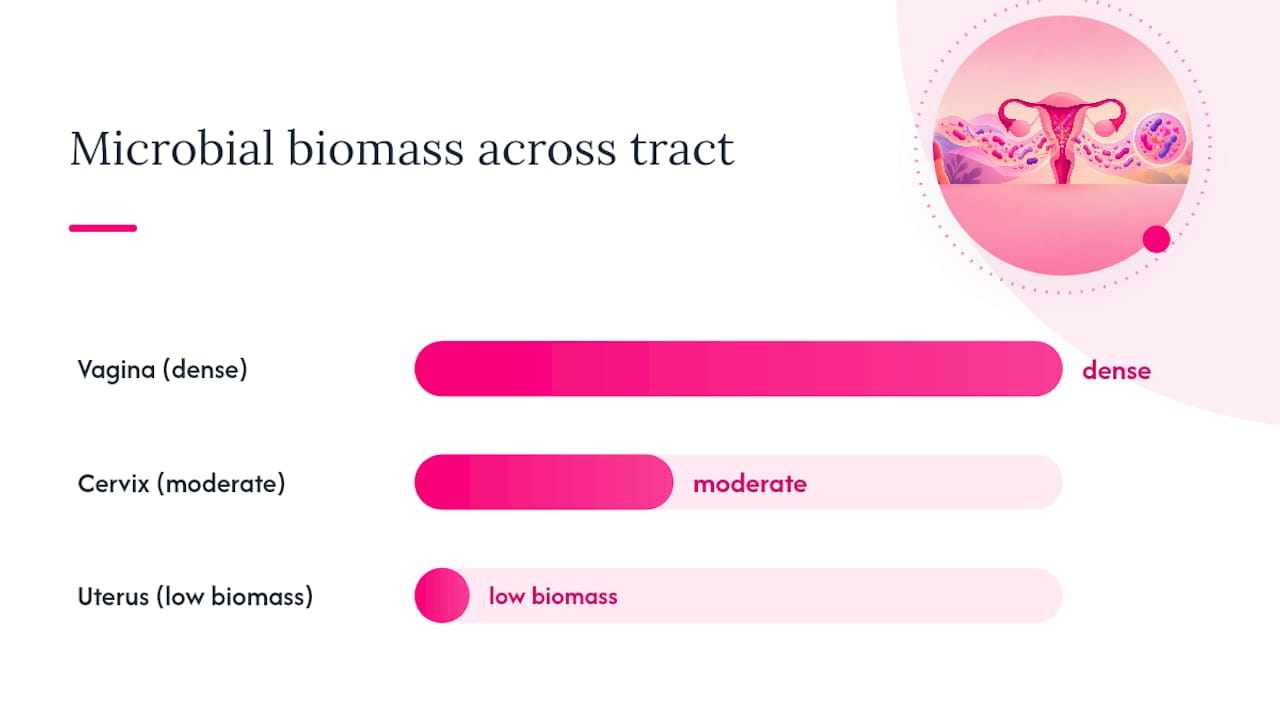
The reproductive tract is not one environment. It is a series of connected niches, the vagina, the cervix, and the uterus, and the bacterial population changes dramatically as you move from one to the next. The vagina carries a relatively dense, well-studied microbial community. The uterus is what researchers call “low biomass,” meaning it holds far fewer bacteria. This makes it much harder to sample and analyze without picking up contamination from the cervix or the collection instrument on the way through.
Lactobacillus species, especially Lactobacillus crispatus, do more than just occupy space. They produce lactic acid that keeps vaginal and cervical pH low and hostile to many pathogens, they secrete bacteriocins that directly suppress competing bacteria, and they interact with the local immune system in ways that appear to keep inflammation in check. A community dominated by these organisms is typically called Lactobacillus-dominant (LD). One that instead contains a mix of anaerobes such as Gardnerella, Atopobium, Prevotella, or Streptococcus is called non-Lactobacillus-dominant (non-LD), and it is this second pattern that shows up repeatedly in studies of poorer implantation.
The proposed mechanisms connecting a non-LD uterine environment to implantation failure fall into a few overlapping categories:
- Local inflammation: dysbiotic bacteria can trigger an inflammatory cascade in the endometrial lining that may interfere with the window of receptivity an embryo needs to implant.
- Biofilm formation: certain species, particularly those tied to chronic endometritis and dysbiotic patterns, can form biofilms on the endometrial surface that physically and chemically disrupt normal tissue signaling.
- Metabolite shifts: a non-LD community produces different byproducts than a Lactobacillus-rich one, and some of those metabolites may alter the local immune and hormonal signals embryos rely on.
- Reduced protective buffering: without lactic acid keeping pH low, the endometrium loses a layer of chemical protection against ascending pathogens from the lower tract.
None of these mechanisms is fully proven in humans. They are biologically plausible explanations built from a mix of animal models, in vitro work, and correlational human studies, which is an important distinction to hold onto as you read the clinical evidence further down.
How Do Doctors Test the Uterine Microbiome, and Why Do Results Vary?
Testing the uterine microbiome sounds straightforward until you realize there is no single agreed-upon method, sample site, or cutoff for what counts as “dominant.” That inconsistency is a major reason two labs can analyze similar patients and reach different conclusions.
Clinicians and researchers currently draw samples from several different sites, and each comes with tradeoffs:
- Vaginal swab: easiest to collect, least invasive, but reflects the vaginal community rather than the uterine cavity directly.
- Endometrial fluid or biopsy: sampled via a catheter passed through the cervix, offering a more direct look at the uterine niche, but carrying real contamination risk from cervical and vaginal flora picked up along the way.
- Embryo-transfer catheter tip: analyzed after a real transfer procedure, useful because it reflects the exact conditions the embryo encountered, though it cannot be used prospectively to guide that same cycle.
- Menstrual blood: a newer, less invasive sampling option being studied as a proxy for the endometrial environment across a full cycle, though it remains less validated than direct sampling.
Lab analysis methods differ just as much. Quantitative PCR (qPCR) targets specific known bacterial genes and gives a fast, targeted readout, while 16S rRNA sequencing or broader next-generation sequencing (NGS) captures the full community composition but is more expensive and more prone to detecting trace contamination as if it were a real signal. Studies commonly define “Lactobacillus-dominant” using a cutoff, often somewhere around 90% relative abundance of Lactobacillus reads, but that threshold is not standardized across labs, which is part of why pooled results across studies show real heterogeneity.
Contamination control is the crux of the whole measurement problem. Because the uterus holds so few bacteria, even small amounts of reagent contamination or cervical carryover during sampling can swamp the true signal, a limitation that reviews of endometrial microbiome methodology flag repeatedly.
Pro Tip: If your clinic ever discusses endometrial microbiome testing with you, ask specifically whether the lab uses negative controls (empty catheter runs, reagent blanks) to rule out contamination. A result without that safeguard is far less trustworthy than one that includes it.
What Does the Research Say About Microbiome Profiles and IVF Outcomes?
The strongest signal in the current evidence comes from a systematic review and meta-analysis pooling comparative studies published between 2015 and 2025. The GRADE certainty rating for that clinical pregnancy finding was moderate, while the evidence for live birth specifically was more heterogeneous, meaning the studies did not line up as cleanly once you look past the initial pregnancy test.
By the numbers: A pooled odds ratio near 9.9 for clinical pregnancy, moderate certainty per GRADE, but inconsistent evidence once outcomes extend to live birth.
Individual cohort studies add texture to that pooled figure. One of the most cited, from Moreno and colleagues, found that women with a non-Lactobacillus-dominant endometrial profile had significantly lower implantation, clinical pregnancy, ongoing pregnancy, and live birth rates than women with LD profiles in the same IVF cohort. It is an influential finding, but it comes from a specific, moderately sized patient population using a particular sampling and sequencing approach, and it has not been replicated at the same scale everywhere.
Broader reviews of the female genital microbiota reach a more tempered conclusion. A synthesis of the mechanistic and clinical literature notes that Lactobacillus-dominant vaginal communities are protective across a range of studies, while endometrial-specific findings remain “methodologically fragile,” a phrase that captures the contamination and sample-size problems discussed above.
Then the interventional evidence complicates the story further. A large, randomized, double-blind trial testing clindamycin plus the live biotherapeutic LACTIN-V against placebo in IVF patients with an abnormal vaginal microbiota found no improvement in clinical pregnancy rates from active treatment across the general study population. Adverse events were actually somewhat higher in the treatment arms. That result does not erase the association seen in cohort studies, but it does show that correcting a “bad” microbiome profile with antibiotics and a probiotic strain does not automatically translate into more babies for everyone.
Putting the pieces together:
- What is consistent: Lactobacillus dominance correlates with better pregnancy odds across multiple study designs and populations.
- What is inconsistent: the size of that effect, the definition of “dominant,” and whether treating a non-LD profile actually changes outcomes.
- What is missing: large, well-controlled trials that test intervention in patients selected specifically for endometrial dysbiosis rather than a general IVF population.
That gap between a strong observational association and a null intervention trial in unselected patients is exactly why professional bodies have not yet endorsed routine screening.
Do Antibiotics and Probiotics Actually Improve Fertility Outcomes?
Several intervention categories exist, and none of them currently carries strong, consistent evidence for improving pregnancy rates across a general IVF population, though some show narrower promise.
Targeted antibiotics remain the standard first response to symptomatic bacterial vaginosis (BV) or confirmed chronic endometritis (CE). Regimens typically involve oral or vaginal metronidazole or clindamycin for BV, and a course of doxycycline or a combination antibiotic protocol for CE confirmed by biopsy or hysteroscopy. This is not experimental territory. Treating a diagnosed infection before a transfer is standard clinical practice independent of any microbiome-specific theory.
Probiotic supplementation, either intravaginal or oral, is a different story. Strain, dose, and duration vary enormously between studies, and there is no consensus protocol. Some trials using intravaginal lactobacilli reported a reduction in miscarriage in specific subgroups, which is an encouraging but narrow signal, not a broad pregnancy-rate improvement. Oral probiotic evidence for reproductive outcomes specifically is even thinner.
Live biotherapeutics, like the LACTIN-V product tested in the large clindamycin trial referenced above, represent a more engineered approach: delivering a specific, characterized Lactobacillus crispatus strain rather than a generic probiotic blend. Despite that precision, the trial found no clinical pregnancy benefit in its overall study population, though the researchers noted certain subgroup signals worth further study.
Vaginal microbiota transplant (VMT), transferring an entire vaginal community from a screened donor to a recipient, remains experimental. It has been studied on a small scale for recurrent bacterial vaginosis outside of fertility contexts, and safety, donor screening standards, and regulatory pathways for reproductive use are not yet established. It is not an option offered in standard fertility care.
- Bottom line on antibiotics: use them for a diagnosed infection, not as a blanket pre-transfer step.
- Bottom line on probiotics: may help in specific subgroups (some miscarriage-reduction signal), but no confirmed universal benefit.
- Bottom line on live biotherapeutics: mechanistically elegant, not yet proven to move the needle for the average patient.
- Bottom line on VMT: experimental, not clinically available for fertility indications.
Pro Tip: If a clinic or supplement company promises a specific probiotic strain “proven to boost IVF success,” ask them to name the trial. Most claims trace back to small, strain-specific studies that have not been replicated at scale, and the ESHRE good practice recommendations explicitly caution against overinterpreting this kind of evidence.
When Should You Test or Treat the Uterine Microbiome Before IVF?
Not every patient needs microbiome testing, and current professional guidance is deliberately conservative about who does.
Testing or targeted treatment is reasonable to discuss when you have a history of recurrent implantation failure (RIF) or recurrent pregnancy loss (RPL), when you have persistent BV symptoms that keep recurring despite standard treatment, or when chronic endometritis is suspected based on hysteroscopy findings or unexplained repeated cycle failures. Outside of those situations, ESHRE’s guidance on recurrent implantation failure notes that routine uterine and vaginal microbiome profiling is not currently recommended, because the methodological and clinical-evidence questions around it remain unresolved.
A pragmatic, stepwise approach looks like this:
- Start with a symptom review. Persistent discharge, odor, or irregular bleeding warrants a standard vaginal health workup before anything more elaborate.
- Order targeted diagnostics only when indicated, using labs that apply contamination controls (reagent blanks, catheter controls) rather than a generic sequencing panel with no quality safeguards.
- Treat confirmed BV or CE per standard guidelines with the appropriate antibiotic course, not a probiotic substitute.
- Re-evaluate the vaginal community state before transfer in patients with a treated history, to confirm the infection has actually resolved rather than assuming it has.
- Reserve endometrial sampling for select cases, ideally within a research protocol, given how fragile the direct endometrial signal remains.
Confounders worth raising with your provider include age, body mass index, and recent hormonal treatment, all of which can shift microbial composition independent of any underlying fertility problem. Before agreeing to any microbiome test, it is worth asking your clinic directly: what sampling method will be used, what contamination controls are in place, and what specific result would actually change your treatment plan. If the answer to that last question is vague, the test may not be worth the cost or the wait.
How Life IVF Center Approaches Microbiome Considerations in Precision IVF®
Life IVF Center’s Precision IVF® approach starts from the premise that a treatment plan should reflect your specific biology and history rather than a one-size protocol. For patients where uterine or vaginal health is a live concern, whether from recurrent implantation failure, prior BV, or unexplained cycle losses, that means individualized evaluation rather than a blanket test ordered on everyone.
An evaluation may include testing for specific infections when symptoms or history support it. An Endometrial Receptivity Assay (ERA), when considered, addresses embryo-transfer timing; it does not diagnose bacterial vaginosis, chronic endometritis, or the uterine microbiome. Testing should be ordered only when the result is likely to change care.
If you are dealing with recurrent implantation failure or symptoms that have not resolved with standard treatment, that history is worth raising directly with your care team, including whether targeted microbiome-related testing or participation in ongoing research makes sense for your specific case.
The Editorial Take: Evidence Over Hype
The honest reading of this research is that the vaginal microbiome, not the endometrial one, is the most actionable signal available right now. Lactobacillus dominance correlates strongly with clinical pregnancy across cohorts, but the leap from “correlates with” to “fix this and get pregnant” has not held up in the one large randomized trial designed to test it directly.
Conventional wellness advice around fertility often skips that distinction entirely, selling probiotic protocols as near-guaranteed fixes based on small, strain-specific studies. That is overreach. The better instinct is narrower: treat symptomatic BV and chronic endometritis using established protocols, be skeptical of any product claiming to “optimize” your microbiome without trial data behind it, and save endometrial sampling for cases where implantation has genuinely and repeatedly failed. Precision in fertility care means matching the intervention to the evidence, not applying every available test to every patient.
Ready to Discuss Your Uterine Health With a Fertility Specialist?
If recurrent implantation failure, persistent BV, or unexplained cycle losses have you wondering whether your uterine environment is playing a role, a generic online probiotic protocol will not answer that question. Life IVF Center builds evaluation and treatment around your specific history through its Precision IVF® approach, pairing individualized testing with a plan built for your case rather than a standardized checklist.

Depending on what your history suggests, that evaluation might include the Infectious Disease (ID) Panel, an Endometrial Receptivity Assay (ERA), or other components of a full pre-IVF workup, each priced individually so you know what you are paying for before you commit. Patients from outside the immediate area also get support coordinating travel and scheduling across visits. The first step is a consultation where your history and any prior test results get an actual review, not a form letter. You can book a consultation to start that conversation with Life IVF Center’s team.
This article is for general educational purposes and is not medical advice. Do not start or stop antibiotics, probiotics, or fertility treatment based on this article; discuss symptoms and options with a qualified healthcare professional.
Sources
- Microbiome and Reproductive Outcomes: A Systematic Review and Meta-Analysis (2015–2025)
- Impact of the Female Genital Microbiota on Outcomes of Assisted Reproductive Techniques
- Study linking endometrial microbiota profiles to IVF outcomes (Moreno et al.)
- Randomized trial of clindamycin plus LACTIN-V in IVF patients with abnormal vaginal microbiota
FAQ
What Are the Top Causes of Female Infertility?
The most common causes include ovulatory disorders (such as polycystic ovary syndrome), tubal or pelvic pathology (often from endometriosis or prior infection), and diminished ovarian reserve related to age. Uterine and endometrial factors, including dysbiosis and chronic endometritis, are increasingly studied as contributing factors but are not among the top three established causes.
How Do You Check the Uterine Microbiome?
Testing involves sampling the endometrial fluid or lining, usually via a catheter passed through the cervix, then analyzing the sample with qPCR or genetic sequencing to identify which bacteria are present. Results vary significantly by lab because of contamination risk and inconsistent thresholds for defining a “Lactobacillus-dominant” community, which is why ESHRE guidance does not currently recommend it as a routine test.
Can Long-Term Bacterial Vaginosis Cause Infertility?
Persistent, untreated bacterial vaginosis is associated with a higher risk of pelvic inflammatory disease and has been linked to lower implantation rates in some IVF cohorts. It is treatable with standard antibiotic regimens, and addressing symptomatic BV before an embryo transfer is considered reasonable practice regardless of the broader microbiome debate.
Which Probiotic Is Best for Fertility?
No single probiotic strain has been confirmed as broadly effective for improving pregnancy rates. Some intravaginal lactobacilli formulations showed a miscarriage-reduction signal in specific subgroups, but a large randomized trial of a live biotherapeutic strain found no overall clinical pregnancy benefit, so any probiotic decision should be made with your fertility provider rather than based on marketing claims.
Does Life IVF Center Test for Uterine Microbiome Issues?
Life IVF Center’s pre-IVF workup includes tests relevant to uterine health, such as the Infectious Disease (ID) Panel and Endometrial Receptivity Assay (ERA), used selectively as part of an individualized Precision IVF® plan rather than as a routine screen for every patient. Pricing for these tests varies and is typically available on the clinic’s pricing page; a consultation can help determine which tests might be appropriate for a given case.
This article is for general educational purposes only and is not a substitute for personalized medical advice, diagnosis, or treatment. Fertility care is highly individual; please consult a qualified healthcare professional about your specific circumstances.
