
Navigating fertility supplements when you are already managing a complex reproductive history or facing age-related challenges can feel like searching for solid ground in shifting sand. The market is crowded with products making bold promises, and a quick online search returns dozens of “best supplement” lists that rarely agree with one another. What most of those lists miss is that fertility supplement research is highly diagnosis-specific, and the evidence quality varies enormously depending on whether you are dealing with diminished ovarian reserve, idiopathic male infertility, PCOS, or preparing for an assisted reproductive technology cycle. This article cuts through the noise with an evidence-based framework, detailed supplement profiles, and scenario-driven recommendations grounded in the latest meta-analytic research.
Table of Contents
- How to evaluate fertility supplements: What the evidence says
- Fertility supplements for women: Options, effects, and limitations
- Male fertility supplements: CoQ10, L-carnitine, and outcome benchmarks
- Head-to-head comparison and recommendations by scenario
- The uncomfortable truth about fertility supplement selection
- Next steps: Personalized fertility support at Life IVF Center
- Frequently asked questions
Key Takeaways
| Point | Details |
|---|---|
| Evidence varies by diagnosis | Choose supplements based on your specific infertility diagnosis and mechanism for best results. |
| Duration matters | Most supplements show stronger effects when taken for two to three months or longer. |
| CoQ10 stands out | CoQ10 has outperformed other options for both diminished ovarian reserve in women and idiopathic infertility in men. |
| Specialist guidance is crucial | Coordinate supplement use with fertility specialists and ART timelines to optimize benefits and safety. |
How to evaluate fertility supplements: What the evidence says
Before you add a single capsule to your daily routine, it helps to understand how fertility supplement research is structured and what it can realistically tell you. Most of the strongest evidence comes from systematic reviews and network meta-analyses, which pool data from multiple randomized controlled trials to detect patterns that individual studies cannot reliably show. Even so, the certainty of that evidence is often rated as low to very low, meaning the findings are directionally useful but not definitive.
A large 2025 network meta-analysis assessed a wide range of nutritional supplements for women with infertility and found some promising signals, including a combination of probiotics and vitamin D for clinical pregnancy rates. However, the certainty of evidence for several outcomes was rated as low to very low across the board. This is not a reason to dismiss supplements entirely. It is a reason to be precise about why you are using them.
The most defensible approach to fertility treatment benchmarks is diagnosis-driven selection. Supplements tend to show the most meaningful benefit when they address a specific biological mechanism, such as oxidative stress in sperm DNA, insulin resistance in PCOS, or mitochondrial energy deficits in aging oocytes. Broad-spectrum “fertility blends” that attempt to address everything at once rarely match the effect sizes seen in targeted protocols.
When evaluating any supplement, apply these criteria:
- Diagnosis alignment: Does the supplement address a mechanism relevant to your specific diagnosis?
- Mechanism clarity: Is there a plausible biological reason this compound would help (e.g., antioxidant activity, hormone modulation)?
- Evidence strength: Is the supporting research from randomized trials, and has it been pooled in a meta-analysis?
- Outcome focus: Does the evidence measure clinical pregnancy rates or live birth rates, not just surrogate markers?
- Specialist input: Has a reproductive endocrinologist reviewed the choice in the context of your treatment timeline?
“No supplement has been proven to reliably increase fertility across the board. Benefit is most plausible when addressing specific mechanisms tied to an individual’s diagnosis.” (Adapted from 2025 network meta-analysis findings)
Getting fertility testing insights before selecting supplements is not optional. It is the foundation. Knowing your AMH level, antral follicle count, sperm analysis results, and hormonal profile allows a specialist to match supplement choices to your actual biology. Reviewing supplement selection tips from pharmacist-level resources can also help you understand formulation quality and dosing standards before purchasing.
Having outlined this evaluation framework, let’s dive deeper into individual supplement options and their evidence profiles.
Fertility supplements for women: Options, effects, and limitations
For women navigating infertility, the supplement landscape is shaped heavily by diagnosis. The most studied compounds include Coenzyme Q10 (CoQ10), dehydroepiandrosterone (DHEA), vitamins D and E, probiotics, and curcumin. Each has a distinct mechanism, a specific population where it shows the most promise, and real limitations that patient-facing marketing often glosses over.
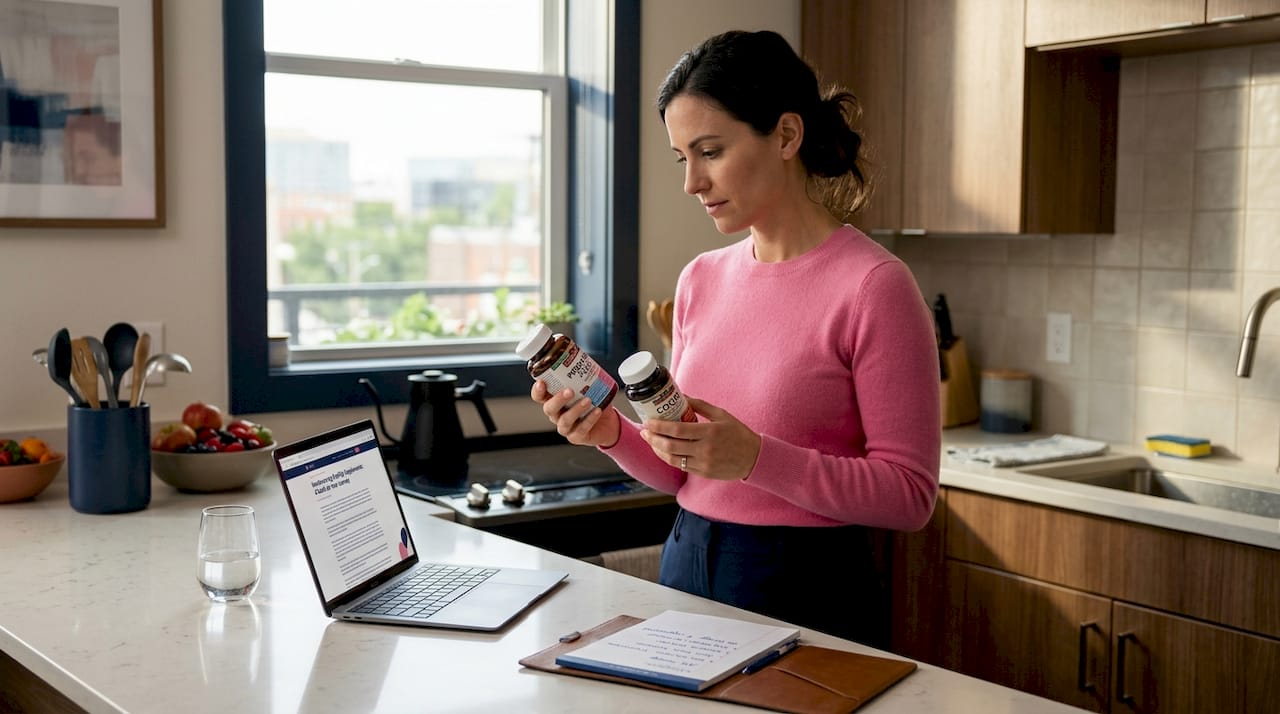
A systematic review and meta-analysis focused on women with diminished ovarian reserve found that oral nutritional supplements, including vitamins, CoQ10, and DHEA, showed beneficial associations with reproductive markers and clinical pregnancy rates. Importantly, the analysis found that effects were stronger when supplementation lasted more than two months, and CoQ10 alone outperformed DHEA alone in subgroup analysis. This is a clinically meaningful distinction for anyone designing a pre-cycle protocol.
Here is a summary of the most commonly studied female fertility supplements:
| Supplement | Primary mechanism | Best-use scenario | Evidence quality |
|---|---|---|---|
| CoQ10 | Mitochondrial energy support, antioxidant | DOR, age-related oocyte decline | Moderate (for DOR) |
| DHEA | Androgen precursor, follicular support | DOR, poor ovarian response | Low to moderate |
| Vitamin D | Immune modulation, endometrial receptivity | General infertility, PCOS | Low to moderate |
| Probiotics | Microbiome balance, inflammation reduction | ART cycles, combined with vitamin D | Low |
| Curcumin | Anti-inflammatory, antioxidant | Endometriosis, oocyte quality | Very low |
| Vitamin E | Antioxidant, endometrial thickness | ART support, thin endometrium | Low |
For women with DOR supplement strategies in mind, CoQ10 at doses ranging from 200 to 600 mg daily is the most consistently supported choice. It works by improving mitochondrial function in oocytes, which becomes increasingly relevant after age 35 when cellular energy production naturally declines. DHEA, typically dosed at 25 to 75 mg daily, is often added for women with very low AMH or poor response to ovarian stimulation, though it requires monitoring due to androgenic side effects.
The probiotic-plus-vitamin D combination deserves attention despite its low certainty rating. The biological rationale is sound: vitamin D receptors are present in endometrial tissue, and a balanced vaginal and gut microbiome may reduce inflammatory interference with implantation. For women undergoing ART cycles, this combination may offer a low-risk adjunct worth discussing with your specialist.
Curcumin, the active compound in turmeric, has generated interest for its anti-inflammatory properties, particularly in endometriosis supplement tips. However, the current evidence for curcumin improving fertilization rates or clinical pregnancy outcomes remains very low certainty. It may have a role as part of a broader anti-inflammatory protocol, but it should not be the centerpiece of a fertility supplement plan.
Pro Tip: For women with DOR, prioritize CoQ10 over DHEA as the primary supplement. Add DHEA only under specialist supervision if ovarian response remains poor after an adequate CoQ10 trial of at least eight weeks. Review DOR treatment options with your reproductive endocrinologist before finalizing your protocol.
Useful guidance on female fertility supplement choices from pharmacy-level resources can help you compare formulation quality, bioavailability differences between ubiquinol and ubiquinone forms of CoQ10, and appropriate dosing ranges before your specialist consultation.
With women’s supplement profiles established, we turn to the strongest evidence for male fertility support.
Male fertility supplements: CoQ10, L-carnitine, and outcome benchmarks
Male factor infertility contributes to roughly half of all infertility cases, yet supplement discussions in couples’ fertility planning often focus disproportionately on the female partner. The evidence for male fertility supplements has strengthened considerably in recent years, with two high-quality 2025 meta-analyses offering clearer guidance than previously available.
For men with idiopathic (unexplained) infertility, CoQ10 supplementation is associated with statistically significant improvements in sperm concentration, volume, and motility, along with higher clinical pregnancy odds compared to placebo. The analysis of randomized trials found that benefits were most pronounced with treatment durations exceeding three months, and safety was generally reassuring with only minimal, transient side effects reported.
A separate 2025 network meta-analysis compared multiple supplements head-to-head for men with unexplained infertility and found that both L-carnitine and CoQ10 improved semen quality versus placebo. The ranking was nuanced: CoQ10 performed highest for sperm concentration improvements, while L-carnitine ranked highest for progressive motility gains. The combination of L-carnitine and acetyl-L-carnitine also showed favorable results, suggesting that carnitine compounds may work through complementary pathways.
| Supplement | Strongest effect | Ranking vs. placebo | Minimum duration |
|---|---|---|---|
| CoQ10 | Sperm concentration, clinical pregnancy odds | Highest for concentration | 3 months |
| L-carnitine | Progressive motility | Highest for motility | 3 months |
| Acetyl-L-carnitine (combined) | Motility, DNA integrity | Favorable | 3 months |
| Vitamin C + E (antioxidant combo) | Oxidative stress reduction | Moderate | 2 to 3 months |
| Zinc + folate | Sperm count | Moderate | 3 months |
Key considerations for male supplement protocols:
- Semen analysis results should guide supplement selection. If concentration is the primary concern, CoQ10 is the stronger choice. If motility is the limiting factor, L-carnitine or a carnitine combination is preferable.
- Sperm production cycles take approximately 74 days, which is why the three-month minimum treatment period is not arbitrary. It aligns with one full spermatogenesis cycle.
- CoQ10 dosing in clinical trials typically ranges from 200 to 300 mg daily. L-carnitine doses range from 1 to 3 grams daily, often split into two doses.
- Combining CoQ10 and L-carnitine is generally safe and may offer additive benefits, though the evidence for combination protocols is less robust than for individual agents.
For men preparing for an IVF cycle, reviewing male fertility IVF tips alongside supplement planning ensures that the timing of supplementation aligns with the egg retrieval and fertilization schedule. Additional male fertility FAQs address common questions about sperm quality, DNA fragmentation testing, and how semen parameters affect IVF outcomes.
Pro Tip: Review your semen analysis before choosing between CoQ10 and L-carnitine. If your report shows low concentration as the primary issue, CoQ10 is your first-line choice. If progressive motility is the main deficit, start with L-carnitine. Explore male fertility supplements for formulation guidance and quality benchmarks before purchasing.
With supplement options profiled, let’s compare them side-by-side and discuss special-case recommendations.
Head-to-head comparison and recommendations by scenario
Choosing the right supplement becomes more straightforward when you map options directly to clinical scenarios. The following comparison organizes the most evidence-supported choices by diagnosis and treatment context.
| Scenario | Recommended supplement(s) | Primary outcome target | Evidence certainty |
|---|---|---|---|
| DOR, age >35 | CoQ10 (primary), DHEA (secondary) | Oocyte quality, clinical pregnancy | Moderate |
| PCOS | Vitamin D, inositol, probiotics | Ovulation, insulin sensitivity | Low to moderate |
| Idiopathic male infertility | CoQ10 (concentration), L-carnitine (motility) | Semen parameters, pregnancy odds | Moderate |
| ART cycle preparation (female) | CoQ10, vitamin D, probiotics | Endometrial receptivity, oocyte quality | Low |
| Endometriosis | Curcumin, vitamin D, omega-3 | Inflammation, pain, oocyte quality | Very low |
A meta-analysis focused on complex reproductive histories confirms that for women over 35 with DOR, PCOS, or those undergoing ART cycles, meta-analyses can show meaningful marker improvements, but evidence certainty remains low and effects vary by subgroup and duration. This reinforces why diagnosis-driven selection is the most defensible approach rather than choosing supplements based on popularity or general wellness claims.
Actionable steps for making your supplement decision:
- Complete a full fertility workup, including AMH, FSH, antral follicle count, and semen analysis, before selecting any supplement.
- Identify the primary biological mechanism you are targeting (oxidative stress, mitochondrial function, insulin resistance, or inflammation).
- Choose supplements with the strongest evidence for your specific diagnosis and mechanism.
- Align the start date of supplementation with your treatment timeline. For ART cycles, most specialists recommend starting two to three months before egg retrieval.
- Schedule a follow-up with your reproductive endocrinologist to assess whether markers have improved before proceeding to a cycle.
“No supplement has been proven to reliably increase fertility across the board. Best results arise when targeting specific mechanisms tied to an individual’s diagnosis and treatment plan.”
For those considering egg and embryo freezing as part of their reproductive planning, supplement timing relative to the freeze cycle matters. CoQ10 and antioxidant protocols are typically initiated two to three months before the stimulation phase. Coordinating with ART coordination strategies ensures that supplement protocols do not interfere with stimulation medications or monitoring schedules.
With these head-to-head recommendations in place, let’s reflect on where real-world selection can go wrong and what experts wish you knew before deciding.
The uncomfortable truth about fertility supplement selection
Here is what most supplement articles will not tell you directly: the single biggest mistake people make is selecting supplements based on general wellness logic rather than reproductive medicine evidence. A supplement that supports cardiovascular health or general antioxidant status is not automatically beneficial for fertility, and the doses required for reproductive benefit often differ substantially from standard wellness dosing.
Generalized “top 10 fertility supplements” lists rarely account for the interaction between supplement timing and ART protocols. Some antioxidants, for example, may theoretically interfere with the controlled oxidative environment that supports certain stages of follicular development. This is not a reason to avoid all antioxidants, but it is a reason to have a specialist review your specific protocol rather than self-prescribing based on a blog post.
The meta-analytic evidence is clear that subgroup nuances matter enormously. A supplement showing benefit in women with DOR may show no benefit in women with normal ovarian reserve. A dose effective for three months may plateau or lose relevance after six months. Protocols need to adapt as your clinical picture evolves, which means supplement selection is not a one-time decision but an ongoing conversation with your care team.
“Choosing supplements without specialist guidance risks missing the window for clinical benefit, particularly in time-sensitive situations like ART cycle preparation or age-related fertility decline.”
The couples and individuals who see the best outcomes from supplement protocols are those who treat them as one component of a medically supervised plan, not as a standalone intervention. Integrating ART supplement integration guidance from your clinic ensures that every element of your preparation, including supplements, nutrition, and medication, works in the same direction.
Pro Tip: Always align supplement timing and selection with your medical team’s ART schedule. Starting CoQ10 or L-carnitine three months before a planned egg retrieval or IUI cycle maximizes the window for measurable improvement in oocyte or sperm quality.
Next steps: Personalized fertility support at Life IVF Center
Understanding the evidence is the first step. Translating it into a plan that fits your specific diagnosis, age, and treatment timeline is where expert guidance becomes essential.
Life IVF Center’s Precision IVF® approach is built on exactly this principle. Every protocol, including supplement recommendations, is customized to your unique biological profile and treatment goals. Whether you are managing DOR, preparing for an ART cycle, or addressing male factor infertility, the team at Life IVF Center coordinates diagnosis-driven supplement strategies alongside your full treatment plan. Explore sperm and male fertility resources for additional guidance, and review insurance for fertility care to understand your coverage options before your first consultation.
Frequently asked questions
Do fertility supplements work for everyone?
No supplement reliably increases fertility for all individuals. Best results occur when supplements address specific biological mechanisms tied to a confirmed diagnosis, with specialist oversight guiding selection and timing.
How long should you take fertility supplements before seeing results?
Most evidence shows improved reproductive markers and pregnancy rates when supplements are used for more than two months for female fertility and more than three months for male fertility, aligning with biological cycles for oocyte maturation and spermatogenesis.
Are fertility supplements safe?
Most supplements studied in clinical trials are well-tolerated, with minimal mild transient side effects reported. Always consult your fertility specialist before starting any supplement, particularly if you are on stimulation medications or other treatments.
Which supplements work best for diminished ovarian reserve?
CoQ10, DHEA, and vitamins have shown beneficial associations with reproductive markers and clinical pregnancy rates in women with DOR, with CoQ10 outperforming DHEA in subgroup analysis when used for more than two months.
What supplement is most effective for idiopathic male infertility?
CoQ10 significantly improves sperm concentration and pregnancy odds, while L-carnitine leads for progressive motility gains. The best choice depends on which semen parameter is most affected, making a current semen analysis essential before starting either supplement.
Recommended
- Evidence-Based Endometriosis Fertility Tips for Better Conception
- Fertility treatment options: Effectiveness and best uses
- Why consider fertility testing? Key insights and action steps
- Egg retrieval tips: Expert guidance for IVF success
Ready to take the next step?
Life IVF Center specializes in individualized Precision IVF® care for complex cases—including diminished ovarian reserve, prior failed cycles, and advanced maternal age. Our in-house labs and dedicated physicians are ready to help.
Book a Free Consultation →