
Multilingual fertility care means you can understand every part of your treatment, and be understood, in the language you think and feel in. It covers a licensed medical interpreter at each visit, consent discussions you can follow, instructions in your own language and a team that plans for these needs from the first call. At Life IVF Center, multi-language support, travel coordination and financial guidance are part of how we help patients through treatment, so language is never a reason to delay care.
This guide explains what professional guidance says good language support looks like, how to request an interpreter (including a Mandarin interpreter for IVF), and how to prepare for appointments about fertility preservation, egg donation or gestational surrogacy.
TL;DR
- Professional guidance from ASRM’s 2025 committee opinion on access to care calls for licensed medical interpreters, short jargon-free sentences, native-language materials and translated patient portals.
- A relative or friend is not a substitute for a qualified interpreter, especially for consent, medical history and sensitive subjects.
- Tell the clinic your language when you book, so an interpreter is arranged before the visit rather than during it.
- Prepare a written list of questions, your medical history and your goals. For donor or surrogacy pathways, bring the questions you want explained twice.
- Life IVF Center offers multi-language support, travel coordination and financial guidance, and welcomes second-opinion cases.
Table of Contents
- What multilingual fertility care actually involves
- Why language access matters in fertility treatment
- Informed consent in your own language
- How to request a Mandarin interpreter (or any language) for IVF
- Preparing for an interpreted consultation
- Planning the tests and costs before treatment starts
- How Life IVF Center supports patients across languages
- Our perspective on language and fertility care
- FAQ
- Sources
What multilingual fertility care actually involves
Fertility treatment is a long sequence of decisions: which protocol, how many embryos to transfer, whether to test them genetically, how to store them, and what to do if a cycle does not work. Each decision depends on understanding terms such as ovarian reserve, stimulation, trigger shot, or mosaic embryo. These are difficult in a first language and harder in a second.
ASRM, the American Society for Reproductive Medicine, is the main professional body for fertility specialists in the United States. Its 2025 committee opinion notes that only 54% of US immigrants report English proficiency, which makes patient education and treatment instructions hard to deliver. It recommends:
- licensed medical interpreters, including remote video interpretation with access to more than 100 languages;
- short sentences without jargon;
- patient materials in the patient’s native language;
- translated electronic health portals.
Those four items are a useful checklist for any language-accessible clinic. Interpretation covers the live conversation. Written materials cover what you read at home, such as medication schedules and consent forms. The portal covers the messages, lab results and reminders that arrive between visits. Language support is only complete when all three work together.
Why a qualified interpreter, not a family member
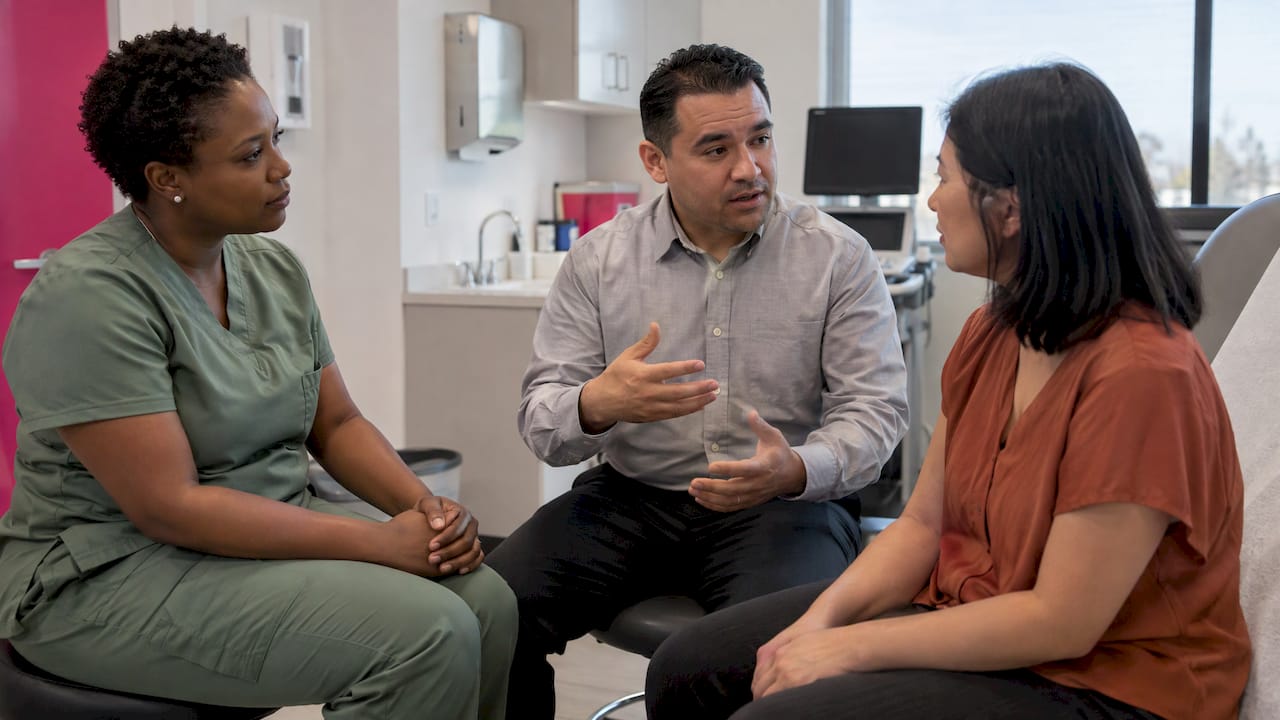
It is natural to bring a spouse, sibling or adult child to translate. The difficulty is that fertility visits involve intimate history: past pregnancies, losses, sexual function, sexually transmitted infections, and in some cases donor or surrogate arrangements that a family may not know about. HHS guidance on nondiscrimination in telehealth says providers should avoid relying on patients to bring their own interpreters, citing confidentiality and potential conflicts of interest. The same guidance says language assistance should generally be offered free of cost to people with limited English proficiency.
A trained interpreter is bound by confidentiality, knows medical vocabulary in both languages and does not soften, skip or add to what is said. That protects you, and it protects the person who would otherwise be asked to translate a difficult conversation about your body.
Why language access matters in fertility treatment
The evidence on language and fertility outcomes comes from independent academic studies, and it points in one direction: communication shapes how far patients get in treatment.
- A 2023 Fertility and Sterility cohort study of 406 first-IUI patients at an urban New York medical center found that patients with limited English proficiency waited longer before starting care (4.53 years versus 2.01 years) and were more likely to stop treatment rather than move on to IVF.
- A 2020 Fertility Research and Practice study of 143 women found that women from low-resource, largely immigrant clinics scored lower on a fertility knowledge assessment (5.3 versus 8.04 out of 11). Education level was the only independent predictor of knowledge, which is a reminder that clear, plain-language explanation matters for everyone.
- A 2025 Fertility and Sterility nationwide survey of US clinics found that 72.4% of 656 contacted clinics offered interpreter services, mostly by telephone. Availability was highest at academic centers (98%) and lower at multi-site private (70%) and single-site private (54%) practices. About 59% of clinics reported needing an interpreter at least weekly, so the need is routine, not rare.
The practical lesson is that a clinic that plans for interpretation from the first booking removes a hurdle many patients meet before they ever start a cycle. If you have delayed care because you were unsure whether you would be understood, that delay is common, and it is solvable.
Informed consent in your own language
Consent in IVF is not a single signature. ASRM’s 2023 Ethics Committee opinion on informed consent in assisted reproduction describes it as an unbiased discussion of the known and potential risks, benefits and likely outcomes of the available options, including no treatment. It says special efforts may be needed when a patient’s primary language is not English, and that consent is an ongoing process that gives patients time and encouragement to ask questions.
The same opinion says alternatives such as using a gestational carrier, adoption or living child-free should be discussed, and that complex situations such as poor-prognosis IVF, high-risk treatment or posthumous use of gametes or embryos call for additional effort.
For you, that translates into three expectations:
- The discussion happens in your language. You should hear and answer in the language you are most comfortable in, not only sign a translated page.
- Time to think. You can ask for a form to be reviewed again at a later visit.
- Plain explanations. Terms like “genetic testing of embryos” or “cryopreservation” are explained, not assumed.
At one academic center described in the 2023 study above, procedural consents are done in the patient’s preferred language, instructions are given with a phone interpreter, and written instructions are provided in the preferred language when available. That is a sound model of what thorough language support looks like at each step.
How to request a Mandarin interpreter (or any language) for IVF
The process is similar across US health systems, and the principle is the same for any language. Tell the clinic your language when you book, not on the day of the visit.
Published patient guidance from large US health systems shows what to expect. UW Medicine’s interpreter services page says patients can request an interpreter by calling the clinic and naming the language needed, or by telling staff when they make the appointment. It describes interpreters who introduce themselves, help patients communicate with the care team, encourage questions and protect dignity and privacy. It also notes that interpreters can help the team understand a patient’s goals and cultural communication patterns around difficult subjects.
Seattle Children’s interpreter services page adds useful detail on how an interpreted visit works:
- the interpreter conveys everything said in the room as it is said;
- you speak directly to the clinician, not to the interpreter (“I have had two losses” rather than “tell her I have had two losses”);
- the interpreter does not read, fill out or sign forms for you, so a clinician goes through each form while the interpreter interprets;
- the interpreter does not stay in the room to talk with you when the care team is absent.
These are good habits to carry into any fertility visit. Speak in short sentences, pause so the interpreter can finish, and ask the clinician to repeat anything that was not clear. Tell the clinic whether you prefer an in-person, phone or video interpreter. For telehealth consultations, HHS guidance says a qualified interpreter should be provided and the video platform should allow the interpreter to join, so check that your link allows a third voice before the call.
What to say when you call
A short script works well: “I would like to schedule a fertility consultation. I need a Mandarin interpreter for the visit. I would also like my consent forms and instructions in Mandarin if available.” Replace the language as needed. Life IVF Center provides multi-language support, and when you contact us you can tell us the language you prefer so we can plan your consultation around it.
Preparing for an interpreted consultation
Good preparation makes an interpreted visit shorter and clearer. Interpreted appointments have the same content as any other but take somewhat longer, so bring organized information.
Before the visit
- Write down your history in your own language. Include the age you started trying, previous pregnancies or losses, past surgeries (for example for endometriosis), cycle patterns, and any diagnoses such as immune conditions. Bring prior records, even if they are in another language.
- List your medicines and supplements with the names on the packaging, since drug names often differ between countries.
- Write your goals plainly. Do you want to conceive soon, preserve fertility for later, use a donor, or work with a gestational carrier? A single clear sentence helps the team build a plan.
- Prepare your questions. Group them: diagnosis, treatment options, timeline, cost, and what happens if a cycle does not work.
For fertility preservation, egg donation or gestational surrogacy
These pathways add legal, genetic and emotional questions. A 2025 ASRM resource-based review of this topic calls for culturally and linguistically appropriate communication, and the ASRM consent opinion above notes that alternatives and complex situations deserve extra discussion time. In practice:
- Ask for key concepts to be explained in both languages, such as how long eggs or embryos are stored, who owns them, and what happens if your plans change.
- If surrogacy or donor conception is sensitive in your family or culture, tell the care team how you would like that information handled. An interpreter can help the team understand how to discuss difficult subjects respectfully.
- Ask for written summaries after the visit, in your language where available, so you can review them with your partner at home.
During and after the visit
Take notes or ask permission to record the summary of next steps. Ask the clinician to confirm medication timing and dates in writing. If you use a patient portal, ask whether messages and instructions can appear in your language. Follow-up calls about medication timing deserve an interpreter as well, since an unclear dose or injection time is easy to misunderstand by phone.
Planning the tests and costs before treatment starts
Language support also helps with money and logistics. Cost discussions are easier when you can compare line items calmly with a financial counselor in your own language. Life IVF Center publishes its prices on its site and offers financial guidance and travel coordination, which is helpful for patients who travel from other states or countries.
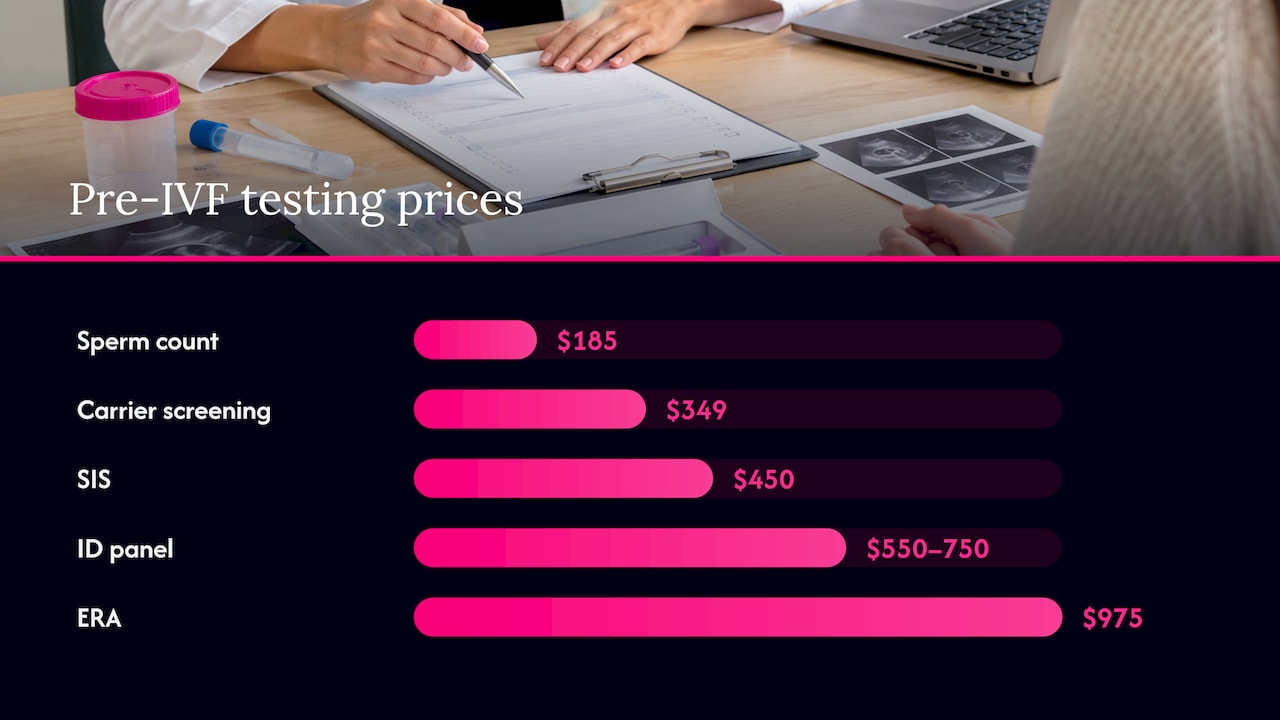
The pre-treatment evaluation is where many patients first meet unfamiliar terms. Published pre-IVF testing prices include:
| Test | Published price |
|---|---|
| Sperm count | $185 |
| Pap smear | $185 |
| Carrier screening for genetic disease | $349 |
| Saline infusion sonohysterogram (SIS) | $450 |
| Karyotype chromosomal analysis | $595 |
| Infectious disease (ID) panel | $550 to $750 |
| Endometrial receptivity assay (ERA) | $975 |
A carrier screening checks whether you or your partner carry gene changes for certain inherited conditions. A karyotype looks at the number and structure of chromosomes. An SIS uses saline and ultrasound to look at the inside of the uterus. Having each term explained in your own language before you pay for it is part of informed consent.
For treatment itself, our treatment packages page lists the Advanced IVF Package at $13,500 and Embryo Transfer from $2,950. Our freezing pricing lists Precision Egg Freezing at $7,500 and Precision Embryo Freezing at $8,950. Storage is listed at $750 per year, $70 per month, or $2,000 for a three-year prepaid term. Full details are on our storage cost page.
How Life IVF Center supports patients across languages
Our approach to care is Precision IVF®, which tailors the treatment protocol to each patient’s biology, history and goals. That personalization depends on clear communication: an accurate history in, a clear explanation out. Life IVF Center offers multi-language support, travel coordination and financial guidance, works with in-house labs, and welcomes second-opinion cases and patients who have been turned away elsewhere.
If you are considering Precision IVF®, egg or embryo freezing, genetic testing, IUI, donor programs or gestational surrogacy, you can start with a consultation and tell us which language you want it in. You can also see our care and treatment overview.
Our perspective on language and fertility care
At Life IVF Center, we think of language support as part of clinical quality, not an extra. A treatment plan can only be individualized if we truly understand the patient’s history, and a patient can only consent if they truly understand the plan.
That is why Precision IVF® begins with listening. Our team builds each plan around a person’s biology, history and goals, and we offer multi-language support, travel coordination and financial guidance so that these conversations do not depend on how fluent anyone is in English.
We welcome patients with complex histories, patients who want a second opinion, and families building through egg donation or gestational surrogacy. Clear communication in the language you are most comfortable in helps each of those pathways begin with confidence.
FAQ
Do I have to pay for an interpreter?
Federal guidance says language assistance services should generally be offered free of cost to people with limited English proficiency, as described in the HHS telehealth nondiscrimination guidance. Ask about interpreter arrangements when you book, along with the rest of your visit details.
Can my spouse or a friend interpret for me?
It is better to use a qualified interpreter. HHS guidance advises providers to avoid relying on patients to bring their own interpreters because of confidentiality and conflicts of interest. Your spouse can still attend and take part in the conversation as your partner.
Can interpreted visits happen by video or phone?
Yes. ASRM’s 2025 guidance recommends remote video interpretation with access to more than 100 languages, and telephone interpretation is the most common form in US clinics according to the 2025 clinic survey. Tell the clinic which format you prefer, and confirm your telehealth link lets the interpreter join.
Will I get forms and instructions in my language?
Professional guidance recommends native-language patient materials and translated portals. Ask what is available in your language and request an interpreter to go through any form that is not, so you understand each page before you sign.
I need a Mandarin interpreter for IVF. How do I start?
When you contact Life IVF Center, say that you want a Mandarin-language consultation. Bring your prior records and a short written history, and we will help you plan the visit, including travel and financial questions if you are coming from out of town.
Sources
- Fertility and Sterility 2025: A survey of language interpreter services offered at US fertility clinics
- Fertility and Sterility 2023: Reproductive inequity and inferior intrauterine insemination outcomes
- Fertility Research and Practice 2020: Disparities in fertility knowledge among women from low and high resource settings
- HHS Office for Civil Rights: Guidance on Nondiscrimination in Telehealth
- UW Medicine: Interpreter Services for patients
- Seattle Children’s: Interpreter Services
This article is for general educational purposes only and is not a substitute for personalized medical advice, diagnosis, or treatment. Fertility care is highly individual; please consult a qualified healthcare professional about your specific circumstances.
Ready to take the next step?
Life IVF Center specializes in individualized Precision IVF® care for complex cases—including diminished ovarian reserve, prior failed cycles, and advanced maternal age. Our in-house labs and dedicated physicians are ready to help.
Book a Free Consultation →