
Male infertility is defined as a man’s inability to cause pregnancy in a fertile female after at least 12 months of regular, unprotected intercourse. This condition is far more common than most men realize. Male infertility accounts for 20–30% of all infertility cases and plays a role in roughly half of all couples who cannot conceive. This male infertility overview covers the primary causes, what to expect during diagnosis, and the full range of treatments available today, from lifestyle changes to assisted reproductive technologies.
What are the common causes of male infertility?
Male infertility rarely has a single cause. Clinicians organize the primary causes of male infertility into three broad categories: disorders of the hypothalamus or pituitary gland, disorders of the testes themselves, and obstructions that block sperm transport.
The breakdown matters because each category points to a different treatment path. Hypothalamic and pituitary disorders account for roughly 1–2% of cases. Primary gonad disorders, which affect sperm production directly in the testes, account for 30–40% of cases. Sperm transport obstructions represent 10–20% of cases. Genital tract infections are also a significant factor, appearing in anywhere from 6.7% to 36.7% of patients.

The most frequently overlooked category is idiopathic infertility. Idiopathic cases account for 30–40% of all male infertility diagnoses. That means no identifiable structural, hormonal, or genetic cause is found despite a full workup, which is why advanced molecular testing is becoming standard practice.
Common modifiable and non-modifiable causes include:
- Varicocele: Enlarged veins in the scrotum that raise testicular temperature and impair sperm production. This is the most surgically correctable cause.
- Hormonal imbalances: Low testosterone, elevated estrogen, or abnormal FSH and LH levels disrupt spermatogenesis.
- Genetic conditions: Chromosomal abnormalities such as Klinefelter syndrome and Y-chromosome microdeletions directly impair sperm production.
- Genital tract infections: Conditions like epididymitis or orchitis can cause scarring and obstruction.
- Lifestyle factors: Tobacco use, heavy alcohol consumption, obesity, and exposure to environmental toxins all reduce sperm quality.
| Cause | Approximate prevalence | Modifiable? |
|---|---|---|
| Primary gonad disorders | 30–40% | Partially |
| Idiopathic infertility | 30–40% | Unknown |
| Sperm transport obstruction | 10–20% | Yes (surgical) |
| Genital tract infections | 6.7–36.7% | Yes (medical) |
| Hypothalamic/pituitary disorders | 1–2% | Yes (hormonal) |
Pro Tip: If you smoke, stopping is the single most impactful lifestyle change you can make for sperm quality. Tobacco use damages sperm DNA and reduces motility, and the effects compound over time.
How is male infertility diagnosed?
A thorough diagnosis follows a structured sequence. No single test tells the full story, so clinicians layer multiple evaluations to build an accurate picture of your reproductive health.
- Medical and reproductive history. Your doctor will ask about prior pregnancies, childhood illnesses like mumps, surgeries, medications, and exposure to toxins or radiation. This history often points directly to the likely cause.
- Physical examination. The exam focuses on the genitalia, secondary sexual characteristics, and signs of hormonal imbalance. A varicocele, for example, is often detectable on physical exam alone.
- Semen analysis. Two or more semen analyses are required for an accurate diagnosis. Semen analysis results vary based on recent illness, heat exposure, abstinence period, and even season. A single abnormal result does not confirm infertility.
- Hormonal profile. Blood tests measuring FSH, LH, testosterone, and prolactin identify hormonal causes. Elevated FSH, for instance, suggests the testes are failing to respond to normal signals.
- Scrotal ultrasound. Imaging identifies varicoceles, obstructions, or structural abnormalities not visible on physical exam.
- Advanced molecular testing. For idiopathic cases, molecular diagnostics including Y-chromosome microdeletions and sperm DNA fragmentation testing are now standard at specialized centers. These tests identify genetic contributors that standard semen analysis misses entirely.
The fertility evaluation checklist at Life IVF Center outlines each step in detail, including what benchmarks to expect at each stage. Reviewing it before your first appointment helps you arrive prepared and ask the right questions.
Pro Tip: Schedule your semen analysis after 2–5 days of sexual abstinence. Fewer days reduces sperm count; more days reduces motility. Both skew results and can lead to unnecessary repeat testing.
What treatment options are available for male infertility?
Treatment depends entirely on the underlying cause. The most effective approach combines lifestyle modification, medical therapy, and, when needed, assisted reproductive technology.
Lifestyle changes are the starting point for most patients. Stopping tobacco use, reducing alcohol, losing excess weight, and avoiding prolonged scrotal heat from laptops or hot tubs all improve sperm parameters. These changes take time. Spermatogenesis takes approximately 74–90 days, so you should expect at least three months before a follow-up semen analysis reflects any improvement.
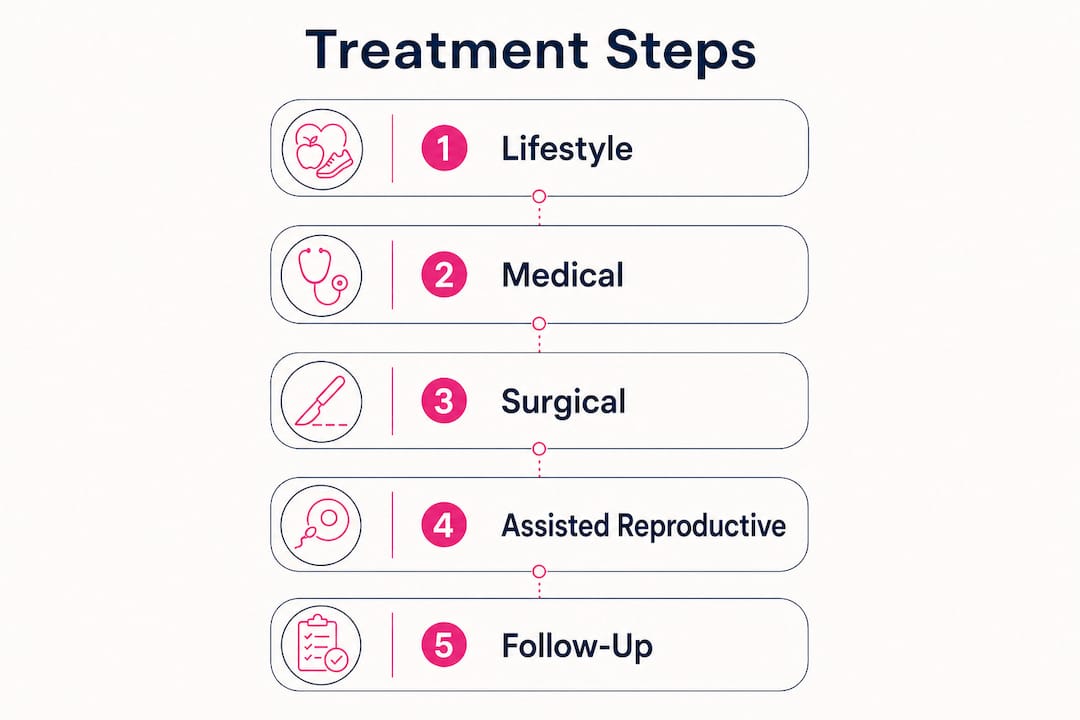
Medical therapy targets hormonal imbalances and spermatogenic failure. Letrozole, an aromatase inhibitor, has shown measurable results in clinical trials. Letrozole at 2.5 mg daily for three months improved WHO sperm concentration upgrade rates from 5.4% in control groups to 14.3% in treated patients. That improvement can reduce the need for more invasive procedures.
Surgical options address structural problems directly. Varicocele repair (varicocelectomy) improves sperm parameters in a significant portion of patients. Surgical reconstruction of obstructions, such as vasovasostomy after vasectomy reversal, restores natural sperm transport.
For severe cases, assisted reproductive technologies (ART) offer the highest success rates. IVF combined with intracytoplasmic sperm injection (ICSI) allows fertilization even when sperm count or motility is very low. A detailed breakdown of proven male infertility treatments at Life IVF Center covers the full spectrum from medication to ICSI.
| Treatment | Indication | Expected outcome |
|---|---|---|
| Lifestyle modification | Modifiable risk factors | Improved sperm quality in 3+ months |
| Letrozole | Spermatogenic failure | Sperm concentration upgrade in some patients |
| Varicocelectomy | Varicocele | Improved parameters, possible natural conception |
| IVF with ICSI | Severe oligospermia or azoospermia | High fertilization rates with retrieved sperm |
| Hormonal therapy | Hypogonadotropic hypogonadism | Restored sperm production |
Pro Tip: Do not wait for a “perfect” semen analysis before consulting a reproductive specialist. Many men with very low sperm counts achieve biological fatherhood through ICSI. The threshold for treatment is lower than most patients assume.
How do lifestyle and environmental factors affect sperm quality?
Lifestyle factors including tobacco, alcohol, obesity, and environmental toxins influence sperm quality but rarely act as the sole cause of infertility. They typically compound underlying genetic or structural issues. Understanding this distinction prevents men from either dismissing lifestyle factors entirely or assuming that lifestyle changes alone will solve the problem.
Heat is one of the most underappreciated threats to sperm production. The testes function optimally at temperatures slightly below core body temperature. Frequent use of hot tubs, saunas, or even keeping a laptop on your lap for extended periods raises scrotal temperature enough to suppress spermatogenesis. The effect is reversible, but recovery takes the full spermatogenesis cycle of roughly three months.
Endocrine-disrupting chemicals found in plastics, pesticides, and industrial solvents interfere with testosterone signaling. Reducing exposure means choosing glass or stainless steel containers, washing produce thoroughly, and being aware of occupational chemical exposures. These are practical steps, not theoretical ones.
Practical male fertility tips that support sperm health:
- Eat a diet rich in antioxidants: leafy greens, berries, nuts, and fish reduce oxidative stress on sperm DNA.
- Exercise regularly but avoid anabolic steroids, which suppress natural testosterone production and can cause azoospermia.
- Maintain a healthy body weight. Obesity raises estrogen levels and lowers testosterone, directly impairing sperm production.
- Limit alcohol to moderate levels. Heavy drinking reduces testosterone and damages sperm morphology.
- Manage stress. Chronic stress elevates cortisol, which suppresses reproductive hormones.
Pro Tip: Start lifestyle changes the moment you decide to try to conceive. Because spermatogenesis takes 74–90 days, changes you make today will not appear in a semen analysis for at least three months. Early action gives you the best window.
Key Takeaways
Successful management of male infertility requires combining lifestyle changes, targeted medical therapy, and assisted reproductive technologies based on the specific underlying cause.
| Point | Details |
|---|---|
| Prevalence is significant | Male infertility contributes to 20–30% of all cases and affects half of infertile couples. |
| Causes span multiple categories | Primary gonad disorders and idiopathic infertility each account for 30–40% of cases. |
| Diagnosis requires multiple tests | At least two semen analyses plus hormonal and imaging workups are needed for accuracy. |
| Letrozole shows clinical benefit | A 2.5 mg daily dose for three months improved sperm concentration upgrade rates to 14.3%. |
| Lifestyle changes take three months | Spermatogenesis lasts 74–90 days, so improvements appear only after a full cycle. |
What I’ve learned after years of watching men navigate this diagnosis
The most damaging misconception I encounter is the belief that male infertility is a single, fixable problem with a single, fast solution. It almost never works that way. Most patients I see have two or three overlapping factors: a varicocele, borderline testosterone, and a history of smoking. Treating only one of those and expecting full resolution is unrealistic.
The second misconception is that a normal-looking semen analysis means everything is fine. Sperm DNA fragmentation, Y-chromosome microdeletions, and epigenetic abnormalities do not show up on a standard count. Men with “normal” results who still cannot conceive after a year need advanced molecular testing, not reassurance.
What actually works is persistence combined with a structured, multidisciplinary plan. Lifestyle changes run in parallel with medical therapy. Surgical correction happens when indicated. ART is not a last resort. It is a tool that belongs in the plan from the beginning when the clinical picture calls for it. The men who reach fatherhood are almost always the ones who stayed in the process long enough to let the full workup guide the right combination of interventions.
The field is also moving fast. Molecular diagnostics and personalized treatment protocols are changing what “idiopathic” actually means. Cases that were once untreatable are now being resolved through targeted therapy. That is genuinely encouraging.
How Life IVF Center supports men through fertility evaluation and treatment
Men dealing with fertility concerns deserve a clear plan, not a waiting game.

Life IVF Center provides a full male infertility workup, from initial semen analysis and hormonal profiling to advanced sperm DNA fragmentation testing and scrotal ultrasound. The clinic’s Precision IVF® approach customizes treatment protocols based on each patient’s specific biological profile, which means your care plan reflects your actual diagnosis, not a generic template. Whether your path leads to lifestyle modification, medical therapy, or IVF with ICSI, the team at Life IVF Center coordinates every step. Patients can also review insurance coverage options to understand what fertility treatments their plan may support before their first consultation.
FAQ
What is the definition of male infertility?
Male infertility is defined as the inability of a man to cause pregnancy in a fertile female after 12 months of regular, unprotected intercourse. It contributes to 20–30% of all infertility cases.
What are the most common symptoms of male infertility?
Male infertility typically has no outward symptoms. Most men discover the condition only after a semen analysis, which is why testing is the only reliable way to assess reproductive health.
How many semen analyses are needed for an accurate diagnosis?
At least two semen analyses are required, spaced several weeks apart. A single result can be skewed by recent illness, heat exposure, or abstinence duration.
Can male infertility be treated without IVF?
Yes. Many causes respond to lifestyle changes, hormonal medications like letrozole, or surgical correction such as varicocelectomy. IVF with ICSI is reserved for severe cases where other approaches have not succeeded.
How long does it take for lifestyle changes to improve sperm quality?
Because spermatogenesis takes approximately 74–90 days, lifestyle changes require at least three months to produce measurable improvements in semen analysis results.
Recommended
- Blog – Life IVF Center
- Female Infertility Explained: Causes, Diagnosis, and Treatment
- Uncategorized Archives – Life IVF Center
- Causes of Infertility List: What You Need to Know
Ready to take the next step?
Life IVF Center specializes in individualized Precision IVF® care for complex cases—including diminished ovarian reserve, prior failed cycles, and advanced maternal age. Our in-house labs and dedicated physicians are ready to help.
Book a Free Consultation →