

An endometrial receptivity test is not a standard step in every IVF cycle. For most patients, particularly those attempting a first transfer with chromosomally normal embryos, current evidence does not support routine use. The test is most likely to be considered after two or more failed transfers when no clear embryo-related cause has been identified. If your clinic is recommending it, the most productive next step is a direct conversation with your reproductive endocrinologist (REI) about whether your specific history makes you a plausible candidate.
Here is what to do before moving forward:
- Discuss candidacy with your REI. Ask specifically how your clinic defines recurrent implantation failure and whether your case meets that threshold.
- Request a full cost breakdown. The lab fee, mock-cycle medications, monitoring visits, and any potential repeat biopsy are typically billed separately and are often not covered by insurance.
- Ask how a mock cycle fits your timeline. The biopsy requires a dedicated cycle before any transfer can occur, which adds weeks to your overall schedule.
The HFEA currently rates endometrial receptivity testing as a “red” add-on, meaning that limited randomized evidence supports its routine use. Life IVF Center evaluates each patient individually before recommending the test as part of its Precision IVF® pathway.
Key Takeaways
ERA is a targeted diagnostic tool for a specific IVF patient population, not a universal step, and the evidence base does not support routine use outside of carefully selected cases.
| Point | Details |
|---|---|
| ERA is not routine | Randomized trials show no clear benefit for general IVF patients; the HFEA rates it a “red” add-on. |
| RIF patients may benefit | Patients with two or more unexplained failed transfers using tested embryos are the most plausible candidates. |
| Costs are typically out of pocket | Lab fees, mock-cycle medications, and monitoring are usually not covered by insurance and should be itemized before proceeding. |
| Results are predictive, not absolute | WOI can shift between cycles; ERA narrows timing probability but does not guarantee the same window at transfer. |
| Life IVF Center evaluates individually | ERA is considered within the Precision IVF® pathway based on each patient’s transfer history and clinical profile. |
Table of Contents
- What is an endometrial receptivity test?
- How does the ERA test work, step by step?
- Who should consider an endometrial receptivity test?
- How to prepare for the biopsy and what to expect
- How ERA results guide your embryo transfer timing
- What does the research actually say about ERA?
- What does ERA cost, and will insurance cover it?
- What are the risks and side effects of the ERA biopsy?
- How Life IVF Center evaluates and uses endometrial receptivity testing
- An editorial perspective on ERA: what the evidence gap actually means for patients
- Schedule a consultation at Life IVF Center
- Sources
What is an endometrial receptivity test?
An endometrial receptivity test analyzes a small sample of uterine lining tissue to determine whether the endometrium is in the right biological state to accept an embryo. The most widely used version is the ERA (Endometrial Receptivity Analysis), developed by Igenomix. It works by measuring the activity of several hundred genes in the endometrial tissue using next-generation sequencing (NGS), then applying a computational model to classify the sample as receptive, pre-receptive, or post-receptive.
The biological concept behind the test is the window of implantation (WOI). According to StatPearls, the WOI falls roughly on cycle days 20–24 in a standard 28-day cycle, a short mid-luteal phase period when the endometrium is primed for an embryo to attach. Outside that window, even a genetically normal embryo may fail to implant. ERA attempts to pinpoint each patient’s individual WOI, which may be slightly earlier or later than the population average.
Key terms you will encounter:
- Window of implantation (WOI): The brief period when the endometrium is biologically ready for embryo attachment.
- Personalized embryo transfer (pET): A frozen embryo transfer timed to match the patient’s ERA-identified WOI rather than a standard protocol.
- Receptive: The sample shows a gene-expression pattern consistent with the WOI. Standard transfer timing is appropriate.
- Pre-receptive: The endometrium has not yet reached peak receptivity. Transfer timing needs to be delayed by a specified number of hours or days.
- Post-receptive: The WOI has already passed. Transfer timing needs to move earlier in the next cycle.
- Mock cycle: A medicated or natural cycle that mimics the hormonal conditions of a real frozen embryo transfer cycle, used solely to time and perform the biopsy.
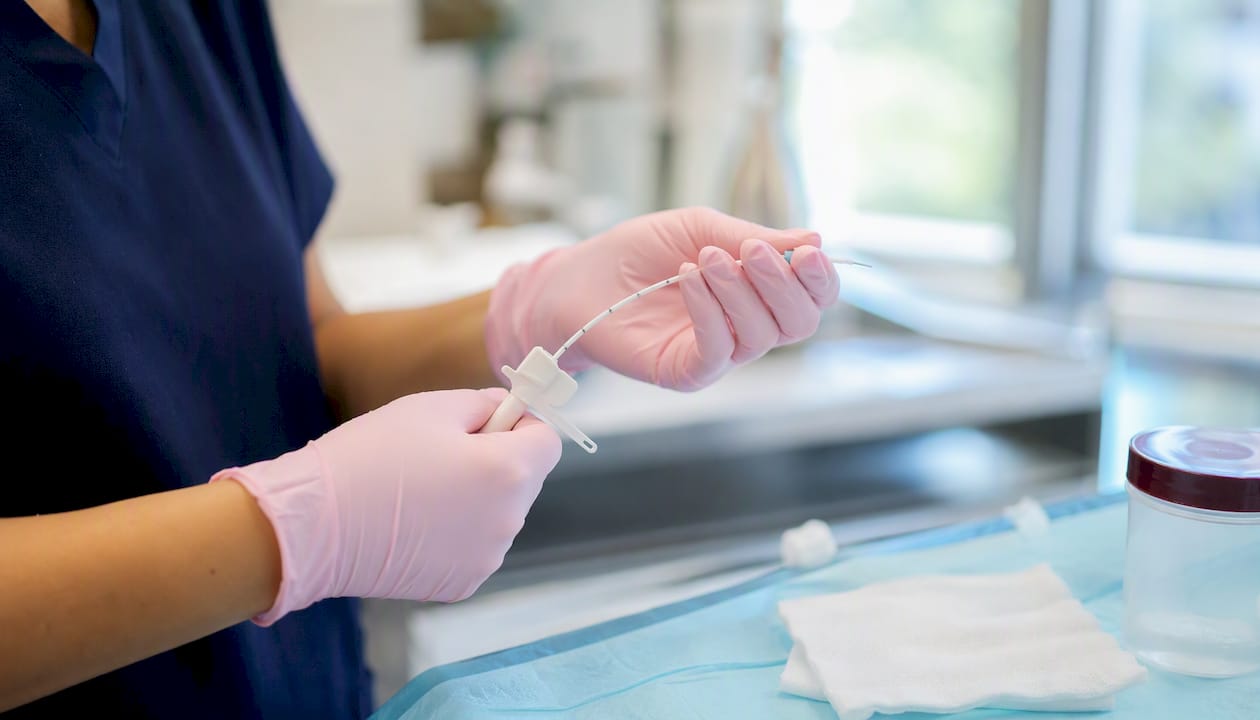
- Endometrial biopsy: A brief in-office procedure in which a thin catheter is passed through the cervix to collect a small tissue sample from the uterine lining.
Understanding these terms makes it much easier to interpret what your clinic is recommending and why. Uterine health plays a central role in implantation success, and ERA is one tool among several for evaluating it.
How does the ERA test work, step by step?
The ERA process spans two separate cycles. The first is the mock cycle, used only for the biopsy.
- Set up the mock cycle. Your clinic schedules a hormone replacement therapy (HRT) cycle or a natural/modified natural cycle to replicate the conditions of a real transfer cycle. Estrogen is administered first to build the uterine lining.
- Begin progesterone. Once the lining reaches an adequate thickness (typically confirmed by ultrasound), progesterone is started. The biopsy timing is calculated from this point.
- Perform the biopsy. The tissue sample is taken at a precise number of hours after progesterone exposure begins. For a standard HRT protocol, this is commonly around 120 hours (P+5). The procedure takes a few minutes in the clinic.
- Handle and ship the sample. The tissue is placed in a preservative solution and shipped to the specialized laboratory, typically overnight.
- NGS and transcriptomic analysis. The lab extracts RNA from the sample and sequences the expression of the ERA gene panel. A validated computational model classifies the tissue as receptive, pre-receptive, or post-receptive.
- Receive the report. Results are typically returned within 2–3 weeks. The report specifies the classification and, if the sample is non-receptive, the recommended timing adjustment in hours for the next transfer cycle.
- Schedule the personalized embryo transfer (pET). In a subsequent FET cycle, progesterone is started and the transfer is timed to the adjusted window identified by the ERA.
Progesterone exposure timing reference
Sample handling matters. RNA degrades quickly, so the tissue must be placed in the correct stabilizing solution immediately after collection and shipped promptly. Most labs report results within 10–21 days. Synchronizing the mock cycle closely to the planned transfer cycle calendar helps minimize the total time added to treatment.
Who should consider an endometrial receptivity test?
ERA is not for every IVF patient. Clinicians generally consider it for patients whose implantation failures cannot be explained by embryo quality or other identifiable uterine factors.
Patients who may be appropriate candidates:
- Those with recurrent implantation failure (RIF), commonly defined as two or more failed transfers, particularly with good-quality or chromosomally tested embryos
- Patients with unexplained repeated failures despite normal uterine anatomy and adequate lining
- Patients with suspected displaced WOI, such as those with irregular luteal phases or cycles where standard progesterone timing has been inconsistent
- Some patients with endometriosis, where altered hormonal signaling may affect receptivity timing
Patients who typically do not need the test:
- First-time IVF patients with no prior transfer failures and chromosomally normal embryos
- Patients where PGT-A has already identified embryo quality as the primary issue
- Cases where a clear uterine structural problem (polyp, fibroid, adhesion) has been identified and corrected
- Clinics that do not have a reliable mock-cycle protocol in place, since inconsistent biopsy timing undermines the result
Pro Tip: Before agreeing to ERA, ask your REI three specific questions: How does this clinic define recurrent implantation failure? Do you pair ERA with PGT-A, and if so, how do results from both tests influence the transfer plan? How many additional monitoring visits will the mock cycle require, and how will that affect my overall timeline?
How to prepare for the biopsy and what to expect
The ERA biopsy is an outpatient procedure, but it requires a full preparatory cycle. Here is what the process typically involves:
Pre-procedure checklist:
- Confirm embryos are frozen before starting the mock cycle, since the biopsy cycle cannot result in a transfer
- Begin estrogen supplementation as directed (oral, patch, or injectable) to build the lining
- Attend ultrasound monitoring appointments to confirm lining thickness and pattern
- Start progesterone on the clinic-specified day and note the exact start time, since biopsy timing is calculated to the hour
- Complete any required infection screening (STI panel, uterine culture) if your clinic requires it before an intrauterine procedure
How painful is the ERA biopsy?
Most patients describe the sensation as similar to a strong menstrual cramp lasting one to two minutes. The catheter passes through the cervix, which can cause a brief, sharp pinch. Mild cramping and light spotting for 24–48 hours afterward are normal. Local anesthesia is not standard for this procedure, though some clinics offer cervical numbing for patients with a history of cervical stenosis or significant procedural anxiety. Over-the-counter pain relief taken 30–60 minutes before the appointment can help manage discomfort.

Because the biopsy is performed during the mock cycle, embryo transfer cannot happen that same cycle. If the result is inconclusive due to insufficient tissue, a repeat biopsy in another mock cycle is required, adding further time and cost. Patients should discuss this possibility with their clinic before starting.
How ERA results guide your embryo transfer timing
Once the ERA report arrives, the clinical team translates the classification into a concrete timing plan for the next frozen embryo transfer cycle.
- Mock cycle biopsy performed (Day 0 reference point: progesterone start).
- Lab analysis completed (typically 10–21 days after sample receipt).
- Clinician review and consultation to discuss results and adjust the transfer protocol.
- Next FET cycle begins, with progesterone started on the clinic-scheduled day.
- Transfer performed at the ERA-adjusted time point relative to progesterone start.
What each result category means for your next transfer:
- Receptive: Your WOI aligns with the standard protocol. The next transfer proceeds at the same progesterone timing used during the mock cycle.
- Pre-receptive: Your WOI has not yet opened at the standard biopsy point. Progesterone exposure is extended by the number of hours specified in the report (a specified number of hours, though the exact figure comes from the ERA algorithm) before the transfer is scheduled.
- Post-receptive: Your WOI closed before the standard biopsy point. Transfer is moved earlier in the next cycle by the specified number of hours.
Understanding embryo transfer timing is central to making sense of these adjustments. One important caveat: transcriptomic expression can shift subtly between cycles due to hormonal variation or external factors. Most clinicians treat ERA results as predictive guidance rather than a permanent biological diagnosis, and they interpret the report alongside other clinical data rather than in isolation.
What does the research actually say about ERA?
The evidence picture is more nuanced than many clinic websites suggest, and patients deserve a clear-eyed summary.
A 2026 meta-analysis pooling 44 studies found no clear benefit of receptivity tests, including ERA, for general IVF patients in randomized trials. Non-randomized studies of some RIF patients transferring untested embryos showed possible improvement, but the signal was inconsistent across studies.
Key finding: In randomized controlled trials, ERA-guided personalized embryo transfer did not produce a statistically significant improvement in live-birth rates compared with standard transfer timing for general IVF populations.
The HFEA rates endometrial receptivity testing as a “red” add-on, its lowest evidence tier, noting that the test may not increase and could in some cases reduce treatment effectiveness. A randomized trial by Doyle et al. (2022) found no significant difference in live-birth rates when ERA-guided timing was used for euploid embryo transfers compared with standard timing. A registered multicenter trial (NCT04687670) continues to evaluate ERA-guided pET versus standard FET in first IVF cycles, with biopsy timed at approximately 120 hours of progesterone exposure.
| Population | Trial quality | Outcome signal |
|---|---|---|
| General IVF (first transfer) | RCTs available | No clear benefit demonstrated |
| RIF without PGT-A embryos | Mostly non-randomized | Possible improvement; inconsistent |
| RIF with PGT-A euploid embryos | Limited RCT data | No significant benefit in available trials |
Methodological caveats are real. RIF is defined differently across studies (some use two failed transfers, others three or more), trial designs vary in progesterone protocols, and care-delivery differences between ERA and control groups may introduce bias. The University of Melbourne’s patient guidance states plainly that ERA has not been shown to change the chance of having a baby for most IVF patients and calls for further randomized trials. StatPearls reinforces that the most definitive test of endometrial receptivity remains a well-timed embryo transfer interpreted in full clinical context.
What does ERA cost, and will insurance cover it?
ERA is almost universally classified as a treatment add-on, which means insurance coverage is limited or absent for most patients in the United States. Costs vary by clinic and laboratory, but the total out-of-pocket expense typically includes several components:
- Lab analysis fee: The ERA test itself, billed by the laboratory (commonly Igenomix), is typically in the range of $800–$1,000, though this figure is an estimate and varies by contract.
- Clinic biopsy visit: The office visit and procedure fee, billed separately by the clinic.
- Mock-cycle medications: Estrogen and progesterone for the preparatory cycle, which can add several hundred dollars depending on formulation and dosage.
- Monitoring visits: Ultrasound and bloodwork appointments during the mock cycle.
- Repeat biopsy: If the initial sample is insufficient or the result is inconclusive, a second mock cycle and biopsy are required at additional cost.
- Shipping and handling: If the clinic uses an off-site specialized lab, overnight shipping of the sample may be billed separately.
For patients navigating insurance and coverage questions, it is worth confirming whether any portion of the mock-cycle monitoring falls under a covered diagnostic benefit. Most plans that cover IVF do not explicitly cover ERA as a line item.
Questions to ask your billing coordinator before proceeding:
- Can you provide an itemized estimate covering the lab fee, biopsy visit, medications, and monitoring?
- Does the quoted price include a repeat biopsy if the first sample is insufficient?
- What is the cancellation or refund policy if the biopsy cannot be completed?
- Is any portion of the mock-cycle monitoring billable to my insurance plan?
What are the risks and side effects of the ERA biopsy?
The biopsy itself carries a low but real risk profile that patients should weigh alongside the uncertain clinical benefit.
Common side effects:
- Mild to moderate uterine cramping during and immediately after the procedure
- Light spotting or bleeding for 24–48 hours post-biopsy
- Temporary pelvic discomfort
Rare but possible risks:
- Uterine infection (endometritis), particularly if pre-procedure screening is not completed
- Uterine perforation, which is uncommon but possible with any intrauterine instrument
- Cervical trauma in patients with stenosis
Practical and non-medical downsides:
- The mock cycle delays transfer by at least one full cycle, adding 4–6 weeks to the treatment timeline
- Inconclusive results due to insufficient tissue require a repeat biopsy and another mock cycle
- ERA results may create false reassurance if the WOI shifts between the mock cycle and the actual transfer cycle, since hormonal variation can alter transcriptomic expression
- The added procedures, waiting time, and out-of-pocket cost carry a real emotional and financial burden
Patients should discuss both the medical risks and the psychosocial tradeoffs with their clinic before committing to the test. For patients with endometriosis or other conditions that may affect receptivity, the risk-benefit calculation may differ from the general IVF population.
How Life IVF Center evaluates and uses endometrial receptivity testing
At Life IVF Center, ERA is not offered as a default add-on. The clinical team prioritizes it for patients who meet specific criteria within the Precision IVF® care pathway, where every diagnostic tool is selected based on individual history rather than protocol convenience.
Patients Life IVF Center typically prioritizes for ERA evaluation:
- Those with two or more failed frozen embryo transfers using chromosomally tested embryos and no identifiable structural uterine cause
- Patients with irregular luteal phases or cycle variability that makes standard progesterone timing unreliable
- Select patients with endometriosis or immune-related implantation concerns where receptivity timing may be altered
How the process works at the clinic:
- Mock cycles are run using the same hormonal protocol planned for the actual transfer, so the biopsy conditions match the transfer conditions as closely as possible
- The transcriptomic report is reviewed by the clinic’s reproductive endocrinologist alongside prior transfer records, embryo quality data, and uterine imaging
- pET scheduling is coordinated to align the adjusted progesterone timing with the patient’s calendar and embryo availability
What to bring to a consultation:
- Records from all prior embryo transfers, including protocol details and progesterone start dates
- PGT-A results for any tested embryos
- Menstrual cycle logs or prior monitoring records showing cycle length and luteal phase characteristics
Receptivity testing at Life IVF Center is one data point in a broader clinical picture. The ERA result informs the transfer plan, but it is interpreted alongside embryo quality, uterine assessment, and the patient’s full reproductive history. No single test replaces that integrated evaluation. Patients can review the fertility evaluation checklist to understand what records to gather before a consultation.
An editorial perspective on ERA: what the evidence gap actually means for patients
The most important thing to understand about ERA is what the “red” rating from the HFEA and the null results from randomized trials are actually telling you. They are not saying the window of implantation is a myth. They are saying that for most IVF patients, standard progesterone timing already lands within the WOI, so a molecular test to find it adds no measurable benefit. The test was designed to solve a problem that, for the majority of patients, does not exist in a clinically meaningful form.
Where ERA gets more interesting is in the genuinely unexplained RIF population, specifically patients who have transferred chromosomally normal embryos and still failed, with no structural or immunological explanation. That is a narrow group. The non-randomized data for that group are suggestive but not definitive, and the randomized data are still sparse. Clinicians who recommend ERA broadly, beyond that narrow indication, are getting ahead of the evidence.
The other underappreciated issue is cycle-to-cycle variability. ERA gives you a snapshot of one mock cycle. If your hormonal environment shifts even modestly in the actual transfer cycle, the WOI may shift with it. That does not make the test useless, but it does mean treating the result as a fixed biological truth is a mistake. The most honest framing is that ERA narrows the probability range for transfer timing. It does not guarantee the window will be in the same place next time.
For patients who have been through multiple failed transfers and are looking for answers, the emotional pull toward ERA is completely understandable. The question worth pressing your REI on is not just “could ERA help me?” but “what is the specific clinical reasoning that makes my case different from the general IVF population where the RCTs showed no benefit?” If the answer is clear and specific, the test may be worth considering. If the answer is vague, that is important information too.
Schedule a consultation at Life IVF Center
Patients who want a clear, individualized answer about ERA candidacy can schedule a consultation at Life IVF Center, where the clinical team will review prior transfer records, embryo testing results, and cycle history to determine whether receptivity testing fits your specific situation.
Bring your prior transfer protocol notes, any PGT-A embryo reports, and your menstrual cycle logs to the appointment. The consultation will include a review of whether ERA is clinically indicated, a realistic cost breakdown if it is recommended, and how it would integrate into your Precision IVF® care plan. For patients ready to review treatment package options and pricing, the treatment packages page provides a starting point for financial planning before your visit.
Sources
- Endometrial receptivity testing | HFEA
- Endometrial Receptivity – StatPearls – NCBI Bookshelf
- Endometrial Receptivity Array Test (ERA test) | University of Melbourne
- Meta-analysis finds mixed results for ERA and other receptivity tests | Remembryo
- PubMed entry for a randomized trial evaluating ERA timing (Doyle et al. 2022) – listed among trials reviewed
- Clinicaltrials
This article is general information, not a substitute for advice from a qualified doctor. Consult a qualified healthcare professional about your own circumstances before acting on anything here.
Recommended
- Uterine Health and IVF Success: What You Need to Know
- Endometriosis IVF Process: What You Need to Know
- Evidence-Based Endometriosis Fertility Tips for Better Conception
- The Role of Genetics in IVF: What Patients Need to Know
Ready to take the next step?
Life IVF Center specializes in individualized Precision IVF® care for complex cases—including diminished ovarian reserve, prior failed cycles, and advanced maternal age. Our in-house labs and dedicated physicians are ready to help.
Book a Free Consultation →