
Treatment for blocked fallopian tubes depends on where and how severe the blockage is. Mild proximal blockages often respond to minimally invasive tubal cannulation, also called fallopian tube recanalization (FTR), which can restore patency in a single outpatient visit. Severe distal disease, extensive scarring, or a hydrosalpinx usually points toward IVF instead, frequently after the affected tube is removed or sealed off first.
Age matters as much as anatomy. WHO guidance suggests surgical repair for mild to moderate tubal disease in women under 35, while women 35 and older, or anyone with severe disease, are generally steered toward IVF to avoid losing time on repeat procedures.
The main paths your care team will discuss include:
- Antibiotics for active pelvic infection (does not reverse existing scarring)
- Tubal cannulation / FTR for proximal blockages
- Laparoscopic surgery (adhesiolysis, fimbrioplasty, salpingostomy) for select distal cases
- Salpingectomy or tubal occlusion for hydrosalpinx before IVF
- Tubal reversal (anastomosis) after prior tubal ligation
- IVF, often the fastest route when tubes are severely damaged
If you have a hydrosalpinx, removing or sealing that tube before IVF is a distinct recommendation worth flagging early with your specialist, since leftover tubal fluid can undermine an embryo’s chance of implanting.
Key Takeaways
Blocked fallopian tubes respond best to treatment matched to blockage location, severity, and patient age, with IVF favored for severe or distal disease and FTR reserved for selected proximal cases.
| Point | Details |
|---|---|
| Location determines treatment | Proximal blockages often suit FTR; distal blockages and hydrosalpinx usually favor IVF. |
| Hydrosalpinx needs pre-IVF action | Salpingectomy or tubal occlusion before IVF is standard practice, since retained fluid can interfere with embryo implantation. |
| Age shapes the recommendation | Women 35 and older are generally steered toward IVF to avoid delays from repeat procedures. |
| Set a realistic timeline | Try conceiving 6 to 12 months after a successful intervention before considering IVF. |
| Personalized evaluation matters | Life IVF Center’s Precision IVF® tailors the repair-versus-IVF decision to each patient’s diagnostic profile. |
This article is general information, not a substitute for advice from a qualified doctor. Consult a qualified healthcare professional about your own circumstances before acting on anything here.
Table of Contents
- What Blocked Fallopian Tubes Are and How They Affect Fertility
- Causes and Symptoms Patients Should Know
- Diagnosing a Blockage: Tests, Accuracy, and Limits
- Treatment Options Explained: From Antibiotics to IVF
- Comparing Outcomes: Repair and Recanalization vs. IVF
- How to Plan Your Next Steps and What to Ask Your Doctor
- How a Personalized Fertility Center Approaches Blocked-Tube Cases
- Where Life IVF Center Fits Into Your Treatment Plan
- Sources
What Blocked Fallopian Tubes Are and How They Affect Fertility
Your fallopian tubes do more than connect ovary to uterus. The fimbriae, the fringed structures at the tube’s outer end, sweep the released egg inside, and the lumen (inner passage) is where fertilization actually happens before the embryo travels to the uterus. A blockage anywhere along that path can stop conception cold.
Where the blockage sits changes everything about treatment:
- Proximal blockages sit near the uterus, closer to where the tube begins.
- Distal blockages sit near the fimbriated end, farther from the uterus.
- Hydrosalpinx describes a tube blocked at the distal end and swollen with trapped fluid. That fluid can leak backward into the uterine cavity and interfere with embryo implantation, which is why it gets special handling before IVF.
Causes and Symptoms Patients Should Know
Pelvic inflammatory disease (PID), often triggered by untreated chlamydia or gonorrhea, remains the leading cause of tubal scarring and blockage. When infection reaches the distal end of the tube, it can leave behind exactly the kind of fluid-filled hydrosalpinx described above.
Other common causes include:
- Prior pelvic or abdominal surgery, including appendix rupture
- Endometriosis, which creates adhesions around and inside the tubes
- A previous ectopic pregnancy
- Tubal ligation performed for prior sterilization
Here’s the part that surprises most patients: tubal disease rarely announces itself. Most women with blocked tubes have no pelvic pain, no unusual discharge, no obvious warning sign. The clues tend to surface only in hindsight, through a history of infertility, a past infection, or previous pelvic surgery. That silence is exactly why diagnostic testing carries so much weight.
Diagnosing a Blockage: Tests, Accuracy, and Limits
Your fertility workup usually moves through a sequence rather than a single test, because each tool answers a different question.
- Hysterosalpingogram (HSG) is typically the first-line test. A radiologist injects dye through the cervix and watches it move on X-ray. It is a well-established first look at tubal patency, but it can produce false-positive proximal occlusions caused by tubal spasm rather than true scarring.
- Sonohysterography or pelvic ultrasound adds detail on uterine and ovarian structure, and can flag a hydrosalpinx directly.
- Selective salpingography with tubal cannulation (FTR) is both diagnostic and therapeutic: an interventional radiologist threads a thin catheter into the tube to confirm a proximal blockage and often clear it in the same session.
- Diagnostic laparoscopy with chromopertubation remains the gold standard for distal disease, since it lets a surgeon see adhesions and dye spill directly rather than infer them from an X-ray.
Before any of this, expect a semen analysis and ovarian reserve testing, since male-factor infertility or diminished reserve can change the whole treatment conversation. Active infection or pregnancy rules out most of these procedures until resolved.
Pro Tip: Ask specifically whether your HSG showed a “true” or “possible” proximal occlusion. Spasm-related false positives are common enough that many specialists recommend confirming with FTR before assuming you need surgery.
Treatment Options Explained: From Antibiotics to IVF
Antibiotics come first if there’s an active infection. They clear the infection itself, but they cannot undo scar tissue that has already formed, so antibiotics alone rarely restore fertility once damage exists.
Fallopian tube recanalization (FTR), also called tubal cannulation, treats proximal blockages. It’s an outpatient procedure with strong technical success in appropriately selected patients, and pregnancy can happen within the same cycle in some cases. Re-occlusion does happen, so follow-up matters. Interventional radiology reviews describe FTR as a cost-effective first-line option for isolated proximal obstruction when performed by an experienced operator.
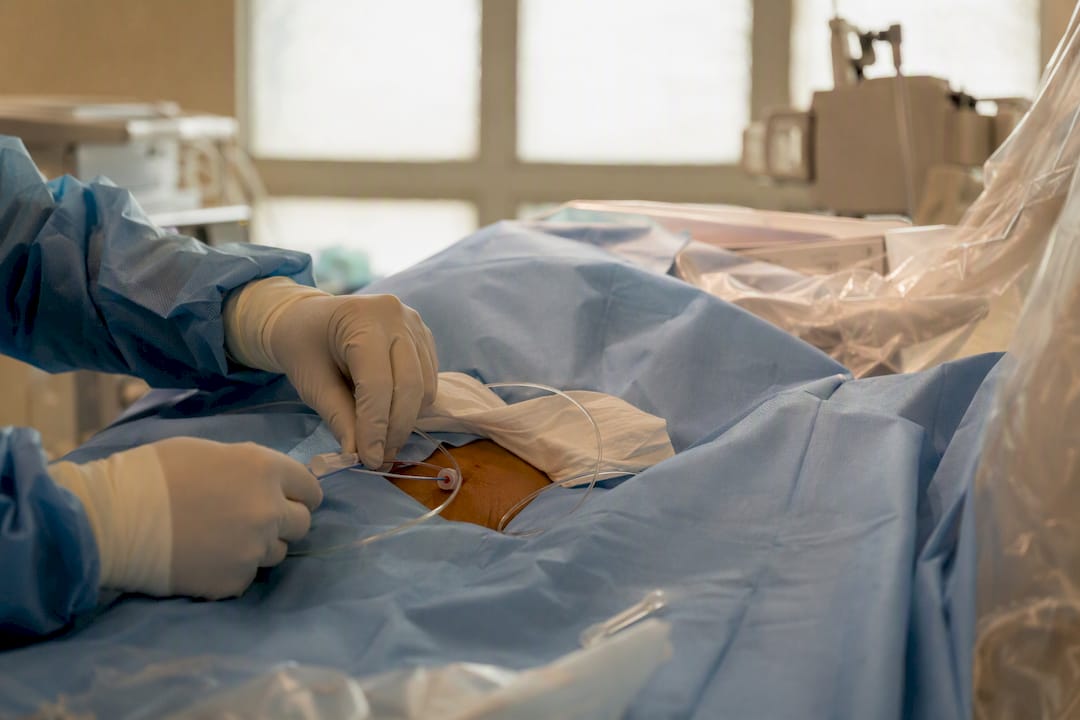
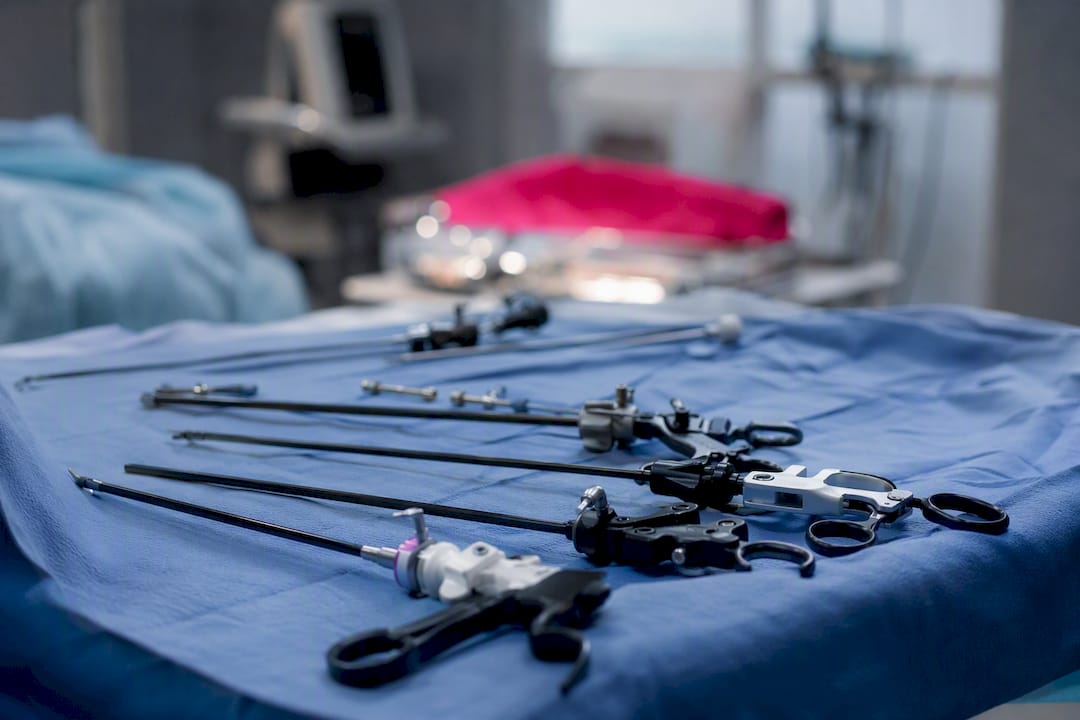
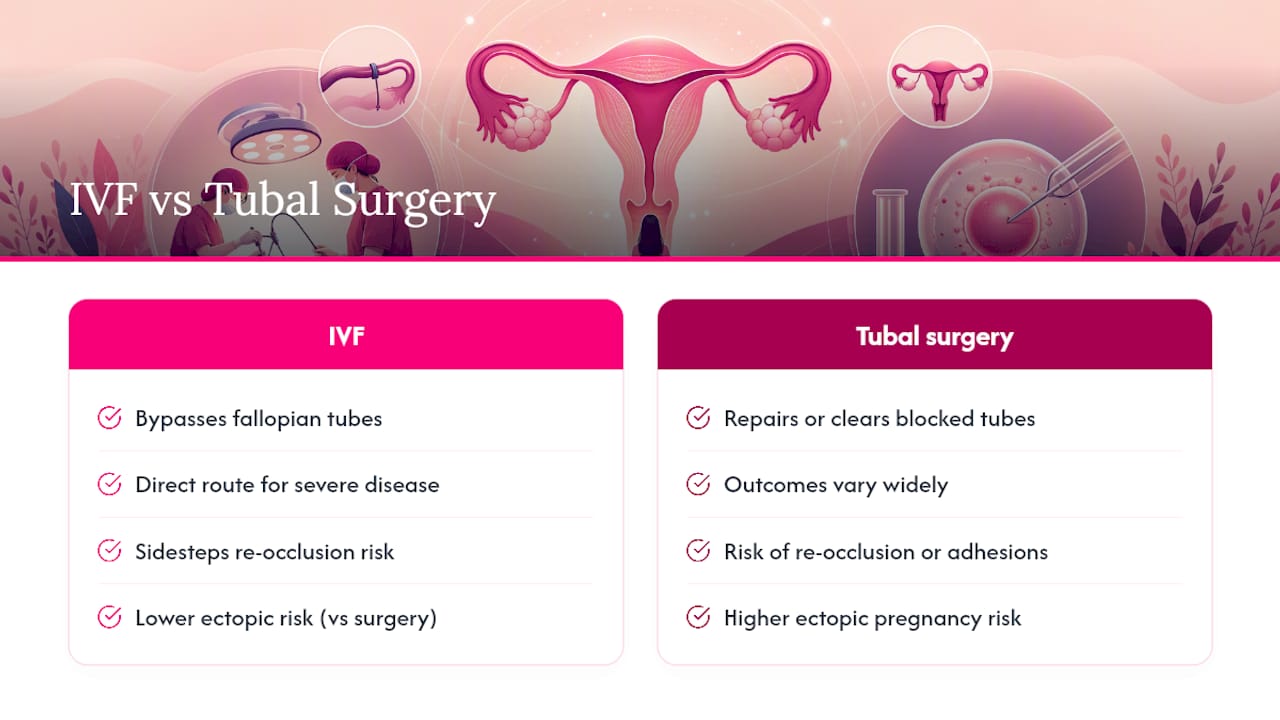
Laparoscopic surgery (adhesiolysis, fimbrioplasty, or salpingostomy) addresses distal blockages and pelvic adhesions. Outcomes vary widely, and surgical repair carries a real risk of adhesions reforming, along with a higher ectopic pregnancy risk than IVF.
Hydrosalpinx management deserves its own line item: removing or sealing an affected tube before IVF is standard practice, since retained tubal fluid can interfere with embryo implantation. Most reproductive endocrinologists treat this step as standard practice rather than optional.
Tubal reversal (anastomosis) reconnects tubes after a prior tubal ligation. It’s a longer surgery with a longer recovery, and candidacy depends heavily on how much healthy tube remains.
IVF bypasses the tubes altogether. For severe disease, older patients, or anyone who has already tried repair without success, it’s often the more direct route to pregnancy, and it sidesteps the re-occlusion risk that comes with tubal procedures.
Comparing Outcomes: Repair and Recanalization vs. IVF
Numbers here vary by patient selection, which is exactly what makes shared decision-making so important.
- FTR and laparoscopic repair show meaningful but variable outcomes, concentrated among patients with isolated, uncomplicated blockages, per the ASRM committee opinion.
- Tubal disease itself raises ectopic pregnancy risk, and certain tubal surgeries add to that risk further.
- Re-occlusion after recanalization and adhesion reformation after laparoscopic surgery are both documented possibilities, not rare exceptions.
- Age 35 or older, or the presence of male-factor infertility, tends to shift the calculus toward IVF, since clinicians often prefer avoiding repeat procedures that delay time-to-pregnancy.
Cost, time, and the emotional weight of each option belong in this conversation too. A repair attempt that fails still costs time you may not want to spend.
How to Plan Your Next Steps and What to Ask Your Doctor
Walk into your next appointment with facts, not just questions.
- Confirm the specifics: Is the blockage proximal or distal? One tube or both? Is a hydrosalpinx present?
- Bring your full workup: semen analysis results and ovarian reserve testing change which path makes sense.
- Ask direct questions: What are my realistic odds with repair versus IVF? What are the specific risks for my case? If FTR is on the table, will you refer me to an interventional radiologist?
- Set a timeline: after a successful intervention, most guidance points toward trying to conceive for 6 to 12 months before reevaluating rather than repeating the procedure.
Pro Tip: If cannulation meets resistance rather than opening smoothly, ask what that means. Persistent resistance often signals fibrosis that further attempts won’t fix, which is useful information before you agree to try again.
How a Personalized Fertility Center Approaches Blocked-Tube Cases
Life IVF Center treats the repair-versus-IVF decision as genuinely individual, not a formula. Precision IVF® adjusts protocols around your specific anatomy, hormone profile, and history rather than defaulting every tubal-disease patient to the same pathway. That means a full evaluation, including imaging review and reserve testing, before recommending whether recanalization deserves a shot or IVF is the more direct route for you.
A multidisciplinary team, not a single physician working in isolation, reviews complex cases like hydrosalpinx or prior failed surgery. If you want that kind of tailored read on your own situation, a consultation is the logical next step.
Where Life IVF Center Fits Into Your Treatment Plan
If you’ve been weighing FTR, laparoscopic repair, or a hydrosalpinx procedure against jumping straight to IVF, Life IVF Center’s advantage is that you don’t have to choose blind. Precision IVF® builds your protocol around your actual anatomy and hormone profile instead of a one-size answer, which matters most for exactly the complicated cases this article covers: hydrosalpinx, prior failed surgery, and diminished ovarian reserve.
Life IVF Center’s Southern California team handles the full range, from evaluating whether your proximal blockage is a good FTR candidate to managing salpingectomy-before-IVF cases and complex donor-egg or gestational-surrogacy pathways when tubal damage is severe. Multi-language support and financial guidance are built into the process, so the logistics don’t add to an already heavy decision. If you’re ready to find out which path fits your case, schedule a consultation with Life IVF Center and get a plan built around your own diagnosis, not a generic protocol.
Sources
- Treatment of infertility due to tubal disease – Guideline for the prevention, diagnosis and treatment of infertility – NCBI Bookshelf
- Role of tubal surgery in the era of assisted reproductive technology: a committee opinion (2021) | ASRM
- Fallopian tube recanalization for the management of infertility | CVIR Endovascular
- Tubal Dysfunction and Pelvic Abnormalities – Merck Manual Professional Edition
Ready to take the next step?
Life IVF Center specializes in individualized Precision IVF® care for complex cases—including diminished ovarian reserve, prior failed cycles, and advanced maternal age. Our in-house labs and dedicated physicians are ready to help.
Book a Free Consultation →