

Yes, a single person can absolutely pursue IVF and related fertility treatments in the United States. The main clinical routes are intrauterine insemination (IUI) with donor sperm, IVF with donor sperm or donor eggs, embryo adoption, and gestational surrogacy for those who cannot carry a pregnancy. IVF alone accounts for many births per year in the U.S., with numbers increasing over recent decades.. The number of single people pursuing these paths has grown substantially over the past decade.
Here is a quick roadmap of the main options:
- IUI with donor sperm: A less invasive first step for single women with good ovarian reserve and open fallopian tubes.
- IVF with donor sperm: Higher per-cycle success than IUI; the standard route for most single women by choice.
- IVF with donor eggs: Recommended when ovarian reserve is diminished or age-related egg quality is a concern.
- Embryo adoption: Using a donated embryo from another family’s IVF cycle; lower cost, but limited selection.
- Gestational surrogacy: The primary path for single men and for women who cannot safely carry a pregnancy.
- Fertility preservation (egg or sperm freezing): For those not ready to conceive now but wanting to protect future options.
The logical next step is a consultation with a fertility specialist who can assess your individual situation and recommend the most appropriate pathway.
Key Takeaways
Single people can pursue IVF and related fertility treatments in the U.S. through multiple well-established clinical pathways, with IUI, IVF with donor gametes, embryo adoption, and gestational surrogacy all viable depending on individual circumstances.
| Point | Details |
|---|---|
| Multiple pathways available | IUI, IVF with donor sperm or eggs, embryo adoption, and gestational surrogacy are all established options for single parents. |
| Cost ranges vary widely | IVF cycles typically cost $15,000–$30,000+; surrogacy carrier compensation alone typically runs $150,000–$200,000, not including IVF, donor egg, or donor sperm costs; many patients pay out of pocket. |
| Start testing early | AMH, FSH, antral follicle count, and infectious screening at the first consult determine which pathway fits your biology. |
| Legal prep is non-negotiable | A reproductive attorney is required for donor contracts, surrogacy agreements, and establishing sole parental rights. |
| Life IVF Center’s role | Life IVF Center offers Precision IVF®, donor programs, gestational carrier coordination, and financial counseling tailored for single-parent patients. |
Table of Contents
- What are the main single parent IVF and fertility options?
- What happens at your first fertility consultation?
- How do donor sperm and egg options work in the U.S.?
- How does surrogacy work for single parents?
- Should you consider egg freezing before starting IVF?
- What does single parent IVF cost in the U.S., and how can you finance it?
- Emotional and practical planning for single parents
- A clinician’s perspective on single-parent family building
- Life IVF Center supports single parents from first consult to family
- Useful resources for single parents researching IVF
- Sources
What are the main single parent IVF and fertility options?
Single people have more clinical pathways available today than at any prior point in reproductive medicine. Choosing among them depends on age, ovarian or sperm reserve, medical history, and whether you plan to carry the pregnancy yourself. Between 2012 and 2022 in the UK, the number of women receiving fertility treatment alone increased significantly over the decade., a trend mirrored in the U.S. as more single women and men pursue parenthood independently.
IUI with donor sperm
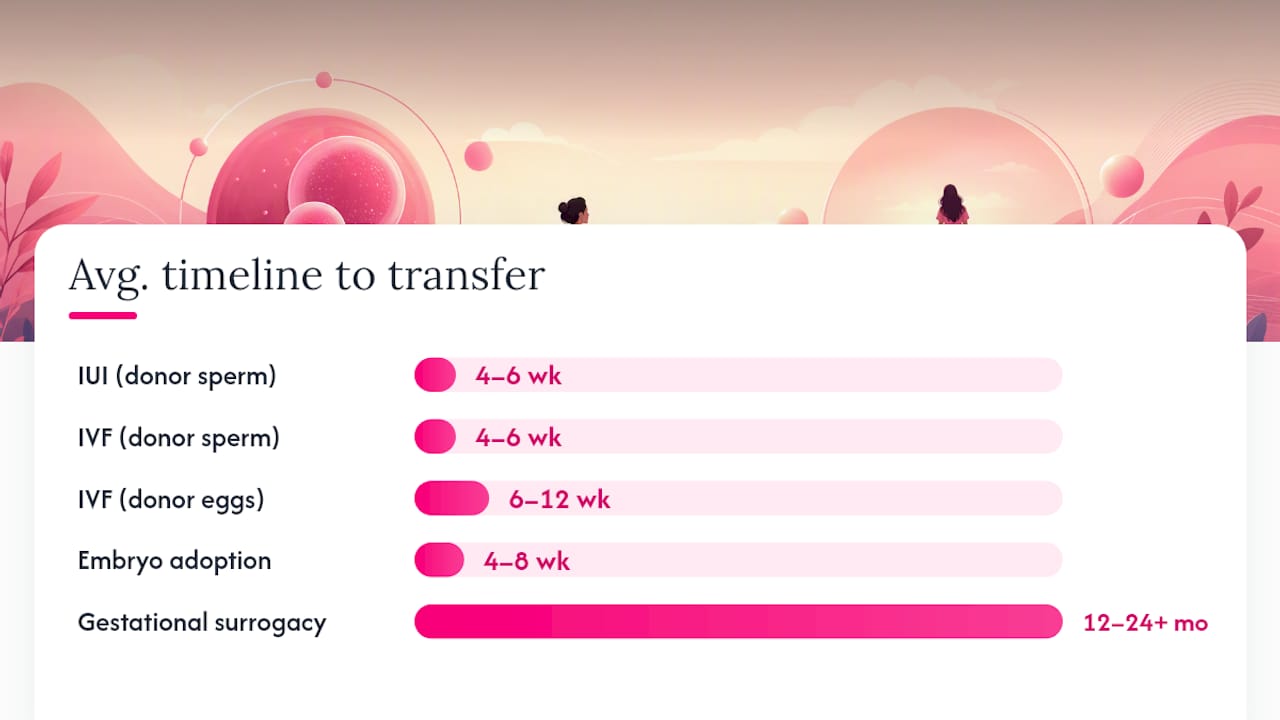
IUI places prepared donor sperm directly into the uterus around ovulation. It is the least invasive and least expensive option, typically completed in a single office visit per cycle. Clinics generally recommend IUI for single women under 35 with good ovarian reserve, open tubes, and no significant uterine abnormalities. Success rates per cycle are lower than IVF, so multiple attempts are common. Most patients complete a cycle within four to six weeks.
IVF with donor sperm
Standard IVF involves ovarian stimulation, egg retrieval, fertilization with donor sperm in a laboratory, and embryo transfer. For single women, this is the most common route when IUI has failed or when age or ovarian reserve makes IUI a lower-probability choice. Per-cycle success rates are meaningfully higher than IUI, particularly for women under 38. A full cycle from stimulation start to transfer typically takes four to six weeks, with embryo freezing adding flexibility for future transfers.

IVF with donor eggs
When a patient’s own egg quality or quantity is insufficient, donor eggs from a screened, anonymous or identity-release donor can be fertilized with donor sperm (or the patient’s own sperm, for single men using a gestational carrier). Donor egg cycles carry higher per-cycle success rates than cycles using a patient’s own eggs, especially for patients over 40. The tradeoff is additional cost and the time required for donor matching, which can add several weeks to the timeline.
Embryo adoption
Donated embryos from other families’ completed IVF cycles are available through embryo adoption programs. This is the most affordable donor-assisted route, though the selection of available embryos is more limited than with fresh donor gametes. The recipient undergoes a frozen embryo transfer cycle, which is less physically demanding than a full IVF stimulation cycle.
Gestational surrogacy
A gestational carrier carries a pregnancy created from the intended parent’s or donor’s gametes. This is the primary path for single men by choice and for single women with medical conditions that prevent safe pregnancy. The process involves creating embryos through IVF, matching with a carrier through an agency or independent arrangement, completing legal contracts, and coordinating the transfer. Surrogacy is the most time-intensive and costly pathway.
Fertility preservation
Egg freezing allows single women to bank eggs now for future use, preserving options before age-related decline accelerates. Single men can freeze sperm at any point. Preservation is not a treatment pathway on its own but a planning tool for those not yet ready to conceive.
| Pathway | Invasiveness | Typical Cost Shape | Avg. Timeline to Transfer | Success Context |
|---|---|---|---|---|
| IUI with donor sperm | Low | Lower per cycle; often multiple cycles needed | 4–6 weeks per cycle | Lower per-cycle rate; best for younger patients |
| IVF with donor sperm | Moderate | Higher per cycle; better per-cycle odds | 4–6 weeks | Higher per-cycle rate than IUI |
| IVF with donor eggs | Moderate to high | Higher; includes donor fees | 6–12 weeks (includes matching) | Highest per-cycle rates, especially over 40 |
| Embryo adoption | Low to moderate | Lowest donor-assisted option | 4–8 weeks | Variable; depends on embryo quality |
| Gestational surrogacy | High (for carrier) | Highest overall cost | 12–24+ months | Depends on embryo quality and carrier health |
| Egg/sperm freezing | Moderate | Upfront retrieval + annual storage | 2–4 weeks per retrieval cycle | Preservation only; success depends on age at freeze |
What happens at your first fertility consultation?
The first consultation determines your fertility potential, narrows the list of appropriate pathways, and gives your care team the baseline data needed to build a treatment plan. Coming prepared makes a real difference in how quickly you can move forward.
Here is what to expect and how to prepare:
- Complete medical history review. Your physician will review menstrual history, prior pregnancies, surgeries, chronic conditions, and any medications. Bring records from previous fertility evaluations if you have them.
- AMH (anti-Müllerian hormone) blood test. AMH measures ovarian reserve and is one of the most informative single markers for predicting response to stimulation. Results typically return within a few days.
- FSH and estradiol on cycle day 2 or 3. These hormones give additional context on ovarian function and are usually drawn at the same blood draw as AMH.
- Transvaginal ultrasound with antral follicle count. The ultrasound assesses the uterus for fibroids or polyps and counts the visible follicles in each ovary, which correlates with egg reserve.
- Hysteroscopy (if indicated). Not always performed at the first visit, but recommended when the ultrasound suggests a uterine abnormality that could affect implantation.
- Infectious disease screening. Standard panel includes HIV, hepatitis B and C, syphilis, and other sexually transmitted infections. Required before any treatment cycle.
- Genetic carrier screening. A saliva or blood test that checks whether you carry mutations for conditions such as cystic fibrosis, spinal muscular atrophy, or fragile X. Particularly relevant when using donor gametes, so donor and recipient carrier status can be compared.
- Donor sperm planning discussion. For single women, the consultation will include a conversation about sperm bank options, donor types, and logistics. For single men planning surrogacy, egg donor and carrier coordination will be introduced.
From the day of your first consultation, expect two to four weeks for all test results to return and be reviewed. Donor matching, if needed, can add several more weeks. Realistically, most patients begin their first treatment cycle six to twelve weeks after the initial appointment, depending on donor availability and cycle timing.
Pro Tip: Bring a written list of questions and a summary of any prior fertility tests. Clinics that see single-parent patients regularly will also want to know your timeline preferences, since time is often the most significant factor driving the decision to move forward.
How do donor sperm and egg options work in the U.S.?
Donor selection is one of the most personal decisions in the solo parenthood process, and the U.S. market offers more options than most countries. Sperm banks, egg donor agencies, anonymous donors, identity-release (open-ID) donors, known donors, and directed donation are all available, each with different legal and logistical implications.
Sperm donor options
Sperm banks in the U.S. screen donors extensively. Standard screening includes semen analysis, infectious disease testing (HIV, hepatitis, CMV, gonorrhea, chlamydia), genetic carrier screening, and a detailed family medical history. Most banks offer both anonymous donors and identity-release donors, the latter agreeing to be contactable by donor-conceived children once they reach age 18.
When selecting a donor, patients typically review profiles covering physical characteristics, education, personal essays, and health history. CMV (cytomegalovirus) status is a practical selection factor that can significantly narrow your donor pool, particularly for CMV-negative recipients, since many clinics recommend matching CMV-negative recipients with CMV-negative donors. Confirming vial availability before finalizing a choice is also critical, since popular donors sell out.
Practical steps for donor sperm selection:
- Review extended profiles and, where available, audio interviews or childhood photos.
- Confirm the number of vials available and whether the bank offers a reservation hold.
- Check CMV status and discuss with your clinic whether matching is medically recommended for you.
- Confirm shipping logistics and storage requirements with your clinic’s laboratory.
- Consult a reproductive attorney to review any donor contract terms, particularly if using a known donor.
Egg donor options
Egg donors are typically recruited through agencies or clinic-affiliated programs. Screening mirrors sperm donor standards and adds ovarian reserve testing, psychological evaluation, and a physical exam. Identity-release egg donors are less common than in sperm banking but are available through select agencies.
Choosing an identity-release donor gives donor-conceived children the option to learn about their genetic origins when they are ready. Many solo parents report that this choice brings long-term peace of mind, both for themselves and for the child they are raising.
Pro Tip: Ask your clinic or agency whether the egg donor has completed a prior donation cycle with confirmed results. A donor with a proven retrieval history gives you more predictable data on her response to stimulation.
Legal considerations for donor selection
Donor contracts in the U.S. establish that the donor relinquishes all parental rights. For anonymous and identity-release donors through licensed banks and agencies, these contracts are standard. Known donors require a separate legal agreement drafted by a reproductive attorney before any medical procedures begin. State law governs parental rights after donor-assisted conception, and the rules vary. Consulting a reproductive attorney before finalizing any donor arrangement is strongly advisable, particularly for single parents who will be establishing sole legal parentage. Life IVF Center coordinates third-party reproduction services including referrals to reproductive attorneys for exactly this purpose.
How does surrogacy work for single parents?
Gestational surrogacy is the primary family-building route for single men by choice and for single women who cannot safely carry a pregnancy due to medical conditions such as uterine absence, severe uterine abnormality, or a health condition that makes pregnancy high-risk. In gestational surrogacy, the carrier has no genetic connection to the child; the embryo is created from the intended parent’s gametes (or donor gametes) and transferred to the carrier’s uterus.
The two main models are agency-coordinated surrogacy and independent (private) arrangements. Agency coordination is strongly recommended for first-time intended parents because agencies handle carrier screening, matching, legal coordination, and insurance review.
Key steps in the surrogacy process:
- Embryo creation: The intended parent completes an IVF cycle to create and freeze embryos before or during the matching process.
- Carrier matching: The agency presents profiles of screened carriers. Matching typically takes two to six months depending on criteria and availability.
- Medical and psychological screening: The carrier undergoes a full medical workup, uterine evaluation, and psychological assessment.
- Legal contracts: Both parties retain separate reproductive attorneys. A surrogacy agreement is executed before any medical procedures involving the carrier begin.
- Embryo transfer: Once legal contracts are signed and the carrier’s cycle is synchronized, the frozen embryo transfer takes place.
- Pre-birth order: In most U.S. states, a pre-birth order establishes the intended parent’s legal parentage before the child is born. State law varies significantly on this point.
- Birth and post-birth steps: The intended parent is named on the birth certificate in states with favorable pre-birth order laws. In other states, a post-birth adoption or parentage order may be required.
The full surrogacy timeline from embryo creation to birth typically runs 18–24 months. Cost drivers include agency fees, carrier compensation, legal fees, medical costs for the carrier, and insurance. A reproductive attorney is not optional in this process; it is the single most important professional to retain early.
Selecting an agency: Look for agencies that conduct thorough carrier background checks, psychological evaluations, and insurance reviews. Ask specifically about their experience with single intended parents and their process for establishing sole legal parentage.
Should you consider egg freezing before starting IVF?
Egg freezing is a practical preservation strategy for single women who are not ready to conceive now but want to protect their options. Success is meaningfully age-dependent: eggs retrieved and frozen in a patient’s 20s or early 30s have substantially higher post-thaw fertilization and live birth potential than eggs frozen after the mid-30s. IVF success rates by age follow the same curve, and the same principle applies to frozen eggs used in a future IVF cycle.
The process involves ovarian stimulation with injectable hormones (typically 10–14 days), followed by a brief egg retrieval procedure under light sedation. Retrieved eggs are vitrified (flash-frozen) and stored in liquid nitrogen. A single retrieval cycle takes approximately two to four weeks from the start of stimulation to the day of retrieval.
Age and outcomes: The American Society for Reproductive Medicine (ASRM) notes that egg quality and quantity decline with age, with a more pronounced drop after 35. Patients who freeze eggs before 35 generally have more eggs retrieved per cycle and better post-thaw survival rates.
Typical cost components for egg freezing include the stimulation medications (which can range from $3,000 to $6,000 depending on protocol and pharmacy), the retrieval procedure, laboratory vitrification fees, and annual storage fees. Life IVF Center offers egg and embryo freezing packages that bundle these components for clearer cost planning.
Who should discuss freezing early: single women in their 20s or early 30s who anticipate delaying partner-based or solo parenthood, those recently diagnosed with a condition that may affect fertility (such as endometriosis or early diminished ovarian reserve), and anyone who wants to preserve options before beginning a demanding career phase or major life transition.
What does single parent IVF cost in the U.S., and how can you finance it?
Costs vary significantly by pathway. Per-cycle IVF costs frequently fall within a range that many patients find substantial., and many patients pay largely out of pocket because insurance coverage for fertility treatment remains uneven across states and employers.
Ranges are approximate and vary by clinic, geographic market, and individual protocol. Medication costs are often additional.
Insurance coverage gaps for single parents
Most U.S. states do not mandate insurance coverage for IVF, and even in the 21 states with some fertility coverage mandate, single patients using donor gametes may face exclusions. Policies that define infertility as the inability to conceive after 12 months of unprotected intercourse can effectively exclude single people who have never had the opportunity to try. Reviewing your policy’s exact language, or working with a clinic’s insurance coordinator, is the only reliable way to know what is covered. Life IVF Center’s insurance intake process helps patients understand their coverage before committing to a treatment plan.
Financing options
- Clinic payment plans: Many clinics offer in-house installment plans or deferred payment arrangements for treatment packages.
- Fertility-specific loans: Lenders such as Prosper Healthcare Lending and CapexMD offer personal loans designed for fertility treatment costs.
- Employer fertility benefits: A growing number of large employers offer fertility benefits through platforms that cover IVF cycles, donor services, or surrogacy costs. Check your HR benefits summary carefully.
- Grants: Organizations such as the Baby Quest Foundation and the Tinina Q. Cade Foundation offer grants to individuals and couples facing fertility treatment costs.
- Multi-cycle packages: Bundled packages that include multiple retrieval or transfer cycles at a fixed price can reduce per-cycle cost and financial uncertainty.
Pro Tip: Ask your clinic specifically about medication discount programs. Fertility drug manufacturers and specialty pharmacies often offer patient assistance programs that can reduce stimulation medication costs by several hundred to several thousand dollars per cycle.
Emotional and practical planning for single parents
The medical side of solo parenthood gets most of the attention, but the practical and emotional infrastructure around it matters just as much. Single parents who pursue fertility treatment often face significant logistical burdens, including managing appointments, injections, and recovery without a partner’s daily support. Planning for these realities before treatment begins reduces stress and lowers the risk of missed medications or appointments.
Practical items to address before starting treatment:
- Identify a support person. A trusted friend or family member who can attend monitoring appointments, help administer injections, and provide emotional support during the two-week wait. Clinics can train a support person to assist safely with subcutaneous injections, which reduces both missed doses and patient anxiety.
- Childcare planning. If you already have children, arrange reliable backup care for monitoring visits, retrieval day, and transfer day.
- Parental leave research. Review your employer’s parental leave policy early. Single parents may need to plan for leave without a co-parent’s income as a backup.
- Financial buffer. Treatment timelines extend unexpectedly. Having three to six months of living expenses accessible alongside treatment funds reduces pressure if a cycle needs to be repeated.
- Emergency backup plan. Identify who can step in if your primary support person is unavailable on a critical appointment day.
Many single parents report that pursuing parenthood alone brought clarity and purpose, and the autonomy of making decisions without compromise is frequently described as one of the most positive aspects of the experience. That said, the emotional weight of the process is real, and professional support makes a measurable difference.
Resources worth knowing:
- Fertility counseling: A licensed counselor specializing in reproductive mental health can help process the emotional complexity of donor conception, single parenthood, and treatment uncertainty. Understanding the role of counseling in IVF is a useful starting point.
- Single-parent support networks: Organizations such as Single Mothers by Choice (SMC) and the Donor Conception Network offer peer communities, forums, and local chapters.
- Donor-conception communities: Online communities for donor-conceived families provide perspective on disclosure conversations and long-term family dynamics.
Pro Tip: Build what practitioners sometimes call a “non-romantic care plan” before your first treatment cycle: a written list of two or three trusted people, their roles (appointment companion, injection helper, emotional check-in), and their availability. Having this in place before stimulation starts means you are not problem-solving logistics during the most demanding phase of treatment.
A clinician’s perspective on single-parent family building
Single-parent family building is a medically supported path, and most fertility clinics today treat it as a standard presentation rather than an exception. The clinical protocols are the same as for any patient; what changes is the coordination layer around donor selection, legal preparation, and support planning.
From a clinical standpoint, the Precision IVF® approach is particularly well-suited to single-parent patients because it customizes stimulation protocols based on each patient’s ovarian reserve, hormonal profile, and medical history rather than applying a one-size-fits-all protocol. For a single patient who may have only one or two chances within a financial or biological window, minimizing unnecessary cycles matters more, not less.
Nina Barnsley of the Donor Conception Network has observed that time is the single most significant factor driving women to pursue solo parenthood, prompting many to move ahead rather than wait for a partner. Clinically, this translates into a clear recommendation: do not delay the initial consultation. Ovarian reserve can decline faster than expected, and earlier testing gives more options, not fewer.
Clinics that work regularly with single-parent patients also help coordinate donor matching early in the process to reduce time-to-treatment, prepare legal referrals to reproductive attorneys for parentage orders, and offer combined packages that bundle stimulation, retrieval, and freezing into a single cost structure. Privacy and confidentiality are standard; single patients are not treated differently in any clinical or administrative respect.
Pro Tip: Bring your complete medical records to the first consultation, including any prior hormone panels, imaging, or surgical reports. The more baseline data your physician has at the outset, the faster the team can build a realistic treatment plan and timeline.
Life IVF Center supports single parents from first consult to family
Single parents pursuing IVF need a clinic that does more than perform procedures. They need coordinated support across donor programs, legal referrals, financial planning, and the medical protocol itself.
Life IVF Center’s third-party reproduction services are built for exactly this patient. The clinic’s Precision IVF® protocol customizes every treatment cycle to the individual patient’s biology, which is especially valuable when cycles need to count. Services available to single-parent patients include:
- Donor sperm coordination: Guidance on bank selection, vial reservation, and working with donor sperm through the clinic’s laboratory.
- Donor egg programs: Access to screened egg donors through the clinic’s agency relationships, with identity-release options available.
- Embryo freezing: Vitrification and storage for future frozen embryo transfer cycles, with transparent package pricing.
- Gestational carrier coordination: Referrals to vetted surrogacy agencies and reproductive attorneys, with the clinic managing the medical side of the carrier’s cycle.
- Financial counseling: Assistance reviewing insurance coverage, exploring treatment packages, and identifying financing options before treatment begins.
- Multilingual support and travel coordination: For patients traveling to Southern California for treatment, the clinic offers language support and logistical assistance.
Patient testimonials consistently highlight the clinic’s responsiveness and the personalized attention single-parent patients receive throughout the process. To take the next step, schedule a consultation directly through Life IVF Center’s website or call the clinic to speak with a patient coordinator who can walk you through the intake process and what to expect at your first visit.
Useful resources for single parents researching IVF
The sources below were selected for U.S. relevance, editorial credibility, and practical value for single people at the research stage of their fertility planning.
- More single women in their 40s are using IVF to have children (NPR): A detailed feature on the trend of single women pursuing IVF in their 40s, with cost context and patient perspectives.
- IVF: Single women on why they had babies alone through sperm donors (BBC News): Covers the IUI vs. IVF decision and the personal experiences of single women who pursued donor-assisted conception.
- Why I’ve chosen to have my babies solo via a sperm donor (BBC News): First-person perspectives on the emotional and practical dimensions of solo parenthood by choice.
- I gave up on dating to have solo IVF (The Independent): Candid account of the financial and logistical realities of pursuing IVF as a single person.
- Intro to Third Party Reproduction (Life IVF Center): Clinic-specific overview of donor programs, gestational carrier coordination, and legal referral services available to single-parent patients.
- IVF Success Rates by Age (Life IVF Center): Data-grounded discussion of how age affects IVF outcomes, directly relevant to egg freezing and treatment timing decisions.
This article is general information, not a substitute for advice from a qualified doctor. Consult a qualified healthcare professional about your own circumstances before acting on anything here.
Sources
- Why I’ve chosen to have my babies solo via a sperm donor: BBC News
- IVF: Single women on why they had babies alone through sperm donors – BBC News
- I gave up on dating to have solo IVF: This is what you should know | The Independent
- BBC under scrutiny: here’s what research tells about its role | Reuters Institute (news item used for practitioner quote)
Recommended
- How to Handle IVF After Failed Cycles: What to Do Next
- Top 6 westcoastfertility.com Alternatives Providers 2026
- Top 6 westcoastfertility.com Alternatives Providers 2026
- Mini IVF: A personalized path to fertility success
Ready to take the next step?
Life IVF Center specializes in individualized Precision IVF® care for complex cases—including diminished ovarian reserve, prior failed cycles, and advanced maternal age. Our in-house labs and dedicated physicians are ready to help.
Book a Free Consultation →