
Egg retrieval is a minor outpatient procedure at the center of every IVF cycle, and preparing for egg retrieval correctly determines both the number and quality of eggs collected. The process involves ovarian stimulation, precise trigger shot timing, and a short procedure under sedation. Patients who follow their clinic’s preparation protocol closely give themselves the best possible chance of a successful collection. This guide covers the medical steps, physical and emotional preparation, what to expect on the day, and how to recover well.
What is the egg retrieval process and why does timing matter?
Egg retrieval, also called oocyte retrieval or follicular aspiration, is a 10 to 30 minute outpatient procedure performed under light sedation. Because it is so short and minimally invasive, most patients go home the same day within a few hours of waking from sedation. The brevity of the procedure does not reduce its medical precision. Every step, from stimulation to collection, follows a strict clinical sequence.
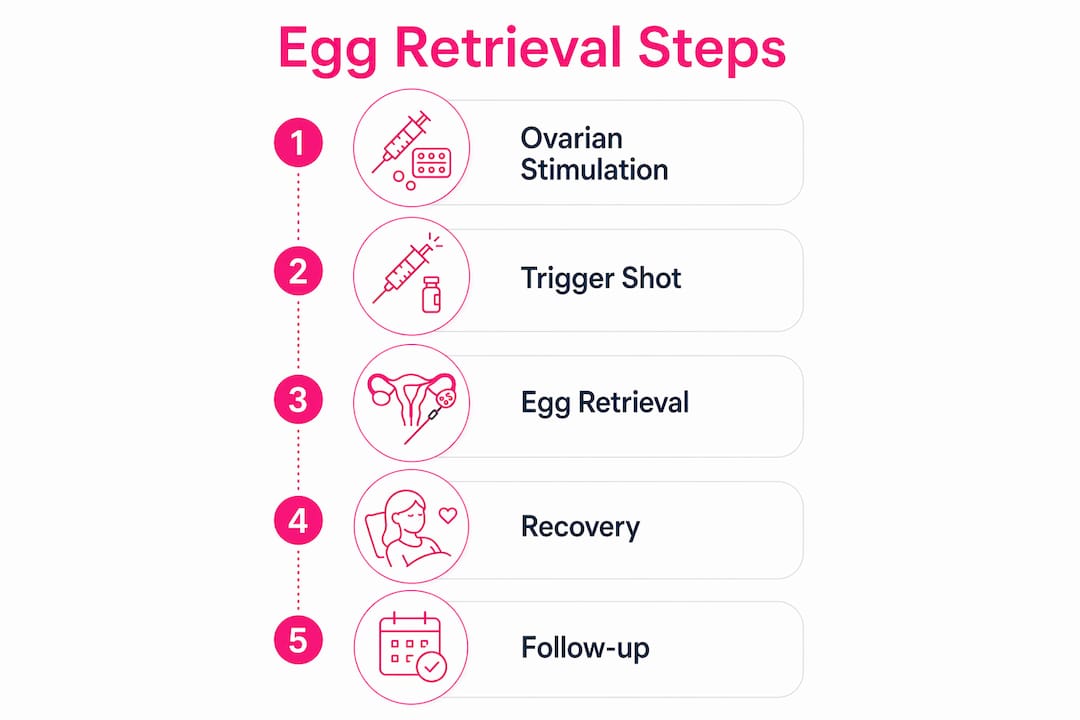
The ovarian stimulation phase comes first. Patients self-inject hormonal medications for roughly 8 to 14 days to encourage multiple follicles to grow. The fertility team monitors follicle development through regular ultrasounds and blood tests, adjusting medication doses as needed. Once follicles reach the target size, the trigger shot is given.

The trigger shot is the most time-sensitive step in the entire IVF cycle. It must be administered precisely 34 to 36 hours before retrieval to allow eggs to reach full maturity. Missing this window by even a small margin can result in premature ovulation or immature eggs that cannot be fertilized. Clinics implement strict protocols around this step, and patients are advised to set multiple alarms to avoid any timing error.
The retrieval itself uses ultrasound-guided needle aspiration through the vaginal wall. A thin needle passes through the vaginal tissue into each follicle, drawing out the follicular fluid and the egg inside. The embryologist receives the fluid immediately and identifies the eggs under a microscope. Patients feel no pain during the procedure due to conscious sedation.
| Step | Timing | Purpose |
|---|---|---|
| Ovarian stimulation | Days 1–12 of cycle | Grow multiple follicles |
| Follicle monitoring | Every 2–3 days | Adjust medication doses |
| Trigger shot | 34–36 hours before retrieval | Finalize egg maturation |
| Egg retrieval procedure | Day of surgery | Collect mature eggs |
| Post-procedure recovery | Same day | Observation before discharge |
Pro Tip: Set three separate alarms for your trigger shot, spaced 10 minutes apart. Fertility nurses at clinics like Life IVF Center recommend this redundancy because even a 30-minute deviation can compromise egg maturity.
How to prepare physically and mentally before egg retrieval
Physical preparation for egg retrieval starts well before the procedure day. The days leading up to retrieval are when your body is under the most hormonal stress, and the choices you make directly affect how you feel and how your eggs develop.
Nutrition is a practical lever you can control. A fertility-friendly diet rich in lean protein, leafy greens, and healthy fats supports follicle development. Prenatal vitamins, particularly those containing folic acid and CoQ10, are standard recommendations from most reproductive endocrinologists. Drinking 8 to 10 glasses of water daily in the days before retrieval supports circulation and overall comfort during the stimulation phase.
Certain habits must stop before retrieval. Alcohol, smoking, and recreational substances all interfere with egg quality and hormonal response. Heavy fragrances and chemical-based personal care products are also discouraged in the days before retrieval, as some clinics ask patients to avoid them on the procedure day itself. These are small adjustments that carry real clinical weight.
Medication adherence is non-negotiable. Follow these numbered steps to stay on track:
- Review your medication schedule with your nurse coordinator at least 48 hours before retrieval day to confirm all doses and timing.
- Set phone reminders for every injection, including the trigger shot, with backup alarms as described above.
- Confirm your fasting instructions with your clinic the day before, as protocols can vary slightly between centers.
- Avoid new supplements or over-the-counter medications without checking with your doctor, since some interact with fertility drugs.
- Contact your care team immediately if you miss a dose or experience unusual symptoms like severe bloating or sharp pelvic pain.
Emotional preparation carries equal weight. Stress reduction practices like meditation and mindfulness are clinically recognized as beneficial during fertility treatment. Patients who build a support system before retrieval day, whether through a partner, a close friend, or a fertility counselor, report feeling more grounded during the procedure. Acknowledging anxiety as a normal response, rather than trying to suppress it, tends to reduce its intensity.
Pro Tip: Write down your questions for your care team the night before your pre-retrieval appointment. Patients who arrive prepared with specific questions leave with less anxiety and better recall of their instructions.
What to expect on the day of egg retrieval
The day of egg retrieval follows a predictable sequence, and knowing it in advance reduces stress significantly. Patients must fast from midnight the night before the procedure. This means no food, water, gum, or mints after midnight. Fasting is a non-negotiable anesthesia safety requirement, and arriving without having fasted will result in the procedure being postponed.
When you arrive at the clinic, the nursing team will check you in, confirm your identity and medication history, and place an IV line for sedation. You will change into a procedure gown. Wearing loose, comfortable clothing on retrieval day is strongly recommended because bloating from stimulation medications is common and tight waistbands cause real discomfort.
The procedure itself takes 10 to 30 minutes. You will be under conscious sedation, meaning you are asleep but breathing on your own. Most patients have no memory of the procedure. After the eggs are collected, you move to a recovery area where nurses monitor your vital signs and comfort level for one to two hours before discharge.
Key points to remember for retrieval day:
- Arrange a driver in advance. You cannot drive yourself home after sedation, and rideshare services are not a safe substitute for a trusted person who can stay with you.
- Leave jewelry, nail polish, and contact lenses at home. These interfere with monitoring equipment.
- Bring your photo ID, insurance card, and a list of all current medications.
- Expect mild cramping and light spotting after waking. These are normal and expected.
- Your embryologist will typically give you a preliminary egg count before you leave the clinic.
The egg count you receive on retrieval day is a preliminary number. Not every retrieved egg will be mature, and not every mature egg will fertilize successfully. Understanding this in advance prevents unnecessary distress if the final fertilized count is lower than the initial retrieval number.
How to manage recovery after egg retrieval
Recovery from egg retrieval is generally short. Most patients experience cramping and spotting for a few days after the procedure, and these symptoms resolve with rest and over-the-counter pain relief as approved by your doctor. Strenuous exercise, heavy lifting, and sexual activity should be avoided for at least a few days post-procedure.
Nutrition plays a direct role in recovery quality. Increasing protein and electrolyte intake after retrieval helps reduce the risk of ovarian hyperstimulation syndrome (OHSS). Foods high in sodium and potassium, such as broth, bananas, and sports drinks, help draw excess fluid back into the bloodstream. OHSS ranges from mild to severe, and early dietary support is one of the most effective ways to keep symptoms mild.
Know when to call your clinic. Contact your care team if you experience:
- Severe abdominal pain or significant bloating that worsens over 24 hours
- Nausea or vomiting that prevents you from keeping fluids down
- Fever above 101°F
- Difficulty urinating or very dark urine
- Shortness of breath or chest tightness
Emotional recovery deserves the same attention as physical recovery. The period after retrieval can bring a mix of relief, anxiety about fertilization results, and physical fatigue. Connecting with IVF side effect resources and speaking openly with your partner or counselor helps you process the experience rather than isolate in it.
“The days after retrieval are often the hardest emotionally. You have done everything right, and now you are waiting. That waiting is part of the process, and it deserves as much care as the preparation itself.”
Key takeaways
Preparing for egg retrieval requires precise timing, consistent medication adherence, physical readiness, and emotional support working together from the first day of stimulation through post-procedure recovery.
| Point | Details |
|---|---|
| Trigger shot timing is critical | Administer exactly 34–36 hours before retrieval to protect egg maturity. |
| Fasting is mandatory | No food or drink from midnight before the procedure for anesthesia safety. |
| Physical prep starts early | Hydration, prenatal vitamins, and a protein-rich diet support follicle development. |
| Protein and electrolytes aid recovery | Increasing both after retrieval reduces OHSS risk and speeds healing. |
| Emotional readiness matters | Stress reduction practices and a support system improve the overall experience. |
What I have learned from watching patients prepare for retrieval
The single most common preparation mistake I see is underestimating the trigger shot. Patients follow weeks of injections perfectly, then treat the trigger as just another dose. It is not. The trigger shot timing is the one step where a small error has an immediate and irreversible consequence. I have seen patients lose an entire cycle because of a 45-minute delay. Set three alarms. Tell your partner. Treat it like a medical appointment, not a reminder.
The second pattern I notice is patients who prepare physically but neglect the emotional side entirely. They eat well, hydrate, and take every medication on time. Then retrieval day arrives and the anxiety is overwhelming because they never addressed it. Mindfulness, honest conversations with a partner, and even a single session with a fertility counselor before retrieval day make a measurable difference in how patients experience the procedure and the waiting period after.
My honest advice: read your clinic’s egg retrieval preparation guide carefully, ask every question you have before the day arrives, and give yourself permission to feel whatever you feel. This process is demanding. Patients who acknowledge that tend to move through it with more resilience than those who expect it to be straightforward.
Personalized fertility care at Life IVF Center
Life IVF Center supports patients through every phase of the IVF process, from the first stimulation injection through egg retrieval and beyond. The clinic’s Precision IVF® approach customizes each treatment protocol based on your individual biological profile, which means your stimulation doses, trigger timing, and retrieval plan are built around your specific response, not a generic template.
Patients across Southern California have access to Life IVF Center’s experienced medical team and advanced monitoring technology at multiple locations. Whether you are preparing for your first retrieval or navigating a complex case, the team provides clear guidance at every step. Review the clinic’s fertility treatment packages to understand what is included in your care plan, and speak with a coordinator to get answers specific to your cycle.
FAQ
What is the egg retrieval process in IVF?
Egg retrieval is a 10 to 30 minute outpatient procedure in which a doctor uses ultrasound-guided needle aspiration to collect eggs from mature follicles while the patient is under light sedation. Patients typically go home the same day.
How long before retrieval should the trigger shot be given?
The trigger shot must be given exactly 34 to 36 hours before the scheduled retrieval time. Deviating from this window risks premature ovulation or immature eggs that cannot be fertilized.
Can I eat or drink before egg retrieval?
No. Patients must fast from midnight the night before retrieval. This fasting requirement is a standard anesthesia safety protocol and applies to all food, water, and beverages.
What helps recovery after egg retrieval?
Rest, avoiding strenuous activity, and eating foods high in protein and electrolytes all support recovery. Increasing sodium and potassium intake specifically helps reduce the risk of ovarian hyperstimulation syndrome.
When should I contact my doctor after egg retrieval?
Contact your clinic if you experience severe abdominal pain, worsening bloating, fever above 101°F, persistent nausea, or difficulty urinating. These symptoms may indicate OHSS or another complication that requires prompt evaluation.
Recommended
- Egg retrieval tips: Expert guidance for IVF success
- Male Fertility: Tips and Key Factors for IVF Success – Life IVF Center
- Your fertility evaluation checklist: Steps, tests, and benchmarks
- Fertility Treatment Timeline Guide: Phase by Phase
Ready to take the next step?
Life IVF Center specializes in individualized Precision IVF® care for complex cases—including diminished ovarian reserve, prior failed cycles, and advanced maternal age. Our in-house labs and dedicated physicians are ready to help.
Book a Free Consultation →