
Advanced fertility testing is a specialized set of diagnostic procedures that uncover subtle reproductive issues invisible to standard fertility workups, giving individuals and couples a far more accurate picture of their reproductive health. Standard evaluations, which typically cover ovulation tracking, a basic semen analysis, and a uterine cavity check, miss the underlying cause in the majority of cases labeled “unexplained infertility.” Sperm DNA fragmentation, chronic endometritis, reproductive microbiome imbalances, and silent endometriosis are all conditions that standard panels routinely overlook. Understanding why advanced fertility testing matters is the first step toward a diagnosis that actually reflects what is happening in your body, and a treatment plan built on real evidence rather than assumption.
Why standard fertility testing falls short
Standard fertility evaluations follow a predictable protocol: confirm ovulation, check tubal patency with an HSG, review a semen analysis for count, motility, and morphology, and assess the uterine cavity. These tests answer the most obvious questions, but they leave significant diagnostic gaps. Comprehensive testing identifies causes in 70 to 85% of couples previously labeled with unexplained infertility, revealing issues that standard evaluations consistently miss. That figure means the majority of “unexplained” diagnoses are actually undiagnosed conditions waiting for the right test.
The problem runs deeper than test selection. Many standard reference ranges used in fertility labs are based on averages from sick populations, which means subclinical conditions like mild hypothyroidism can fall within “normal” limits while still impairing fertility. A TSH of 3.5 mIU/L reads as acceptable on a standard panel but is associated with reduced implantation success in reproductive medicine. The lab result looks fine; the fertility impact is real.

The downstream consequences of missed diagnoses are significant. IVF live birth rates per cycle hover around 31.2% even in women under 35, with repeated failures often tied to unaddressed root causes like sperm DNA damage or uterine inflammation. Each failed cycle carries both financial and emotional costs that a more thorough initial workup could have prevented.
The most commonly missed factors in standard evaluations include:
- Sperm DNA fragmentation: Normal semen parameters do not rule out DNA damage that impairs embryo development
- Chronic endometritis: Uterine inflammation caused by bacterial infection, detectable only through endometrial biopsy
- Reproductive microbiome imbalances: Disruptions in vaginal or uterine flora that reduce implantation success
- Silent endometriosis: Endometrial tissue outside the uterus, often asymptomatic and invisible without diagnostic laparoscopy
“The infertility diagnosis ‘unexplained’ reflects the limits of testing, not the absence of pathology.” Studies estimate silent endometriosis is present in 25 to 50% of unexplained infertility cases, making it one of the most underdiagnosed contributors to reproductive failure.
What do advanced fertility tests actually measure?
Advanced reproductive technology has expanded the diagnostic toolkit well beyond what most couples encounter in a first consultation. Each test below addresses a specific gap in standard evaluation and provides clinically actionable data.
Sperm DNA fragmentation testing measures the integrity of genetic material inside sperm cells. DNA fragmentation above 30 to 50% strongly correlates with implantation failure and early pregnancy loss, even when count, motility, and morphology appear normal. This test requires strict sample handling and validated lab techniques to produce reliable results, so the quality of the testing facility matters as much as the test itself.
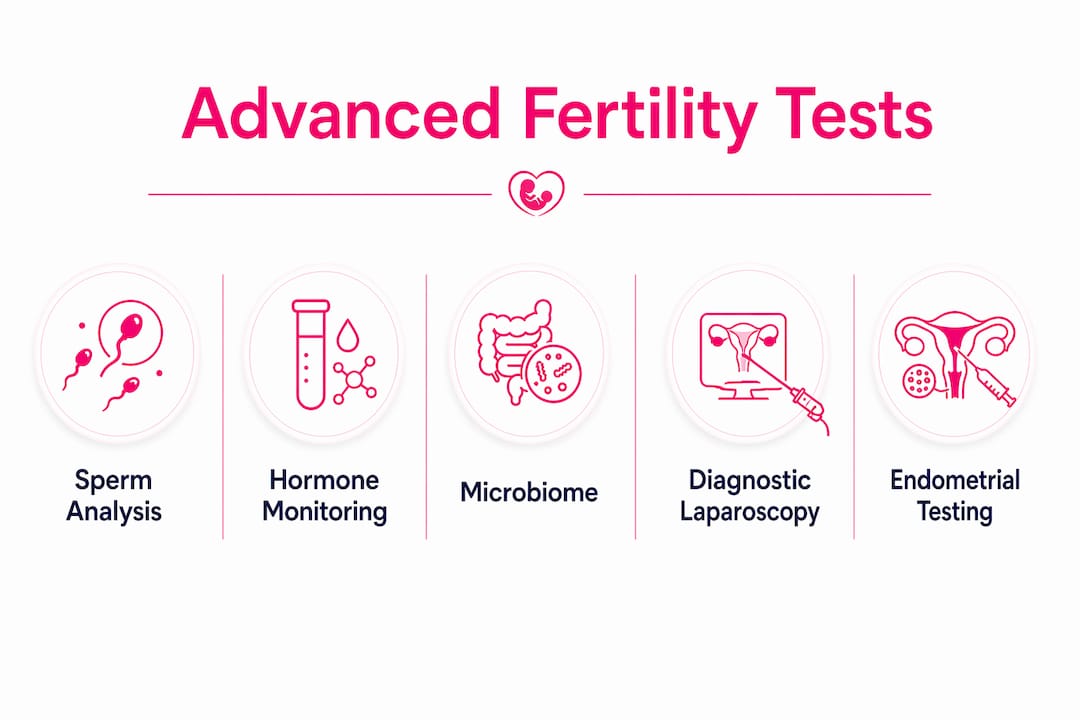
Longitudinal hormone tracking replaces the single-day blood draw with repeated measurements across a full cycle. No single test measures egg quality conclusively; pattern recognition through repeated hormone measures gives a far more accurate fertility picture than a one-time AMH or AFC reading. This approach, championed by reproductive endocrinologists like Dr. Lora Shahine, identifies subtle hormonal fluctuations that a snapshot test would normalize.
Reproductive microbiome analysis examines the bacterial environment of the vaginal canal and uterine cavity. An imbalance in Lactobacillus-dominant flora has been linked to reduced embryo receptivity and increased miscarriage risk. This test is rarely included in standard workups but is increasingly available through specialized fertility clinics.
Diagnostic laparoscopy is the only definitive method for identifying endometriosis. Because the condition is frequently asymptomatic, many women with significant endometrial involvement have no pain or irregular cycles to prompt investigation. Laparoscopy both diagnoses and treats the condition in a single procedure.
Endometrial receptivity array (ERA) and endometrial biopsy address two distinct uterine factors. The ERA identifies the precise window of implantation, which varies by individual and can shift by 24 to 48 hours from the statistical average. Endometrial biopsy detects chronic endometritis through plasma cell identification in uterine tissue.
Nutritional and metabolic evaluations round out a thorough workup. Vitamin D deficiency below 30 ng/mL reduces conception probability by 40%, yet vitamin D testing is routinely omitted from standard fertility panels. Optimal levels between 50 and 70 ng/mL are associated with improved reproductive function and implantation success.
| Test | What it detects | Standard panel includes it? |
|---|---|---|
| Sperm DNA fragmentation | Genetic damage in sperm affecting embryo quality | No |
| ERA (endometrial receptivity array) | Personalized implantation window timing | No |
| Reproductive microbiome analysis | Uterine and vaginal flora imbalances | No |
| Diagnostic laparoscopy | Silent endometriosis | No |
| Vitamin D and ferritin levels | Nutritional deficiencies affecting implantation | Rarely |
Pro Tip: Ask your specialist specifically about sperm DNA fragmentation testing if you have had one or more failed IVF cycles with good-quality embryos. Normal semen parameters do not rule out this cause, and it is one of the most frequently missed contributors to repeated failure.
When should you consider advanced fertility testing?
Timing matters in fertility diagnostics. Waiting for multiple failed cycles before requesting advanced tests adds months or years to a process that is already emotionally and financially demanding. Proactive advanced testing reduces emotional and financial burdens by uncovering hidden causes early and enabling more targeted treatment pathways. The following situations are clear clinical indications for pursuing a deeper workup:
- Unexplained infertility diagnosis: If you have completed a standard evaluation and received no clear cause, advanced testing is the logical next step rather than proceeding to treatment blind.
- Recurrent pregnancy loss: Two or more miscarriages warrant investigation into sperm DNA fragmentation, immune factors, uterine anatomy, and thrombophilia panels.
- Failed IVF or IUI cycles: One or more failed cycles with good-quality embryos strongly suggests an unaddressed uterine, immune, or sperm factor.
- Known risk factors: Conditions like polycystic ovary syndrome (PCOS), endometriosis, thyroid disorders, or a history of pelvic infection increase the likelihood of hidden contributing factors.
- Male partner with borderline semen parameters: Borderline results on standard semen analysis are a direct indication for DNA fragmentation testing and hormonal evaluation.
Testing both partners thoroughly from the start is not optional. Male factor infertility contributes to roughly half of all cases, yet advanced sperm testing including DNA fragmentation assays is still underutilized in couples with unexplained infertility or repeated IVF failures. A complete picture requires complete data from both sides.
You also have the right to advocate for yourself in this process. If your current specialist does not offer or discuss advanced diagnostics, a second opinion from a reproductive endocrinologist who specializes in complex or recurrent cases is a reasonable and often productive step. Reviewing real examples of fertility challenges can help you recognize patterns in your own situation and ask more specific questions.
Pro Tip: Bring a written list of every test you have already completed to your consultation. Specialists can then identify gaps in your workup immediately rather than repeating tests you have already done.
How to navigate the advanced fertility testing process
Choosing the right clinic for advanced fertility diagnostics requires asking specific questions, not just reviewing headline success rates. Clinic success rates can be misleading due to patient selection bias; lab quality, embryology expertise, and personalized protocols are more predictive of individual success than published percentages. When evaluating a clinic, focus on these factors:
- Lab accreditation and quality assurance: Ask whether the embryology lab holds CAP (College of American Pathologists) accreditation and what quality control protocols are in place for sperm DNA fragmentation testing.
- Test menu transparency: A quality clinic should be able to explain which advanced tests they offer in-house versus which they send to reference labs, and why.
- Protocol personalization: Ask how treatment protocols are adjusted based on advanced test results. A clinic that offers ERA testing but applies a uniform transfer protocol regardless of results is not using the data effectively.
- Insurance and cost clarity: Advanced tests vary widely in cost. Sperm DNA fragmentation testing typically runs $200 to $400; ERA testing can reach $800 or more. Ask upfront what is covered and what payment options exist.
Emerging technologies are also expanding access to advanced diagnostics outside clinic walls. At-home hormone monitoring kits from companies like Mira and Proov now track LH, FSH, estrogen, and progesterone across full cycles, providing the longitudinal data that single-day blood draws cannot. Mail-in semen analysis kits with DNA fragmentation add-ons are available through services like Legacy and Dadi, though results should always be reviewed by a reproductive specialist. These tools do not replace clinical testing, but they can provide useful preliminary data before your first consultation.
Understanding what to expect from fertility testing in terms of timing, sample collection requirements, and result interpretation will help you approach the process with realistic expectations and reduce unnecessary anxiety.
Key takeaways
Advanced fertility testing identifies the root causes of infertility that standard evaluations miss, making it the most direct path to a treatment plan that actually fits your biology.
| Point | Details |
|---|---|
| Standard testing misses most causes | Comprehensive diagnostics identify causes in 70 to 85% of couples labeled with unexplained infertility. |
| Sperm DNA fragmentation is critical | DNA fragmentation above 30 to 50% causes implantation failure even with normal semen parameters. |
| Vitamin D is routinely overlooked | Deficiency below 30 ng/mL reduces conception probability by 40% and is rarely tested in standard workups. |
| Test both partners from the start | Male factor contributes to roughly half of all infertility cases; advanced sperm testing is underutilized. |
| Clinic quality matters as much as test selection | Lab accreditation, embryology expertise, and protocol personalization predict outcomes better than success rate headlines. |
What I have learned from watching couples accept “unexplained” too soon
The phrase “unexplained infertility” is one of the most misleading terms in reproductive medicine. It does not mean there is no cause. It means the tests ordered so far have not found one. I have seen couples spend two or three years cycling through IUI and IVF protocols built on incomplete information, only to discover through advanced diagnostics that the husband had a DNA fragmentation index of 55%, or that the wife had chronic endometritis that had never been biopsied for. Those are not rare edge cases. They are common findings that standard panels are simply not designed to detect.
The most important shift I would encourage any couple to make is this: treat “unexplained” as a prompt to investigate further, not a final answer. Proactive advanced testing earlier in the fertility journey consistently leads to better-tailored treatments and fewer wasted cycles. The science of fertility diagnostics is evolving rapidly, and clinics that have adopted ERA testing, microbiome analysis, and longitudinal hormone tracking are operating with a fundamentally different level of precision than those still relying on a standard four-test panel.
Personalized care is not a marketing phrase. It is the practical outcome of having complete diagnostic data. If your current evaluation has not included sperm DNA fragmentation testing, an endometrial biopsy, or nutritional panels, you do not yet have the full picture. Advocate for it. The IVF process works best when it is built on a foundation of thorough, individualized diagnostics.
Take the next step with Life IVF Center
Life IVF Center specializes in exactly the kind of precision diagnostics this article describes. Through its Precision IVF® approach, the clinic builds treatment protocols around each patient’s unique biological profile, incorporating advanced tests like ERA, sperm DNA fragmentation analysis, and immune factor assessments from the start rather than as a last resort.

Life IVF Center serves patients across multiple Southern California locations and offers affordable fertility treatment packages designed to reduce the financial barrier to comprehensive care. If you are ready to move beyond a standard workup and get a diagnosis that reflects your actual reproductive biology, scheduling a consultation with Life IVF Center is a concrete, practical next step. You can also explore the clinic’s Precision IVF approach to understand how advanced diagnostics translate into personalized treatment protocols.
FAQ
What is advanced fertility testing?
Advanced fertility testing is a set of specialized diagnostic procedures that go beyond standard evaluations to identify hidden causes of infertility, including sperm DNA fragmentation, chronic endometritis, microbiome imbalances, and silent endometriosis.
Why does standard fertility testing miss so many causes?
Standard panels assess only the most obvious fertility factors and use reference ranges that can normalize subclinical conditions. Comprehensive advanced testing identifies causes in 70 to 85% of couples previously labeled with unexplained infertility.
When should a couple request advanced fertility testing?
Couples should consider advanced testing after an unexplained infertility diagnosis, two or more miscarriages, one or more failed IVF cycles with good-quality embryos, or when either partner has known risk factors like endometriosis or borderline semen parameters.
Does sperm DNA fragmentation testing matter if semen analysis is normal?
Yes. A normal semen analysis does not rule out DNA damage. Fragmentation above 30 to 50% strongly correlates with implantation failure and early pregnancy loss regardless of normal count, motility, and morphology results.
How do you choose a fertility clinic for advanced diagnostics?
Prioritize clinics with CAP-accredited embryology labs, transparent test menus, and protocols that are genuinely adjusted based on advanced test results. Published success rates are less reliable indicators of quality than lab standards and diagnostic personalization.
Recommended
- Why consider fertility testing? Key insights and action steps
- Failed IVF Elsewhere – Redesign Draft – Life IVF Center
- Previous IVF Failures – Life IVF Center
- Failed IVF Second Opinion – Life IVF Center
Ready to take the next step?
Life IVF Center specializes in individualized Precision IVF® care for complex cases—including diminished ovarian reserve, prior failed cycles, and advanced maternal age. Our in-house labs and dedicated physicians are ready to help.
Book a Free Consultation →