
Washed sperm is semen that a laboratory has processed so the healthiest, most motile sperm are concentrated in a small volume of clean medium and the seminal fluid is removed. Every intrauterine insemination (IUI) uses it, because raw semen placed in the uterus can cause severe cramping. At Life IVF Center, IUI is one of the treatments we offer, and the sperm preparation step is where much of the cycle’s planning comes together: your collection, the lab’s processing and the timing of ovulation all have to line up within a few hours.
This guide explains what happens to the sample, how to prepare, what the timing looks like and what you may feel afterward.
TL;DR
- Washed sperm has been processed in a lab to concentrate motile sperm and remove seminal fluid, which can cause severe cramping if it enters the uterus (ASRM IUI patient fact sheet).
- The wash takes up to about 2 hours, so the sample is collected, processed and placed in the uterus on the same day, close to ovulation.
- You collect the sample in a sterile cup (or with a special condom or, in rare cases, from urine), and you should avoid very long abstinence.
- Expect mild cramping or light spotting for a day or two, and a return to normal activity the next day.
- A semen analysis and the right pre-treatment tests tell you whether IUI is a sensible next step or whether another treatment will save you time.
Table of Contents
- What washed sperm is, and how it differs from unwashed sperm
- How the lab prepares the sample
- Why the post-wash count matters
- How to collect the sample
- How many days to abstain before IUI
- Timing: where washing fits between ovulation and insemination
- What to expect afterward
- Is IUI with washed sperm right for you?
- Washed sperm and donor sperm
- Questions to settle before your first cycle
- Our perspective on sperm preparation
- Planning your IUI with Life IVF Center
- FAQ
- Sources
What washed sperm is, and how it differs from unwashed sperm
Semen is a mixture. It contains sperm, but also seminal fluid, dead or immotile sperm, white blood cells and cellular debris. In natural conception, sperm swim out of the semen and through the cervix, which filters out most of that material before anything reaches the uterus.
IUI skips the cervix. The sample is placed directly into the uterus with a thin, soft catheter, so the cervix’s filtering job has to be done in the laboratory first. That is what sperm washing is. According to the American Society for Reproductive Medicine’s IUI fact sheet, the lab concentrates the sperm and removes seminal fluid, and the process takes up to 2 hours.
The difference in practice:
| Washed sperm | Unwashed (raw) semen | |
|---|---|---|
| What it contains | Concentrated motile sperm in a small volume of sterile medium | Sperm plus seminal fluid, debris and immotile sperm |
| Placed in the uterus | Yes, this is the standard for IUI | No, it can cause severe cramping |
| Where it is prepared | In the laboratory after collection | Not processed |
| Typical use | IUI, and often IVF preparation | Intercourse |
The word “washed” is a little misleading. Nothing is rinsed with water. The sample is spun and separated so the best sperm can be selected and resuspended.
How the lab prepares the sample
The goal of any preparation method is to recover as many normal, motile sperm as possible. A review of semen preparation techniques for IUI describes the common approaches and notes that the technique is chosen according to semen quality, with density gradient methods often preferred when there is a male factor.
A typical sequence looks like this:
- Liquefaction. Fresh semen is thick at first and needs a short time at room or body temperature to thin out.
- Initial analysis. The lab checks volume, concentration and motility, so it knows what it is starting with.
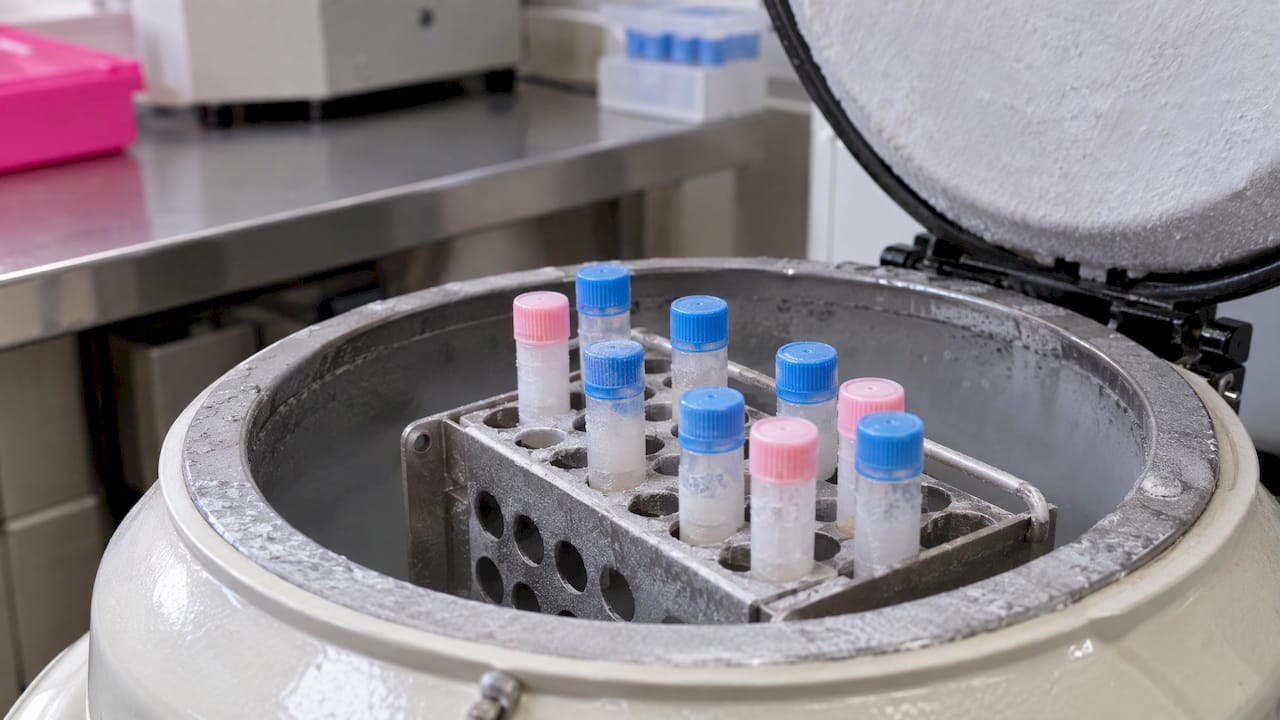
- Separation. The sample is centrifuged, often over a density gradient, so that healthy motile sperm settle apart from seminal fluid, debris and poorly moving cells. Some labs use a swim-up method instead, where the most active sperm swim out of the sample into clean medium.
- Rinsing and concentration. The selected sperm are spun again and resuspended in a small volume of sterile medium.
- Final count. The lab measures the post-wash motile count, which is the number of motile sperm that will actually be placed in the uterus.
The process is often compared to what happens in the body. A chapter on semen preparation for IUI explains that advanced preparation procedures mimic the natural selection that sperm undergo as they travel through the female reproductive tract.
Because the wash discards most of the original volume, the amount placed in the uterus is small. Insemination is a short, low-volume procedure, and that is part of why the cramping from raw semen is avoided.
Why the post-wash count matters
The number that matters for IUI is not the count on the first semen analysis but what remains after processing. Two men with the same raw numbers can have different post-wash results if one sample has more debris, more immotile sperm or lower motility.
This is why a baseline semen analysis is useful before you commit to a cycle. It gives you and your care team a realistic picture of what the lab is likely to recover, and it can show early whether IUI is a good fit or whether IVF with a more targeted approach would use your time better. At Life IVF Center, a sperm count is listed at $185 among the pre-IVF evaluations, so this first step has a clear, published cost.
How to collect the sample
Most patients collect a semen sample by masturbating into a sterile cup provided by the clinic or laboratory. The ASRM fact sheet also lists other options: a special condom used during sex, and, for men with retrograde ejaculation, retrieving sperm from urine. Your clinic will explain which method fits your situation.
Practical points that help:
- Use the container you are given. Ordinary condoms and household containers can contain substances that harm sperm.
- Collect on site or keep the sample warm. If you collect at home, follow your clinic’s instructions on transport time and temperature. Handing over a sample promptly keeps the processing schedule on track.
- Label the container. Name, date and time of collection prevent mix-ups.
- Tell the lab about anything unusual. A missed portion of the sample, a recent fever or new medications are worth mentioning, because they can affect the result.
- Plan for privacy and calm. Stress is normal on the day. Allow extra time so you are not rushing.
How many days to abstain before IUI
Patients often ask for an exact number, and the answer is less strict than many expect. ASRM’s Optimizing Male Fertility fact sheet says that long periods of abstinence can decrease sperm quality and that avoiding sex before the fertile window is not needed.
So do not hold off for a week hoping to “save up”. Your clinic will give you a specific abstinence window for your collection day, and that instruction should be the one you follow. If you are unsure, ask the nurse coordinator when you receive your cycle calendar.
Timing: where washing fits between ovulation and insemination
IUI is performed near ovulation. That timing is set by monitoring, usually ultrasound and blood work, and sometimes an ovulation trigger medication, depending on whether you are on a natural or a medicated cycle.
On the day of insemination the sequence is compact:
- The semen sample is collected.
- The lab washes and concentrates it, which takes up to 2 hours.
- The prepared sample is loaded into a thin catheter and placed in the uterus. The insemination itself is brief and feels similar to a Pap smear for most people.
- You rest briefly and then go about your day.
The reason clinics coordinate these steps tightly is simple: the prepared sample is meant to be used soon after processing, and the egg is available for a limited window. Missing the ovulation window is a common reason a good sample does not result in pregnancy, which is why monitoring visits matter as much as the lab work.
A question patients often raise is how long washed sperm lives in the uterus. Survival varies with the quality of the sample and the individual cycle, and a precise number is less useful than the principle behind it: the cycle is built so sperm and egg meet close together in time. Your care team will time the insemination for that reason, not for a fixed hour count.
What to expect afterward
Some patients feel mild cramping or notice light spotting for a day or two after the procedure. The ASRM fact sheet says most people can return to normal activities the next day. Contact your clinic if you have severe pain, heavy bleeding or fever.
You will usually be asked to wait about two weeks before taking a pregnancy test, and your team will tell you exactly when and how to test.
Is IUI with washed sperm right for you?
IUI is often considered when the fallopian tubes are open, sperm quality is mild to moderately reduced or unexplained infertility is the diagnosis. It is also commonly used with donor sperm and in same-sex couple and single-parent pathways. Several factors decide whether it is a good first step:
- Age and ovarian reserve. Time matters more as ovarian reserve declines. Women over 35 or those with diminished ovarian reserve often want a plan that limits the number of cycles before moving to a stronger treatment.
- Tubal health. If a tube is blocked, IUI cannot work. A saline infusion sonohysterogram (SIS) checks the uterine cavity, and Life IVF Center lists it at $450.
- Semen analysis and post-wash count. These indicate how much IUI can realistically offer.
- Infectious disease and genetic factors. Screening protects the sample’s use and the future child. Carrier screening for genetic disease is listed at $349 and the infectious disease panel at $550 to $750.
- Prior history. Endometriosis, immune disorders or earlier unsuccessful cycles may call for a different plan from the start.
A full workup before the first cycle prevents spending time and money on a treatment that does not match the diagnosis.
Washed sperm and donor sperm
Donor sperm is usually prepared and frozen in vials. Depending on the product, donor samples may arrive already washed and ready for IUI, or they may need preparation at the clinic. Which one you have changes how the day is planned, so confirm the sample type early with your coordinator. Donor sperm pathways are among the programs we support, including for LGBTQ families and single parents.
Questions to settle before your first cycle
A short list worth bringing to a consultation:
- What is my partner’s or my donor’s expected post-wash count based on the analysis?
- Is a natural or medicated cycle the better fit for me?
- How many IUI cycles make sense before we reassess?
- Which tests should be completed first, and what do they cost?
- If IUI is not the right step, what is the next one, and how soon?
Having these answers in writing helps you set expectations and budget.
Our perspective on sperm preparation
At Life IVF Center we think of sperm washing as one step in a plan, not a stand-alone procedure. A well-prepared sample matters, but so do the diagnosis, the cycle protocol and the decision about when IUI has done its job.
Our approach, Precision IVF®, starts from each patient’s biology, history and goals. In practice, that means asking early whether IUI is the right treatment for you or whether moving straight to IVF would shorten the road, particularly for women over 35, patients with diminished ovarian reserve, endometriosis or immune disorders, and anyone who has been turned away elsewhere. We welcome second-opinion cases for exactly that reason.
We also run in-house labs, which gives our team direct control over the lab side of treatment. Combined with published prices for pre-treatment tests and treatment packages, our goal is that you know what each step involves and what it costs before you commit to it.
The emotional side counts too. A cycle that does not work is hard, and the plan should have a next step built in, so you are never left guessing.
Planning your IUI with Life IVF Center
If you are weighing IUI, the most useful first step is a complete evaluation: a semen analysis, tubal and uterine assessment, ovarian reserve review and the screening tests above. From there, our team can tell you whether IUI with washed sperm is a sensible starting point or whether a package such as the IVF treatment packages would serve you better. Our IUI and care services page explains how we approach insemination, and our team offers multi-language support, travel coordination and financial guidance if you are coming from outside Southern California.
If you want to compare options, our published pre-IVF test prices are on the pre-IVF pricing page, and you can book a consultation from our home page.
FAQ
What is washed versus unwashed sperm?
Unwashed sperm is raw semen, which contains seminal fluid and debris along with sperm. Washed sperm has been processed in the lab to concentrate motile sperm and remove the seminal fluid. Only washed sperm is used for IUI, because seminal fluid in the uterus can cause severe cramping.
How long does sperm washing take?
The laboratory process takes up to about 2 hours, according to ASRM. Clinics schedule collection, washing and insemination on the same day so the prepared sample is used soon after processing. Your care team will give you a collection time based on your insemination appointment.
How do I collect a sperm sample for IUI?
Most patients collect the sample in a sterile cup provided by the clinic or lab. A special condom used during sex is another option, and for retrograde ejaculation, sperm can be retrieved from urine. Follow your clinic’s instructions on timing and transport so the sample stays viable.
How many days should I abstain before IUI?
Very long abstinence can lower sperm quality, so more is not better. ASRM also notes that avoiding sex before the fertile window is not needed. Your clinic will give you a specific window for collection day, and you should follow that.
Will I feel anything after the insemination?
Mild cramping or light spotting for a day or two is common, and most people return to normal activities the next day. Call your clinic about severe pain, heavy bleeding or fever.
Sources
- Semen preparation techniques for intrauterine insemination (PMC review)
- Semen preparation for intrauterine insemination (Manual of Intrauterine Insemination and Ovulation Induction, Cambridge University Press)
This article is for general educational purposes only and is not a substitute for personalized medical advice, diagnosis, or treatment. Fertility care is highly individual; please consult a qualified healthcare professional about your specific circumstances.
Ready to take the next step?
Life IVF Center specializes in individualized Precision IVF® care for complex cases—including diminished ovarian reserve, prior failed cycles, and advanced maternal age. Our in-house labs and dedicated physicians are ready to help.
Book a Free Consultation →