
LGBTQ+ individuals and couples can build families with IVF in several ways: reciprocal IVF for two-mom couples, donor sperm or donor eggs, and gestational surrogacy for gay male couples. Which path fits depends on your anatomy, your goals for genetic connection, your budget and the laws of your state. This guide explains each route, the medical and legal steps, and what to expect in cost, so you can arrive at a first consultation with clear questions.
TL;DR
- Main routes: IUI, standard IVF, reciprocal IVF (one partner provides eggs, the other carries), donor eggs or sperm, and gestational surrogacy.
- Two-mom couples can both take part biologically through reciprocal IVF, and the choice of who provides eggs and who carries can be guided by clinical criteria.
- Screening, counseling and independent legal counsel are part of most third-party pathways, and surrogacy law varies widely by state.
- Published figures put an initial IVF cycle at $12,000 to $15,000 and a full surrogacy journey at $200,000 to $250,000, so planning coverage early matters.
- Life IVF Center publishes prices for several packages and pre-IVF tests, so you can budget before you book.
Table of Contents
- The main family-building options for LGBTQ+ people
- Reciprocal IVF: how two-mom couples share the process
- Gay male couples and single men: donor eggs and a gestational carrier
- Medical screening and counseling you should expect
- Legal considerations: protect your parentage early
- What LGBTQ+ IVF costs in the United States
- Our perspective: individualized care for every family structure
- Planning your treatment with Life IVF Center
- A practical checklist before your first consultation
- FAQ
- Sources
The main family-building options for LGBTQ+ people
The American Society for Reproductive Medicine (ASRM) lists the options available to LGBTQ+ individuals and couples: intrauterine insemination, IVF, reciprocal IVF, donor sperm, donor eggs, gestational surrogacy, adoption and foster care. No single option is “the” LGBTQ+ route. Each answers a different combination of questions: who will provide eggs, who will provide sperm, who will carry, and how much genetic connection matters to you.
| Pathway | Who it often suits | What it involves |
|---|---|---|
| IUI with donor sperm | Single women and female couples with healthy tubes and ovulation | Sperm is placed in the uterus around ovulation, with or without mild medication |
| IVF with donor sperm | Women who need IVF for medical reasons, or who want embryo testing | Eggs are retrieved, fertilized in the lab and transferred as embryos |
| Reciprocal IVF | Female couples who both want a biological role | One partner provides eggs, the other carries the pregnancy |
| Donor eggs with a gestational carrier | Gay male couples and single men | Donor eggs are fertilized with one or both partners’ sperm, and a carrier gestates |
| Donor eggs with your own carrying | Trans women with a partner, or couples with egg-quality concerns | Donor eggs and a known or banked sperm source, transferred to the person who will carry |
| Adoption or foster care | Anyone, regardless of fertility | Handled through agencies or the state, outside the clinic |
A fertility consultation is the place to map your situation onto this list. For trans and non-binary patients, the conversation also covers hormone therapy history and whether fertility preservation before or during transition is possible.
Reciprocal IVF: how two-mom couples share the process
Reciprocal IVF, also called co-IVF or ROPA (Reception of Oocytes from Partner), splits the biological roles between two partners. One partner provides eggs that are retrieved and fertilized, and the other receives the embryo and carries the pregnancy. A systematic review of the method describes it as a way for couples to share biological motherhood, and as an option for some medical indications as well.
The steps
- Consultation and testing. Both partners are evaluated. The egg provider typically has ovarian reserve testing, and the partner who will carry has a uterine assessment.
- Choosing roles. The decision belongs to the intended parents. The ASRM notes it can be based on clinical criteria, such as age, egg supply, and uterine or medical history, as well as personal preference.
- Donor sperm selection. You choose a donor from a sperm bank or use a known donor, who goes through screening.
- Stimulation and retrieval. The egg provider takes injectable medication for roughly two weeks and has a short retrieval procedure under sedation.
- Fertilization and embryo culture. Eggs are fertilized in the lab with donor sperm. Embryos can be tested genetically if you choose.
- Preparing the carrier. The partner carrying the pregnancy has her uterine lining prepared with hormones, then receives an embryo transfer.
- Pregnancy monitoring. Early monitoring is followed by a transition to an OB provider.
Some couples are curious about how well it works. The ASRM states that data are limited, and that reciprocal IVF success is approximately 60%, with higher cumulative live birth rates reported when partners are selected using specific clinical criteria. Those are population figures from the literature. They are not predictions for any one couple, and your own results depend on age, egg quality and uterine health.
When both partners want a genetic link in other ways
Some couples want both partners to be genetic parents without reciprocal IVF, for example when one partner carries and the other provides eggs for a donor-sperm embryo. Others use egg donation with split insemination, where one donor’s eggs are divided and fertilized with each partner’s sperm, as with two dads. The ASRM notes that such arrangements may require a donor with high ovarian reserve, because enough eggs must be available to create embryos for both partners.
Gay male couples and single men: donor eggs and a gestational carrier
Men building a family need two things: an egg source and someone to carry the pregnancy. Under ASRM guidance, gay male couples may use donor eggs and a gestational carrier, who provides gestation but not gametes. A gestational carrier has no genetic connection to the child, which distinguishes her role from traditional surrogacy.
The process runs in parallel tracks:
- Egg donor track: matching, screening, stimulation and retrieval.
- Sperm track: a semen analysis for each partner who may provide sperm, then fertilization of donor eggs, often with a plan to test embryos.
- Carrier track: medical and psychological screening, legal contracts and uterine preparation.
- Transfer: typically a single embryo. The ASRM recommends single embryo transfer for all gestational carriers to reduce the risk of multiple-pregnancy complications.
With two partners providing sperm, many couples fertilize half of the eggs with each partner’s sperm and transfer one embryo at a time. Genetic testing of the embryos can help in choosing which to transfer first, and it can also confirm which partner is the biological parent if you wish to know.
Medical screening and counseling you should expect
Third-party pathways add screening steps that protect everyone involved. The ASRM describes semen analysis for sperm providers, infectious-disease screening and psychoeducational counseling for intended parents using third-party reproduction. Screening for syphilis, gonorrhea, chlamydia, CMV, HIV, and hepatitis B and C should be done on intended parents and the gestational carrier.
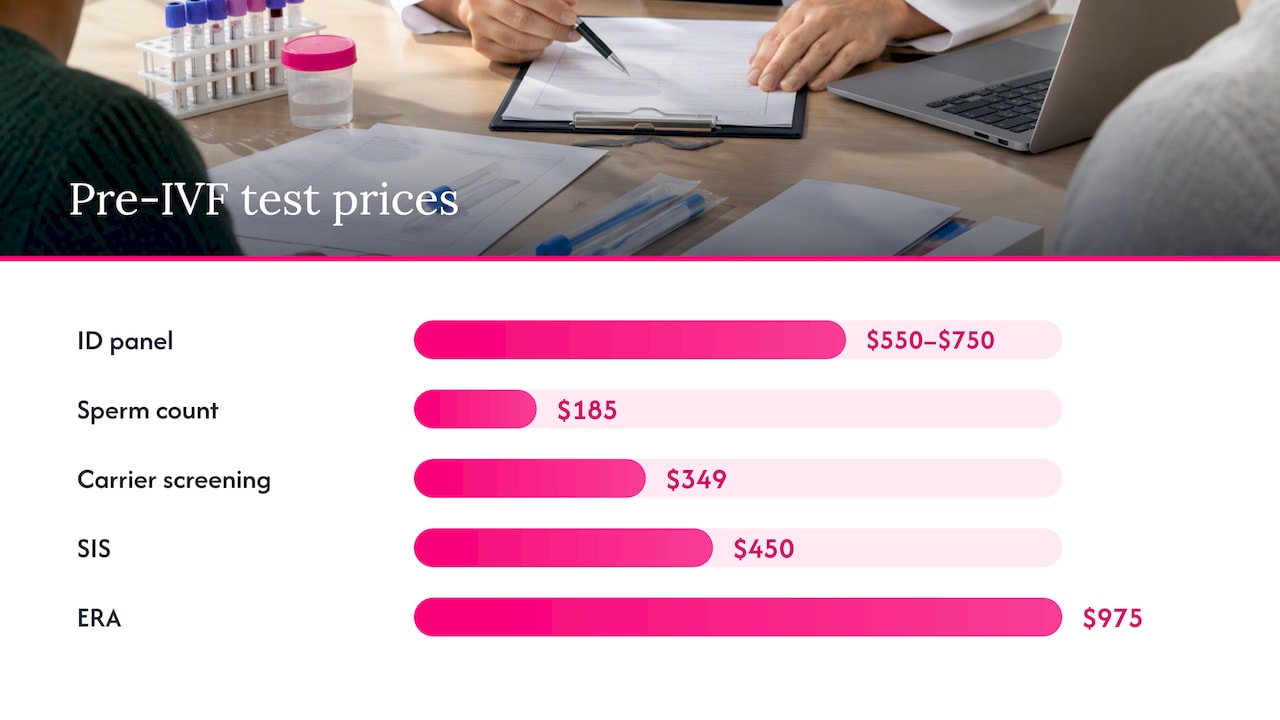
At Life IVF Center, many of these pre-treatment tests are listed with prices on our pre-IVF testing page:
| Test | Published price |
|---|---|
| Infectious Disease (ID) Panel | $550 to $750 |
| Sperm Count | $185 |
| Pap Smear | $185 |
| Karyotype Chromosomal Analysis | $595 |
| Carrier Screening for Genetic Disease | $349 |
| Saline Infusion Sonohysterogram (SIS) | $450 |
| Endometrial Receptivity Assay (ERA) | $975 |
Not every patient needs every test. Your care team selects the tests that apply to your pathway, and the list helps you plan the early budget. Counseling is not a formality: it gives you space to talk through disclosure to your child, relationships with donors or carriers, and what you would do with unused embryos.
Legal considerations: protect your parentage early
Legal planning is as important as medical planning for LGBTQ+ families. The ASRM Ethics Committee advises discussing independent legal counsel, contracts defining each participant’s role, and the expectations and risks of the arrangement. In the United States, gestational carrier laws vary by state, and only about half of states have formal governing laws. Both intended parents and carriers need their own attorneys, and the same ethics guidance holds that it is ethically permissible for intended parents to pay for the carrier’s independent counsel.
State law can change the outcome. New York’s 2020 Child-Parent Security Act, for instance, establishes legal parental rights for parents using assisted reproduction and includes a Surrogate Bill of Rights. Other states handle parentage differently, and some couples pursue a second-parent or confirmatory adoption even when both are named on a birth certificate, to secure recognition across state lines. Ask a family-formation attorney in your state, and in the carrier’s state, what is needed before an embryo transfer is scheduled.
What LGBTQ+ IVF costs in the United States
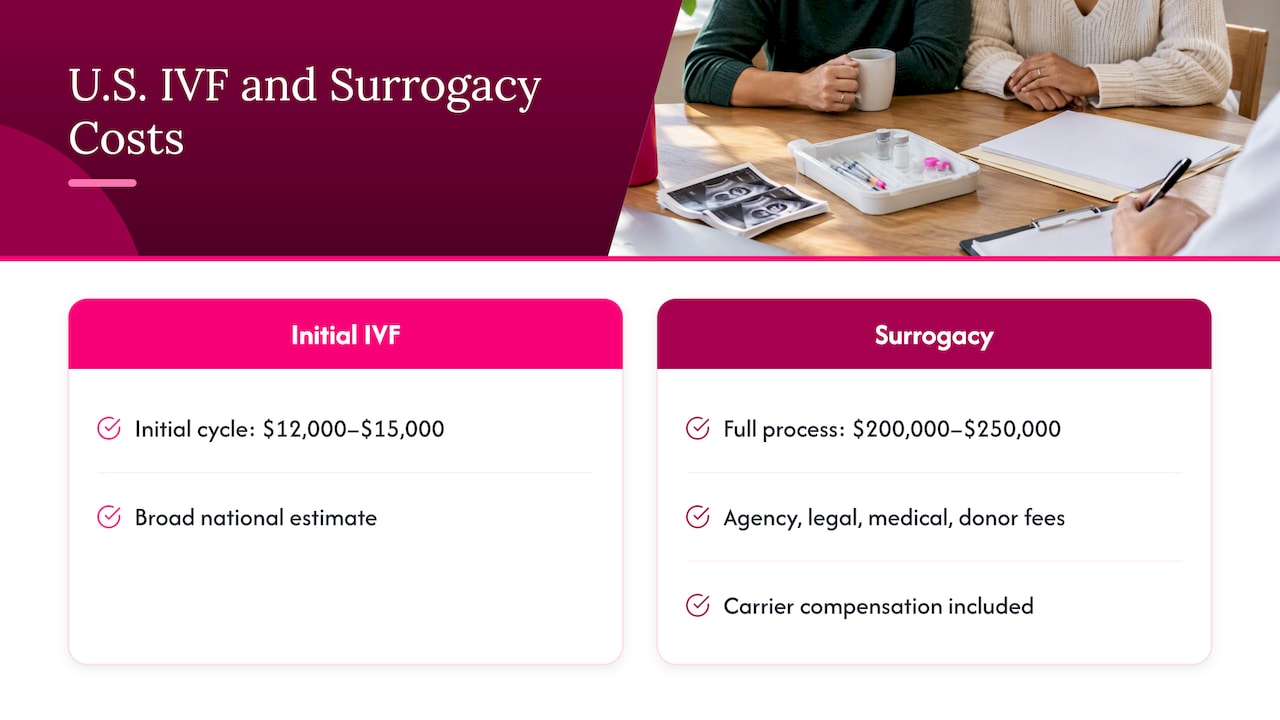
Costs depend on the pathway more than on any other factor. UnitedHealthcare’s family-building guide cites $12,000 to $15,000 for an initial IVF cycle and $200,000 to $250,000 for the entire surrogacy process, which covers agency, legal, medical and donor fees as well as compensation for the carrier. Those are broad national ranges. Your total will reflect medication, testing, donor selection, the number of cycles and where you live.
Life IVF Center’s published prices
We post prices so you can plan. These figures were published on our site and apply to the services listed, not to a complete family-building journey:
- The Advanced IVF Package: $13,500 (see treatment packages)
- Embryo Transfer: from $2,950
- Precision Egg Freezing: $7,500 (see freezing pricing)
- Precision Embryo Freezing: $8,950
- Storage: $750 per year, $70 per month, or $2,000 for a 3-year prepaid plan (see storage costs)
Donor programs, gestational surrogacy, genetic testing and IUI are individualized, so we do not publish a fixed price for them. Package contents and prices can change, so confirm the current details on each page.
Insurance and financial help
Coverage is the hardest part for many LGBTQ+ families. RESOLVE explains that definitions of infertility in insurance plans have historically rested on outdated assumptions about natural conception by heterosexual couples, which can leave same-sex couples without a qualifying diagnosis. Some states require coverage: nineteen states have laws requiring insurers to cover or offer infertility treatment, though these do not apply to self-funded ERISA plans, which many large employers use. Language on same-sex couples differs from state to state, so read your plan’s definition of infertility closely.
Options to explore:
- Ask your employer’s benefits office whether a fertility benefit exists. Specialty vendors now offer family-building benefits that supplement standard medical plans.
- Check your partner’s plan as well as your own.
- Consider HSAs or FSAs, grants and loans, which UnitedHealthcare notes may help cover costs.
- Ask about a single-embryo transfer strategy. Employer benefits that remove financial pressure encourage single-embryo transfer, which lowers the risk of costly multiple-pregnancy complications.
Our perspective: individualized care for every family structure
We see LGBTQ+ family building as fertility care first, built around the person or couple in front of us. Two partners with different ovarian reserve, a single man planning with donor eggs, and a trans patient who preserved gametes years ago all need different plans, and we do not apply one template to them.
That is the idea behind Precision IVF®, our approach of tailoring each protocol to the patient’s biology, history and goals. In a reciprocal IVF case, that means looking carefully at both partners before deciding who provides eggs and who carries, rather than defaulting to age or convenience. In a donor or surrogacy case, it means building the plan around screening, embryo testing and a transfer strategy that protects the person carrying the pregnancy.
Three things we believe help families most:
- Start the legal conversation early. Medical and legal steps move best in parallel.
- Know your numbers before you commit. Published prices and a written estimate prevent surprises.
- Ask about logistics. We have in-house labs and offer travel coordination and multi-language support, which matters for families coming from other states or countries.
We also welcome second-opinion cases, including patients who feel they were turned away or poorly heard elsewhere.
Planning your treatment with Life IVF Center
If you are ready to talk through your options, our team can review your history, explain which pathway fits and outline a cost estimate. You can explore our Precision IVF® program, see the full list of fertility services including IUI and genetic testing, or compare IVF treatment packages before your visit.
Bring your questions about reciprocal IVF, donor selection or surrogacy to the consultation. There is no need to have decided anything in advance.
A practical checklist before your first consultation
- Decide which parts of the process matter most to you: genetic connection, carrying the pregnancy, budget, timeline.
- Gather medical records, previous test results and any prior cycle history for each partner.
- Check your insurance plan’s infertility definition and any fertility benefit.
- Identify an attorney experienced in assisted reproduction in your state.
- Write down your questions about donors, embryo testing and the number of embryos to transfer.
- Consider how you want to talk with your future child about their origins, and ask the clinic about counseling.
FAQ
Can two women both be biological mothers through IVF?
Yes, through reciprocal IVF. One partner provides the eggs, and the other carries the pregnancy, so both take part biologically. Your care team will evaluate both partners to help decide who takes which role.
Do gay male couples need a surrogate?
Men who want a biological child need donor eggs and someone to carry the pregnancy, since neither is possible without them. A gestational carrier has no genetic link to the child, and the arrangement is guided by screening and legal contracts. Laws differ by state, so independent attorneys for both sides are essential.
Will insurance pay for LGBTQ+ IVF?
Sometimes, but not reliably. Some states mandate coverage or an offer of coverage, self-funded employer plans are exempt from those laws, and plan definitions of infertility can exclude same-sex couples. Ask your benefits administrator for the written definition and any exclusions before you start.
How long does the process take?
A single IVF cycle typically takes a few weeks from stimulation to transfer. Donor matching, legal contracts and carrier screening can add months. Your care team can give a timeline based on the pathway you choose.
Sources
- Lesbian Shared IVF: The ROPA Method, a Systematic Review
- UnitedHealthcare: LGBTQ+ Family Building
- RESOLVE: Building a LGBTQ+ Family and the Fight for Equal Access to Fertility Care
- RESOLVE: Starting the Conversation on Employer Fertility Benefits (Jan-Feb 2022)
- RESOLVE: The New York Child-Parent Security Act
This article is for general educational purposes only and is not a substitute for personalized medical advice, diagnosis, or treatment. Fertility care is highly individual; please consult a qualified healthcare professional about your specific circumstances.
Ready to take the next step?
Life IVF Center specializes in individualized Precision IVF® care for complex cases—including diminished ovarian reserve, prior failed cycles, and advanced maternal age. Our in-house labs and dedicated physicians are ready to help.
Book a Free Consultation →