

IVF combined with gestational surrogacy is defined as the process of creating embryos through in vitro fertilization and transferring them into a surrogate’s uterus, where the surrogate carries the pregnancy with no genetic connection to the child. This path gives individuals and couples who cannot carry a pregnancy the ability to have a biologically related child. Understanding IVF and surrogacy what patients need to know, from medical steps to legal protections to financial planning, is the difference between a prepared patient and an overwhelmed one. Life IVF Center’s Precision IVF® approach customizes every protocol to each patient’s biology, which matters greatly when embryo quality and timing are this critical.
What is the medical process behind IVF and surrogacy?
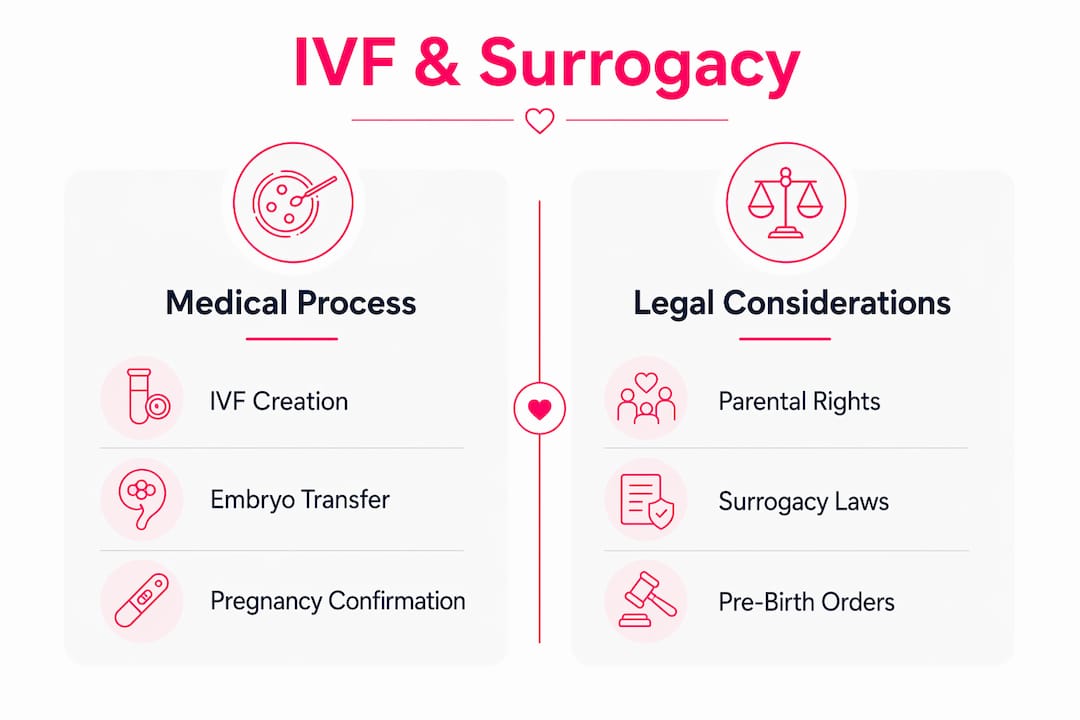
The medical phase of IVF-surrogacy runs on two parallel tracks: embryo creation for the intended parents and uterine preparation for the surrogate. Both tracks must be coordinated carefully, because delays in one affect the other. The full fertility timeline from initial consultation through pregnancy confirmation typically spans 3–6 months.
Step-by-step medical process
- Surrogate medical screening. The surrogate undergoes a full physical evaluation, uterine assessment, and infectious disease testing before any medications begin.
- Ovarian stimulation and egg retrieval. The intended mother or egg donor receives hormone injections for 10–14 days to stimulate follicle growth, followed by a minor surgical retrieval procedure.
- Fertilization and embryo culture. Retrieved eggs are fertilized with sperm in the laboratory. Embryos develop over 5–6 days to the blastocyst stage.
- Preimplantation genetic testing (PGT-A). Embryos are biopsied and screened for chromosomal abnormalities. PGT-A can raise transfer success rates to 75–80%, making it one of the most impactful tools in the process.
- Surrogate uterine preparation. The surrogate takes estrogen and progesterone to build the uterine lining. A lining of about 7 mm with proper layering is the clinical target for optimal implantation.
- Embryo transfer. A single chromosomally normal embryo is placed into the surrogate’s uterus using a thin catheter. The procedure takes minutes and requires no anesthesia.
- Pregnancy confirmation. A blood test measuring hCG levels occurs roughly 10–14 days after transfer. Prenatal care transitions from the fertility clinic to a local OB/GYN after the first trimester.
The uterine lining preparation is highly time-sensitive. The embryo transfer must occur within a narrow receptive window of approximately 48 hours, which is why precise hormone monitoring is non-negotiable.
Pro Tip: Create your embryos before you finalize a surrogate match. Knowing your embryo count and quality upfront gives you clarity on viability and accelerates the transfer timeline once your surrogate is ready.

What legal considerations should patients know about IVF and surrogacy?
Legal preparation is not optional in surrogacy. It is the foundation that protects every party involved. State laws determine whether surrogacy contracts are enforceable and how parental rights are established, and those laws vary significantly across the United States.
Key legal steps every patient must address:
- Hire independent attorneys. The intended parents and the surrogate each need their own legal counsel. One attorney cannot represent both parties.
- Draft a comprehensive surrogacy contract. The agreement covers surrogate compensation, medical decision-making authority, contact expectations during pregnancy, and what happens in unexpected medical situations.
- Obtain a pre-birth order. This court order, issued before the baby is born, legally establishes the intended parents as the child’s legal parents. Without it, parentage is not automatic, regardless of genetic connection.
- Choose a surrogacy-friendly state when possible. States like California, Nevada, and Washington have well-established legal frameworks that support pre-birth orders and contract enforceability.
- Start legal steps in parallel with medical steps. Waiting until after embryo creation to begin legal work adds weeks or months of unnecessary delay.
A common misconception is that a genetic connection automatically grants legal parentage. It does not. Securing parental rights through a pre-birth order in a surrogacy-friendly state is the only reliable way to be recognized as the legal parent at birth.
Pro Tip: If you have flexibility in where your surrogate lives, prioritize states with established surrogacy law. It reduces legal risk and often shortens the court process significantly.
What emotional and psychological factors are involved in IVF and surrogacy?
Psychological readiness is as critical as medical clearance for surrogacy success. Both the intended parents and the surrogate undergo formal psychological screening before the process begins. This is not a formality. It identifies potential emotional challenges before they become real problems.
The emotional terrain of surrogacy is unique. Intended parents often carry grief from prior fertility struggles alongside hope for this new path. Surrogates manage the physical and emotional experience of carrying a pregnancy they will not parent. Clear communication and defined expectations between all parties reduce misunderstandings significantly.
Practical emotional support resources include:
- Individual counseling for intended parents to process anxiety, grief, and anticipation throughout the process
- Couples counseling to align on decisions and maintain relationship health during a stressful period
- Surrogate support groups that connect surrogates with others who share the experience
- Joint sessions between intended parents and surrogate to establish communication norms and birth plan expectations
- Ongoing check-ins with a licensed mental health professional throughout the pregnancy
Counseling support improves outcomes and helps manage expectations for all parties involved. Life IVF Center integrates counseling support into its third-party services because emotional wellbeing directly affects how patients navigate medical decisions, setbacks, and milestones.
What are the costs involved in IVF and surrogacy?
IVF-surrogacy is one of the most significant financial commitments a patient will make. Knowing the cost categories upfront prevents surprises and allows for realistic planning.
| Cost Category | Typical Range |
|---|---|
| Surrogate compensation | $55,000–$75,000+ |
| Legal fees (both parties) | $10,000–$15,000+ |
| IVF medical costs | Varies by clinic and protocol |
| Agency coordination fees | Varies by agency |
| Travel and lodging | Varies by location |
Surrogate compensation and legal fees alone represent a substantial baseline before medical costs are added. That figure does not include IVF medications, embryo storage, PGT-A testing, or the surrogate’s pregnancy-related medical expenses.
Patients can reduce costs without compromising care by:
- Reviewing affordable IVF packages from clinics that specialize in surrogacy coordination
- Confirming whether the surrogate’s health insurance covers surrogacy pregnancies, or budgeting for a separate policy
- Asking clinics for transparent, itemized pricing before committing
- Exploring insurance coverage options early, as some plans cover portions of IVF even when surrogacy is involved
Financial transparency from your clinic and agency is not a luxury. It is a requirement for informed consent.
How can patients prepare practically for the IVF and surrogacy process?
Preparation reduces delays and improves outcomes. The patients who navigate this process most effectively treat it like a project with parallel workstreams, not a linear sequence of steps.
- Start embryo creation early. Creating embryos before surrogate matching confirms viability and puts you ahead of the timeline. Waiting until after matching adds months to the process.
- Choose experienced providers. Select a fertility clinic and surrogacy agency with documented IVF-surrogacy experience. Agencies coordinate screening, matching, legal steps, medical processes, and payments. Inexperienced agencies create gaps in that coordination.
- Plan for contingencies. Not every embryo transfer results in pregnancy on the first attempt. Build time and financial reserves for a second transfer if needed.
- Maintain thorough documentation. Keep records of every medical appointment, legal document, and financial transaction. This protects you legally and keeps all parties accountable.
- Prioritize your own health. Medication adherence, nutrition, and stress management affect egg quality and embryo outcomes. Your physical readiness matters as much as the surrogate’s.
- Stay educated. Review Life IVF Center’s third-party services overview to understand how clinic and agency coordination works before you begin.
Surrogacy should not be considered only after exhausting IVF options. For patients with uterine factor infertility or certain medical conditions, surrogacy is often the most appropriate first path, not a last resort.
Key takeaways
IVF-surrogacy requires coordinated medical, legal, and emotional preparation from the start, and patients who begin embryo creation before surrogate matching consistently move through the process faster.
| Point | Details |
|---|---|
| Medical timeline | The process from surrogate screening to pregnancy confirmation takes 3–6 months. |
| PGT-A testing | Chromosomal screening raises embryo transfer success rates to 75–80%. |
| Legal protection | Pre-birth orders, not genetic connection, establish legal parentage in surrogacy. |
| Financial baseline | Surrogate compensation and legal fees alone typically start at $65,000 combined. |
| Emotional readiness | Psychological screening and counseling are required steps, not optional add-ons. |
What I’ve learned from watching patients navigate this process
Working closely with patients through IVF and surrogacy has taught me one thing above all else: the patients who struggle most are the ones who waited too long to start, either medically or emotionally. They spent years trying other paths before considering surrogacy, and by the time they arrived, they were exhausted before the process even began.
The patients who do best treat surrogacy as a legitimate first option when their medical situation calls for it, not a consolation prize. They start embryo creation early. They hire attorneys before they feel ready. They show up to counseling sessions even when things seem fine, because the hard moments come without warning.
I also want to be direct about something most articles avoid: the emotional weight of watching someone else carry your child is real, and it does not resolve itself without support. The intended parents who build strong communication with their surrogate from the start, and who stay engaged with a counselor throughout the pregnancy, consistently report a more positive experience at birth and beyond.
If you are at the beginning of this path, the most useful thing you can do today is get a clear picture of your embryo situation and speak with a reproductive attorney in your state. Everything else builds from those two facts.
How Life IVF Center supports patients through IVF and surrogacy
Life IVF Center specializes in the full scope of IVF-surrogacy care, from Precision IVF® embryo creation to coordinated third-party support. The clinic’s team works directly with patients to build individualized treatment protocols, connect them with counseling resources, and provide transparent pricing so there are no financial surprises.

Patients exploring surrogacy can review Life IVF Center’s treatment packages for detailed pricing on IVF cycles, embryo freezing, and surrogacy coordination services. The clinic’s Southern California locations serve patients at every stage, whether you are just beginning to explore options or are ready to start your first cycle. Scheduling a consultation is the clearest next step toward understanding what your specific path looks like.
FAQ
What is gestational surrogacy in IVF?
Gestational surrogacy is when an embryo created through IVF is transferred to a surrogate who carries the pregnancy with no genetic connection to the child. The embryo uses the intended parent’s or donor’s egg and sperm.
How long does the IVF and surrogacy process take?
The medical phase from surrogate screening through early pregnancy confirmation typically takes 3–6 months. Legal and matching steps can run concurrently to reduce the overall timeline.
Does the surrogate have parental rights to the child?
No. In gestational surrogacy, the surrogate has no genetic connection to the child. A pre-birth order legally establishes the intended parents as the child’s parents before birth.
What does IVF surrogacy cost in total?
Surrogate compensation typically ranges from $55,000 to $75,000 or more, with legal fees adding $10,000 to $15,000. Medical costs, agency fees, and insurance vary and should be itemized by your clinic and agency upfront.
Can patients use their own eggs with a surrogate?
Yes. Intended mothers who can produce viable eggs but cannot carry a pregnancy use their own eggs for IVF, with the resulting embryos transferred to the surrogate. Donor eggs are used when the intended mother cannot produce viable eggs.
Recommended
- The Role of Genetics in IVF: What Patients Need to Know
- IVF Process Explained: Personalize Your Path to Success
- Intro to Third Party – Life IVF Center
- Top 6 westcoastfertility.com Alternatives Providers 2026
Ready to take the next step?
Life IVF Center specializes in individualized Precision IVF® care for complex cases—including diminished ovarian reserve, prior failed cycles, and advanced maternal age. Our in-house labs and dedicated physicians are ready to help.
Book a Free Consultation →