
Most fertility drugs cause mild, temporary symptoms: bloating, headaches, mood changes, and injection-site soreness, that resolve on their own within days. Serious complications are uncommon, but they do occur and require prompt recognition. According to the ASRM fact sheet on injectable fertility drugs, mild ovarian hyperstimulation syndrome (OHSS) affects approximately 10–20% of gonadotropin-stimulated cycles, while severe OHSS occurs in roughly 1% and can require hospitalization. Multiple pregnancy rates with gonadotropins can reach up to 30% in some settings, compared to approximately 7% with clomiphene citrate.
The following symptoms require immediate contact with your clinic or emergency care:
- Rapid weight gain of more than 2 lb (1 kg) per day
- Severe abdominal pain or significant bloating that does not ease
- Persistent vomiting or inability to keep fluids down
- Decreased urine output or dark-colored urine
- Shortness of breath or difficulty breathing
- Sudden leg swelling, chest pain, or fainting
Pro Tip: Routine blood estradiol checks and transvaginal ultrasounds during stimulation are not just procedural, they are the primary tool your clinical team uses to detect an over-response before it becomes dangerous. Attending every scheduled monitoring appointment is one of the most protective steps you can take.
Key Takeaways
| Point | Details |
|---|---|
| Mild effects are expected | Bloating, mood changes, headaches, and injection-site soreness are common and typically resolve within days of completing stimulation. |
| OHSS incidence by severity | Mild OHSS occurs in 10–20% of gonadotropin cycles; severe OHSS occurs in roughly 1% and may require hospitalization. |
| Key red flags requiring action | Rapid weight gain over 2 lb per day, severe abdominal pain, decreased urine output, and shortness of breath require same-day contact or emergency care. |
| Clinics actively prevent complications | Agonist triggers, dose adjustments, cabergoline, and freeze-all cycles are evidence-based tools clinics use to reduce OHSS risk. |
| Long-term cancer risk is not established | Modern studies have not found a consistent increase in cancer risk from fertility drugs; the most significant risks remain acute and short-term. |
Table of Contents
- What fertility drugs are commonly used, and how do they work?
- Common side effects of fertility drugs most patients experience
- Serious complications: OHSS, blood clots, torsion, and ectopic pregnancy
- Who is at higher risk for a serious response to fertility drugs?
- How clinics monitor you and reduce your risk during treatment
- When should you call your clinic vs. go to the emergency room?
- Managing common side effects safely at home
- What does the evidence say about long-term risks and cancer concerns?
- How Life IVF Center counsels patients and personalizes safety protocols
- What patients often underestimate about fertility drug side effects
- Sources
What fertility drugs are commonly used, and how do they work?
Understanding which medications are involved helps you connect the symptoms you feel to the therapy causing them. Fertility treatments draw on several distinct drug classes, each with a different mechanism and a different side-effect profile.
- Gonadotropins (FSH and LH injections): These are the primary stimulation medications used in IVF and ovulation induction. They signal the ovaries to develop multiple follicles simultaneously. GONAL-f® (recombinant FSH) is one widely referenced example in product labeling; its prescribing information specifically warns that FSH therapy can cause ovarian enlargement and OHSS. Because gonadotropins are injectable, they also carry injection-site reactions: bruising, redness, and localized soreness.
- Clomiphene citrate (oral): An older oral agent that blocks estrogen receptors in the brain, prompting the pituitary to release more FSH. Hot flashes and mood changes are its most characteristic side effects, a direct result of its anti-estrogenic action.
- Letrozole (oral): An aromatase inhibitor increasingly used for ovulation induction, particularly in patients with PCOS. It tends to produce fewer hot flashes than clomiphene and carries a lower multiple pregnancy risk. For a broader overview of when each approach is used, see fertility treatment options and their best uses.
- hCG (trigger shot): Given as a single injection to trigger final egg maturation before retrieval. Because hCG mimics the LH surge and also stimulates OHSS pathways, it is the medication most directly associated with triggering severe hyperstimulation in at-risk patients.
- GnRH agonists and antagonists: Used to control the timing of ovulation during a stimulation cycle. Agonists (like leuprolide) can cause temporary menopause-like symptoms: hot flashes, vaginal dryness, and fatigue, during the suppression phase. Antagonists (like ganirelix or cetrorelix) work faster with fewer systemic effects.
- Progesterone and estradiol (luteal support): Administered after egg retrieval to support the uterine lining. Progesterone is given as vaginal suppositories, intramuscular injections, or oral capsules; the intramuscular route commonly causes injection-site soreness, oil-based bruising, and localized nodules. Vaginal progesterone can cause discharge and mild pelvic discomfort.
The route of administration matters more than many patients expect. Injectable medications produce systemic exposure quickly and carry a higher risk of localized reactions, while oral agents like letrozole and clomiphene act more gradually but can still produce significant hormonal side effects.
Common side effects of fertility drugs most patients experience
The majority of people going through ovarian stimulation will notice at least a few of these symptoms. They are expected, usually manageable, and typically resolve once the stimulation phase ends or shortly after egg retrieval.
During stimulation (gonadotropin injections):
- Abdominal bloating and mild pelvic pressure: As follicles grow, the ovaries enlarge. Mild bloating is nearly universal during stimulation and usually peaks just before or after the trigger shot. Loose, comfortable clothing and avoiding carbonated drinks can help.
- Breast tenderness: Rising estrogen levels during follicle development cause breast sensitivity similar to premenstrual discomfort.
- Headaches: Common with both gonadotropins and GnRH agonists. Staying well hydrated and using acetaminophen (when your clinic approves) usually provides adequate relief.
- Mood swings and emotional sensitivity: Rapid hormonal fluctuations affect neurotransmitter activity. These changes are real and can be significant, but they are temporary.
- Fatigue: The physical and hormonal demands of stimulation are substantial. Rest is appropriate; intense exercise is not (see the torsion risk discussion below).
- Injection-site reactions: Bruising, redness, and mild swelling at the injection site are common with subcutaneous gonadotropins. Rotating sites and allowing the medication to reach room temperature before injecting reduces discomfort.
During the luteal phase (progesterone and estradiol support):
- Nausea and constipation: Progesterone slows gastrointestinal motility. Increasing dietary fiber, staying hydrated, and eating smaller meals helps.
- Hot flashes: More pronounced with clomiphene and GnRH agonists; less common with gonadotropin-only protocols.
- Vaginal discharge or irritation: Expected with vaginal progesterone suppositories.
Pro Tip: Mild bloating that fluctuates day to day is normal. Bloating that worsens progressively, causes visible abdominal distension, or is accompanied by rapid weight gain is a different matter entirely, contact your clinic the same day rather than waiting for your next scheduled appointment.
For a practical guide to managing these day-to-day symptoms, this overview of IVF side effect management covers clinic-specific coping strategies in more detail.
Serious complications: OHSS, blood clots, torsion, and ectopic pregnancy
Serious adverse effects of fertility medications are uncommon, but understanding them clearly helps you recognize warning signs early and respond appropriately.
Ovarian hyperstimulation syndrome (OHSS)
OHSS occurs when the ovaries over-respond to stimulation, releasing fluid into the abdominal cavity and sometimes the chest. The ASRM fact sheet classifies it across a severity spectrum:

| Severity | Key Symptoms | Approximate Incidence |
|---|---|---|
| Mild | Bloating, mild abdominal discomfort, slight ovarian enlargement | 10–20% of gonadotropin cycles |
| Moderate | Nausea, vomiting, visible abdominal distension, ultrasound-confirmed fluid | Less common than mild |
| Severe | Rapid weight gain, decreased urine output, shortness of breath, blood clots | ~1% of gonadotropin cycles |
According to MedlinePlus, the red flags that require urgent evaluation include rapid weight gain exceeding 2 lb (1 kg) per day, significantly decreased urine output, severe abdominal pain, and respiratory symptoms. In rare cases, severe OHSS can lead to blood clots or kidney problems. The HFEA notes that about one-third of women may experience some degree of mild OHSS, while moderate or severe cases are less frequent but can be serious.
OHSS tends to be self-limiting and often resolves within one to two weeks with appropriate monitoring and supportive care. However, pregnancy can prolong or worsen the condition because rising hCG from an early pregnancy continues to stimulate the ovaries.
Thromboembolism (blood clots)
Severe OHSS creates conditions that raise the risk of blood clots forming in veins or arteries. Red flags include:
- Swelling, redness, or pain in one leg (possible deep vein thrombosis)
- Sudden shortness of breath or chest pain (possible pulmonary embolism)
- Sudden severe headache or vision changes
These symptoms require emergency evaluation, not a call to the clinic’s regular line.
Ovarian torsion
When ovaries enlarge significantly during stimulation, they become more susceptible to twisting on their supporting ligament. The hallmark symptom is sudden, severe, one-sided pelvic pain, often with nausea and vomiting. Avoiding vigorous physical activity and sexual intercourse during stimulation reduces, though does not eliminate, this risk.

Ectopic and heterotopic pregnancy
Fertility treatments, particularly IVF, carry a slightly elevated risk of ectopic pregnancy (implantation outside the uterus). Heterotopic pregnancy, where one embryo implants normally and another implants ectopically, is rare in natural conception but more likely after IVF. Warning signs include one-sided pelvic pain, vaginal bleeding, and shoulder tip pain. Any of these symptoms after a positive pregnancy test warrant same-day contact with your clinic.
Who is at higher risk for a serious response to fertility drugs?
Not every patient carries the same baseline risk. Clinicians use the following factors to identify patients who need closer monitoring or modified protocols:
- Polycystic ovary syndrome (PCOS): The most significant single risk factor for OHSS. Patients with PCOS typically have a high antral follicle count and respond more vigorously to gonadotropin stimulation, producing more follicles than intended. A detailed look at how protocols are adjusted for this group is available in this PCOS IVF protocol guide.
- High anti-Müllerian hormone (AMH) or high antral follicle count: Both are markers of ovarian reserve. A high count means more follicles available to respond, which increases the likelihood of an exaggerated response.
- Young age with many follicles: Younger patients often have higher ovarian reserve and a more robust response to stimulation.
- Prior OHSS: A previous episode is one of the strongest predictors of recurrence.
- Rapid rise in estradiol during stimulation: When blood estradiol climbs faster than expected, it signals that many follicles are developing simultaneously, raising OHSS risk.
- Pregnancy occurring in the same cycle: Rising hCG from an early pregnancy sustains and can worsen OHSS that might otherwise resolve.
- Underlying thrombotic tendency: Patients with clotting disorders or a personal or family history of blood clots face a higher risk of thromboembolic complications if severe OHSS develops.
When these risk factors are present, clinicians typically increase monitoring frequency, adjust gonadotropin doses downward, and may plan from the outset to use an agonist trigger and freeze all embryos rather than proceeding to a fresh transfer.
How clinics monitor you and reduce your risk during treatment
Active monitoring is not optional in fertility treatment, it is the mechanism by which clinicians catch an over-response before it becomes dangerous. The ASRM guidance outlines several evidence-based strategies clinics use to prevent and manage OHSS.
Routine monitoring during stimulation:
- Serial transvaginal ultrasounds (typically every one to two days during active stimulation) to count follicles and measure their diameter. Learn more about what these appointments involve in this follicle monitoring overview.
- Blood estradiol measurements at each monitoring visit to track how rapidly hormone levels are rising.
- Symptom check-ins at every visit: your clinical team will ask about bloating, weight changes, and urine output.
Protocol-level risk reduction strategies:
- Lowering the gonadotropin dose: If estradiol rises faster than expected or follicle count is high, the dose can be reduced mid-cycle.
- GnRH antagonist protocols: These allow more flexible trigger timing and make it possible to use an agonist trigger instead of hCG.
- Agonist trigger (GnRH agonist instead of hCG): In high-risk patients, replacing the standard hCG trigger with a GnRH agonist dramatically reduces OHSS risk because the resulting LH surge is shorter-lived than exogenous hCG.
- Withholding hCG: If the risk is judged too high, the trigger can be withheld and the cycle cancelled or converted.
- Freeze-all embryo strategy: All viable embryos are cryopreserved and transferred in a subsequent, unstimulated cycle. This allows hormone levels and ovarian size to return to baseline before pregnancy begins, preventing the hCG of early pregnancy from sustaining or worsening OHSS.
- Cabergoline: A dopamine agonist that can reduce the severity of OHSS when started around the time of trigger. It is one of the pharmacological mitigation options referenced in ASRM guidance.
SART publishes national and clinic-level data that can provide context for fertility treatment outcomes and quality improvement. These reports should be interpreted carefully because patient populations and treatment approaches differ.
Pro Tip: Before your stimulation cycle starts, ask your clinic: “What is my estimated OHSS risk based on my AMH and antral follicle count, and what is your plan if my estradiol rises faster than expected?” A clinic that answers this question specifically (not generically) is demonstrating the kind of individualized care that matters.
When should you call your clinic vs. go to the emergency room?
Knowing which symptoms require which level of response can prevent both unnecessary panic and dangerous delays.
Call your clinic’s regular or after-hours line for:
- Bloating that is worsening day over day, even if not yet severe
- Nausea or vomiting that is making it difficult to stay hydrated
- Weight gain of more than 2 lb (1 kg) in a single day, per the MedlinePlus OHSS guidance
- Decreased urine output or noticeably darker urine
- Mild to moderate abdominal discomfort that is new or changing
- Any symptom that concerns you but does not feel like an emergency
Go directly to the emergency room for:
- Sudden, severe abdominal pain (possible torsion or ruptured cyst)
- Fainting or near-fainting
- Shortness of breath or chest pain
- Sudden leg swelling with pain or redness (possible blood clot)
- Heavy vaginal bleeding after a positive pregnancy test (possible ectopic)
Timing context: Mild bloating typically begins during the stimulation phase and peaks in the days after the trigger shot. OHSS symptoms, if they develop, usually appear two to five days after the trigger in fresh cycles, or later in frozen cycles if pregnancy occurs. Ectopic pregnancy symptoms typically appear three to five weeks after embryo transfer.
Pro Tip: When you call your clinic, have the following ready: your current medications and doses, your weight today versus your weight yesterday, your urine output over the past 12 hours, and your most recent estradiol value if you know it. This information allows the clinical team to triage your call accurately and quickly.
Managing common side effects safely at home
Most of what patients feel during a stimulation cycle can be addressed with straightforward, clinic-safe measures. The goal is to stay comfortable without interfering with the treatment or masking symptoms that need clinical attention.
For bloating and fluid retention:
- Drink adequate fluids, particularly electrolyte-containing drinks, to support kidney function and reduce fluid shifts.
- Reduce sodium intake to limit additional fluid retention.
- Eat smaller, more frequent meals to avoid compounding abdominal pressure.
For injection-site bruising and soreness:
- Rotate injection sites systematically and allow the medication to reach room temperature before injecting.
- Apply a cold pack to the site immediately after injection to reduce local inflammation.
- Avoid rubbing the site after injection, which can increase bruising.
For nausea and constipation:
- Increase dietary fiber and fluid intake during the luteal phase.
- Ginger tea or small, bland meals can help with nausea.
- Ask your clinic before using any laxative, as some interact with progesterone supplementation.
For fatigue and mood changes:
- Prioritize consistent sleep and reduce non-essential obligations during the stimulation phase.
- Light walking is generally acceptable and can improve mood; vigorous exercise, however, should be avoided because enlarged ovaries are more susceptible to torsion.
- Pelvic rest (avoiding sexual intercourse) is often recommended during stimulation and immediately after retrieval, follow your clinic’s specific guidance.
Regarding over-the-counter pain relief: Acetaminophen is generally considered safe during fertility treatment for mild pain. NSAIDs (ibuprofen, naproxen) are typically avoided around egg retrieval and embryo transfer because of their potential effect on ovulation and implantation. Always confirm with your clinical team before taking any OTC medication. For questions about supplements during treatment, this evidence-based fertility supplements guide provides useful context.
Pro Tip: Keep a simple daily log during your cycle: record your weight each morning, note your urine output as normal or reduced, and rate your abdominal discomfort on a 1–10 scale. If you call the clinic, this log gives the nurse or physician a clear picture of how your symptoms have changed over time, which is far more useful than a general “I feel worse.”
What does the evidence say about long-term risks and cancer concerns?
One of the most common worries patients raise is whether fertility medications increase the long-term risk of cancer, particularly ovarian cancer. The current evidence, while not without nuance, is reassuring on this point.
Modern studies have not found a convincing, consistent increase in ovarian or other gynecologic cancers attributable to fertility drugs themselves. Earlier signals from older studies were largely re-evaluated once researchers accounted for the fact that infertility itself, independent of treatment, is associated with a modestly higher baseline risk of ovarian cancer. When studies compare treated patients to untreated infertile patients rather than to the general population, the drug-specific signal weakens substantially. Addressing this and other common misconceptions in more depth, the fertility myths resource is worth reviewing.
Pregnancy-related risks linked to fertility treatment are a separate and more established concern:
- Pregnancies conceived through IVF carry slightly higher rates of pre-eclampsia, gestational diabetes, and preterm birth compared to spontaneous conceptions, though the absolute increases in risk remain modest.
- Multiple pregnancy, which is more common after fertility treatment, is the primary driver of many of these complications. A twin or higher-order pregnancy carries substantially higher risks of preterm delivery, low birth weight, and maternal complications than a singleton.
For appropriately selected patients, single-embryo transfer is an important strategy for reducing multiple-pregnancy risk. The effect on cumulative outcomes depends on age, embryo factors, and the overall treatment plan.
The HFEA confirms that fertility treatment is generally safe and that serious long-term harms are less frequent than the short-term complications discussed earlier in this article. The most clinically significant risks remain the acute ones: OHSS, torsion, ectopic pregnancy, rather than long-term sequelae from the medications themselves.
How Life IVF Center counsels patients and personalizes safety protocols
A fertility clinic’s approach to safety is not just about having the right medications available, it is about the systems in place before, during, and after treatment to catch problems early and respond decisively.
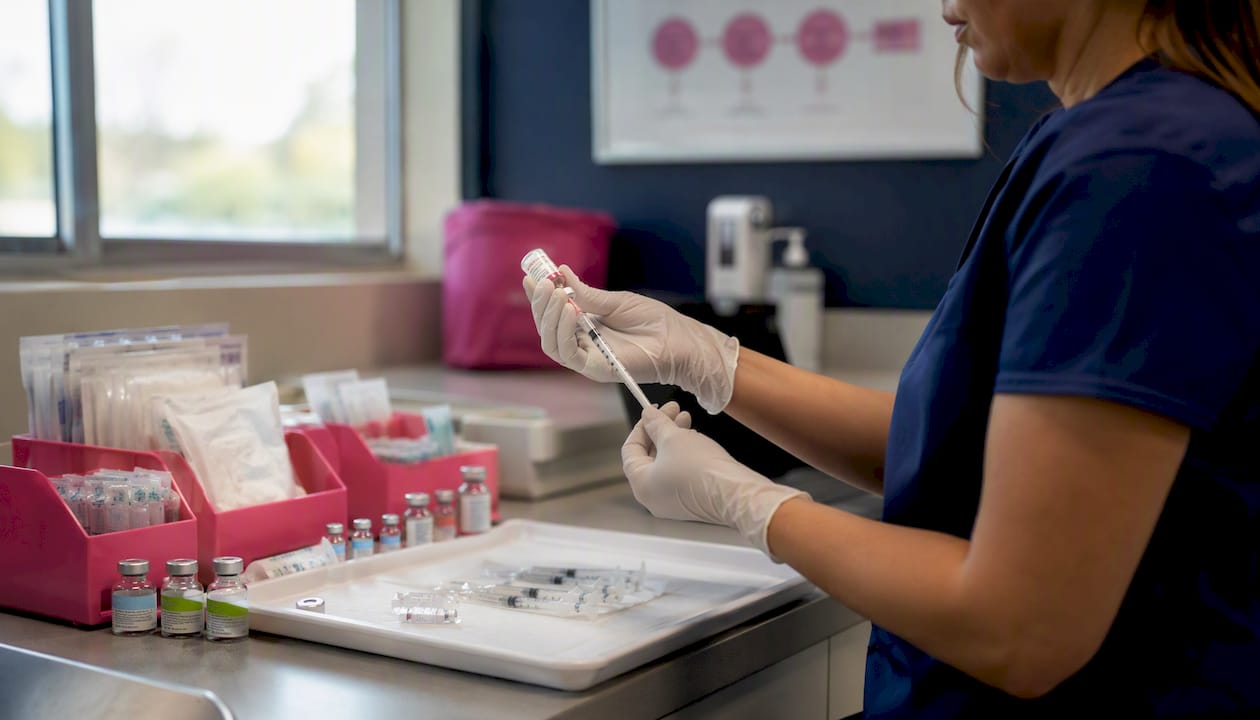
At Life IVF Center, Precision IVF® emphasizes individualized risk assessment and treatment planning based on medical history, ovarian-reserve testing, and prior treatment response. Medication doses, monitoring, trigger strategy, and transfer timing are adjusted as clinically appropriate.
During stimulation, the care team uses ultrasound, laboratory results, symptoms, and clinical judgment to guide monitoring and medication adjustments. Patients should receive clear instructions about expected symptoms, warning signs, and how to contact the clinic with urgent concerns.
Before treatment, patients should understand common side effects, urgent warning signs, alternatives, and the reasons a plan may change during the cycle. Ask the care team to explain anything that is unclear.
Questions worth asking at your initial consultation:
- What is my estimated OHSS risk based on my ovarian reserve markers?
- Under what circumstances would you recommend a freeze-all cycle for me?
- What is your after-hours protocol if I develop symptoms on a weekend?
- How frequently will I be monitored during stimulation, and what triggers a dose adjustment?
- What baseline tests should I bring from previous evaluations?
For patients with immune-related conditions that may affect medication choices or monitoring protocols, the immune disorder fertility treatment guide provides additional context on how complex cases are managed.
Pro Tip: Bring a written list of all current medications, supplements, and any prior fertility treatment records to your first consultation. Clinicians make better individualized decisions when they have complete information from the start, rather than reconstructing a history from memory.
What patients often underestimate about fertility drug side effects
Lists of side effects are useful, but safe treatment also depends on individualized dosing, appropriate monitoring, clear instructions, and prompt communication when symptoms change.
They cluster heavily among those with PCOS, high follicle counts, and rapidly rising estradiol, factors that are identifiable before a cycle even begins. A clinic that identifies those factors and builds a protocol around them (agonist trigger, freeze-all, cabergoline, frequent monitoring) is not just being cautious. It is practicing the standard of care that ASRM and SART guidance explicitly supports.
What patients often underestimate is their own role in that system. The monitoring appointments feel repetitive. The daily weight check feels excessive. The symptom log feels like busywork. None of it is. Rapid weight gain of more than 2 lb per day is a clinical signal, not a subjective complaint, and it is one that patients detect before any blood test or ultrasound does. The patients who report it promptly give their clinical team the window to intervene before hospitalization becomes necessary.
The conventional framing of fertility drug risks as something that happens to you is worth questioning. The more accurate framing is that the risks are shared between the biology and the response system, and the response system includes you. Knowing the red flags, keeping the symptom log, attending every monitoring visit, and asking direct questions at consultation are not supplementary steps. They are part of the treatment itself.
This article is for general educational purposes only and is not a substitute for personalized medical advice, diagnosis, or treatment. Contact your fertility clinic promptly about concerning symptoms, and seek emergency care for severe pain, difficulty breathing, fainting, heavy bleeding, or other urgent symptoms. To discuss an individualized treatment and monitoring plan, schedule a consultation with Life IVF Center.
Sources
The following resources provide authoritative, primary-source information for patients who want to go deeper on any topic covered in this article.
- Ovarian hyperstimulation syndrome: MedlinePlus Medical Encyclopedia
- Risks of fertility treatment | HFEA
- SART: Society for Assisted Reproductive Technology
Recommended
- How to Manage IVF Side Effects Effectively
- IVF and Surrogacy: What Patients Need to Know
- Blog – Life IVF Center
- Fertility treatment options: Effectiveness and best uses
Ready to take the next step?
Life IVF Center specializes in individualized Precision IVF® care for complex cases—including diminished ovarian reserve, prior failed cycles, and advanced maternal age. Our in-house labs and dedicated physicians are ready to help.
Book a Free Consultation →