
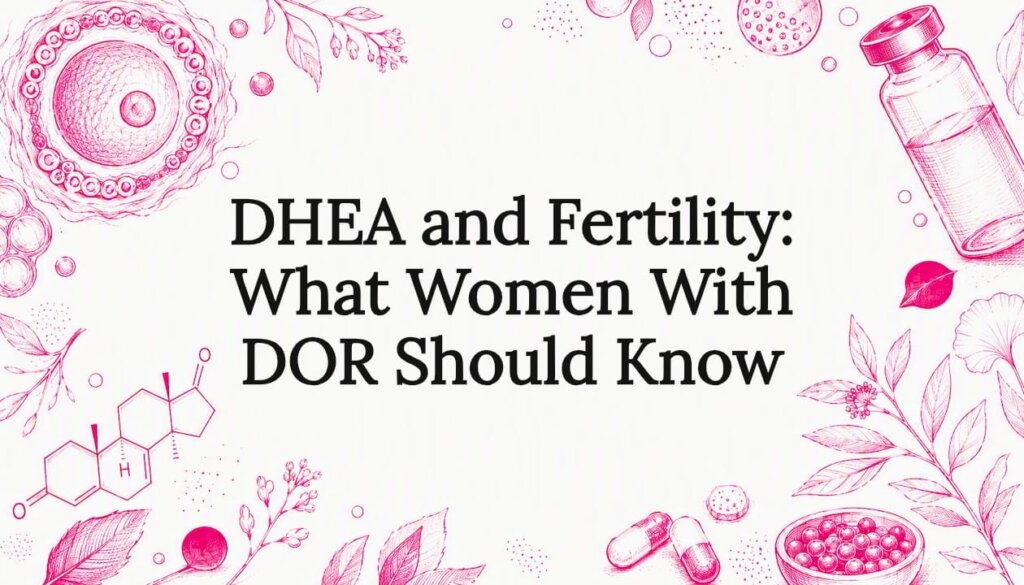
DHEA may help improve IVF outcomes for a specific group of women, mainly those with diminished ovarian reserve or poor ovarian response who also show low baseline DHEA-S. It is not a general fertility booster, and the evidence behind it is real but limited. Most of what we know comes from cohort studies and a handful of small randomized trials, not the kind of large, definitive research that would let any clinic promise results.
That distinction shapes everything in this guide. DHEA and fertility research points to a narrow, biologically plausible benefit for a defined patient group, not a blanket recommendation.
- It may help: Women over 35, those with diminished ovarian reserve (DOR) or poor ovarian response (POR), and anyone with a low baseline DHEA-S reading.
- Evidence is weak or absent: Younger women with normal ovarian reserve and typical responders to stimulation, where trials show little to no measurable benefit.
Pro Tip: Before you buy a bottle of DHEA off a shelf, ask your fertility specialist to order a baseline DHEA-S test. That single lab value does more to predict whether DHEA is worth trying than anything else in this article.
Key Takeaways
DHEA supplementation shows the clearest, most consistent benefit in women with diminished ovarian reserve or poor ovarian response who also have low baseline DHEA-S, and it requires supervised dosing and monitoring to use safely.
| Point | Details |
|---|---|
| Benefit is qualified, not universal | DHEA and fertility research supports use mainly in DOR, POR, and low-DHEA-S patients, not the general IVF population. |
| Baseline DHEA-S predicts response | Women below roughly 180 μg/dL show the strongest documented improvements in oocyte yield. |
| Typical regimen is time-limited | Studies commonly used 75 to 90 mg per day for 8 to 12 weeks before ovarian stimulation began. |
| Monitoring isn’t optional | Baseline and follow-up labs around 4 weeks catch excess androgen effects before they cause harm. |
| Precision IVF® personalizes the decision | Life IVF Center builds DHEA trials around individual hormone data rather than a standard protocol. |
Table of Contents
- What Does the Research Say About DHEA and Fertility?
- Who Is Most Likely to Benefit From DHEA?
- How Does DHEA Affect Fertility at the Cellular Level?
- What Dose and Duration Did Studies Actually Use?
- Are There Side Effects or Risks With DHEA?
- What Labs Should Be Checked Before and During DHEA Use?
- What Do Regulators and Guideline Bodies Say About DHEA?
- How Do Fertility Clinics Actually Use DHEA in Practice?
- What Questions Should You Ask Your Fertility Specialist?
- Should You Try DHEA Before Your Next IVF Cycle?
- A Clinical Perspective on Using DHEA Selectively
- Considering DHEA? Get a Supervised Evaluation First
- Sources
What Does the Research Say About DHEA and Fertility?
The evidence on DHEA and reproduction splits cleanly into two tiers, and understanding that split matters more than any single statistic. Observational and cohort studies show consistent, moderately encouraging signals. Randomized controlled trials, the gold standard for proving cause and effect, are fewer, smaller, and more mixed.
A 2024 systematic review and meta-analysis pooling data from women undergoing IVF or ICSI found that DHEA supplementation was associated with increased endometrial thickness and improved clinical pregnancy rates. The same review rated the overall quality of evidence as low, and it stopped short of confirming a live-birth advantage. That gap between “clinical pregnancy improved” and “live birth improved” is where a lot of the confusion about DHEA comes from.
Cohort data tells a more specific story. A retrospective cohort study of poor ovarian responders found that women with a DHEA-S level under 180 μg/dL had nearly six times the odds (an odds ratio of 5.92) of retrieving more than three oocytes compared to women with higher baseline DHEA-S. That is a meaningful signal, but it comes from one retrospective analysis, not a multicenter trial, so it should be read as a hypothesis-generating finding rather than proof.
Randomized evidence is thinner. A Cochrane review focused specifically on RCTs concluded that the randomized data on androgen supplementation, including DHEA, remains limited and imprecise. Pooled estimates sometimes favor DHEA, but Cochrane’s own authors flag that results are sensitive to which trials get included and how rigorously they were run. Registered trials on DHEA in IVF also vary widely in dose, duration, and what outcomes they actually measured, which makes head-to-head comparisons harder than they should be.
A narrative review focused on diminished ovarian reserve summarized the literature as showing beneficial effects on oocyte and cumulus cell quality in older women and poor responders, while explicitly calling for larger, better-designed RCTs before anyone treats DHEA as standard care.
Here is how the evidence stacks up by outcome:
| Outcome | Strength of evidence |
|---|---|
| Oocyte yield in poor responders | Moderate (consistent cohort signal, limited RCT confirmation) |
| Endometrial thickness | Moderate (meta-analysis signal, low certainty rating) |
| Clinical pregnancy rate | Moderate (pooled improvement, low quality of evidence) |
| Live birth rate | Weak (not consistently confirmed across reviews) |
| Embryo quality | Weak to moderate (mixed cohort reports) |
The honest summary: DHEA supplements and fertility outcomes correlate in observational data more clearly than they do in randomized trials, and that gap is exactly why major guideline bodies still hedge their recommendations.
Who Is Most Likely to Benefit From DHEA?
Trials and cohort studies rarely test DHEA on the general fertility population. They almost always focus on women who fit specific clinical profiles, and knowing those profiles helps you figure out whether DHEA is even worth discussing with your doctor.
- Diminished ovarian reserve (DOR) or poor ovarian response (POR): Most study populations meet Bologna criteria or fall into POSEIDON group 4, meaning older age combined with low antral follicle counts or low AMH.
- Age: Benefit signals are more consistent in women over 35, and particularly in women over 38 to 40, where baseline egg quantity and quality are already declining.
- Prior poor response: Women with a documented history of retrieving few oocytes in a previous IVF cycle are frequently the ones enrolled in DHEA studies.
- Low baseline DHEA-S: This is arguably the single most predictive factor. The 2019 cohort analysis on older patients with DOR found stronger improvements in oocyte and embryo yields specifically among women whose baseline DHEA-S was already low.
A DHEA-S cutoff of roughly 180 μg/dL shows up repeatedly in the literature as a rough dividing line. Women below that threshold appear to respond more reliably to supplementation than women whose DHEA-S is already in a normal or high range. That makes physiological sense: DHEA corrects a measurable deficiency in that subgroup rather than trying to push an already-normal hormone level higher. Researchers describe this idea as adrenal hypoandrogenism, a state where the adrenal glands (and, to a lesser extent, the ovaries) simply aren’t producing enough of this precursor hormone.
Pro Tip: Ask your clinic to order DHEA-S as part of your baseline hormone panel, ideally alongside AMH and FSH. A DHEA-S reading in isolation tells you less than DHEA-S read against your age, AMH, and antral follicle count together.
How Does DHEA Affect Fertility at the Cellular Level?
The mechanism behind DHEA and egg quality is a chain of biological steps, and it helps to walk through it plainly rather than in dense endocrinology language.
- DHEA acts as a precursor hormone, produced mainly by the adrenal glands and, in smaller amounts, by the ovaries themselves.
- The body converts DHEA into testosterone and then into estrogens, giving it downstream effects on androgen receptors throughout the reproductive system.
- Granulosa and cumulus cells, the support cells that surround a developing egg, carry androgen receptors. When DHEA raises local androgen levels, those receptors appear to become more responsive to FSH and IGF-1, two signals that drive healthy follicle growth.
- Laboratory research has reported improved mitochondrial function and reduced apoptosis (programmed cell death) in cumulus and granulosa cells exposed to androgen supplementation, which would theoretically support better egg quality.
That mechanism is coherent and biologically plausible, but it’s worth being direct about its limits. Most of this cellular-level evidence comes from laboratory and animal studies, not from randomized trials in human patients. A clean mechanism doesn’t guarantee a clean clinical result, and that mismatch is exactly why reviewers keep calling for stronger trial data before treating the mechanism as proof of benefit.
What Dose and Duration Did Studies Actually Use?
If you’re trying to figure out how to prepare DHEA supplementation for fertility purposes, the published literature gives a fairly consistent starting point, even if it isn’t a single universal protocol.
| Regimen detail | What studies typically used |
|---|---|
| Daily dose | 75 to 90 mg per day |
| Dosing schedule | Often split into three equal doses |
| Duration before stimulation | Commonly 8 to 12 weeks |
| Timing relative to transfer | Frequently discontinued at stimulation start or before embryo transfer |
Most researchers chose 8 to 12 weeks of pretreatment because that window roughly matches how long a cohort of follicles takes to mature from early recruitment to the point where they respond to stimulation. Starting DHEA earlier than that theoretically gives it time to act on follicles before they’re ever exposed to fertility medications.
Timing at the other end matters just as much. Many protocols stop DHEA once ovarian stimulation begins, or before embryo transfer, largely out of caution around androgen exposure during a potential early pregnancy rather than because of confirmed harm at that stage.
One practical wrinkle worth flagging: trial-grade DHEA and over-the-counter DHEA capsules are not automatically equivalent. Supplement manufacturing isn’t held to the same purity and dosing consistency standards as pharmaceutical products, so two bottles labeled “50 mg DHEA” can vary in actual potency. If you’re considering a DHEA supplement, look for third-party testing and discuss the specific product with your clinic rather than assuming all capsules are interchangeable. Reviewing how other fertility supplements stack up on evidence can also help you separate marketing claims from actual trial data.
Are There Side Effects or Risks With DHEA?
DHEA is a hormone precursor, not an inert vitamin, and it comes with a real side effect profile that deserves the same attention as any other medication you’d take during fertility treatment.
- Acne and oily skin, among the most commonly reported androgenic effects.
- Hirsutism, meaning unwanted hair growth on the face, chest, or abdomen.
- Scalp hair thinning in some users.
- Mood changes, including irritability reported anecdotally in some patients.
- Voice deepening, a rare but theoretically possible effect of prolonged excess androgen exposure.
Patients starting DHEA need baseline hormone testing and follow-up testing at four to six weeks to confirm they’re staying in a therapeutic range. Excess testosterone from over-supplementation can cause acne, hirsutism, hair loss, and mood changes, and women with PCOS or hormone-sensitive conditions should generally avoid DHEA unless a specialist clears them first, according to Harvard Health.
Contraindications matter just as much as side effects. Women with polycystic ovary syndrome already have elevated androgens, so adding DHEA can worsen symptoms rather than help. Anyone with a hormone-sensitive cancer history, or an autoimmune or adrenal disorder, needs specialist clearance before starting. DHEA should never be used during pregnancy, and most clinics stop it either at the start of stimulation or immediately upon a positive pregnancy test, out of caution rather than confirmed danger.
Two other points worth stating plainly: DHEA can interact with other hormone therapies, which is exactly why supervision matters, and DHEA supplements sold in the United States are regulated as dietary supplements, not as FDA-approved fertility drugs. That means manufacturing oversight and efficacy claims are held to a lower bar than a prescription medication. If you experience unexpected side effects while managing an IVF cycle, a practical guide to managing IVF side effects can help you sort out what’s routine from what needs a call to your clinic.
What Labs Should Be Checked Before and During DHEA Use?
Monitoring isn’t optional with DHEA. It’s the mechanism that turns a supplement with real risks into something a clinic can use responsibly.
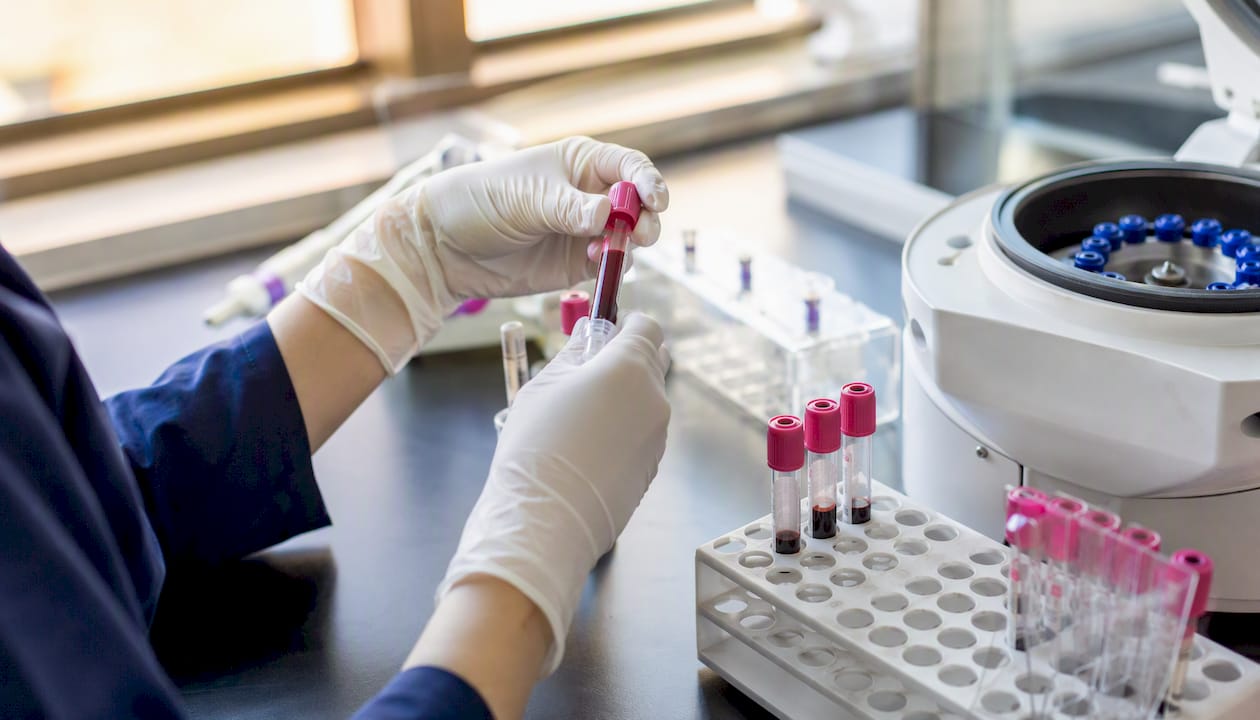
Baseline testing should include:
- DHEA-S to confirm you actually have a low baseline worth correcting.
- Total testosterone to establish your starting androgen level before supplementation begins.
- AMH (anti-Müllerian hormone) to assess ovarian reserve independently of DHEA-S.
- FSH and estradiol to round out the hormonal picture of ovarian function.
- Antral follicle count (AFC) via ultrasound, giving a direct visual estimate of remaining egg supply.
After starting DHEA, most clinics recheck androgen levels around four to six weeks in, which lines up with the monitoring window described in Harvard Health’s review of DHEA safety. That follow-up test confirms you’re in a therapeutic range rather than drifting into excess androgen territory, and it gives your clinic a checkpoint to stop treatment if levels run too high.
- Baseline panel: DHEA-S, testosterone, AMH, FSH, estradiol, AFC.
- Four to six week recheck: repeat DHEA-S and testosterone.
- Ongoing: repeat AMH/AFC per your clinic’s own protocol, often closer to the start of a stimulation cycle.
- Outcome tracking: oocyte yield, embryo quality, and endometrial thickness during the actual IVF cycle that follows.
If oocyte yield and embryo quality don’t improve after a supervised trial, that’s useful information, not a failure. It tells your clinic that DHEA likely isn’t your rate-limiting factor and that adjusting the stimulation protocol or exploring other pathways deserves more attention.
What Do Regulators and Guideline Bodies Say About DHEA?
Regulatory caution here isn’t bureaucratic foot-dragging. It reflects a genuine, unresolved gap between promising observational data and thin randomized evidence.
The Human Fertilisation & Embryology Authority rates androgen supplementation, including DHEA, as having insufficient evidence for most patients, assigning it a grey traffic-light rating. For some outcomes in women with poor ovarian response or diminished ovarian reserve, higher-quality evidence analyses led to a black rating, meaning no convincing benefit was found, according to the HFEA’s own guidance.
That grey-to-black spectrum matters because it distinguishes “we don’t have enough evidence yet” from “the evidence we do have doesn’t support this.” DHEA sits mostly in the first category, with pockets sliding into the second for specific outcomes.
Cochrane’s own RCT-focused synthesis lands in a similar place: the randomized evidence base remains limited and imprecise, with pooled results that sometimes favor DHEA but shift depending on which trials get included.
- Ask your clinic directly whether they follow HFEA-style add-on ratings or a similar evidence framework.
- Ask what specific outcome data they’re relying on when they recommend DHEA to you personally.
- Ask whether your particular profile (age, AMH, DHEA-S, prior cycle history) matches the populations studied in the trials they’re citing.
For readers weighing how much confidence to place in any fertility add-on, a broader look at how evidence quality varies across IVF add-ons is a useful companion read.
How Do Fertility Clinics Actually Use DHEA in Practice?
A responsible clinic doesn’t hand out DHEA on request. It follows a structured sequence designed to confirm the supplement is appropriate and to catch problems early.
- Consultation and history review: The specialist reviews prior cycle outcomes, age, and any existing hormone data.
- Baseline labs: DHEA-S, testosterone, AMH, FSH, and an antral follicle count establish where you’re starting from.
- Risk assessment: The clinic screens for PCOS, hormone-sensitive conditions, and other contraindications before recommending a trial.
- Supervised trial: If appropriate, a defined dose and duration, typically in the 75 to 90 mg per day range for 8 to 12 weeks, begins under monitoring.
- Follow-up testing: Androgen levels get rechecked at the four to six week mark.
- Stimulation adjustment: The IVF protocol itself may be adjusted based on how the patient responded during the pretreatment window.
Two brief scenarios show why individualized review matters. A patient with diminished ovarian reserve and a low DHEA-S level may reasonably discuss a supervised trial with a fertility specialist. A patient with poor ovarian response but a normal DHEA-S level may need evaluation for other contributing factors. Neither profile establishes that DHEA will improve an outcome.
Pro Tip: Ask your clinic to document your DHEA trial in writing, including starting labs, dose, duration, and follow-up results. That paper trail is what lets a specialist actually interpret whether DHEA helped you specifically, rather than guessing after the fact.
What Questions Should You Ask Your Fertility Specialist?
Walking into a consultation with the right questions turns a vague conversation about supplements into a focused clinical decision.
- Do my labs and history actually match the patient profiles studied in DHEA research?
- What dose and duration would you recommend for me specifically, and why that regimen?
- How will you monitor my androgen levels while I’m taking it?
- What outcome are we realistically expecting to see, oocyte number, embryo quality, or something else?
- What’s the plan if my labs show I’m not responding as expected?
- What alternatives exist if DHEA isn’t a good fit for my case, including adjusted stimulation protocols or, in more advanced cases, a donor egg conversation?
Ask for a written monitoring plan and a brief summary of the evidence your clinic is basing its recommendation on. A specialist who can point to specific studies and explain why your case matches them is giving you something far more useful than a general assurance that “some patients do better on DHEA.”
Should You Try DHEA Before Your Next IVF Cycle?
Boil this down to a short action list before you make any decision.
- Get baseline DHEA-S tested, ideally alongside AMH, FSH, and an antral follicle count, before starting anything.
- Consult a reproductive endocrinologist who can interpret those labs against your age and cycle history, not a general practitioner or an online supplement guide.
- Consider a supervised 8 to 12 week trial only if your profile matches what studies report benefiting from, meaning DOR, POR, or a documented low DHEA-S.
- Skip DHEA if your DHEA-S is already normal or high, if you have PCOS, or if you have a hormone-sensitive condition, since the risk profile likely outweighs any plausible benefit.
- Escalate to a specialist consultation if a prior cycle produced few oocytes or poor embryo quality, since that history is exactly what most DHEA studies were built around.
If your case is more complicated than a straightforward low-DHEA-S profile, evaluating your options for diminished ovarian reserve treatment with a specialist gives you a clearer picture than trying to self-diagnose from a supplement label.
A Clinical Perspective on Using DHEA Selectively
The instinct to treat DHEA as a blanket recommendation for “declining fertility” is understandable, and it’s also the wrong way to use it. The data doesn’t support DHEA as something every woman heading into IVF should take. It supports something narrower and, frankly, more useful: a targeted intervention for a specific biological profile, low DHEA-S paired with diminished ovarian reserve, where the supplement corrects a measurable deficiency rather than chasing a vague notion of “boosting fertility.”
A careful DHEA discussion starts with relevant history and baseline laboratory testing, then considers dose, duration, follow-up testing, side effects, and stopping criteria. Because the evidence is mixed, DHEA should not be presented as a routine fertility booster or a proven way to improve IVF outcomes.
Life IVF Center’s Precision IVF® approach emphasizes individualized evaluation before supplements or hormonal adjuncts are considered.
Considering DHEA? Get a Supervised Evaluation First
DHEA may be relevant for a limited group of patients, but taking it without baseline testing and clinical supervision is not recommended. At Life IVF Center, a Precision IVF® consultation can review DHEA-S, AMH, antral follicle count, prior treatment response, and potential contraindications.

A supervised trial may include baseline testing, a defined dose and duration, side-effect monitoring, and follow-up laboratory review. The exact plan should be determined by a qualified clinician who has reviewed your history and current medications.
If diminished ovarian reserve or a prior poor response is part of your story, start with a conversation about your low AMH and DOR treatment options so your fertility team can tell you, with actual data in hand, whether DHEA belongs in your protocol at all.
Sources
These sources were chosen because they represent the strongest available evidence tiers on this topic: systematic reviews, cohort studies with clear statistical reporting, a Cochrane RCT synthesis, and an official regulator position.
- Dehydroepiandrosterone Supplementation Improves the Outcomes of in vitro Fertilization Cycles in Older Patients With Diminished Ovarian Reserve
- Androgen supplementation
- Cochrane review on androgen supplementation / DHEA in IVF (CD009749)
This article is for general educational purposes only and is not a substitute for personalized medical advice, diagnosis, or treatment. Fertility care is individual; please consult a qualified healthcare professional about your circumstances. To discuss your options with our team, schedule a consultation with Life IVF Center.
Recommended
- Low AMH & Diminished Ovarian Reserve Treatment – Life IVF Center
- Diminished Ovarian Reserve: How Life IVF Gives You a Fighting Chance – Life IVF Center
- Blog – Life IVF Center
- Evidence-Based Endometriosis Fertility Tips for Better Conception
Ready to take the next step?
Life IVF Center specializes in individualized Precision IVF® care for complex cases—including diminished ovarian reserve, prior failed cycles, and advanced maternal age. Our in-house labs and dedicated physicians are ready to help.
Book a Free Consultation →