
Advanced reproductive technology (ART) is defined by the CDC as any fertility treatment where both eggs and sperm are handled outside the body to assist reproduction. This definition excludes procedures like intrauterine insemination (IUI) or medication-only cycles, which do not involve laboratory handling of both gametes. ART encompasses techniques like in vitro fertilization (IVF), intracytoplasmic sperm injection (ICSI), and embryo cryopreservation, each designed to address specific causes of infertility. Organizations like the American Society for Reproductive Medicine (ASRM) and the CDC set the clinical standards and track success rates that patients and providers rely on. Life IVF Center uses this same evidence base to build personalized treatment protocols for every patient.
What are the main assisted reproductive techniques and how do they work?
ART procedures share one defining feature: fertilization or embryo development occurs in a laboratory rather than inside the body. Each technique targets a different infertility cause, which is why understanding the options matters before choosing a path.
The most widely used ART method is IVF. A standard IVF cycle spans approximately two weeks, covering ovarian stimulation, egg retrieval, fertilization, embryo culture, and transfer. Each stage is tightly monitored, and the sequence rarely changes regardless of the clinic.
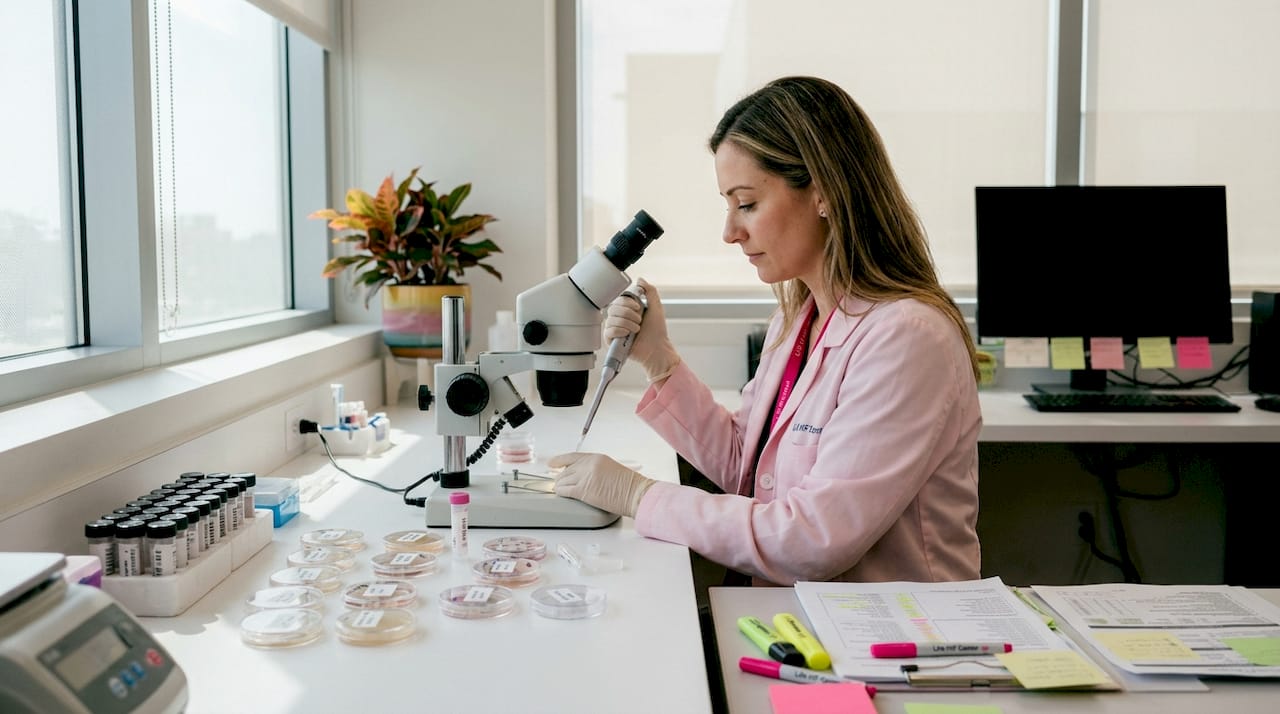
ICSI is a specialized form of IVF used primarily for male factor infertility. Where conventional IVF requires 50,000–100,000 sperm per egg, ICSI requires only one. An embryologist injects a single sperm directly into the egg using a fine needle. That difference makes ICSI the standard choice when sperm count, motility, or morphology is severely compromised.
Other ART methods include:
- Embryo cryopreservation: Surplus embryos are frozen after a retrieval cycle and stored for future transfers, reducing the need for repeated stimulation cycles.
- Gamete intrafallopian transfer (GIFT): Eggs and sperm are placed directly into the fallopian tube for fertilization to occur naturally inside the body. GIFT is rarely used today.
- Zygote intrafallopian transfer (ZIFT): A fertilized egg is transferred to the fallopian tube rather than the uterus. Also uncommon in current practice.
- Preimplantation genetic testing (PGT): Embryos are biopsied before transfer to screen for chromosomal abnormalities or specific genetic conditions.
Pro Tip: Ask your fertility specialist to explain which technique is indicated for your specific diagnosis. Not every patient needs ICSI, and not every embryo needs PGT. Matching the method to the cause improves outcomes and controls costs.
AI-assisted embryo selection is now entering clinical use. Systems like the STAR platform analyze over one million sperm images per hour to identify the highest-quality candidates for fertilization. This level of analysis was not possible with manual review alone.
What is the typical patient journey during an ART treatment cycle?
A structured, step-by-step process defines every ART cycle. Knowing the sequence helps patients plan their schedules, manage expectations, and communicate clearly with their care team.
-
Initial consultation. The first IVF consultation covers medical history, prior fertility testing, and a review of any previous treatment cycles. This session typically lasts 30–60 minutes and results in a personalized treatment timeline. The information gathered here directly shapes the ovarian stimulation protocol.
-
Diagnostic testing. Blood work, ultrasound, semen analysis, and uterine evaluation confirm the diagnosis and rule out conditions that could affect treatment. A thorough fertility evaluation checklist at this stage prevents surprises later in the cycle.
-
Ovarian stimulation. Injectable hormones stimulate the ovaries to produce multiple follicles. Monitoring appointments every two to three days track follicle growth and adjust medication doses. The goal is to retrieve a sufficient number of mature eggs without overstimulating the ovaries.
-
Egg retrieval. A minor surgical procedure performed under sedation collects eggs from the follicles using an ultrasound-guided needle. The procedure takes approximately 20–30 minutes. Patients typically rest for a few hours before going home.
-
Fertilization and embryo culture. Retrieved eggs are fertilized using conventional IVF or ICSI, depending on the diagnosis. Embryos develop in the laboratory for five to six days, reaching the blastocyst stage before transfer or freezing.
-
Embryo transfer and follow-up. A thin catheter places one or more embryos into the uterus. A blood pregnancy test follows approximately 10–14 days later. Patients continue progesterone support until results confirm whether implantation occurred.
Pro Tip: Keep a personal record of every test result, medication dose, and monitoring appointment. Detailed records make it easier to adjust protocols in subsequent cycles and give any new provider immediate context.
Comprehensive preconception evaluation and thorough documentation are not administrative formalities. They directly influence which stimulation protocol a physician selects and how aggressively they respond to monitoring data.
How do ART options compare in terms of indications and benefits?
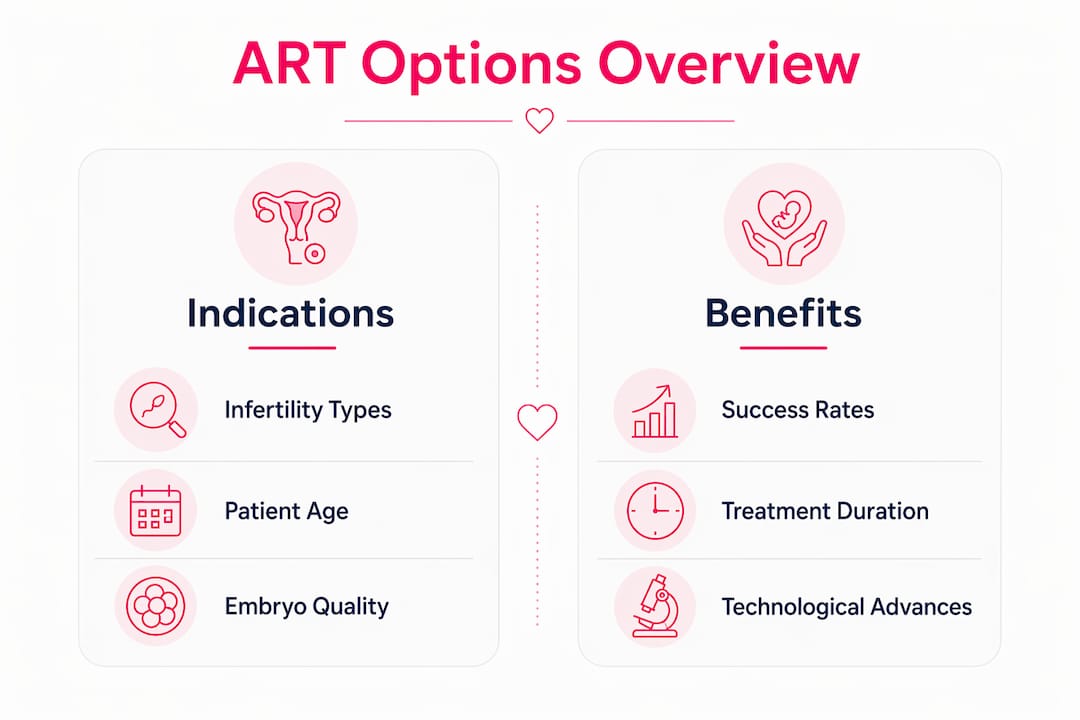
Choosing the right ART method depends on the underlying infertility diagnosis, patient age, embryo quality, and treatment history. The table below summarizes the primary indications and key benefits of the most common techniques.
| Technique | Primary indication | Key benefit |
|---|---|---|
| Standard IVF | Tubal factor, unexplained infertility, ovulatory disorders | Established track record, widely available |
| ICSI | Severe male factor infertility, prior fertilization failure | Fertilization with a single sperm cell |
| Embryo cryopreservation | Surplus embryos, fertility preservation, PGT cycles | Avoids repeated stimulation, supports future transfers |
| PGT-A | Advanced maternal age, recurrent pregnancy loss, chromosomal risk | Screens embryos before transfer to reduce miscarriage risk |
| GIFT/ZIFT | Rare cases with specific anatomical or religious considerations | Fertilization or early development in a more natural environment |
Several factors influence which option a physician recommends:
- Tubal factor infertility responds well to standard IVF because fertilization bypasses the fallopian tubes entirely.
- Male factor infertility with low sperm count or poor motility calls for ICSI rather than conventional IVF.
- Unexplained infertility often starts with standard IVF, with ICSI added if fertilization rates are low.
- Recurrent pregnancy loss or advanced maternal age may warrant PGT-A to screen for chromosomal errors before transfer.
Robotic automation is beginning to standardize laboratory steps that previously depended on individual embryologist skill. This reduces variability between cycles and between clinics, which matters when patients transfer care mid-treatment.
What recent technological advancements are shaping ART in 2026?
The most significant shift in ART over the past two years is the integration of artificial intelligence into laboratory workflows. AI tools now assess sperm, egg, and embryo quality with a speed and consistency that manual review cannot match.
“AI-enabled embryo selection and robotic automation promise to standardize IVF outcomes and make fertility treatment more accessible and efficient.” (MIT Technology Review, 2026)
Key advances currently in clinical or late-stage development include:
- AI-assisted sperm selection: Platforms like the STAR system process millions of microscope images per hour to identify sperm with the highest fertilization potential. This reduces reliance on subjective visual assessment.
- Sperm DNA methylation testing: Tools such as the SpermEGT DNA Methylation Test assess epigenetic markers in sperm that standard semen analysis misses, giving a more complete picture of male fertility.
- Robotic IVF automation: Robotic systems now handle pipetting, culture media changes, and embryo manipulation with sub-millimeter precision. Standardization across these steps reduces human error.
- PGT-A with frozen embryo transfer: PGT-A requires a blastocyst biopsy on day 5 or 6, followed by embryo freezing while genetic results are processed. Fresh transfers are generally not performed alongside PGT-A because of this timing requirement.
The ethical questions around PGT-A remain active. Screening embryos for chromosomal abnormalities can improve embryo selection, but it also means some viable embryos may be excluded from transfer based on test results that carry a margin of error. Patients considering PGT-A benefit from a detailed conversation with their physician about what the results can and cannot confirm.
Key Takeaways
ART success depends on matching the right technique to the right diagnosis, supported by thorough evaluation and the latest laboratory tools.
| Point | Details |
|---|---|
| ART definition | ART requires handling both eggs and sperm outside the body, per CDC standards. |
| ICSI is not universal | ICSI is indicated for male factor infertility, not as a default upgrade over standard IVF. |
| Cycle timeline | A standard IVF cycle spans approximately two weeks from stimulation to embryo transfer. |
| PGT-A requires freezing | Embryos biopsied for PGT-A must be frozen while awaiting results; fresh transfers are not performed. |
| AI is changing the lab | AI tools now analyze millions of sperm and embryo images per hour, improving selection accuracy. |
What I’ve learned watching ART evolve over the past decade
The most persistent misconception I encounter is that ICSI is simply a “better” version of IVF that every patient should request. It is not. ICSI is specifically indicated for male factor infertility. Applying it indiscriminately adds cost and laboratory complexity without improving outcomes for patients who do not have a sperm-related diagnosis. Patients who push for ICSI without a clear indication are often responding to marketing rather than medicine.
The second thing I have observed is how much the initial consultation shapes everything that follows. Physicians who spend time on a thorough preconception evaluation at the start build a protocol that fits the patient rather than a generic template. That specificity shows up in stimulation response, embryo quality, and ultimately in outcomes.
On AI: the technology is genuinely promising, but patients should not expect it to replace clinical judgment yet. What AI does well is remove variability from high-volume, repetitive tasks like sperm image analysis. What it cannot do is weigh the full clinical picture of an individual patient. The best outcomes will come from clinics that use AI as a tool within a physician-led protocol, not as a substitute for one.
My advice to any patient starting this process: ask your clinic to explain the specific reason each technique is being recommended for your case. A good answer will reference your diagnosis, your test results, and the evidence behind the choice. A vague answer is a signal to ask more questions.
Personalized ART care at Life IVF Center
Life IVF Center brings together the diagnostic depth and laboratory technology described in this article under one roof across multiple Southern California locations.
The clinic’s Precision IVF® approach builds each treatment protocol from a patient’s unique biological profile, medical history, and reproductive goals rather than a standard template. Life IVF Center also provides guidance on insurance coverage options and offers fertility preservation packages for patients who want to freeze eggs or embryos before starting a full treatment cycle. Scheduling a consultation is the first step toward a plan built specifically for you.
FAQ
What does ART stand for in fertility treatment?
ART stands for assisted reproductive technology. The CDC defines it as any fertility treatment where both eggs and sperm are handled outside the body, which includes IVF and ICSI but excludes IUI.
When is ICSI used instead of standard IVF?
ICSI is used when male factor infertility is present, such as low sperm count, poor motility, or prior fertilization failure. Standard IVF requires 50,000–100,000 sperm per egg; ICSI requires only one.
How long does a typical IVF cycle take?
A standard IVF cycle takes approximately two weeks, covering ovarian stimulation, egg retrieval, fertilization, embryo culture, and transfer. Follow-up testing adds another 10–14 days before a pregnancy result is confirmed.
What is PGT-A and why does it require embryo freezing?
PGT-A is preimplantation genetic testing for chromosomal abnormalities. Embryos are biopsied at the blastocyst stage on day 5 or 6, then frozen while genetic results are processed, which is why fresh transfers are not performed alongside PGT-A.
How is AI being used in IVF laboratories today?
AI systems now analyze millions of sperm and embryo images per hour to identify the highest-quality candidates for fertilization and transfer. This improves selection accuracy beyond what manual review can achieve and reduces variability between cycles.
Recommended
- The Role of Technology in IVF: What Really Works
- Blog – Life IVF Center
- The Role of Stem Cells in Fertility: 2026 Guide
- Blog – Life IVF Center
Ready to take the next step?
Life IVF Center specializes in individualized Precision IVF® care for complex cases—including diminished ovarian reserve, prior failed cycles, and advanced maternal age. Our in-house labs and dedicated physicians are ready to help.
Book a Free Consultation →