
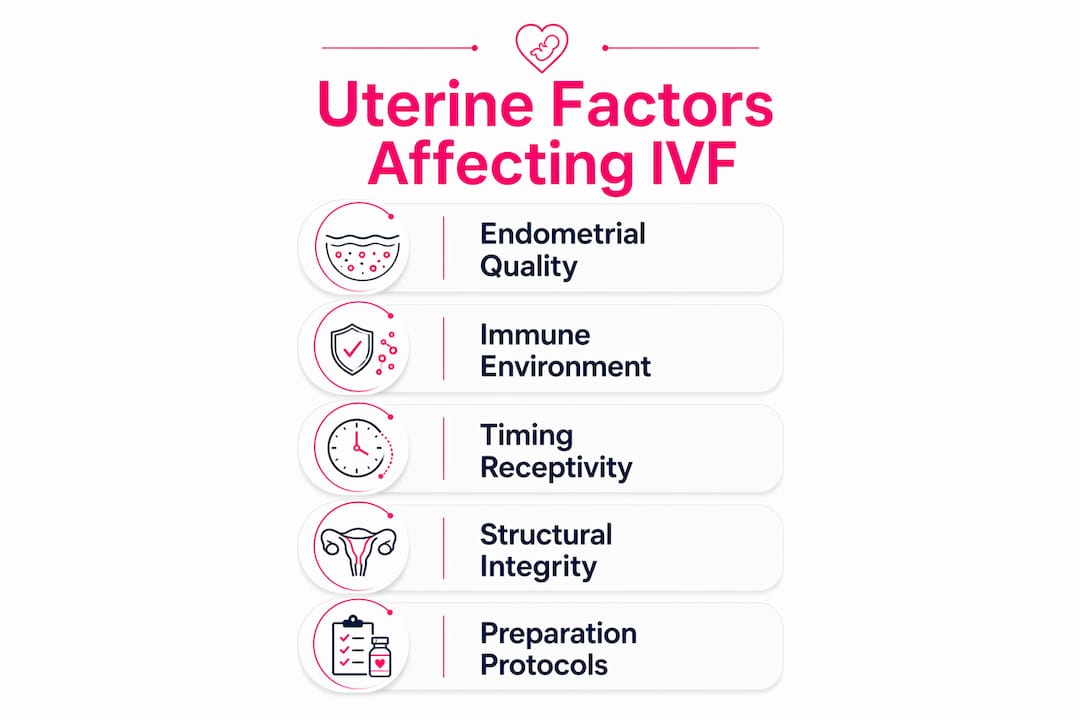
The role of uterine health in IVF is defined as the direct influence the uterine environment exerts on embryo implantation, pregnancy progression, and live birth outcomes. Most IVF conversations center on embryo quality and ovarian response, yet the uterus itself determines whether a viable embryo successfully implants. Uterine health encompasses endometrial thickness and morphology, immune cell balance, structural integrity, and the precise timing of receptivity. Each factor operates independently and in combination, meaning a single weakness can undermine an otherwise well-executed cycle. Understanding these variables gives you and your care team a clearer path toward a successful outcome.
How does uterine lining quality affect IVF outcomes?
Endometrial quality is the foundation of uterine health in IVF, and its assessment goes well beyond measuring thickness on an ultrasound. Clinicians commonly use a threshold of 6 mm as a minimum for transfer, but endometrial thickness alone shows low predictive value for clinical pregnancy or live birth rates, even in women without endometriosis. That finding matters because many patients and providers treat thickness as a pass/fail metric when it is actually just one data point among several.
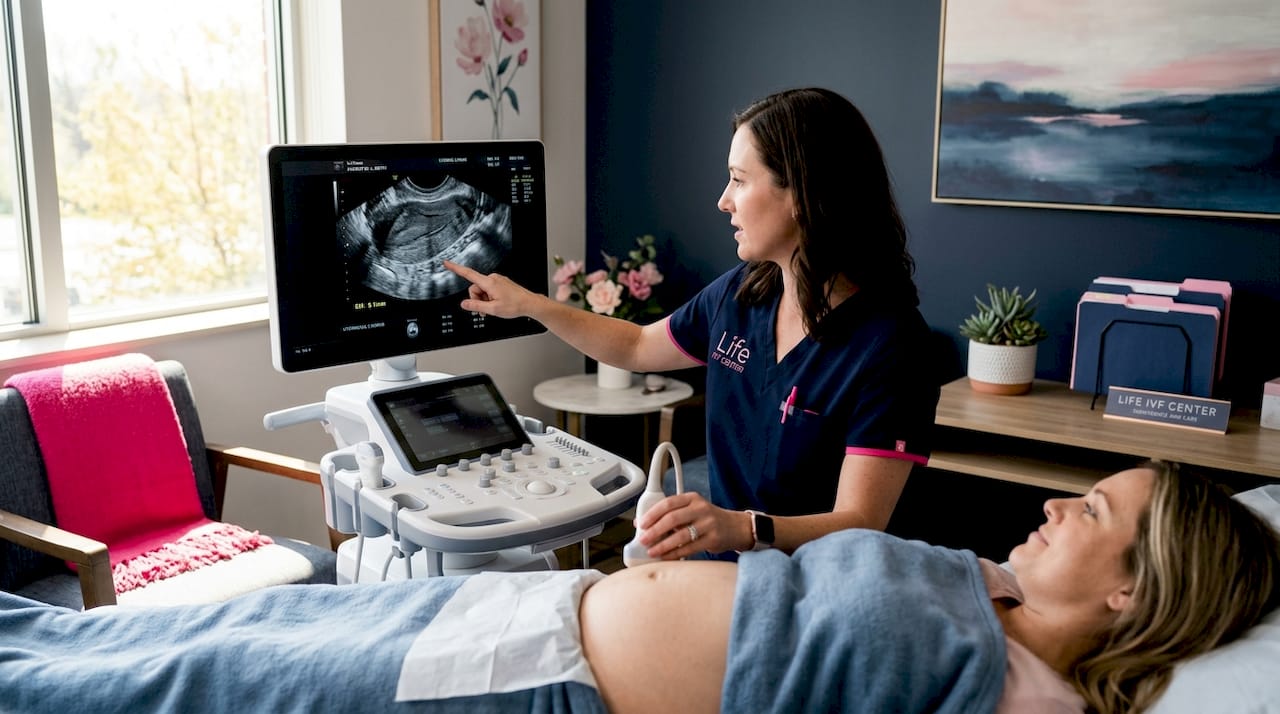
Morphology, or the structural appearance of the endometrial lining, carries equal weight. A trilaminar pattern on ultrasound is associated with better receptivity, but abnormal features can override a favorable thickness reading. One particularly significant finding is the presence of endometrial cavity fluid. Cavity fluid presence reduces implantation likelihood with an odds ratio of 0.38, meaning the probability of successful implantation drops sharply when fluid is detected. This is not a minor finding. It signals an adverse uterine environment that requires investigation before transfer proceeds.
Key factors that shape endometrial quality include:
- Thickness: Adequate volume is necessary but not sufficient on its own
- Morphology: Trilaminar appearance correlates with better receptivity
- Cavity fluid: Even small amounts significantly reduce implantation odds
- Vascularity: Blood flow to the endometrium supports nutrient delivery and receptivity
- Coexisting pathology: Conditions like endometriosis alter lining behavior independently of thickness
Pro Tip: Ask your physician to evaluate the full uterine environment at your pre-transfer ultrasound, not just thickness. Cavity fluid, lining pattern, and blood flow data together give a far more accurate picture of readiness.
What role does the uterine immune environment play in IVF success?
Embryo implantation is an immunological event as much as a physical one. The endometrium must tolerate a genetically foreign embryo while simultaneously mounting a controlled inflammatory response to support invasion and placentation. When this balance is disrupted, implantation fails even when embryo quality is excellent.
Research on endometrial immune profiling reveals how consequential this balance is. Live birth rates reached 38.4% in patients with balanced immune profiles compared to 21.2% in those with dysregulated profiles, an odds ratio of 2.11. That gap is clinically significant, particularly for patients using morphologically suboptimal embryos. The immune environment effectively compensates for or amplifies embryo quality, depending on its state.
The clinical implications are substantial:
- 78% of infertile patients in one study were diagnosed with some degree of immune dysregulation
- Dysregulation most severely affects outcomes when embryo quality is already borderline
- Immune profiling can guide targeted immunomodulatory treatments to rebalance the local environment
- Patients with repeated implantation failure benefit most from this type of evaluation
The evidence on IVF immunotherapies continues to grow, and immune profiling is moving from experimental to clinically applicable in specialized centers.
Pro Tip: If you have experienced two or more failed transfers with good-quality embryos, ask specifically about endometrial immune profiling. Standard pre-transfer workups do not routinely include this assessment.
How does the timing of endometrial receptivity influence IVF success?
The window of implantation (WOI) is the narrow period, typically 4 to 6 days after ovulation or progesterone initiation, during which the endometrium is receptive to an embryo. Transferring outside this window, even by 24 hours, reduces the probability of implantation substantially. The challenge is that the WOI is not fixed at the same point in every patient.
Displaced WOI accounts for approximately 25.9% of repeated implantation failure cases. That statistic reframes what many patients experience as unexplained failure. The embryo and the uterus simply were not synchronized. Standard ultrasound parameters cannot reliably detect this displacement, which is why molecular testing has gained traction.
Current approaches to assessing and optimizing receptivity timing include:
- Endometrial receptivity analysis (ERA): A biopsy-based molecular test that identifies the personalized WOI by analyzing gene expression patterns in endometrial tissue
- Ultrasound monitoring: Useful for tracking lining development but insufficient as a standalone receptivity marker
- Uterine fluid biomarkers: Prostaglandin E2 and F2α concentrations peak during the WOI and are under investigation as non-invasive receptivity indicators
- Personalized transfer timing: Adjusting the progesterone start date or transfer day based on individual receptivity data rather than a fixed protocol
- Combined assessment: Using molecular and ultrasound data together, since no single marker currently provides sufficient accuracy on its own
For patients with repeated implantation failure, personalized timing is not optional. It is the most direct way to address a displaced WOI without changing the embryo or the protocol.
What uterine structural conditions impact IVF outcomes?
Structural abnormalities within the uterine cavity create physical and physiological barriers to implantation. Intrauterine adhesions (IUA), also called Asherman’s syndrome, represent one of the most challenging structural conditions in IVF. Adhesions reduce the functional endometrial surface area and impair blood flow, both of which are necessary for implantation.
In patients with severe IUA, each additional surgical repair procedure reduces implantation odds by 21% and clinical pregnancy likelihood by 23%. This finding carries a counterintuitive message: more surgery is not always better. Repeated transcervical resection of adhesions (TCRA) damages the endometrium further, creating a cycle of injury and scarring that compounds the original problem.
The table below compares key structural factors and their management strategies:
| Structural condition | Impact on IVF | Management approach |
|---|---|---|
| Severe intrauterine adhesions | Reduces embryo implantation and pregnancy outcomes | Surgical adhesiolysis with minimal repeat procedures |
| Endometrial cavity fluid | Odds ratio 0.38 for implantation failure | Identify and treat underlying cause before transfer |
| Uterine volume abnormalities | Alters endometrial environment and blood flow | Hormonal protocols to normalize uterine response |
| Endometriosis | Disrupts lining quality and immune balance | Combined hormonal and surgical management |
| Uterine scarring from prior surgery | Impairs receptivity markers | Hormonal down-regulation to restore receptivity signals |
Hormonal down-regulation protocols before embryo transfer can restore markers of receptivity in patients with severe uterine scarring. Antibiotic treatment addresses inflammatory contributors to poor endometrial response. For patients with endometriosis, the IVF process requires additional planning because the condition simultaneously affects lining quality and immune balance.
Pro Tip: If you have a history of uterine surgery, D&C procedures, or endometriosis, request a saline infusion sonogram or hysteroscopy before your transfer cycle. These tests detect cavity abnormalities that standard ultrasound misses.
What are current protocols for preparing the uterus for embryo transfer?
Endometrial preparation for frozen embryo transfer (FET) follows three main protocol types, each with distinct mechanisms and clinical trade-offs. The goal of all three is the same: to create a progesterone-driven secretory transformation of the endometrium that mirrors the natural post-ovulatory state an embryo would encounter.
Progesterone timing and transfer synchronization are the mechanistic keys to FET success. A one-size-fits-all preparation approach is inadequate for personalized cycles, particularly when receptivity timing varies between patients.
| Protocol type | Mechanism | Best suited for |
|---|---|---|
| Natural cycle (NC-FET) | Relies on spontaneous ovulation and natural progesterone rise | Patients with regular ovulatory cycles |
| Stimulated cycle | Mild ovarian stimulation triggers ovulation and progesterone production | Patients with irregular cycles needing ovulation support |
| Hormone replacement therapy (HRT-FET) | Exogenous estrogen and progesterone replace natural hormones entirely | Patients with anovulation or prior cycle irregularity |
| Personalized HRT-FET | HRT with ERA-guided transfer timing | Patients with repeated implantation failure or displaced WOI |
Personalized FET protocols that account for individual timing and hormone environment improve clinical pregnancy and live birth rates compared to standard fixed protocols. The difference lies in matching the embryo to the uterus at the precise moment of peak receptivity rather than assuming all patients share the same timeline. For patients exploring embryo freezing and transfer options, understanding which preparation protocol applies to your situation is a meaningful part of treatment planning.
Key takeaways
Uterine health determines IVF success through endometrial quality, immune balance, structural integrity, and precisely timed receptivity, and each factor requires individual assessment.
| Point | Details |
|---|---|
| Thickness alone is insufficient | Endometrial thickness above 6 mm does not reliably predict live birth; morphology and cavity fluid matter equally. |
| Immune balance drives implantation | Balanced immune profiles produce live birth rates nearly double those of dysregulated profiles in IVF patients. |
| Timing displacement causes failures | Displaced WOI accounts for roughly 25.9% of repeated implantation failures and requires personalized transfer timing. |
| Structural repair has limits | Each additional adhesion surgery reduces implantation odds by 21%; minimizing procedures protects uterine function. |
| Personalized protocols outperform fixed ones | ERA-guided and individualized FET preparation improves outcomes over standard one-size-fits-all approaches. |
Why uterine health deserves equal attention alongside embryo quality
Most patients arrive at a fertility clinic focused on one question: how are my eggs? That is understandable. Egg quality and embryo grading are tangible, measurable, and heavily discussed. What gets less attention is the environment those embryos are transferred into, and in my experience reviewing complex IVF cases, the uterus is where many unexplained failures actually originate.
The immune profiling data is particularly striking to me. When 78% of infertile patients show some degree of immune dysregulation, and when that dysregulation cuts live birth rates nearly in half for patients with suboptimal embryos, it becomes difficult to justify skipping this evaluation. Yet many standard IVF workups do not include it. Patients cycle through transfers, receive no clear explanation for failure, and are left wondering what went wrong.
The same logic applies to receptivity timing. A displaced WOI is invisible on ultrasound. Without molecular testing, a patient can have a perfect embryo, a perfect-looking lining, and still fail because the transfer happened 24 hours outside her personal window. That is not bad luck. That is a solvable problem with the right diagnostic approach.
My honest view is that the field has been embryo-centric for too long. The uterus is not a passive recipient. It is an active participant in implantation, and treating it as such, through immune profiling, structural assessment, and personalized timing, is where the next meaningful gains in IVF success rates will come from. If you have experienced repeated failures or are preparing for your first transfer, push for a thorough uterine evaluation before you proceed. The second opinion process exists precisely for situations where uterine factors may have been overlooked.
How Life IVF Center approaches uterine health in IVF treatment
Life IVF Center’s Precision IVF® approach integrates uterine health evaluation directly into treatment planning, rather than treating it as an afterthought. Each patient’s protocol accounts for endometrial quality, structural findings, immune environment, and receptivity timing, so that embryo transfer happens under the most favorable conditions possible. This level of individualization is what separates a personalized IVF cycle from a standardized one. If you have experienced prior implantation failures or want to optimize your first cycle, Life IVF Center’s team can build a protocol around your specific uterine profile. Explore treatment packages designed to address the full picture of reproductive health, not just embryo selection.
FAQ
What is the role of uterine health in IVF?
Uterine health in IVF refers to the condition of the endometrial lining, immune environment, structural integrity, and receptivity timing that together determine whether an embryo successfully implants. All four factors must be evaluated and optimized for the best possible outcome.
Does endometrial thickness predict IVF success?
Endometrial thickness above 6 mm is not a reliable predictor of live birth rate on its own. Morphology, cavity fluid, and coexisting uterine conditions carry equal or greater weight in determining implantation success.
What is the window of implantation and why does it matter?
The window of implantation is the short period when the endometrium is receptive to an embryo, and a displaced WOI causes approximately 25.9% of repeated implantation failures. Personalized transfer timing based on molecular testing can correct this problem.
Can intrauterine adhesions be treated before IVF?
Surgical adhesiolysis can improve uterine conditions, but each additional procedure reduces implantation odds by 21%. Minimizing repeat surgeries and using hormonal protocols to restore receptivity markers is the preferred management strategy.
How does the immune environment affect embryo implantation?
A balanced endometrial immune environment produces live birth rates of 38.4% compared to 21.2% in dysregulated cases. Immune profiling is particularly valuable for patients with suboptimal embryos or a history of unexplained implantation failure.
Recommended
- Endometriosis IVF Process: What You Need to Know
- Understanding embryo transfer: The key step in IVF
- The Role of Counseling in IVF: What You Need to Know
- Egg retrieval tips: Expert guidance for IVF success
Ready to take the next step?
Life IVF Center specializes in individualized Precision IVF® care for complex cases—including diminished ovarian reserve, prior failed cycles, and advanced maternal age. Our in-house labs and dedicated physicians are ready to help.
Book a Free Consultation →