
Embryo storage fees are the recurring charges clinics or cryobanks bill to keep frozen embryos preserved in liquid nitrogen, typically billed annually or monthly rather than as a single payment. In the United States, the median cash price for a year of storage sits around $318 across hospitals reporting CPT 89342 (Storage/Year Embryo(s)) pricing, though many clinics charge more. Clinics or third-party biorepositories usually issue the invoice, and the first year is often folded into an IVF or freezing package.
TL;DR:
- Ask whether storage is billed per patient or per embryo, and request an itemized invoice because monitoring, records, or insurance may appear separately.
- Choose monthly billing for flexibility, annual prepayment to reduce monthly costs, or multiyear prepayment only if your storage timeline is clear.
- Before relocating embryos, confirm the receiving facility accepts them, obtain written total costs from both facilities, and clarify who carries transit liability.
- Review renewal and price increase clauses, grace periods, and written disposition preferences; continued payments can help prevent embryos from being treated as unclaimed.
- Do not assume insurance or FSA coverage; ask your benefits administrator about storage eligibility and consult a tax professional before claiming reproductive expenses.
Table of Contents
- How Clinics and Cryobanks Structure Embryo Storage Invoices
- What Drives the Price of Embryo Storage
- Payment Choices: Monthly, Annual, or Multi-Year Prepay
- Shipping, Transfer, and Relocation Costs for Embryos
- Contract Terms, Nonpayment, and Disposition Policies
- Can Insurance, FSA, HSA, or Tax Rules Lower Your Storage Costs?
- How to Build a Realistic Storage Budget
- Life IVF Center: How We Handle Embryo Storage and Billing
- Storage Fees as a Financial Planning Decision
- How We Can Help With Pricing and Planning
- FAQ
- Sources
How Clinics and Cryobanks Structure Embryo Storage Invoices
Once your embryos move from an active treatment cycle into long-term storage, the billing shifts from a one-time procedure charge to a recurring maintenance fee. Some clinics bill a flat annual rate per patient regardless of how many embryos you have, while others price per embryo or per storage “straw,” which can matter if you have embryos from multiple retrievals. The American Society for Reproductive Medicine (ASRM) notes that storage is typically billed as a one-year service per patient, an approach that simplifies billing when embryos from different cycles are stored together.
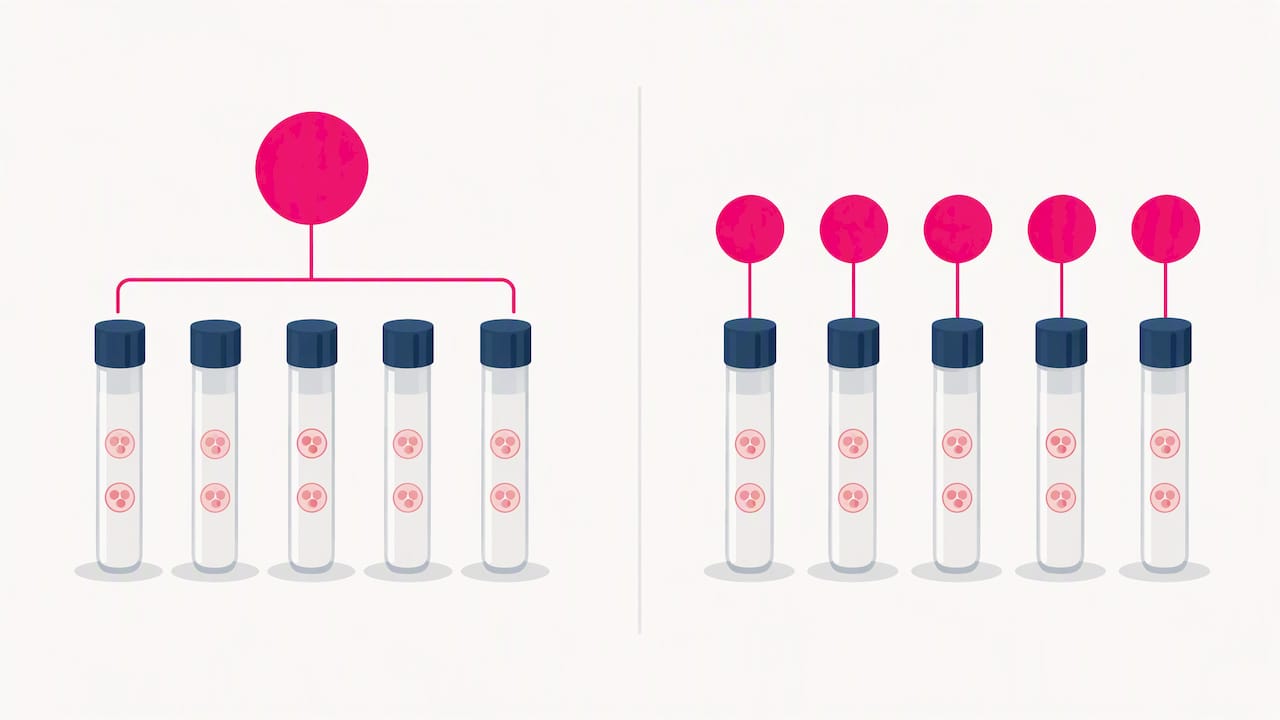
Who sends the bill depends on where your embryos physically live. Some clinics maintain on-site cryostorage and invoice you directly as part of their regular billing cycle. Others partner with a separate biorepository, in which case you receive a distinct invoice from that third party, sometimes on a different schedule than your clinic’s billing.
Common line items you might see include:
- A base storage fee covering tank space and liquid nitrogen replenishment
- A monitoring or quality control charge for tank checks and temperature logs
- An administrative or record-keeping fee separate from the storage charge itself
- A facility insurance or liability coverage line, which some providers bundle in and others itemize
Reading your invoice line by line helps you understand what’s included before you commit to a payment plan.
What Drives the Price of Embryo Storage
Storage prices vary more than most patients expect, and the differences usually trace back to a handful of structural factors rather than random markup. Facility type matters: hospital-affiliated fertility programs often publish different cash prices than independent IVF centers or specialized cryobanks, partly reflecting different overhead and partly reflecting local market rates.
A typical cash price for a year of embryo storage among hospitals reporting CPT code 89342 is in the low hundreds of dollars, though CDC resources on assisted reproductive technology show wide variation in actual patient costs depending on facility and region. That median is a useful anchor, but it is not a guarantee of what any single clinic will charge you.
Other factors that shape your price:
- The number of embryos stored and whether pricing is per patient or per embryo
- Lab accreditation and the quality control systems behind temperature monitoring and backup power
- Security features like redundant tanks, alarm systems, and off-site backup storage
- Contract clauses permitting future price increases, which can change your cost years into a storage relationship
Asking a clinic directly why its published price differs from the national median often reveals which of these factors apply to your situation.
Payment Choices: Monthly, Annual, or Multi-Year Prepay
Most providers offer more than one way to pay for storage, and the right choice depends on how certain you feel about your family-building timeline. Here’s how the common options typically work:
- Monthly billing keeps cash flow predictable and low-commitment, useful if you expect to transfer embryos soon or are still deciding on next steps.
- Annual prepayment usually costs less per month than monthly billing and reduces the number of transactions you need to track.
- Multi-year prepay plans often carry the steepest discount per year, rewarding patients who are confident they will not need their embryos in the near term.
- Financing arrangements, where available, spread a prepay option into smaller payments without necessarily changing the total cost.
Lapses in payment are handled differently across providers, but most require advance notice before a missed payment escalates to a hold on services or, eventually, a disposition conversation. Auto-pay reduces the risk of an accidental lapse, though expired cards remain a common and avoidable cause of billing problems.
Pro Tip: Set a calendar reminder a month before any prepaid term ends so a lapsed card doesn’t trigger late fees or a disposition notice.
Shipping, Transfer, and Relocation Costs for Embryos
Moving embryos between facilities, whether you’re relocating, switching clinics, or consolidating storage, involves its own cost layer separate from ongoing storage fees. Specialized couriers use cryogenic shipping tanks (dry shippers) that maintain ultra-low temperatures for days, and renting or purchasing that equipment is typically the largest line item in a transfer.
Expect charges for:
- Courier and tank rental fees, often billed per shipment rather than per embryo
- Transfer-related insurance covering loss or temperature failure in transit
- Administrative handling fees from both the sending and receiving facility
- Paperwork processing, including chain-of-custody documentation and signed release forms
Your sending clinic usually arranges the logistics, but you are responsible for confirming the receiving facility accepts the shipment and has matching paperwork ready. Before any transfer, confirm the total cost in writing, the expected transit window, and which party carries liability if something goes wrong in transit. For intended parents coordinating embryo transfers as part of an international surrogacy arrangement, additional logistics around IVF and embryo transfer in a surrogacy workflow can add extra steps to this process.
Contract Terms, Nonpayment, and Disposition Policies
The storage agreement you sign at the start of treatment governs far more than the sticker price, and the clauses buried in that paperwork determine what happens years down the line. Watch for:
- Auto-renewal terms: does your contract renew automatically at the end of each term, and at what price?
- Price-increase clauses: can the facility raise rates mid-contract, and how much notice is required?
- Nonpayment consequences: what is the grace period before a missed payment triggers a hold or escalation?
- Notice requirements: how does the facility attempt to reach you before taking any action on unpaid embryos?
The ASRM ethics opinion on disposition of unclaimed embryos recommends that facilities document written disposition preferences at the outset and define “reasonable efforts” to contact patients before treating embryos as unclaimed. This guidance exists precisely because contracts vary so much from one provider to the next, and clear documentation protects both patients and clinics.
Continuing to pay storage fees generally counts as maintaining contact and can prevent embryos from being treated as abandoned.
That principle, discussed in legal analysis of unclaimed embryo disposition, underscores why staying current on payments matters beyond simple account standing. It can be part of what preserves your legal and ethical claim to embryos you intend to use later. If your plans change, whether toward donation, destruction, or continued storage, updating your written disposition preference with your clinic keeps your file accurate and avoids ambiguity.
Can Insurance, FSA, HSA, or Tax Rules Lower Your Storage Costs?
Most health insurance plans treat embryo storage as an elective expense and do not cover it, though a growing number of employers now include fertility benefits that extend to storage fees as part of broader family-building packages. Checking your specific plan documents, rather than assuming either way, is the only reliable path to an answer.
On the tax side, an IRS private letter ruling on reproductive expense deductibility indicates that certain reproductive-related costs, including some donor-related expenses, can qualify as deductible medical expenses under Internal Revenue Code Section 213, depending on the specific facts involved. A private letter ruling applies to the taxpayer who requested it, so it signals a legal precedent rather than a blanket rule for every patient.
Practical steps worth taking:
- Call your HR benefits administrator and ask specifically about fertility preservation and storage coverage
- Check whether your FSA or HSA plan administrator classifies storage as an eligible medical expense
- Keep every storage invoice and payment receipt in one place in case you pursue a medical expense deduction
- Talk to a tax professional before claiming any reproductive-related deduction, since individual circumstances affect eligibility
How to Build a Realistic Storage Budget
A simple formula gets you most of the way to an honest long-term estimate: annual storage fee multiplied by the number of years you expect to store, plus a future frozen embryo transfer (FET) cycle, plus a contingency for price increases.
- Start with your clinic’s current annual rate and multiply it by your expected storage horizon, even if that horizon is just a rough guess.
- Add the cost of a future FET cycle so your budget reflects the full picture, not just the waiting period.
- Build in a contingency, since many contracts allow price increases over a multi-year term.
- Request a written price schedule from your clinic or biorepository rather than relying on verbal quotes.
Prepaying multiple years typically saves money if you’re confident in your timeline, while monthly or annual billing preserves flexibility if your plans could shift. Keeping every receipt also supports any tax or benefits claim you pursue later.
Pro Tip: Ask your clinic for a five-year price projection in writing, even if you only plan to store for two, so you can see how the rate structure behaves over time.
Life IVF Center: How We Handle Embryo Storage and Billing
We offer three storage structures so patients can match payment to their timeline: Annual Storage, Monthly Storage, and a 3 Year Prepaid option for patients ready to commit to a longer term. We also coordinate travel logistics for patients who split care between locations, and our financial guidance team walks through storage terms alongside the rest of your treatment costs so nothing arrives as a surprise.
Before your first storage invoice arrives, we recommend you:
- Request a written storage price schedule covering at least the next few years
- Ask our team about transfer logistics if you anticipate moving embryos later
- Book a consultation to review your freezing and storage timeline alongside your broader treatment plan
Storage Fees as a Financial Planning Decision
We see embryo storage fees as part of a longer financial and personal timeline, not a line item to overlook until a bill arrives. Treating storage like any other recurring obligation, with written terms and a multi-year view, protects both your budget and your reproductive options. If pricing clarity would help you plan, our team is ready to talk through the numbers with you.
— Ben
How We Can Help With Pricing and Planning
We built our storage and freezing pricing to be easy to review before you commit to anything. Our storage plan options, including Annual Storage, 3 Year Prepaid, and Monthly Storage, are listed with the terms spelled out, and our freezing pricing page explains how first-year storage often connects to your initial freezing procedure.
If you’re weighing storage costs against a broader treatment plan, our treatment package pricing lays out what’s included at each stage. The clearest next step is a consultation where we walk through your specific numbers: book a consultation and bring your questions about storage terms, transfer logistics, or long-term budgeting.
This article is general information, not a substitute for advice from a qualified doctor. Consult a qualified healthcare professional about your own circumstances before acting on anything here.
FAQ
Can I use my FSA to pay for embryo storage?
Some FSA plans do cover embryo storage as a qualified medical expense, but eligibility depends entirely on your specific plan’s terms. Check with your FSA administrator before assuming coverage, and keep itemized receipts in case documentation is required.
What state is the cheapest for IVF?
IVF and related costs, including storage, vary by clinic and region rather than following a single state-by-state pattern, and no single source tracks a definitive “cheapest state” ranking. The most reliable way to compare costs is requesting written price schedules from clinics in the areas you’re considering.
How much does it cost to preserve an embryo?
Preservation, meaning the initial freezing procedure, is a separate charge from ongoing storage. At Life IVF Center, Precision Embryo Freezing costs 8950 USD one-off, while ongoing Annual Storage runs 750 USD per year.
Can you freeze an embryo for 27 years?
Published research and clinical reports describe successful pregnancies from embryos frozen for well over two decades, suggesting long-term storage does not have a firm expiration point under proper conditions. Continued viability depends on consistent storage conditions and uninterrupted payment or maintenance of the storage agreement over that span.
Sources
For readers who want to go deeper, several official sources informed the figures and guidance in this article. The American Society for Reproductive Medicine (ASRM) publishes practice guidance on storage billing norms, and its ethics opinion on unclaimed embryo disposition outlines recommended consent and notice practices. The CDC’s ART program maintains national surveillance data and patient resources, while the IRS private letter ruling on reproductive expense deductibility offers tax precedent worth reviewing with a tax professional. The U.S. Food and Drug Administration (FDA) provides additional regulatory context for lab and cryostorage standards.
- ASRM ethics opinion: Disposition of unclaimed embryos (2021)
- IRS private letter ruling on deductibility (PLR-165964-02)
- CDC: Assisted Reproductive Technology (ART)
- American Society for Reproductive Medicine (ASRM)
This article is for general educational purposes only and is not a substitute for personalized medical advice, diagnosis, or treatment. Fertility care is highly individual; please consult a qualified healthcare professional about your specific circumstances.
