
Donor-egg IVF in the United States typically costs between $21,000 for a frozen egg-bank cohort and $65,000 for a fresh agency-mediated all-in bundle. The two largest cost drivers are the donor package or egg-bank lot fee and the clinic’s IVF cycle and lab fees. These categories alone can account for more than half your total budget before medications, legal fees, or genetic testing are added. Per-transfer pregnancy rates in reputable U.S. programs commonly reach 60%–80%, which means the cost-per-outcome ratio is often more favorable than it first appears. The American Society for Reproductive Medicine (ASRM) guidance confirms that frozen and fresh donor oocytes produce comparable per-transfer results, so the choice between pathways is largely a financial and logistical decision rather than a medical one.
At a glance: A frozen 6–8 egg cohort typically starts near twenty thousand dollars; a fresh all-in agency cycle usually ranges from thirty-five to around sixty-five thousand dollars.
Table of Contents
- What does the cost of egg donation actually include?
- Which donor pathway fits your budget and timeline?
- Fresh donor cycles vs. frozen cohorts: which makes more financial sense?
- What should a responsible donor-egg quote include?
- How do most patients pay for donor-egg IVF?
- What do success rates tell you about value?
- Sample budgets for common patient scenarios
- What should you look for in a donor-egg clinic?
- Key Takeaways
- What patients most often miss when budgeting for donor-egg IVF
- Life IVF Center makes donor-egg IVF planning clearer from the start
What does the cost of egg donation actually include?
Donor-egg IVF is typically more expensive than standard IVF because donor compensation or egg-bank fees, legal coordination, and donor screening are usually billed separately from the clinic’s base cycle fee. Understanding each line item is the only reliable way to compare quotes.
| Line Item | Typical U.S. Range |
|---|---|
| Egg-bank lot (frozen, 6–8 eggs) | around $21,000 |
| Clinic IVF cycle fee (retrieval/transfer) | $5,000–$10,000 |
| ICSI and embryology lab | $1,500–$3,000 |
| PGT-A (preimplantation genetic testing) | $3,000–$6,000 |
| Donor stimulation medications | $3,000–$6,000 |
| Recipient medications | $1,500–$3,500 |
| Legal fees (donor contract, parentage) | $1,500–$3,500 |
What is commonly included vs. excluded in a clinic’s quoted “cycle” price:
- Usually included: egg retrieval procedure, fertilization, embryo culture, one fresh or frozen embryo transfer
- Usually excluded: donor medications, recipient medications, PGT-A, embryo storage beyond the first cycle, legal fees, agency coordination fees, shipping
- Always confirm: whether a second transfer is included if the first fails, and whether storage fees are waived for the first year
Which donor pathway fits your budget and timeline?
Four main routes exist for using an egg donor, and each carries a distinct cost structure.
Frozen egg bank cohorts are the fastest and most predictable option. Eggs are already vitrified and available to ship, so you can typically begin a cycle within days to weeks rather than months. Lot pricing is fixed, which simplifies budgeting. The tradeoff is a smaller egg cohort (6–8 eggs) compared to a fresh retrieval.
Agency-mediated fresh cycles involve recruiting and synchronizing a live donor, which adds 3–6 months of coordination time and significantly higher fees. Agency fees alone commonly run $5,000–$10,000, and donor compensation can reach much higher for high-demand donors. The benefit is a larger egg yield, typically 15–25+ eggs, which creates more embryos for future transfers or sibling planning.
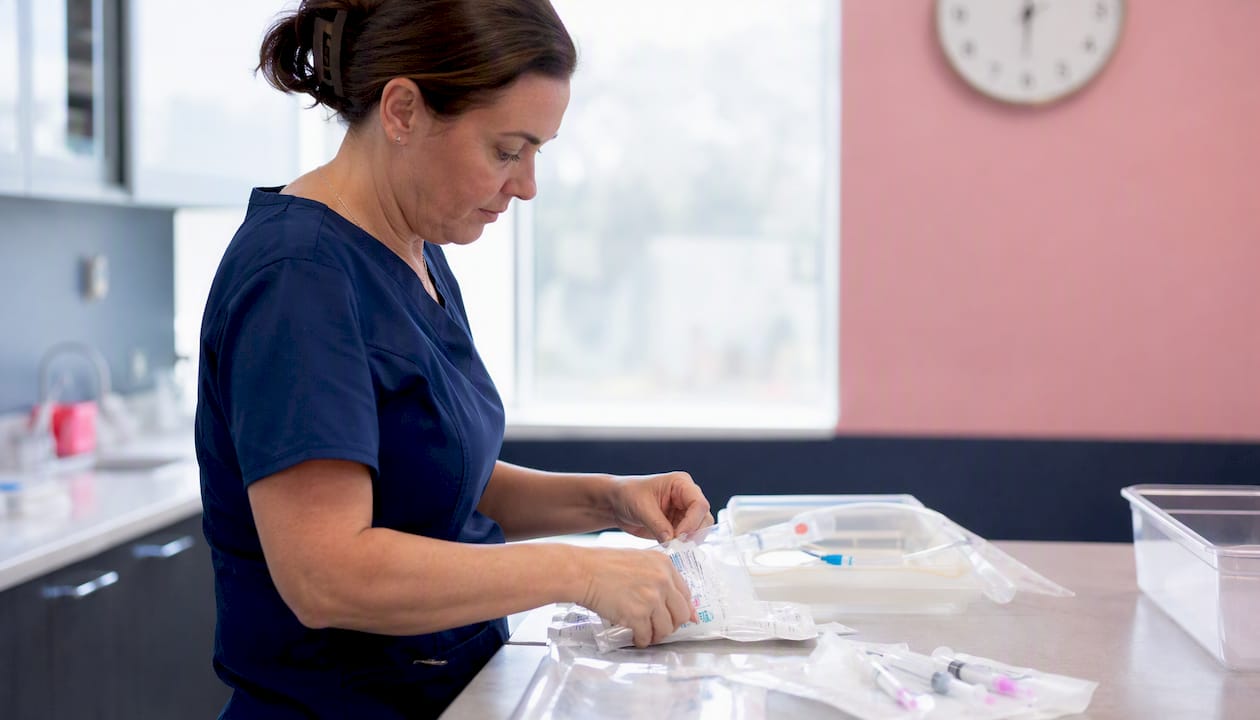
Clinic in-house donor programs sit between these two options. Some clinics maintain their own screened donor pools, which can reduce agency coordination fees while still offering fresh-cycle egg yields.
Embryo donation is the most affordable path, often ranging from $5,000–$10,000 for the transfer cycle, because the embryos already exist. Donor selection is limited, and genetic connection to the child is not possible for either parent.
Pro Tip: If you are planning more than one child, a fresh cycle’s larger egg yield may cost less per child over time than purchasing multiple frozen cohorts.
Fresh donor cycles vs. frozen cohorts: which makes more financial sense?
| Dimension | Fresh Donor Cycle | Frozen Egg Cohort |
|---|---|---|
| Total all-in price range | $35,000 to $65,000 | $21,000–$28,000 |
| Timeline to transfer | 3–6 months | Weeks |
| Eggs expected | 15–25+ | 6–8 |
| Per-transfer success | Comparable (ASRM guidance) | Comparable (ASRM guidance) |
| Sibling planning flexibility | High (more embryos banked) | Lower per cohort |
| Donor selection control | High | Moderate (bank catalog) |
ASRM guidance confirms no significant per-transfer difference between frozen and fresh donor oocytes, which means the decision comes down to budget, timeline, and how many embryos you want in reserve. Frozen cohorts are the right starting point for patients who want to move quickly and keep upfront costs lower. Fresh cycles make more sense when embryo banking for siblings is a priority.
What should a responsible donor-egg quote include?
A thorough quote should explicitly state whether each of the following is included or excluded:
- Donor egg lot or fresh donor compensation
- Agency coordination fee (if applicable)
- Donor stimulation medications
- Recipient estrogen and progesterone medications
- Egg retrieval procedure
- Fertilization and ICSI
- Embryo culture (to blastocyst stage)
- Embryo freezing and at least 12 months of storage
- Number of embryo transfers covered
- PGT-A (included, optional, or excluded)
- Legal fees for donor contract and parentage order
- Shipping or travel costs for frozen eggs
- Refund or shared-risk program terms and eligibility
Common “hidden” extras that appear after a low initial quote include donor medication costs, a second transfer fee, storage renewal fees after year one, and legal coordination charges.
Pro Tip: Ask every clinic: “Can you provide a written all-in estimate for two transfers, including donor medications, storage for one year, and legal fees?” That single question reveals gaps that a headline price conceals.
For a detailed look at what documents and steps the process involves, reviewing clinic-specific checklists early saves time and budget surprises later.
How do most patients pay for donor-egg IVF?
Full insurance coverage for donor-egg IVF is rare in the United States. A small number of states mandate some fertility coverage, but donor fees, medications, and legal costs are almost never covered even where mandates exist. Partial coverage, such as diagnostic testing or monitoring, is more common.
Realistic payment options include:
- Medical loans: Specialty fertility lenders offer fixed-rate loans with terms up to 84 months; interest rates vary by credit profile
- In-house clinic financing: Some clinics offer payment plans directly, often interest-free for shorter terms
- Refund/shared-risk programs: These bundle multiple cycles for a flat fee with a partial refund if no live birth results; eligibility typically requires age cutoffs and minimum embryo thresholds, and refunds usually apply only to clinic fees, not donor or agency costs
- Employer fertility benefits: A growing number of large employers include IVF benefits; check whether donor cycles qualify under your plan
- Grants: Nonprofit fertility grants exist for specific populations; award amounts vary and competition is high
Build a contingency of at least 10%–15% above your quoted total to cover unexpected costs such as an additional transfer, extended storage, or a repeat PGT-A batch. Reviewing insurance and coverage options before your first consultation helps clarify what your plan may contribute.
What do success rates tell you about value?
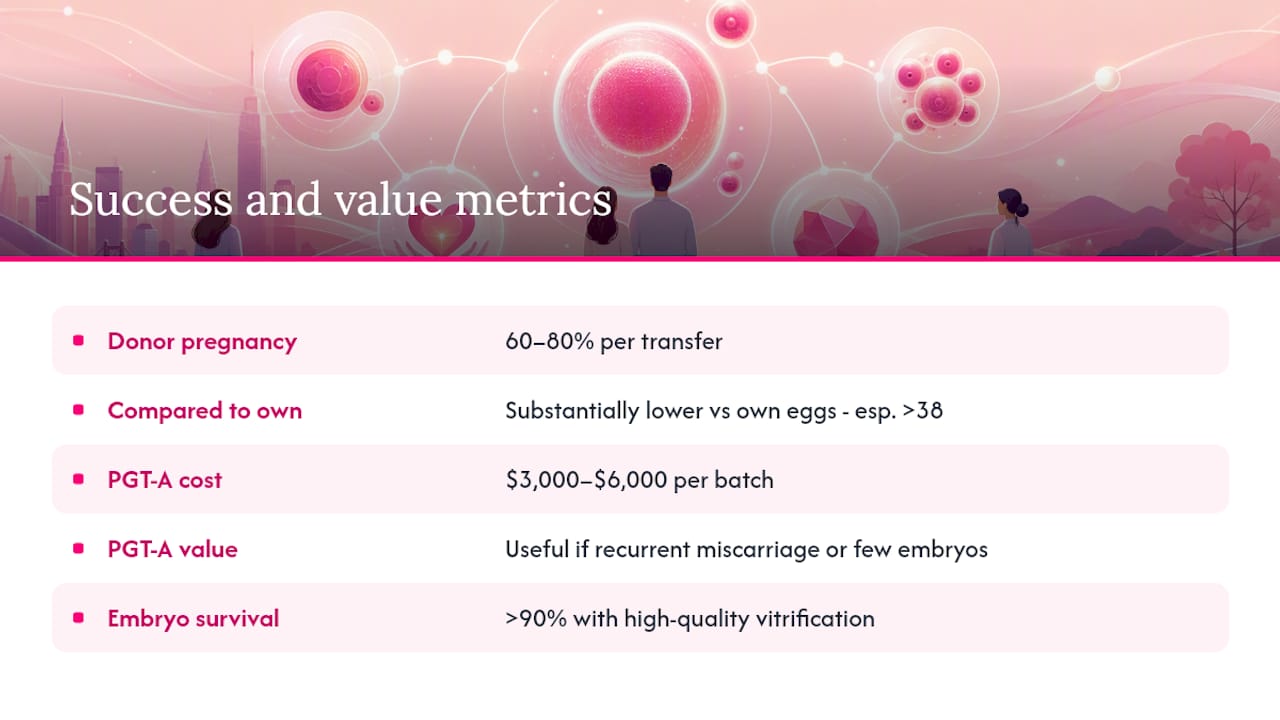
Donor-egg transfers in experienced U.S. programs commonly show per-transfer pregnancy rates of 60%–80%, which is substantially higher than cycles using a patient’s own eggs, particularly for women over 38. That outcome differential is the core reason why using an egg donor often makes financial sense even at a higher upfront cost.
PGT-A, which screens embryos for chromosomal abnormalities before transfer, costs roughly $3,000–$6,000 per batch. For donor-egg cycles, it is not universally recommended because donors are typically young and baseline aneuploidy rates are lower. It tends to add the most value when a patient has a history of recurrent miscarriage, has a limited number of embryos, or wants to select for a specific chromosomal profile. Understanding the difference between PGS-5 and PGS-24 testing helps clarify which option fits your clinical situation.
Lab quality also matters. Higher-quality vitrification protocols can achieve embryo survival rates above 90%, which directly affects how many viable embryos you have available for transfer from a single donor cycle.
Sample budgets for common patient scenarios
| Scenario | Estimated Total | Key Inclusions | Key Exclusions |
|---|---|---|---|
| Single frozen cohort (6–8 eggs), one transfer | $21,000–$28,000 | Egg lot, clinic cycle, one transfer | Meds, legal, PGT-A, storage |
| Fresh donor all-in, one transfer | Contact clinic for estimate | Donor comp, agency, retrieval, one transfer | Meds, PGT-A, storage |
| Fresh donor + PGT-A + embryo banking | $35,000 to around $65,000 | All above + PGT-A, freezing, 1-year storage | Additional transfers, legal |
| Multi-cycle refund program | Contact clinic for estimate | Multiple transfers, partial refund if no birth | Donor/agency fees often excluded from refund |
Add $3,000–$5,000 as a contingency buffer to any of these scenarios for unexpected costs. For patients in Southern California, a practical guide to affordable IVF options provides regional context on pricing and program structures.
What should you look for in a donor-egg clinic?
Clinic and lab quality, coordinated counseling, and transparent consent processes are clinical trust signals that directly affect outcomes and patient experience. When evaluating any clinic, confirm the following:
- Published CDC/SART success-rate data specific to donor-egg transfers
- Lab accreditation (CAP or CLIA certification)
- Physician board certification in reproductive endocrinology
- Itemized written pricing before any commitment
- In-house legal or referral support for donor contracts and parentage orders
- Psychological screening protocols for donors and recipients
Life IVF Center’s Precision IVF® approach customizes each treatment protocol to the patient’s unique biological profile, medical history, and goals. Across multiple Southern California locations, the clinic combines high procedural volume with individualized care, aiming to reduce the number of cycles needed and improve outcomes for complex cases including diminished ovarian reserve, advanced maternal age, and immune-related fertility challenges.
Pro Tip: Ask any clinic for its donor-egg live-birth rate per transfer, not just its clinical pregnancy rate. The gap between those two numbers reveals how often pregnancies result in a healthy birth.
How these estimates were produced and an important disclaimer
The ranges in this article reflect 2026 U.S. pricing as reported across multiple fertility cost sources and clinic disclosures. All figures are estimates; actual costs vary by clinic, geographic location, donor profile, individual clinical factors, and program structure.
Key Takeaways
Donor-egg IVF in the U.S. ranges from roughly $21,000 for a frozen cohort cycle to $65,000 for a fresh all-in agency cycle, with donor fees and clinic lab costs as the two largest variables.
| Point | Details |
|---|---|
| Headline cost range | Frozen cohort starts around $21,000; fresh all-in cycles run $35,000 to $65,000. |
| Biggest cost drivers | Donor package or egg-bank lot and clinic IVF/lab fees together exceed half the total budget. |
| Frozen vs. fresh decision | ASRM confirms comparable per-transfer outcomes; choose fresh if embryo banking for siblings is a priority. |
| Financing and refund programs | Refund programs typically cover clinic fees only, not donor or agency costs; read eligibility terms carefully. |
| Life IVF Center | Life IVF Center’s Precision IVF® program in Southern California offers individualized donor-egg protocols with transparent pricing and legal coordination support. |
What patients most often miss when budgeting for donor-egg IVF
The number that surprises patients most is rarely the headline cycle fee. It is the accumulation of smaller costs that no one mentioned at the first consultation: donor medications ($3,000–$6,000), a legal contract the clinic did not coordinate ($1,500–$3,500), embryo storage renewal after year one, and a second transfer that was never included in the original quote.
Fresh cycles that yield a large embryo cohort can look expensive upfront but prove more cost-efficient over time, particularly for patients who want a second child from the same donor. Buying a second frozen cohort two years later often costs more in total than banking embryos from a single fresh cycle today.
PGT-A deserves a direct conversation with your physician rather than a default yes or no. For most donor-egg patients with young, screened donors, the incremental benefit is modest. For patients with a miscarriage history or very few embryos, it can prevent a failed transfer that costs far more than the test itself.
Life IVF Center makes donor-egg IVF planning clearer from the start
Sorting through itemized quotes, donor pathway options, and financing terms is genuinely complex, and most patients do not want to do it alone. Life IVF Center’s donor-egg program in Southern California pairs Precision IVF® protocols with transparent, itemized pricing and direct support for legal coordination, so you are not piecing together costs from three separate vendors. The clinic’s team walks patients through treatment package options that bundle cycle fees, lab services, and support into a single, comparable figure.
Request a consultation with Life IVF Center to receive a written, itemized estimate for your specific donor-egg scenario, including transfer count, storage, and legal coordination, before you commit to any program.
Recommended
- Become an Egg Donor – Life IVF Center
- Working with Donor Eggs – Life IVF Center
- Donor Egg IVF: What to Expect in 2026
- Egg and Embryo Freezing – Fertility Preservation Packages
Ready to take the next step?
Life IVF Center specializes in individualized Precision IVF® care for complex cases—including diminished ovarian reserve, prior failed cycles, and advanced maternal age. Our in-house labs and dedicated physicians are ready to help.
Book a Free Consultation →